
Forging: Capacity balancing and load control
A forging operation balanced machine load and improved throughput with better work-order planning discipline.

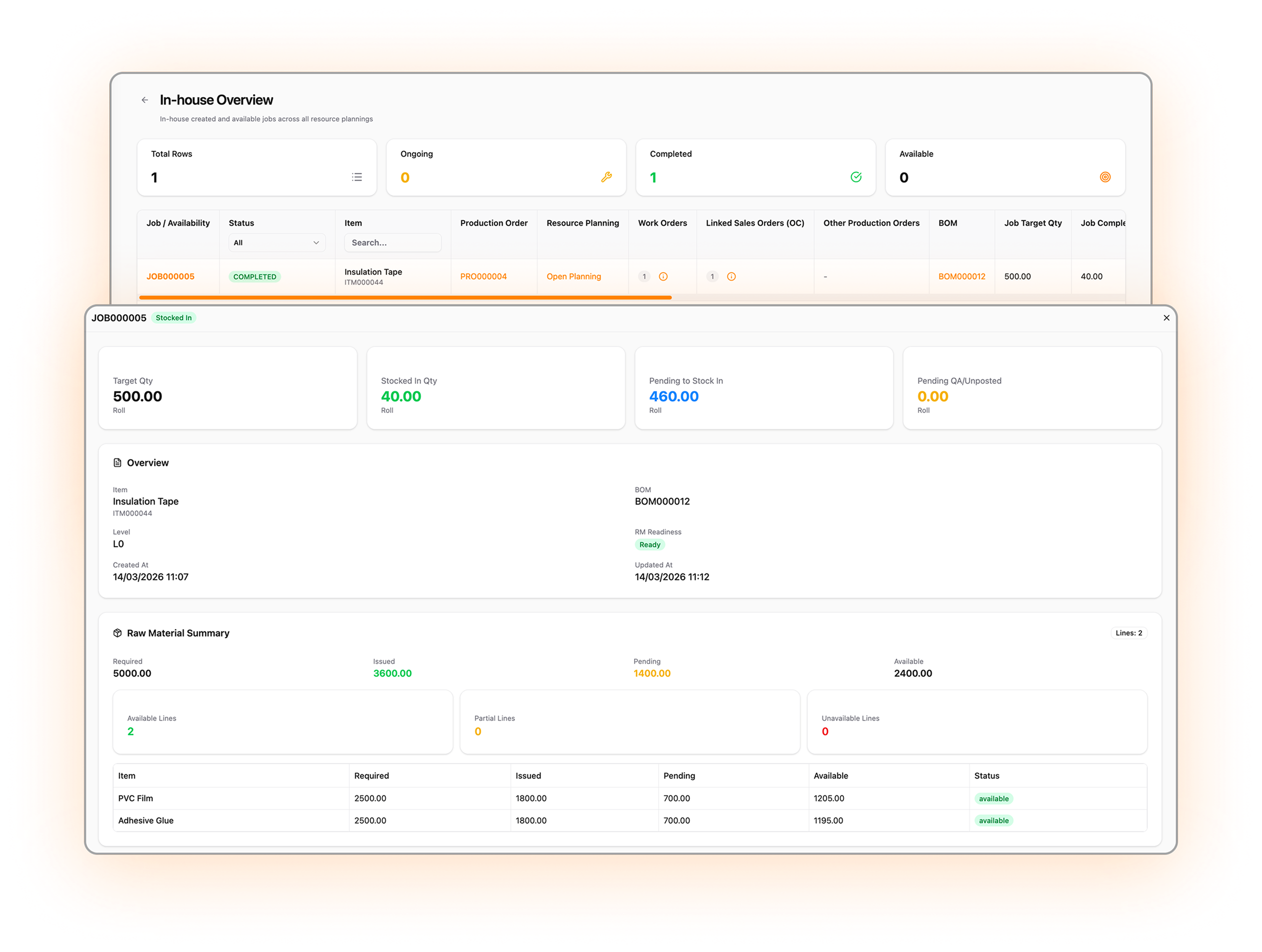
Case study map
From scattered execution to one AI Native OS.
This case study is formatted around the business problem, the connected Optiwise operating layer, and the measurable owner outcome.
2 hrs
daily time saved per role
20%
more team capacity unlocked
1 truth
for job, stock, quality, and dispatch

Before Optiwise
Inquiry, quotation, and order context was scattered.
A forging operation balanced machine load and improved throughput with better work-order planning discipline.
Connected action
Optiwise connects sales promises to live factory reality.
The case study shows how the same job, material, task, document, and status can move through one live operating layer.

Owner outcome
Owners stop being the middleware for every exception.
Teams get clearer ownership, faster escalation, and more reliable decisions without waiting for one person to connect the dots.
Forging | Uneven load created bottlenecks and under-utilized cells
A forging operation balanced machine load and improved throughput with better work-order planning discipline.
The Reality
- Machine loading decisions depended on planner memory.
- Overloaded cells delayed downstream operations.
- Available capacity in alternate routes was underused.
The Cost
- Throughput loss and avoidable queue build-up.
- Higher overtime on overloaded cells.
- Inconsistent dispatch reliability during demand spikes.
The Fix
Digitize
- Mapped capacity and route options at machine level.
- Digitized work-order release with load checks.
- Captured queue and wait signals by stage.
Optimize
- Balanced work distribution using live load view.
- Reduced route-level bottlenecks with proactive scheduling.
- Tracked planned vs actual output by cell.
Scale
- Introduced AI-assisted load balancing recommendations.
- Automated capacity alerts for upcoming overload risk.
- Replicated planning logic across shifts and planners.
The Result
Before: Capacity planning was manual and uneven.
After: Workload balancing improved throughput and dispatch consistency.
Digitize what you have. Optimize what you can see. Scale what you have earned.