
Steel Fabrication: WIP visibility and flow control
A fabrication business achieved better schedule reliability by digitizing WIP tracking across cutting, welding, and finishing.
Case study map
From scattered execution to one AI Native OS.
This case study is formatted around the business problem, the connected Optiwise operating layer, and the measurable owner outcome.
2 hrs
daily time saved per role
20%
more team capacity unlocked
1 truth
for job, stock, quality, and dispatch

Before Optiwise
Factory execution depended on manual visibility and follow-ups.
A fabrication business achieved better schedule reliability by digitizing WIP tracking across cutting, welding, and finishing.
Connected action
Optiwise links planning, material readiness, WIP, and dispatch.
The case study shows how the same job, material, task, document, and status can move through one live operating layer.

Owner outcome
Owners stop being the middleware for every exception.
Teams get clearer ownership, faster escalation, and more reliable decisions without waiting for one person to connect the dots.
Fabrication | WIP blind spots caused dispatch uncertainty
A fabrication business achieved better schedule reliability by digitizing WIP tracking across cutting, welding, and finishing.
The Reality
- Work order status was updated manually and inconsistently.
- Inter-stage handoff delays were invisible to planners.
- Priority changes did not propagate quickly to lines.
The Cost
- Frequent dispatch slippage and overtime planning.
- Idle time at downstream stages due to poor sequencing.
- Low confidence in committed delivery dates.
The Fix
Digitize
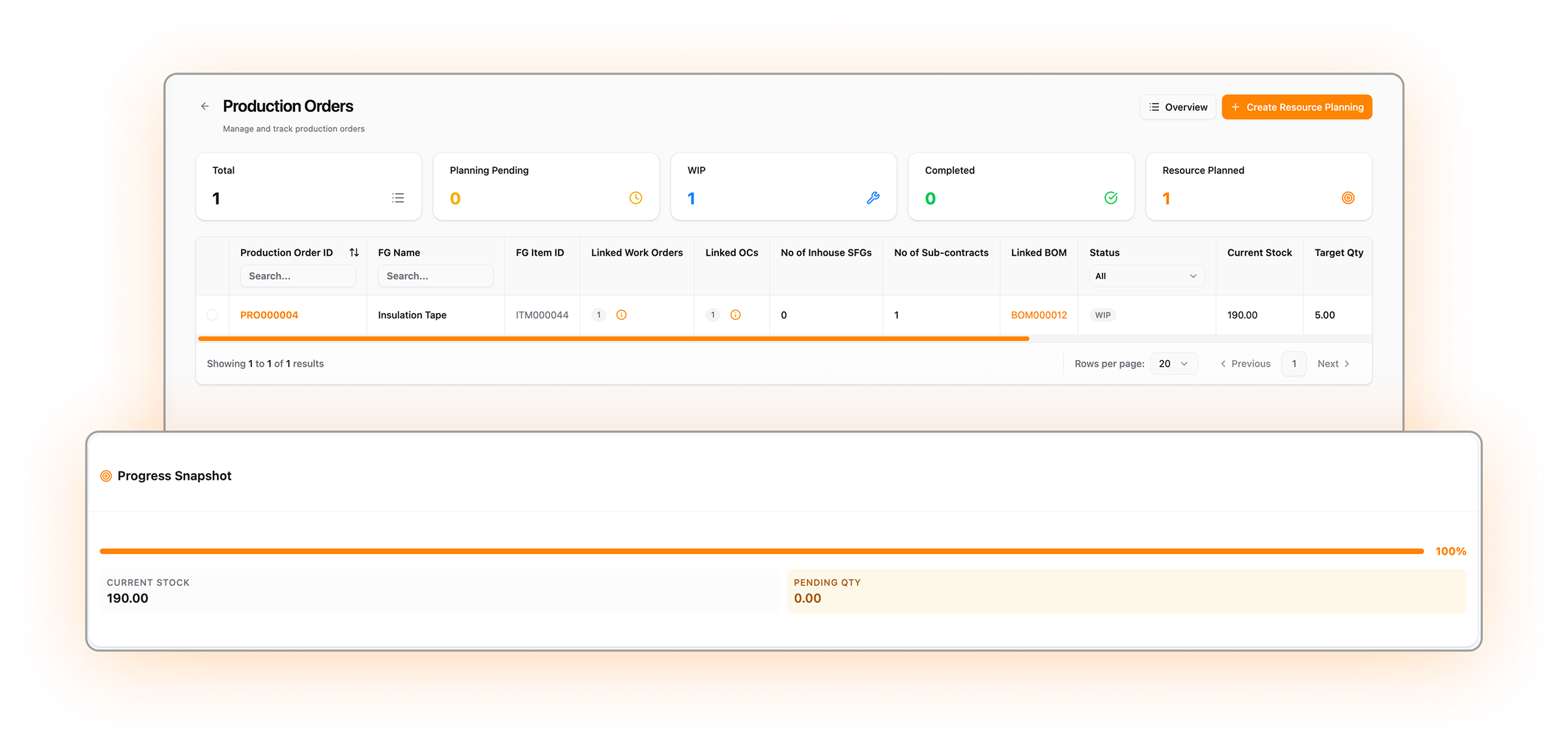
- Tracked every job card across stage transitions.
- Logged start/hold/complete events with reasons.
- Connected WIP boards with dispatch commitments.
Optimize
- Highlighted queue bottlenecks by stage and shift.
- Balanced sequencing based on due date and load.
- Reduced hidden waiting time in handoff-heavy routes.
Scale
- Automated delay alerts for critical jobs.
- Enabled cross-team resolution workflows with owners.
- Expanded same WIP discipline to outsourced processes.
The Result
Before: WIP was opaque and planning accuracy stayed low.
After: Stage-level visibility improved throughput and dispatch confidence.
Digitize what you have. Optimize what you can see. Scale what you have earned.