
Advantages And Disadvantages Of Gst | Optiwise
Understand the practical advantages and disadvantages of GST for Indian manufacturing businesses, including input tax credit, invoicing discipline, compliance workload, and ERP support.
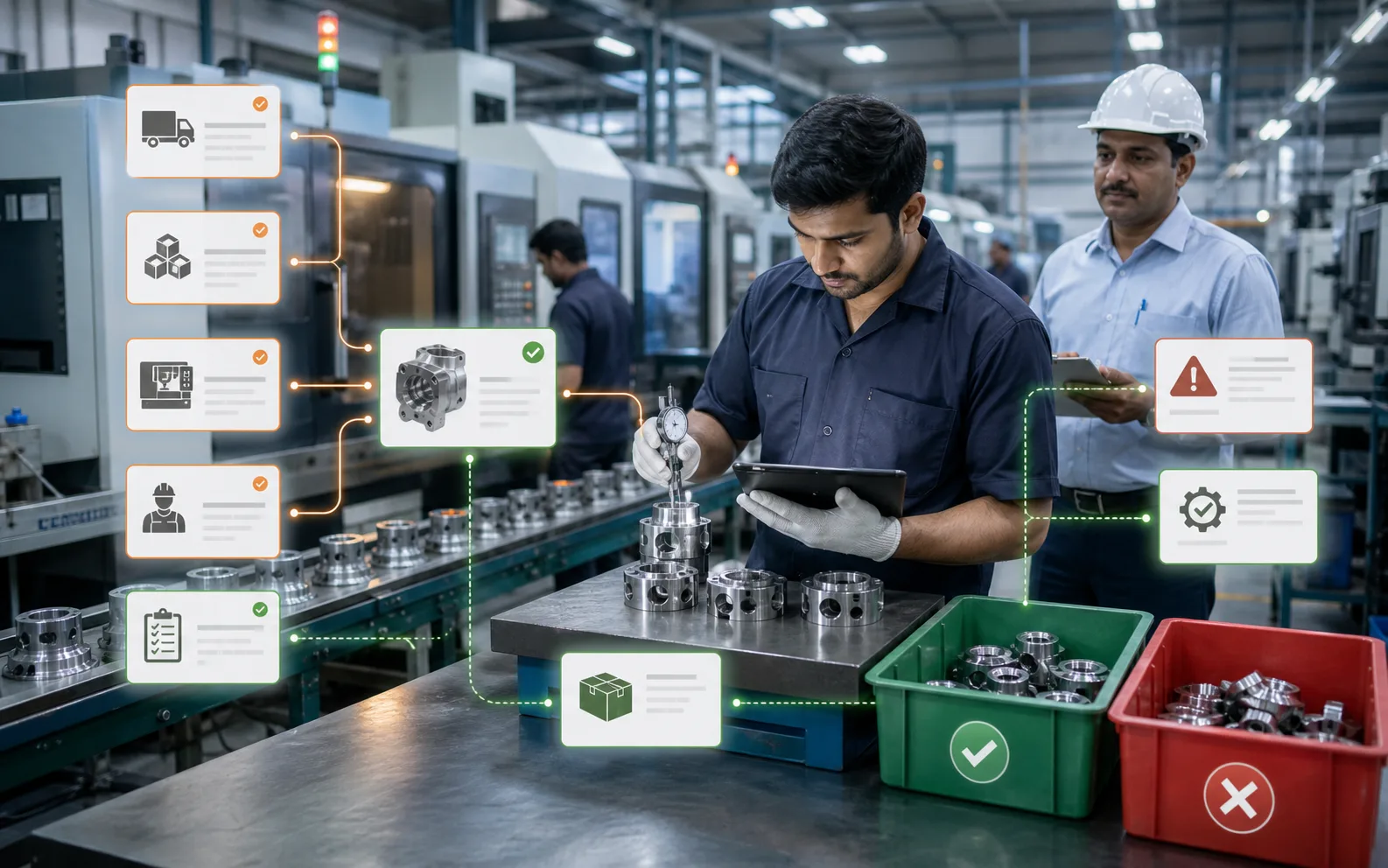
Advantages and Disadvantages of GST for Manufacturing Businesses
GST changed how Indian businesses think about tax, invoices, vendor records, and purchase documentation. For manufacturers, the effect is felt in daily operations: purchase invoices, sales invoices, credit notes, debit notes, e-way bills, input tax credit, stock movement, and accounts reconciliation.
The advantages of GST are real, especially around a more unified tax structure and input tax credit flow. The disadvantages are also real, especially for businesses that still manage records manually. GST rewards discipline. If purchase, inventory, sales, and accounts do not stay aligned, compliance work becomes heavy.
This article is a practical business overview, not tax advice. Manufacturers should always confirm GST positions, rates, eligibility, and filing requirements with their tax advisor or CA. A system like AICAN Optiwise can support cleaner records and workflows, but compliance responsibility still remains with the business.
Advantage 1: More Structured Indirect Tax Flow
GST brought many indirect taxes under one framework. For businesses operating across states, this can make tax treatment more structured than maintaining multiple older tax systems.
For manufacturers, a common tax framework can help standardize invoicing, customer billing, vendor documentation, and interstate supply processes. The benefit becomes stronger when master data, tax codes, and invoice records are maintained properly.
Advantage 2: Input Tax Credit Discipline
Input tax credit is one of the most important GST concepts for manufacturers. In simple terms, eligible tax paid on purchases can be adjusted against output tax liability, subject to GST rules and conditions.
This can reduce cascading tax impact, but only when records are clean. Supplier invoices, goods receipt, tax details, and accounting records must align. If purchase documentation is incomplete or mismatched, ITC review becomes painful.
ERP can help by connecting purchase orders, GRNs, supplier invoices, debit notes, credit notes, and accounts records. It cannot decide legal eligibility on its own, but it can reduce operational confusion.
Advantage 3: Better Invoice Standardization
GST has pushed businesses toward more disciplined invoicing. Invoice details, GSTIN, taxable value, tax rate, place of supply, HSN or SAC where applicable, and document references have become more important in daily work.
For manufacturers, this creates a stronger need for structured sales and purchase records. It also reduces the tolerance for informal billing practices.
Advantage 4: Better Traceability of Business Transactions
When GST records are maintained properly, businesses get a clearer trail of sales, purchases, returns, and tax-related adjustments. This helps accounts teams, auditors, and management review transaction history with more confidence.
For manufacturers, traceability matters because invoices are connected with material movement, dispatch, returns, and customer commitments.
Disadvantage 1: Compliance Workload
GST compliance requires timely returns, correct invoice records, vendor reconciliation, tax classification, and documentation. For SMEs with lean accounts teams, this workload can feel heavy.
The challenge increases when operational records are scattered across Excel, manual challans, accounting software, and WhatsApp messages.
Disadvantage 2: Data Mismatch Risk
GST compliance depends heavily on matching records. A supplier invoice may not match purchase records. A credit note may be missed. Goods may be received but documents may be pending. Tax classification may be entered incorrectly.
These mismatches create follow-up work and may affect reporting or credit review.
Disadvantage 3: Working Capital Pressure
Tax payment timing, delayed customer payments, blocked credit, or vendor mismatches can affect cash flow. Manufacturers already manage raw material purchase, production cost, salaries, power, and supplier payments. GST-related timing issues can add pressure if not planned.
Disadvantage 4: Need for Stronger Systems
GST has made manual recordkeeping more difficult for growing businesses. A company may manage initially with accounting entries alone, but once purchase volume, sales volume, warehouses, and production complexity grow, disconnected records become risky.
How ERP Helps Manufacturers Manage GST Workflows
ERP helps by improving the operational records behind GST work: purchase orders, GRN, inward QC, supplier invoice validation, sales invoices, credit notes, debit notes, stock transfers, and dispatch documents.
AICAN Optiwise helps manufacturers keep operations more connected so accounts teams are not forced to reconstruct tax records later. The goal is cleaner source data, better traceability, and fewer avoidable mismatches.
Practical Advice for SMEs
Keep customer and supplier GST details updated. Validate invoice data before posting. Reconcile purchase invoices regularly. Connect GRN and supplier bills. Track credit notes and debit notes carefully. Keep tax decisions reviewed by qualified advisors. Do not treat ERP as a substitute for professional compliance review.
Founder’s Note
At AICAN, we see GST discipline as an operations issue as much as an accounts issue. If purchase, stores, sales, and finance work from different records, GST work becomes harder than it needs to be. Optiwise is built to keep those records connected so manufacturers can give their accountants cleaner data.
FAQs
What is the main advantage of GST for manufacturers?
A more structured tax framework and input tax credit mechanism are major advantages, provided records are maintained correctly.
What is the biggest disadvantage of GST for SMEs?
Compliance workload and record mismatch risk can be challenging, especially when systems are manual or disconnected.
Can ERP guarantee GST compliance?
No. ERP can support cleaner records and workflows, but GST compliance depends on correct legal interpretation, filings, and professional review.
Why does inventory data matter for GST?
Because purchases, sales, returns, dispatch, and stock movement often support invoice and tax records.
Where can I learn more about AICAN?
Visit AICAN Optiwise and About AICAN.

Related Posts
Types Of GST Returns For Manufacturers | Optiwise
A practical guide to GST returns for manufacturers, including GSTR-1, GSTR-3B, GSTR-9, GSTR-9C, composition returns, TDS/TCS returns, and reconciliation discipline.
17 May 2026Read more →
Gst Invoice | Optiwise
Understand GST invoices, required details, common mistakes, e-invoice readiness, and how ERP helps manufacturers create accurate billing and tax records.
14 May 2026Read more →Gstr 10 | Optiwise
Learn what GSTR-10 final return is, who needs to file it, when it is filed, what records matter, and how ERP helps businesses close GST records cleanly.
20 Apr 2026Read more →
How to Transition Your Manual Accounting to ERP-Based Accounting
Learn how MSME manufacturers can move from manual or standalone accounting to ERP-based accounting with clean masters, opening balances, inventory links, approvals, and finance controls.
13 Apr 2026Read more →