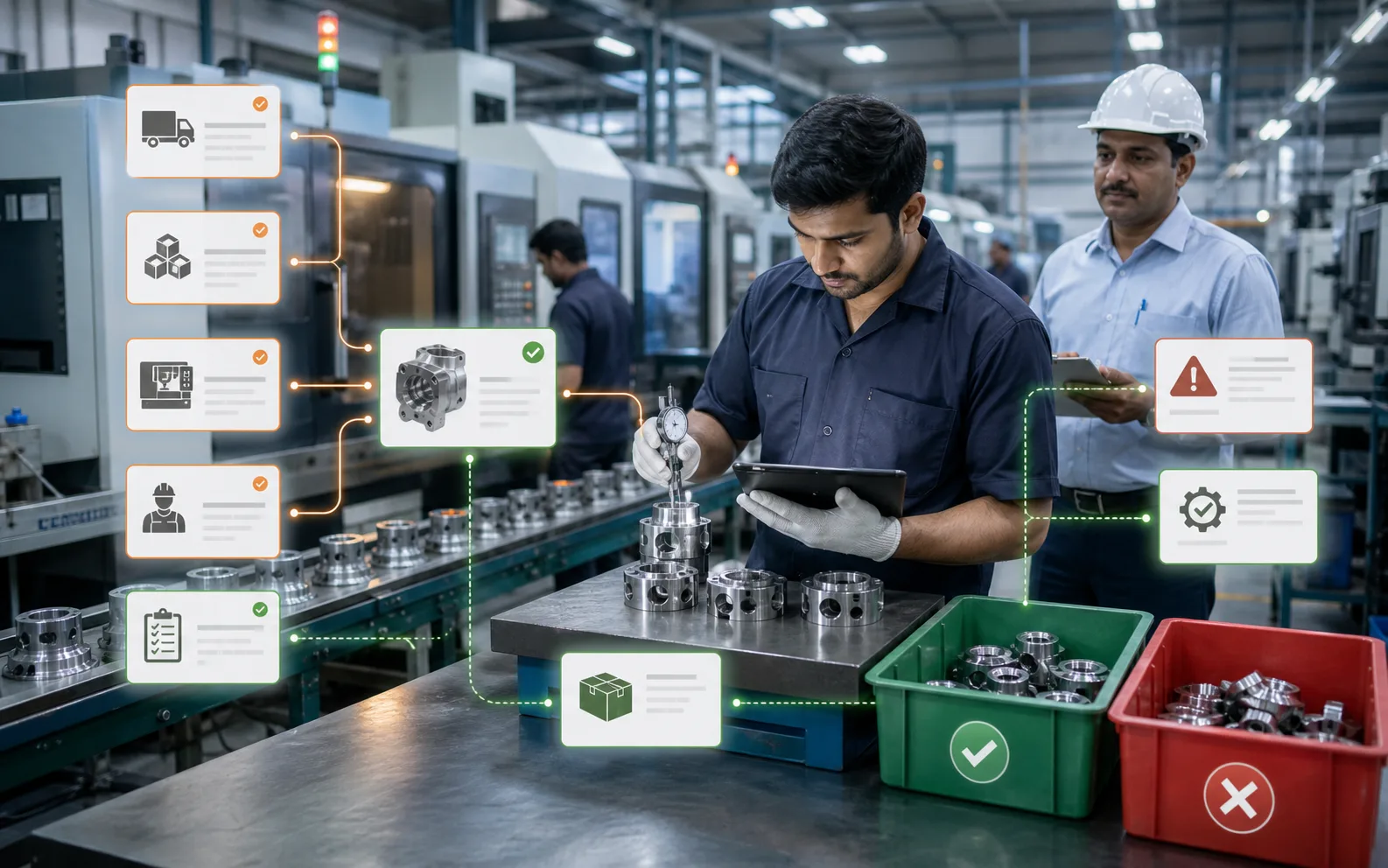
SAP Alternative for Manufacturing
Explore what manufacturers should look for in an SAP alternative, including faster implementation, manufacturing fit, cost control, usability, support, and AI-ready ERP workflows.
Loading Optiwise
A structured blog experience powered by the local AICAN CMS, with rich publishing, search visibility, and editorial control without WordPress.

Filter blog posts
1959 posts available
Explore what manufacturers should look for in an SAP alternative, including faster implementation, manufacturing fit, cost control, usability, support, and AI-ready ERP workflows.
AI will change procurement work, but it is more likely to automate repetitive tasks than replace procurement professionals who build supplier judgment and strategy.
A practical guide for manufacturers to identify when spreadsheets, manual follow-ups, and disconnected systems are no longer enough — and when ERP becomes an operational necessity.
Learn how to decide if AI is worth the investment for your factory by evaluating use cases, data readiness, costs, risks, ROI, and operational impact.
Explore whether AI will create more jobs than it destroys, with a practical view of manufacturing, automation, new roles, reskilling, and business transformation.
Avoid common manufacturing AI mistakes such as unclear use cases, poor data, weak security, no human review, over-automation, and poor adoption planning.
Understand the difference between AI and regular automation in manufacturing, with practical examples for workflows, decisions, alerts, and predictive operations.
Understand the risks of AI in manufacturing, including bad data, wrong recommendations, safety issues, security, job fear, over-automation, and implementation failure.
Learn how IoT enables remote monitoring of manufacturing equipment through sensors, gateways, dashboards, alerts, maintenance visibility, and secure access.
Learn warehouse automation for manufacturing SMEs, including barcode scanning, inventory systems, receiving, putaway, picking, dispatch, and practical adoption steps.
AI agents reduce workload when applied to repetitive, structured tasks with clear rules, clean data, human oversight, and practical workflow integration.
Learn how a Kanban system works in manufacturing, where it helps, where it fails, and how Optiwise connects Kanban signals with inventory, purchase, and production planning.
Learn cloud procurement for SMEs and manufacturers, including purchase requests, approvals, supplier follow-up, inventory linkage, and how AICAN Optiwise improves control.
Learn best practices for optimizing a production management system across planning, scheduling, material readiness, quality, and reporting.
Learn how ERP improves operations management by connecting planning, inventory, purchase, production, quality, dispatch, finance, and reporting.
A practical guide to ERP for FMCG companies in India, covering distributor orders, batch tracking, expiry, inventory, production, schemes, costing, and reporting.
Compare Odoo, Acumatica, and Microsoft Dynamics 365 for small businesses across flexibility, cost, implementation, manufacturing fit, ecosystem, and support considerations.
Compare Tally and modern ERP for manufacturing businesses across accounting, inventory, production, purchase, sales, dashboards, workflows, and operational control.
Understand how much energy sensor systems use, what affects consumption, and why the value of sensor data usually comes from the energy and waste it helps reduce.
Learn how industrial sensors support quality control by monitoring process conditions, detecting variation early, improving traceability, and reducing rework.
Learn when manufacturers can install sensors themselves and when an integrator is needed for safety, wiring, machine compatibility, data accuracy, and IoT dashboards.
Learn how to choose the best ERP for pharmaceutical manufacturing, with guidance on batch control, quality workflows, traceability, inventory, documentation, and GMP discipline.
A practical guide to calculating ROI from factory computer vision systems, including rework, scrap, labour, customer claims, downtime, dispatch errors, and better production decisions.
Learn how ERP supports ISO 9001 and AS9100 compliance through traceability, documentation, quality records, audits, supplier control, nonconformance, and process discipline.
AI-assisted service improves customer satisfaction when it is fast, accurate, transparent, personalized, and easy to escalate to humans.
Learn how to estimate the payback period for manufacturing IoT investments using downtime reduction, labor savings, energy control, quality improvement, and phased ROI planning.
Learn the risks of over-customizing ERP in manufacturing, including higher cost, slower implementation, upgrade issues, poor adoption, and process confusion.
Compare barcode vs QR code for manufacturing inventory, warehouse workflows, batch tracking, scanning speed, data capacity, cost, and ERP integration.
Learn when small manufacturers should buy ERP now versus wait for a cheaper option. Understand cost of delay, implementation timing, hidden losses, and practical buying signals.
Understand the cost of AI production planning software, including subscription, implementation, integrations, training, data preparation, and ROI factors.
Learn the benefits of inventory management for SME manufacturers, including stock accuracy, lower working capital blockage, fewer stockouts, better production planning, and dispatch control.
Learn closing stock meaning, formula, valuation methods, examples, accounting impact, and how AICAN Optiwise helps manufacturers improve stock accuracy.
Learn how manufacturers can start small with AI production planning through pilots, material readiness, order visibility, and phased rollout.
Learn what stock availability means, why it matters for sales and production, how SMEs can improve visibility, and how ERP helps prevent false commitments.
Compare manufacturing AI with hiring more workers and learn when automation, better systems, training, or additional people are the right answer.
Learn how automated inventory management systems help manufacturers improve stock accuracy, low-stock alerts, warehouse control, material planning, and reporting.
Learn inventory write off meaning for manufacturers, when stock may be written off, common causes, operational controls, and how Optiwise helps identify inventory risk early.
A detailed guide to capacity planning for manufacturers, including machine capacity, labour capacity, demand planning, bottlenecks, and how AICAN Optiwise supports better production decisions.
Learn inventory carrying cost, what it includes, why it matters for manufacturers, examples, formula, reduction methods, and how Optiwise improves visibility.
A practical look at how IoT platforms reduce avoidable labor waste in manufacturing by improving visibility, planning, maintenance, and shop-floor coordination.
Learn whether small manufacturers can afford enterprise ERP, what costs to expect, how to reduce risk, and how to choose ERP that fits without overbuying.
Learn how inventory optimization lowers storage costs by reducing excess stock, dead stock, handling effort, space pressure, and unnecessary material movement.
Understand how AI affects production planning jobs, what tasks may change, and how planners can become more valuable with AI-supported scheduling and visibility.
Learn what skills manufacturing teams need to use AI, including process knowledge, data discipline, prompt clarity, review judgment, ERP understanding, and change readiness.
Explore common production planning challenges and best practices for manufacturers, including demand accuracy, material readiness, capacity, and schedule control.
AI can handle company-specific procurement needs when workflows, supplier rules, approval limits, item data, and manufacturing context are configured properly.
Factory workers should understand why digital transformation is happening, how roles change, what data is used, what training is provided, and how feedback matters.
Learn cost center meaning, examples, types, importance in manufacturing, common mistakes, and how AICAN Optiwise supports better cost visibility.
Understand how AI changes manufacturing jobs, which tasks become easier, which skills matter more, and how leaders can introduce AI responsibly.
A practical guide to sales invoice management for SME manufacturers, covering order confirmation, dispatch, GST details, documentation, payment follow-up, and controls.
AI procurement tools create more value when connected with inventory, production, finance, approvals, supplier data, and reporting systems.
Learn how manufacturing SMEs can design better warehouse layouts for receiving, storage, picking, WIP, finished goods, safety, dispatch, and inventory accuracy.
Learn which inventory problems software can solve, including stockouts, excess stock, wrong issues, slow-moving inventory, poor visibility, and manual reporting.
Learn how AI affects remote work, which remote roles may be automated, which remain valuable, and how hybrid AI-enabled work may evolve.
Learn how supplier ratings help manufacturers improve purchase quality, delivery reliability, vendor accountability, and procurement decisions with AICAN Optiwise ERP.
Learn how industrial sensors support safer factories through machine monitoring, alerts, guarded access, environmental sensing, and reduced exposure to risky checks.
Learn how AI can help manufacturers train teams faster with role-based guides, SOPs, quizzes, translations, onboarding support, and practical factory examples.
Learn how to track batch genealogy with ERP, including raw material lots, production batches, quality status, finished goods, dispatch, and traceability reports.
Learn the essential features manufacturers should look for in a purchase order system, from approvals and RFQs to GRN, QC, supplier ratings, and accounting integration.
AI can handle simple customer calls and booking tasks, but businesses should keep human oversight for exceptions, complaints, payments, and complex decisions.
Learn inventory tracking for manufacturing: item codes, QR/barcode, GRN, warehouse location, WIP, finished goods, cycle counts, and how Optiwise keeps stock visible.
Learn what a purchase order system is, how it works, key features, benefits, and why manufacturers need connected PO workflows with inventory and production.
Learn how manufacturers should evaluate the cheapest ERP system that actually works, including fit, support, modules, implementation, hidden costs, and long-term value.
Understand manufacturing AI software security, including data privacy, role-based access, ERP permissions, vendor checks, audit trails, and safe AI usage.
Learn what AI manufacturing solutions cost, including software, implementation, integration, sensors, data cleanup, training, support, and ROI planning.
Learn how ERP helps seasonal businesses manage demand peaks, inventory build-up, purchase planning, production capacity, temporary staff, dispatch, cash flow, and reports.
Learn how ERP helps small businesses manage compliance records for GST, e-invoicing, customer data, audit trails, inventory, documents, access control, and reporting.
Learn how manufacturers should handle wrong AI predictions in production planning with human review, fallback processes, data correction, and continuous improvement.
Understand IoT in metal fabrication, including machine monitoring, welding visibility, material tracking, downtime alerts, quality data, ERP integration, and practical rollout steps.
Learn from realistic AI implementation case study patterns in manufacturing across inventory, quality, maintenance, scheduling, and reporting.
Learn how manufacturers can evaluate whether an AI tool is worth buying using use-case fit, data readiness, ROI, support, adoption, and integration criteria.
Learn how sensor selection changes across manufacturing industries such as food, automotive, textiles, packaging, metalworking, chemicals, and electronics.
The best AI procurement tools help with quote comparison, supplier evaluation, PO automation, spend analysis, risk alerts, and manufacturing workflow visibility.
A practical guide for manufacturers evaluating whether computer vision systems can run reliably in 24/7 production, covering hardware, lighting, uptime, maintenance, monitoring, and support.
Learn how manufacturers can measure whether factory floor software is actually helping using ROI, adoption, production visibility, downtime, quality, WIP, and delivery metrics.
See public examples of manufacturers using Infor VISUAL, what types of companies it fits, and how to evaluate whether it is right for your manufacturing business.
Learn how to track machine utilization with planned time, run time, downtime, idle time, setup time, OEE, production output, and ERP dashboards.
Learn how auto component plants can improve OEE by improving availability, performance, quality, downtime tracking, production planning, maintenance, and shopfloor visibility.
Understand the ERP implementation life cycle, including discovery, planning, configuration, migration, testing, training, go-live, and post-launch support.
Compare IoT and hiring more staff in manufacturing, including visibility, labor productivity, reporting, downtime response, cost, scalability, and when each option makes sense.
Understand production externalities, positive and negative examples, and how manufacturers can reduce operational, environmental, and social impact.
A practical guide for manufacturers on tracking quality issues in ERP, including QC checkpoints, rejection reasons, rework, batch traceability, supplier quality, and corrective action workflows.
Bust common ERP myths for MSME owners: ERP is only for large companies, too expensive, too complex, replaces people, guarantees success, or must be implemented all at once.
Learn how quickly AI can improve manufacturing output through reporting, planning, downtime reduction, quality improvement, bottleneck visibility, and inventory readiness.
Compare cloud ERP and on-premise ERP for small and mid-sized manufacturers across cost, control, security, updates, scalability, and implementation effort.
Explore practical manufacturing business ideas in India, how to evaluate demand, investment, operations, inventory, compliance, and how Optiwise supports growing manufacturers.
Learn how machine shops manage quotations and job cards, from enquiry review and drawing study to costing, routing, machine scheduling, production tracking, inspection, and dispatch.
Learn a practical method to calculate ROI before investing in industrial sensors, including cost, savings, risk reduction, downtime, energy, and quality impact.
Learn demand forecasting for manufacturing SMEs, including methods, examples, forecast errors, inventory impact, production planning, and Optiwise visibility.
Explore the most common inventory management challenges manufacturers face, from stockouts and excess stock to WIP visibility, inaccurate data, and disconnected teams, with practical solutions.
Learn a practical step-by-step approach for small AI pilots in manufacturing, including use case selection, data readiness, workflow design, measurement, and rollout.
Learn how textile mills monitor machine downtime using ERP and IoT, including stoppage reasons, runtime, shift reports, maintenance, output loss, and delay risk.
Learn how manufacturers can check whether a production plan is realistic using capacity, material readiness, manpower, machine availability, changeover, quality, and ERP visibility.
Discover practical AI use cases manufacturers can apply today, from production visibility and inventory planning to maintenance alerts and customer updates.
Learn how a perpetual inventory system works, why real-time stock updates matter, and how manufacturers can implement it successfully.
Learn how ERP supports e-invoicing, GST-ready records, dispatch documentation, audit trails, invoice accuracy, and compliance discipline for Indian manufacturers.
Learn inventory replenishment for manufacturers: reorder points, safety stock, lead time, demand planning, common mistakes, and how Optiwise helps prevent stockouts and overstocking.
Learn how factory automation changes worker roles, which jobs may reduce, which roles grow, and how manufacturers can reskill teams responsibly.
Learn what support manufacturers should expect from IoT platform providers, including assessment, installation, training, integration, security, troubleshooting, and scale-up help.
Manufacturing AI is real, but hype exists. Learn where factories use AI practically: maintenance, scheduling, quality, inventory, procurement, and reporting.
Learn practical ways to improve fabrication shop productivity with better planning, material readiness, stage tracking, welding control, downtime review, quality discipline, and ERP visibility.
Learn the most useful manufacturing metrics for MSMEs: output, WIP, OTD, inventory turnover, rejection, downtime, cost variance, and Optiwise dashboards.
Learn invoice management for manufacturers: purchase invoices, sales invoices, GRN matching, payment tracking, compliance caveats, and how Optiwise connects invoices with operations.
Understand whether AI will replace factory workers, which tasks may change, and how manufacturers and employees can prepare for AI-supported operations.
Learn how small manufacturers can afford AI technology by starting with practical use cases, AI-enabled ERP, phased pilots, and measurable ROI.
Learn how auto manufacturers track production in real time using ERP, shopfloor reporting, machine data, barcode scans, quality status, WIP visibility, and dashboards.
When AI handles routine tasks, teams shift toward review, exception handling, customer care, process improvement, and higher-value decision-making.
Over-automating with AI can create poor customer experience, employee fear, hidden errors, weak accountability, and loss of human judgment.
Learn how IoT helps automobile manufacturing with machine monitoring, downtime tracking, energy visibility, quality control, predictive maintenance, WIP tracking, and ERP-connected decisions.
Learn how furniture manufacturers can manage custom orders using specifications, drawings, approvals, BOMs, materials, cutting, CNC, assembly, finishing, costing, delivery, and installation tracking.
Get team buy-in for AI by addressing fear, explaining benefits, starting small, involving users, providing training, and showing early wins.
Learn how Optiwise can help assembly manufacturers manage BOMs, kitting, inventory, line stages, quality checks, rework, costing, and dispatch visibility.
Learn key manufacturing strategies including MTO, MTS, lean, agile, batch, cellular, and hybrid models, with practical guidance and Optiwise visibility.
See a practical month-by-month ERP implementation timeline for manufacturers, including discovery, data cleanup, configuration, training, testing, go-live, and stabilization.
Learn how AI predicts and prevents manufacturing problems using data patterns, alerts, maintenance signals, inventory risk, quality trends, and workflow visibility.
Learn how to calculate average inventory, why it matters, examples for manufacturers, common mistakes, and how ERP improves inventory reporting.
Understand digital twins in manufacturing, how they use IoT data, and when factories should consider them for planning, maintenance, quality, and productivity.
AI agents can support employee onboarding with checklists, policy answers, document reminders, training guidance, and HR escalation workflows.
Explore new jobs AI may create, especially in manufacturing: AI operations, data quality, workflow design, automation maintenance, AI training, and process intelligence roles.
Learn how ERP supports manufacturers with multiple locations, plants, warehouses, stock transfers, production visibility, purchase control, reporting, and role-based access.
Learn how fabrication companies can track raw material consumption, wastage, offcuts, scrap, job-wise issue, return, and actual costing using ERP.
Understand what to look for in a GMP-supportive ERP for pharma manufacturing, including audit trails, batch records, access control, quality workflows, and validation readiness.
Learn how Optiwise helps manufacturers manage credit notes, debit notes, returns, rate differences, quantity differences, invoice corrections, accounts impact, and audit-ready records.
Learn how AI handles seasonal demand changes in production planning using historical trends, forecasts, inventory planning, capacity review, and supplier readiness.
A practical guide to GST returns for manufacturers, including GSTR-1, GSTR-3B, GSTR-9, GSTR-9C, composition returns, TDS/TCS returns, and reconciliation discipline.
A detailed guide to inventory management in Excel for manufacturers: useful templates, risks, formulas, common mistakes, and when to shift to Optiwise for live inventory control.
Learn when free inventory management software can help, what its limits are, and when growing businesses should move to ERP-based inventory control.
Learn how to generate an e-way bill, what data is needed, common mistakes, and how ERP helps manufacturers prepare accurate dispatch and invoice records.
Learn how vision systems handle colour variation in manufacturing, including lighting control, colour calibration, tolerances, material variation, camera setup, and quality workflows.
Learn how manufacturers can think beyond generic ERP and move toward an AI-ready factory operating system for production, inventory, purchase, finance, and reporting.
Avoid common manufacturing IoT implementation mistakes, including unclear goals, poor data quality, overengineering, weak training, bad dashboards, ignored operators, and poor integration.
Understand the difference between inventory control and inventory management, and why manufacturers need both for stock accuracy, planning, and working capital.
AI can help optimize production for different customer locations by considering demand, delivery timelines, inventory, capacity, routes, and priority orders.
Learn how factories should handle conflicts between AI recommendations and manager decisions without weakening accountability, trust, or production control.
Understand GST invoices, required details, common mistakes, e-invoice readiness, and how ERP helps manufacturers create accurate billing and tax records.
Learn which jobs will continue to need humans despite AI: roles involving judgment, trust, physical skill, safety, leadership, creativity, and accountability.
Understand batch production, how it works, where it fits, common planning problems, and how ERP helps SME manufacturers control batches, inventory, QC, and costing.
Understand VED analysis for inventory management, how vital, essential, and desirable items are classified, and how manufacturers can use it to protect uptime.
AI can support supplier negotiations with data, price history, and risk insights, but complex negotiation still needs human judgment and relationship context.
Learn the difference between debit note and credit note, when each is used under GST, and how manufacturers can manage corrections clearly in Optiwise.
Learn how manufacturers can integrate ERP with accounting, machines, IoT, CRM, barcode systems, quality tools, spreadsheets, and other factory software without creating chaos.
Learn what an item master is, why it matters in manufacturing, key fields to maintain, common mistakes, and how Optiwise helps keep item data clean and usable.
Inventory software cannot remove every supply chain risk, but it can help manufacturers predict shortages, act earlier, and reduce disruption impact.
Learn how IoT improves quality control by connecting inspection data, batch traceability, machine conditions, process parameters, and corrective action.
Learn what a manufacturing automation system is, where automation helps, common mistakes, ROI considerations, and how Optiwise connects automation with ERP, IoT, and AI workflows.
Learn why Indian manufacturing SMEs should go digital, how Digital India has changed business expectations, and how AICAN Optiwise supports factory digitisation.
Learn what ROI manufacturers can expect from AI through time savings, lower downtime, fewer defects, better inventory, faster planning, and improved visibility.
Explore realistic examples of how manufacturers use AI for production planning across material readiness, scheduling, forecasting, capacity, and dispatch risk.
Learn what manufacturers should look for in AI software, including ERP integration, data security, usability, workflow fit, explainability, ROI, and implementation support.
Compare IoT and traditional industrial monitoring for manufacturing, including data access, connectivity, dashboards, analytics, ERP integration, alerts, and scalability.
Learn what ERP should include for polymer manufacturing companies, including formulation, batch tracking, raw material lots, quality control, production planning, inventory, and costing.
AI can support procurement, but strategic work like supplier relationships, ethical judgment, complex negotiation, and business trade-offs still needs humans.
AI can speed up supplier evaluation by comparing price, lead time, quality history, delivery reliability, risk, and past performance for manufacturers.
Learn how plastic factories track batch production with resin lot traceability, machine and mold data, production records, rejection, quality checks, dispatch lots, and ERP workflows.
Learn how small businesses should choose billing software, including GST-ready invoices, inventory linkage, sales orders, dispatch, payments, reports, and growth readiness.
Learn how manufacturers can compare shift performance fairly using production output, downtime, quality, manpower, WIP, planned vs actual targets, and connected factory dashboards.
Learn how textile and garment manufacturers can reduce production delays with ERP planning, material readiness, WIP tracking, job work control, quality visibility, and dashboards.
Learn what production planning means, key steps, common challenges, and how manufacturers can improve material readiness and delivery reliability.
Learn how manufacturers should choose warehouse management software for receiving, putaway, bin control, picking, packing, barcode, dispatch, and ERP integration.
Learn the difference between production planning and production control, how they work together, and how Optiwise helps manufacturers improve factory execution.
Learn how steel manufacturers manage inventory by grade, size, weight, heat number, location, offcut, scrap, reservation, and production demand using ERP.
Learn what Surat manufacturers should expect from ERP, including production, inventory, purchase, dispatch, finance, reporting, textile workflows, and AI readiness.
Learn what a smart factory is, how ERP, IoT, automation, real-time monitoring, quality tracking, maintenance, inventory, and dashboards work together.
Learn how manufacturers can track production in real time using production orders, material readiness, stage-wise WIP, machine status, quality, rework, dispatch, and dashboards.
Learn how plastic manufacturers can reduce downtime by tracking machine stoppages, mold issues, setup delays, material readiness, maintenance, cycle time, and ERP-connected alerts.
Measure AI efficiency with time saved, faster response, fewer errors, task completion, overtime reduction, customer satisfaction, and workflow adoption.
Learn why predictive maintenance software is creating manufacturing tech careers in IoT, analytics, AI, machine data, and ERP-connected operations.
Understand HML analysis in inventory management, how it classifies stock by unit price, how it differs from ABC analysis, and how manufacturers can use it for purchasing control.
Learn what Indian manufacturers should consider when looking for an Oracle NetSuite alternative, including manufacturing fit, cost, implementation, usability, and AI-ready ERP.
Learn how AI can make manufacturing more sustainable by reducing waste, energy use, defects, excess inventory, downtime, and inefficient planning.
Learn what Nashik manufacturers should look for in ERP, including production planning, inventory, purchase, finance, dispatch, reporting, and AI-ready workflows.
Explore practical low-cost ways manufacturers can test AI through reporting, inventory analysis, downtime review, quality summaries, and small workflow pilots.
Learn minimum order quantity, why suppliers set MOQ, how manufacturers should evaluate it, risks, examples, and how Optiwise improves MOQ and stock planning.
Learn what obsolete inventory is, why it hurts manufacturers, and how better planning, ageing reports, and connected inventory systems can reduce dead stock.
Learn how mobile IoT access helps manufacturing owners, supervisors, and maintenance teams see factory data, alerts, and production risks from anywhere.
Compare essential factory floor software features for manufacturers, including production tracking, dashboards, downtime, WIP, quality, inventory, alerts, and ERP integration.
Learn what data manufacturers should clean before using AI, including item masters, inventory records, production entries, machine logs, and approval workflows.
AI agents help small businesses improve efficiency by automating follow-ups, scheduling, reports, reminders, customer intake, and routine coordination.
Learn cost of revenue meaning, formula, examples, difference from COGS, and how AICAN Optiwise helps manufacturers improve cost and margin visibility.
Understand why tech job growth in manufacturing is rising and what roles are emerging in ERP, automation, IoT, analytics, AI, and operations software.
Learn how to evaluate ERP recommendations from other small manufacturers, what questions to ask peers, and how to choose affordable ERP based on real fit.
Learn how often manufacturers should update AI production planning systems, including master data, live transactions, forecasts, schedules, and planning rules.
Learn how manufacturers can reduce scrap and rework with real-time quality tracking, defect reasons, material traceability, machine data, and factory floor visibility.
Learn what in-house skills manufacturers need to run computer vision systems, which tasks vendors can support, and how to build practical ownership without hiring a full AI team.
A practical guide for manufacturers moving from paper records to digital documents across purchase, inventory, production, dispatch, and accounts.
Learn production planning and control best practices for SME manufacturers, covering demand, BOM, material readiness, scheduling, WIP, QC, dispatch, and ERP reporting.
Learn how pharma plants track environmental conditions using ERP, IoT, clean room monitoring, alerts, audit trails, quality review, and batch context.
Understand the difference between AI-based computer vision and traditional rule-based vision systems, including when to use each, their strengths, limits, data needs, and factory use cases.
Learn what Mumbai manufacturers should expect from ERP, including production planning, inventory, purchase, quality, dispatch, finance, reporting, and AI readiness.
Learn how small businesses and manufacturers can benefit from inventory optimization through better cash flow, fewer stockouts, less waste, and simpler planning.
Learn what manufacturers need from production management software: planning, work orders, BOMs, WIP, material issue, stage tracking, quality, dispatch, and dashboards.
Learn how ERP mobile apps help small business owners track orders, stock, purchase, production, dispatch, approvals, dashboards, and follow-ups from anywhere.
Learn how ERP needs differ across textiles, food, metals, fabrication, chemicals, plastics, packaging, and assembly manufacturing businesses.
A practical guide to ERP for chemical manufacturing companies, covering batch production, formula management, quality, inventory, safety controls, costing, and traceability.
Learn how to manage food traceability from raw material lots to finished goods, quality checks, expiry, dispatch, customer complaints, and recall readiness.
Understand the real total cost of factory AI beyond software fees, including implementation, data cleanup, training, integrations, hardware, and adoption time.
Learn the EOQ model, formula, assumptions, benefits, limitations, and how manufacturers can use AICAN Optiwise to improve inventory ordering decisions.
Learn how small businesses can move to ERP smoothly through phased rollout, data cleanup, user training, trial migration, go-live planning, and support.
Learn how small manufacturers can calculate ERP ROI by measuring savings from inventory control, production visibility, purchase planning, reporting time, fewer errors, and better decisions.
Learn what mid-level developers do in traditional manufacturing companies, including ERP customization, integrations, dashboards, automation, data, support, and modernization.
Learn how to decide whether AI is right for your manufacturing company by assessing planning pain, data readiness, team adoption, ROI, and operational complexity.
Understand batch manufacturing records, what they contain, why they matter for quality and traceability, and how ERP helps SMEs maintain reliable production records.
Learn why manufacturing companies hire software engineers for ERP, automation, IoT, analytics, MES, quality systems, AI, and internal digital transformation.
Learn how IoT can help steel plants reduce machine downtime through real-time alerts, downtime reason tracking, maintenance visibility, repeat fault analysis, and ERP integration.
Learn how AI production planning improves communication between sales, purchase, inventory, production, quality, dispatch, and management.
Learn the inventory accounting metrics manufacturers should track, including stock value, turnover, ageing, variance, carrying cost, and valuation discipline.
Learn what factory ERP in India should include, from production planning and inventory to purchase, dispatch, finance, reporting, and AI-ready workflows.
Learn practical ways to reduce scrap in sheet metal production using better planning, nesting discipline, material tracking, operator feedback, quality control, and ERP visibility.
Learn how small businesses can switch ERP systems, what makes migration difficult, and how to protect data, processes, users, and business continuity.
Explore software development careers in real-time manufacturing systems, including shopfloor dashboards, IoT data, alerts, ERP integrations, and production visibility.
Learn job shop, batch, repetitive, discrete, process, continuous, make-to-order, make-to-stock, and assembly manufacturing with practical examples.
Learn the difference between opening stock and closing stock, why both matter for manufacturing accounts and inventory control, and how Optiwise improves stock visibility.
Compare Odoo, Acumatica, and Microsoft Dynamics 365 Business Central for manufacturing ease of use, including workflows, setup, shopfloor adoption, reporting, and fit.
Learn how IoT can improve factory inventory tracking through real-time material visibility, stock movement, WIP tracking, warehouse monitoring, and connected production data.
A practical comparison guide for evaluating Odoo Inventory, Optiwise, and manufacturing-focused ERP alternatives based on operations, customization, adoption, and growth needs.
A practical look at how AI changes factory jobs, why workers remain central to manufacturing, and how Indian factories can manage the transition responsibly.
Learn how to create a practical inventory list for manufacturing: fields to include, common mistakes, Excel limits, and how Optiwise turns stock lists into live inventory control.
Learn how supply chain optimization with AI helps manufacturers improve purchasing, inventory, supplier reliability, demand planning, dispatch, and working capital.
Understand why manual inventory mistakes happen and how inventory software reduces errors through better processes, scanning, alerts, and accountability.
Learn different educational paths into AI roles, from short courses and certifications to data skills, domain training, engineering, operations, and AI adoption roles.
Learn what GSTR-10 final return is, who needs to file it, when it is filed, what records matter, and how ERP helps businesses close GST records cleanly.
A practical guide for manufacturers on how long it takes teams to learn an IoT platform, what training is needed, and how to make adoption easier on the shop floor.
Use this AI readiness checklist for manufacturing, covering use cases, data quality, ERP connection, security, training, ownership, pilots, and ROI measurement.
Learn how to train production planning teams on AI tools with role-based sessions, real scenarios, data discipline, internal champions, and adoption tracking.
AI can reduce procurement costs by improving quote comparison, supplier performance, purchase timing, spend visibility, and emergency purchase control.
Decide whether AI is worth the investment for your factory by evaluating pain points, data readiness, costs, risks, ROI, and practical use cases.
Learn how inventory management affects supply chain efficiency, production planning, purchase timing, dispatch reliability, working capital, and customer service.
A practical guide to the most common bottlenecks in factory computer vision projects, including lighting, data, integration, operator adoption, and ROI tracking.
Learn whether IoT requires replacing existing factory equipment, how legacy machines can be connected, and when upgrades are actually needed for manufacturing visibility.
Learn whether manufacturers need an IT team for IoT systems, what responsibilities are required, and how small factories can manage IoT with vendors and internal ownership.
Learn what smart textile manufacturing means, including ERP, IoT, machine monitoring, WIP visibility, quality control, job work tracking, analytics, and connected planning.
Learn how manufacturers should read IoT implementation case studies, what proof to look for, and which operational patterns matter before choosing a platform.

Written by Reading progress Call us As we step into 2024, the landscape for Micro, Small, and Medium Enterprises (MSMEs) is evolving rapidly. With digital transformation becoming the norm, it’s crucial for Indian busines…
Learn how manufacturing workers are adapting to automation through reskilling, machine supervision, data dashboards, maintenance, quality roles, and human-AI collaboration.
Learn seven practical factors manufacturers should consider before choosing inventory management software, including stock accuracy, warehouses, QC, integrations, and reporting.
A practical guide for manufacturers deciding which ERP features are essential, which are optional, and how to avoid overbuying or overcomplicating implementation.
Learn seven ERP features SMEs should evaluate, including cloud access, inventory, purchase, production, finance integration, dashboards, and implementation support.
Use this ERP implementation checklist to plan scope, data migration, configuration, training, testing, go-live, and post-launch support.
Learn how ERP supports manufacturing cost optimization through inventory control, purchase discipline, production visibility, waste reduction, and better reporting.
Learn how manufacturers can digitize factory operations step by step across inventory, production, quality, maintenance, dispatch, finance, dashboards, ERP, and IoT.
Learn how MSME manufacturers can move from manual or standalone accounting to ERP-based accounting with clean masters, opening balances, inventory links, approvals, and finance controls.
Learn why teams resist ERP software, how MSME manufacturers can reduce resistance, and what practical adoption steps make ERP easier for sales, purchase, stores, production, and finance users.
Learn what ERP vendor support should include for small manufacturers: implementation, training, migration, go-live help, bug fixes, updates, support channels, and change requests.
Learn how manufacturing companies find and hire software talent for ERP, automation, analytics, IoT, support, and digital transformation roles.
Discover the simplest AI tools for manufacturing teams, including AI assistants for SOPs, reports, training, quality summaries, and ERP-connected insights.
Learn what manufacturers should expect after ERP go-live, including stabilization, user adoption, reporting cleanup, support, workflow improvements, and phased expansion.
AI can help predict supplier performance by analyzing delivery history, quality issues, lead times, price changes, and risk signals for manufacturers.
Learn how automation improves inventory management through stock updates, reorder alerts, barcode or QR workflows, reporting, and ERP integration.
Learn five practical production planning tips for manufacturers to improve material readiness, scheduling, capacity use, delivery reliability, and team coordination.
Compare AI quality inspection and human inspection in manufacturing, including accuracy, consistency, judgement, cost, speed, and the best hybrid approach.
Learn how small manufacturers should evaluate free or trial ERP systems, what to test during a trial, and why fit, support, scalability, and implementation matter more than price alone.
Learn practical routing use cases for manufacturers, including operation sequencing, capacity planning, costing, shop floor control, and production tracking.
Learn what buffer stock means, why it matters for Indian manufacturers, how to calculate it, and how AICAN Optiwise helps teams avoid shortages without overstocking.
Learn how to build a practical business case for AI in manufacturing using cost of problems, focused pilots, ROI metrics, risk controls, and adoption planning.
Learn how ERP supports material handling businesses with inventory visibility, job tracking, purchase planning, service records, dispatch, and customer commitments.
Understand the real timeline for AI in manufacturing, from quick document pilots to ERP-connected AI, predictive maintenance, computer vision, and full rollout.
Learn what ERP system works best for job shops, custom manufacturers, machine shops, fabrication units, and make-to-order factories that need flexible production control.
Learn what raw materials inventory means, why it matters in manufacturing, how to manage it, and how ERP improves stock accuracy, planning, and cost control.
Learn what makes manufacturing ERP easy to start with, including phased rollout, simple workflows, clean data, role-based screens, vendor onboarding, and shopfloor adoption.
Learn how industrial sensors can integrate with existing manufacturing systems, including PLCs, ERPs, dashboards, gateways, maintenance tools, and production workflows.
Learn how AI helps production planners deal with supply chain disruptions through material risk alerts, alternate planning, supplier visibility, and schedule adjustments.
Compare cloud ERP and traditional ERP for small businesses across cost, access, updates, security, implementation, support, and scalability.
AI agent tools have a manageable learning curve when workflows are simple, training is practical, rules are clear, and teams start with low-risk tasks.
A practical guide for small businesses choosing inventory management software, with criteria for stock accuracy, ease of use, reporting, purchase, sales, production, and growth.
Learn why manufacturers lose visibility into production orders and how ERP helps track order status, WIP, job stages, material shortages, QC, and dispatch readiness.
Learn how demand forecasting software works for inventory optimization, what data it uses, how it predicts demand, and how manufacturers should use forecasts.
Understand Gross Domestic Product, why GDP matters for manufacturers, what it says and does not say about business demand, and how companies can use ERP visibility during economic changes.
Learn what Next In First Out means, how NIFO differs from FIFO and LIFO, and how manufacturers can use replacement cost thinking for better pricing and planning.
Learn ERP security essentials including role-based access, approvals, audit trails, backups, integrations, passwords, user discipline, and data protection.
Learn the biggest ERP implementation mistakes small businesses make, including unclear scope, messy data, weak training, over-customization, poor support, and low adoption.
Learn how manufacturers can automate factory operations using ERP workflows, inventory controls, production planning, approvals, quality, maintenance, dashboards, and IoT integrations.
Learn what a flexible manufacturing system means, why it matters, how it improves production adaptability, and how ERP supports flexible manufacturing.
AI can help urgent procurement by checking stock, supplier options, lead times, approvals, and risk alerts faster, while humans manage final decisions.
Explore key supply chain trends for manufacturing SMEs, including digital visibility, supplier resilience, inventory control, automation, sustainability, and ERP adoption.
AI procurement software is worth the investment when it reduces manual work, improves supplier decisions, cuts emergency buying, and connects purchasing to operations.
Learn what digital transformation means for manufacturers, where to start, common mistakes, and how AICAN Optiwise helps factories digitise operations.
A practical guide to ERP features that save shop floor time, including work orders, material visibility, mobile updates, QC tracking, dashboards, IoT, and AI alerts.
Learn how Six Sigma improves manufacturing quality, reduces defects, supports process control, and how SMEs can use ERP data to make improvement measurable.
Learn how textile manufacturers monitor production using ERP, machine status, WIP, yarn/fabric tracking, quality checks, downtime, job work, and dispatch reports.
Good shop floor management software fits real factory workflows, connects departments, improves visibility, supports users, and delivers actionable reports.
Learn why factory floor software jobs matter and what developers build for production, inventory, quality, shopfloor data, and real-time visibility.
Learn how AI affects creative jobs, which creative tasks are vulnerable, and why strategy, taste, originality, context, and client understanding remain human advantages.
Learn conversion cost meaning, formula, examples, difference from prime cost, and how AICAN Optiwise helps manufacturers improve production cost visibility.
Learn how manufacturers can begin with one computer vision camera, prove value, and scale later across lines, products, plants, dashboards, and quality workflows without rework.
Learn what batch picking means, how it improves warehouse efficiency, when it works best, and how ERP helps manufacturers control picking, packing, and dispatch.
AI helps manage multiple supplier relationships by tracking performance, risk, pricing, lead times, communication, and dependency across vendors.
Compare SAP and Optiwise ERP for manufacturing SMEs across cost, implementation, usability, inventory, production, reporting, and business control.
A detailed guide to inventory management tools for manufacturers: Excel, barcode systems, ERP, AI dashboards, must-have features, mistakes to avoid, and how Optiwise helps MSMEs control stock.
A practical ERP rollout plan for manufacturers to minimize downtime through phased implementation, data readiness, user training, pilot testing, go-live support, and fallback planning.
Learn why production schedules slip in manufacturing and how factory floor visibility helps identify bottlenecks, material shortages, capacity gaps, QC delays, and planning issues.
Learn how assemble-to-order works, where it fits manufacturing, its benefits, risks, planning needs, and how ERP supports faster customer delivery.
Understand business efficiency in manufacturing, how to measure it, where SMEs lose time and money, and how AICAN Optiwise improves daily operating control.
Learn how manufacturers use machine learning with IoT data for predictive maintenance, quality insights, energy optimization, demand planning, anomaly detection, and productivity improvement.
Understand why AI still needs people for context, judgment, ethics, accountability, creativity, trust, safety, and real-world execution.
Learn what inventory records are, why they matter in manufacturing, key records to maintain, common mistakes, and how Optiwise helps keep stock data accurate and audit-ready.
Learn how manufacturers can track quality issues in real time using shop floor checks, defect capture, quality holds, rejection reports, and connected ERP visibility.
Learn how plastic factories monitor machine health using maintenance history, breakdown data, runtime, alarms, downtime reasons, mold impact, IoT signals, and ERP dashboards.
A practical guide for small manufacturers evaluating low-cost ERP systems, hidden ERP costs, cloud ERP pricing, implementation scope, and how to avoid choosing cheap software that becomes expensive later.
Understand the most common ERP implementation challenges, from unclear scope and poor data to weak training, resistance, customization, and go-live pressure.
Learn manufacturing production software features, benefits, selection checklist, implementation tips, and how Optiwise improves production, WIP, quality, and dispatch visibility.
Learn what distribution management means, why it matters for manufacturers, and how AICAN Optiwise helps manage stock, orders, dispatch, dealers, and delivery visibility.
Learn five common production planning challenges manufacturers face and how ERP can help improve material readiness, capacity visibility, scheduling, and delivery reliability.
Learn how IoT improves injection molding operations through live machine visibility, cycle time tracking, downtime alerts, mold monitoring, rejection analysis, and ERP integration.
Learn the right KPIs to measure manufacturing AI success, including downtime reduction, reporting speed, inventory accuracy, scrap reduction, delivery reliability, and adoption.
Learn how IoT can affect factory electricity bills by revealing machine-wise energy use, idle consumption, peak demand, compressed air losses, and operating patterns.
Learn the essential manufacturing ERP features to evaluate, including production planning, BOMs, inventory, purchase, quality, dispatch, finance, reporting, automation, and AI readiness.
Understand real-time IoT data in manufacturing, including latency, refresh rates, edge devices, alerts, dashboards, and what speed actually matters on the shop floor.
Learn realistic ERP implementation timelines for small businesses, what affects duration, and how MSME manufacturers can speed up setup without risking adoption.
A practical checklist of questions manufacturers should ask before buying AI planning software, covering data, ROI, integrations, support, security, and adoption.
Learn how a sales and inventory management system connects orders, stock, dispatch, production, purchase, and reporting for better business control.
Learn how AI helps manufacturers manage supply chain issues, including supplier delays, inventory risk, demand changes, production impact, and dispatch reliability.
Learn whether AI is worth it for small manufacturers, where ROI appears, what use cases to start with, what risks to avoid, and how AI-enabled ERP helps.
Learn stock reconciliation meaning, process, common mismatch causes, examples, best practices, and how ERP helps SMEs improve inventory accuracy.
Learn how to read inventory cost reduction case studies responsibly and what real manufacturers usually improve: dead stock, reorder planning, accuracy, and cash flow.
Learn what direct costs are, how they differ from indirect costs, why they matter for product costing, and how Optiwise helps manufacturers improve cost visibility.
Learn what a GST return is, why manufacturers file GST returns, key return types, reconciliation needs, common errors, and how clean operations support compliance.
Learn realistic IoT implementation timelines for manufacturing, from pilot planning and sensor installation to dashboard setup, training, integration, and scale-up.
Learn why manufacturing can be a strong career path for software developers interested in ERP, automation, IoT, analytics, AI, and real-world systems.
Compare cloud ERP and on-premise ERP costs for small manufacturers, including subscription, servers, IT support, implementation, security, updates, and total cost of ownership.
Learn what GSTR-9 is, who may need to file it, preparation checklist, common issues, and how ERP helps businesses maintain clean annual GST records.
Learn what intermediate goods are, how they differ from raw materials and finished goods, and why tracking them matters for production and costing.
AI helps small businesses improve procurement by reducing manual work, comparing suppliers faster, tracking purchase orders, and improving buying decisions.
A degree helps for some manufacturing roles, but modern factories also value skills in machines, quality, digital tools, safety, maintenance, and problem-solving.
Learn how small businesses can implement ERP in phases to reduce risk, improve adoption, control cost, and build confidence before expanding modules.
Learn how small manufacturers can evaluate ERP options under $500/month, what features to expect, current low-cost examples, hidden costs, and when budget ERP is enough.
Learn how the cash conversion cycle works in manufacturing, why inventory and receivables matter, and how AICAN Optiwise helps SMEs improve cash flow visibility.
Understand the difference between net realizable value and fair value, when each concept is used, and how manufacturers can improve inventory and finance data quality.
Learn how inventory planning and control helps manufacturers balance material availability, production continuity, cash flow, reorder levels, WIP, and stock accuracy with Optiwise.
Learn how to digitize factory operations step by step, from production and inventory to purchase, quality, maintenance, dispatch, reporting, ERP, and AI readiness.
Learn what safety stock means, why manufacturers need it, how to calculate it, common mistakes, and how Optiwise helps SMEs reduce stockouts without overstocking.
Understand the learning curve for factory sensor systems, including operator training, supervisor adoption, maintenance readiness, and dashboard habits.
Learn how to choose the best stock management software for SME manufacturers, including stock accuracy, locations, barcode, reorder alerts, production linkage, and reports.
Learn why inventory accuracy matters, what causes stock mismatch, and how manufacturers can improve accuracy through GRN, issue control, cycle counts, and ERP.
Learn what incremental cost means, how manufacturers use it for decisions, and why material, labour, capacity, and overhead visibility matter.
Learn practical ways to reduce factory downtime through maintenance planning, material readiness, machine tracking, production visibility, root cause analysis, and ERP systems.
Learn what Indian manufacturers should look for in manufacturing software, including production, inventory, purchase, quality, maintenance, finance, reporting, and AI readiness.
Decide whether your manufacturing business should begin AI adoption with quality control or maintenance based on data readiness, business impact, risk, and ROI.
Learn what factories should look for in an IoT platform, including machine connectivity, downtime tracking, alerts, dashboards, ERP integration, security, and AI readiness.
Learn what a lot number is, why lot tracking matters in manufacturing, how it supports traceability, quality control, recalls, inventory, and compliance.
Learn what GSTR-7 is, who files it, how GST TDS works at a high level, why documentation matters, and what SMEs should verify with tax advisors.
Learn how much data manufacturers need to start using AI, which data matters first, and how factories can improve data readiness without overcomplicating adoption.
Compare cloud-based and on-premise AI production planning solutions across cost, security, updates, integrations, scalability, control, and implementation.
Learn make-to-stock manufacturing, how it works, benefits, risks, forecasting needs, inventory control, and how Optiwise helps manufacturers manage MTS operations.
See practical ways factories use AI on the shopfloor, from production monitoring and quality alerts to maintenance, inventory, planning, and supervisor support.
Learn how manufacturers can improve supply chain planning by connecting demand, BOM, inventory, purchase, supplier lead time, production, and dispatch.
AI agents need setup time for workflows, data, instructions, integrations, testing, tone, escalation rules, and user training before reliable use.
Learn what a free GST invoice generator does, key GST invoice details to include, common risks, and when businesses need ERP-based invoicing instead.
Learn how to train factory teams to use AI tools with role-based sessions, practical examples, internal champions, go-live support, and adoption tracking.
Learn how to improve manufacturing efficiency through better planning, inventory control, machine utilization, quality improvement, maintenance, procurement, and ERP visibility.
Learn practical ways to improve electronics factory productivity using BOM control, material planning, kitting, SMT tracking, testing data, rework control, quality visibility, and ERP dashboards.
Learn how to measure AI planning success using schedule adherence, stockouts, planning time, delivery performance, forecast accuracy, adoption, and ROI.
Factory workers can stay valuable by learning digital tools, quality skills, machine awareness, problem-solving, safety, and teamwork as AI changes manufacturing.
Learn why some factory AI projects succeed while others fail, including data quality, workflow ownership, adoption, ROI, and implementation discipline.
Learn which industries benefit most from small business ERP, including manufacturing, distribution, food, textiles, fabrication, packaging, retail, and services.
Understand inventory cost in manufacturing, including purchase cost, carrying cost, shortage cost, ordering cost, obsolete stock, and working capital impact.
Learn how remote production monitoring helps manufacturers view factory data, dashboards, alerts, work orders, inventory, quality, and dispatch status from anywhere.
Compare the cost and operating impact of computer vision systems versus hiring more manual inspectors, including accuracy, fatigue, rework, scalability, data, and long-term quality control.
Learn how Indian MSMEs can choose the best ERP for affordability, production control, inventory, purchase, sales, finance, reporting, scalability, and AI readiness.
Learn standard, planned, blanket, contract, service, subcontracting, emergency, and capital purchase orders with manufacturing examples and controls.
Learn how multiple warehouse management helps manufacturers control stock across plants, stores, branches, job work locations, and dispatch points.
Compare Odoo and Optiwise for purchase decisions, procurement visibility, inventory linkage, supplier follow-up, and manufacturing SME workflows.
Learn what inventory aging means, why old stock hurts manufacturers, and how to use aging reports to reduce blocked cash, obsolete material, and planning risk.
Discover what makes the best manufacturing ERP in India, from production planning and inventory to purchase, quality, finance, reporting, support, and AI readiness.
Discover simple, practical ways to use AI in a factory without heavy technical setup, including reports, SOPs, quality notes, schedules, and data summaries.
Avoid common factory monitoring mistakes such as tracking too many metrics, ignoring shop-floor adoption, missing downtime reasons, and using disconnected dashboards.
A practical ERP vendor evaluation guide for MSME manufacturers covering demos, process fit, support, cost, implementation plan, scalability, references, and red flags.
Learn what ERP implementation means, how the process works, common risks, and how businesses can go live with stronger adoption and cleaner data.
Learn what employers really want in the AI era: AI tool fluency, domain expertise, communication, judgment, adaptability, data literacy, and ownership.
Understand the difference between value chain and supply chain, how both affect manufacturing growth, cost control, delivery, quality, and customer value.
ERP hidden costs are not only software fees. Learn the real costs manufacturers miss: data cleanup, training, customization, reports, integrations, adoption, support, and process change.
Understand IGST under GST, when it generally applies, why place of supply matters, and how manufacturers should keep invoice and tax records clean.
Learn what work order management means in manufacturing, how work orders control production, maintenance, material issue, and accountability, and how Optiwise helps SMEs manage work orders.
Learn how small manufacturers should migrate data to a new ERP system, including item masters, BOMs, customers, suppliers, opening stock, pending orders, testing, and go-live validation.
Learn how Optiwise helps manufacturers manage GST invoicing, sales orders, dispatch, tax details, credit and debit notes, receivables, and finance visibility.
Learn how manufacturing SMEs should choose sales management software by comparing CRM, accounting tools, and connected ERP workflows for orders, inventory, production, and dispatch.
Understand manufacturing data safety with AI systems, including access control, privacy, vendor checks, sensitive data, audit trails, and responsible usage.
Learn how manufacturers can improve OEE by tracking availability, performance, quality, downtime, speed loss, rejection, maintenance, production plans, and real-time dashboards.
Understand Industry 4.0 in manufacturing, what it means beyond buzzwords, and how data, connected systems, sensors, ERP, and automation change factory operations.
See how ERP helps manufacturers track enquiries, quotations, customer orders, production status, dispatch commitments, and follow-ups in one connected system.
Learn how small businesses implement ERP successfully with focused scope, clean data, team training, phased rollout, practical reports, and strong owner involvement.
Learn how AI integration helps smaller manufacturers compete with larger players through better planning, visibility, delivery reliability, and cost control.
Learn what DRIFT means in manufacturing, why first-time-right quality matters, and how AICAN Optiwise helps reduce rework, rejection, delays, and hidden costs.
Learn what manufacturers should understand about factory data after signing an AI software contract, including ownership, access, migration, privacy, and exit rights.
Learn what input tax credit means under GST, why purchase discipline matters, and how manufacturers can maintain cleaner ITC-ready records.
Learn when a small business really needs ERP, what signs to watch for, and when simpler tools may still be enough.
Learn how computer vision helps reduce production waste by catching defects earlier, improving process control, reducing rework, and connecting quality data to factory decisions.
Learn how manufacturers can manage multiple production lines with real-time visibility, shared schedules, clear priorities, bottleneck alerts, and connected production data.
Continue the Industry 4.0 manufacturing guide with practical use cases in inventory, production, quality, maintenance, supply chain, analytics, and ERP readiness.
Learn how AI can reduce manufacturing downtime through early warning signals, maintenance planning, material readiness, production monitoring, and root cause analysis.
Learn how AI can help reduce manufacturing downtime through predictive maintenance, downtime analysis, schedule alerts, spare planning, and faster decisions.
Learn how ERP supports manufacturing quality control through inspection plans, incoming checks, in-process quality, rejection, rework, traceability, and audit records.
Compare basic and advanced inventory systems, including stock tracking, barcode workflows, forecasting, AI optimization, supplier visibility, and production integration.
Learn how refrigerated warehouses can monitor temperature, batch inventory, cold room performance, alerts, maintenance, dispatch, and quality review.
Learn how manufacturers can choose the right production monitoring tool by evaluating workflows, dashboards, shop-floor usability, alerts, integration, reporting, and ROI.
AI agents and outsourced teams solve different problems. AI fits repetitive digital tasks, while outsourced teams handle human judgment, relationships, and complex work.
Learn what ERP vendor support should include for small businesses: onboarding, implementation, training, go-live help, updates, bug fixes, tickets, and change requests.
Learn how to decide if your manufacturing company needs AI by checking delays, defects, downtime, inventory issues, reporting effort, planning gaps, and data readiness.
Learn how IoT can improve PCB manufacturing through machine visibility, process monitoring, downtime tracking, quality alerts, environmental data, traceability, and ERP-connected dashboards.
Learn how ERP helps machinery and equipment manufacturers manage BOMs, assemblies, procurement, production, quality, costing, dispatch, and service.
Learn how long manufacturers typically take to see ROI from ERP, what affects payback, which benefits appear first, and how to measure ERP return realistically.
Learn how to create a practical bill of materials for manufacturing, including BOM levels, quantity rules, costing, approvals, revisions, and ERP controls.
Learn how to compare manufacturing AI vendors based on use case fit, data needs, ERP integration, explainability, security, support, training, and ROI.
Learn sustainable procurement best practices for SMEs, including supplier evaluation, waste reduction, local sourcing, compliance, cost control, and ERP visibility.
A readiness guide to help manufacturers decide whether their factory can use AI now, what data and workflows are needed, and how to start practically.
Compare NetSuite and Optiwise for manufacturing planning, including enterprise ERP depth, SME usability, production workflows, inventory, reporting, and implementation fit.
AI agent ROI can appear in weeks for simple tasks and months for deeper workflow gains, depending on setup, adoption, integrations, and measurement.
Learn how IoT helps manufacturers handle supply chain disruptions through real-time production visibility, inventory accuracy, supplier risk response, capacity planning, and faster decisions.
Explore software jobs in manufacturing, including ERP developer, automation engineer, data analyst, MES specialist, IoT engineer, AI workflow specialist, and product roles.
Learn how plastic manufacturers should choose ERP software for BOM, moulds, raw material, batch tracking, production, QC, wastage, dispatch, and costing.
A complete checklist of features an automotive ERP should have, covering production planning, BOM, inventory, quality, traceability, purchase, job work, costing, dispatch, and dashboards.
The future of procurement combines AI automation with human judgment in supplier strategy, negotiation, risk management, and manufacturing coordination.
Learn what inventory reserve means, why manufacturers track it, how it relates to obsolete or slow-moving stock, and how Optiwise helps identify inventory risk early.
Learn how to choose ERP that grows with your small manufacturing business through modular rollout, more users, locations, workflows, integrations, dashboards, and automation.
Complete guide to managing sundry creditors in SME manufacturing: vendor records, purchase matching, creditor ageing, payment planning, disputes, reconciliation, and Optiwise.
A practical guide for manufacturers choosing ERP for ISO or AS9100 compliance, covering traceability, document control, QC records, corrective actions, approvals, and audit readiness.
Learn the essential data manufacturers need before implementing factory AI, including production, inventory, purchase, quality, maintenance, and dispatch data.
Learn whether AI integration disrupts factory operations, how to reduce risk, what to pilot first, and how manufacturers can adopt AI without stopping daily work.
Learn how small businesses can integrate ERP with accounting, CRM, e-commerce, barcode, payment, reporting, WhatsApp, and other existing tools.
Learn how manufacturers should structure IoT before-and-after case studies using downtime, production visibility, reporting time, energy use, quality, inventory, and ROI metrics.
Learn how ERP improves raw material planning through BOMs, inventory visibility, MRP, purchase planning, reorder levels, lead times, shortages, and production demand.
Learn how accurately AI can predict demand in production planning, what data affects reliability, and how manufacturers should use forecasts responsibly.
Learn how ERP improves manufacturing accounting by connecting purchase, inventory, production, dispatch, invoicing, stock valuation, GST, job costing, and financial reporting.
Learn approval management for SMEs, including purchase approvals, sales discounts, production exceptions, payments, credit notes, and digital approval workflows.
Learn how to monitor VMC machines remotely using machine status, cycle data, downtime reasons, alerts, utilization tracking, maintenance signals, and ERP integration.
Learn how Optiwise approvals and permissions help manufacturers control purchases, discounts, credit, material issue, quality release, production changes, and user access.
Learn seven benefits of MRP systems for manufacturers, including shortage control, purchase planning, inventory reduction, production readiness, and better delivery reliability.
Understand the difference between ERP and MRP for manufacturers, including material planning, production, inventory, purchase, finance, reporting, and end-to-end operations.
Learn how multilevel BOM helps manufacturers manage complex products, subassemblies, costing, material planning, and production control with ERP.
Learn what manufacturing IoT cybersecurity requires, including device inventory, IT/OT separation, access control, secure remote access, patching, backups, monitoring, and incident response.
Learn what software pharmaceutical factories use for ERP, production, inventory, quality, batch records, traceability, maintenance, and compliance-supporting workflows.
Learn six practical inventory control techniques manufacturers can use to reduce stockouts, excess inventory, variance, and working capital pressure.
Learn the key data needed for AI production planning, including orders, BOMs, inventory, purchase status, capacity, routing, quality, and delivery dates.
Learn the major ERP modules, what each one does, and how businesses should choose modules based on real workflows instead of software checklists.
Learn what distribution ERP is, why manufacturers and distributors need connected inventory, orders, dispatch, billing, and reports, and how AICAN Optiwise helps.
Learn how factory data is used for AI, what data matters, privacy concerns to check, and how manufacturers can use AI responsibly on the shop floor.
Learn how manufacturers can reduce production delays with monitoring across job starts, WIP, material readiness, downtime, quality holds, and dispatch risk.
Learn networking strategies for manufacturing tech jobs: connect with ERP consultants, automation engineers, plant managers, founders, vendors, and industry communities.
Explore AI tools available for factories, including AI assistants, ERP-connected AI, predictive maintenance, quality analytics, inventory AI, planning tools, and safety support.
Understand why AI agents fail in operational workflows and how manufacturers can design safer recovery, review, escalation, and improvement processes.
Learn how companies reduce dead stock using smart inventory software, ageing reports, demand analysis, purchase controls, production planning, and AI alerts.
Learn what Days Inventory Outstanding means, how to calculate it, why it matters for manufacturing cash flow, and how AICAN Optiwise helps teams reduce slow inventory.
Learn how ERP improves efficiency in auto parts factories by reducing manual follow-up, improving planning, controlling inventory, tracking WIP, managing quality, and improving dispatch reliability.
Explore software development opportunities in manufacturing automation, including PLC integration, IoT, dashboards, robotics, machine monitoring, predictive maintenance, and ERP links.
Compare batch production and mass production for SME manufacturers, including flexibility, cost, quality, inventory, planning, and ERP control.
Learn how to improve OEE by tracking availability, performance, and quality with better downtime data, production visibility, maintenance planning, and ERP workflows.
A practical framework for comparing manufacturing ERP systems by workflow fit, inventory control, production planning, usability, support, scalability, AI, IoT, and ROI.
Find the best types of manufacturing software companies to apply to, from ERP and MES vendors to IoT, analytics, automation, and AI platforms.
Learn how to choose purchase order software for manufacturers, including PO creation, approvals, vendor terms, delivery tracking, GRN matching, inventory linkage, and reports.
Learn the common integration challenges when connecting computer vision with ERP, MES, PLCs, dashboards, production records, and quality workflows, plus practical solutions.
Learn what freight shipping means, common freight types, shipping process, cost factors, documentation, and how ERP improves dispatch visibility.
A practical guide for garment and fashion manufacturers choosing ERP for style-wise BOMs, fabric inventory, trims, cutting, stitching, QC, order tracking, costing, dispatch, and production visibility.
Learn what data inventory software needs to work well, including item masters, stock, BOMs, suppliers, lead times, locations, transactions, and demand.
Understand logistics vs supply chain management, how they differ, how they connect in manufacturing, and how Optiwise improves inventory, purchase, dispatch, and delivery visibility.
Understand the real cost of factory IoT implementation, including sensors, gateways, software, integration, installation, training, support, hidden costs, and ROI planning.
Learn how furniture manufacturers can choose ERP for custom orders, BOMs, wood and hardware inventory, cutting, CNC, assembly, polishing, wastage, costing, and delivery.
Learn how early-stage businesses and manufacturing startups can start ERP with focused workflows, clean data, simple scope, cloud tools, and phased adoption.
Learn what ERP scalability means, why it matters, and how growing businesses should evaluate users, locations, data, modules, integrations, and performance.
Better software organizes workflows, while AI learns from patterns and supports predictions, recommendations, alerts, and decision-making on the shop floor.
Learn how manufacturers can improve GRN and quality control efficiency with digital workflows, inspection records, stock holds, vendor tracking, and Optiwise.
A detailed guide to inventory forecasting for manufacturing businesses: demand signals, BOM planning, safety stock, mistakes to avoid, and how Optiwise helps forecast material needs.
Learn how to budget for AI production planning implementation, including software, setup, training, integrations, data cleanup, support, and ROI tracking.
Explore freelance opportunities that remain valuable in the AI era by combining domain expertise, human judgment, client trust, implementation, training, and AI-enabled services.
Learn how to research manufacturing companies before applying for tech roles, including products, systems, digital maturity, ERP usage, and operational challenges.
Learn how AI helps manufacturers create better documentation, including SOPs, work instructions, audit notes, training guides, quality reports, and compliance records.
Manufacturers may not need dedicated procurement AI specialists at first. Learn when to hire, when to train internally, and what skills matter.
Compare RFID and barcode inventory systems for cost, speed, accuracy, use cases, limitations, and manufacturing suitability.
Compare product costs and period costs with examples, formulas, and manufacturing use cases for better costing and profitability decisions.
Avoid common procurement AI implementation mistakes like poor data, unclear workflows, weak training, over-automation, and missing approval controls.
Learn how ERP can increase productivity in small manufacturing by reducing manual work, improving inventory, production planning, purchase visibility, quality, and reporting.
Learn MRO inventory for manufacturers: meaning, examples, risks, stock control methods, maintenance impact, and how Optiwise improves spare and consumable visibility.
Learn what process costing is, when manufacturers use it, how it differs from job costing, and why clean production data matters.
Learn how to manage production planning with demand visibility, material readiness, capacity planning, machine availability, scheduling, dispatch priorities, and ERP workflows.
Understand IoT security risks in manufacturing and how to reduce them with access control, network segmentation, device management, monitoring, backups, and governance.
Compare cloud ERP and on-premise ERP for manufacturing SMEs, including cost, access, maintenance, security, scalability, and how AICAN Optiwise supports operations.
Learn what analytics manufacturers can get from IoT data, including machine utilization, downtime, OEE, energy, quality, maintenance, production planning, and management dashboards.
Learn how process manufacturing ERP helps manage product recalls through batch traceability, quality records, inventory holds, customer tracking, and Optiwise workflows.
AI is changing factory floor work through real-time visibility, predictive maintenance, quality alerts, digital workflows, and better production decisions.
Learn how manufacturers use AI and automation for production planning, quality, predictive maintenance, inventory, purchase, sales, dispatch, and decision support.
Learn how CNC shops can improve shop floor visibility using job cards, machine status, WIP tracking, operator updates, quality status, downtime reasons, and ERP dashboards.
Learn how factories can use IoT with existing machines through retrofit sensors, gateways, meters, operator inputs, and phased modernization.
Learn what small businesses should look for in simple inventory management software, including stock tracking, reorder alerts, reports, and ERP readiness.
A practical guide for small machine shops evaluating ERP ROI, including inventory accuracy, job costing, quoting, scheduling, delivery visibility, and phased implementation.
Learn what the learning curve looks like for AI production planning tools and how manufacturers can make adoption easier for planners and teams.
Learn how IoT data improves production planning through real-time machine status, capacity visibility, plan-versus-actual tracking, downtime data, inventory connection, and better scheduling.
Learn how manufacturers can digitise operations step by step across sales, purchase, inventory, production, quality, dispatch, accounts, and reporting.
AI can generate draft purchase orders when data and approval rules are clear, but manufacturers should use controls for pricing, suppliers, and high-risk purchases.
Learn how secure AI production planning systems should protect manufacturing data, user access, integrations, forecasts, schedules, and customer information.
Compare software developer demand in manufacturing and tech companies, and understand where ERP, automation, IoT, analytics, and AI roles are growing.
Learn how electronics factories track production through BOMs, component kitting, SMT, assembly, testing, rework, quality, serial numbers, and dispatch readiness.
Understand how ERP inventory management software helps control stock, locations, batches, reorder levels, purchase, production, dispatch, and reports.
Factories without good data can start AI by digitizing key workflows, cleaning master data, tracking downtime, improving reporting, and piloting simple use cases.
A practical guide to inventory planning for manufacturers: demand, BOM, lead time, safety stock, reorder levels, cash flow, and how Optiwise improves material planning.
Learn how manufacturers should calculate the payback period for computer vision systems using rework, scrap, labour, customer claims, dispatch errors, and connected operational value.
Explore which manufacturing industries use AI, including automotive, electronics, food, pharma, chemicals, packaging, textiles, metal fabrication, and MSME manufacturing.
Learn how AI will change daily work through automated summaries, alerts, dashboards, follow-ups, decision support, quality checks, and new expectations for workers.
Learn how payment reminders help manufacturers manage receivables, supplier payments, cash flow discipline, and follow-ups without depending on scattered manual trackers.
Understand the main software used in machine shops, including ERP, job card systems, quotation tools, CAD/CAM, production tracking, quality software, machine monitoring, and dashboards.
AI can improve production scheduling by connecting demand, machine capacity, material availability, labor, downtime risk, and delivery priorities.
Compare inventory software options for manufacturing using practical criteria: production fit, usability, reporting, AI, integrations, support, and total cost.
A practical ERP budgeting guide for small and mid-sized manufacturers covering software, implementation, training, data cleanup, support, hidden costs, and ROI.
Use this ERP selection scorecard to compare vendors by workflow fit, ease of use, implementation, support, cost, scalability, security, and reporting.
Learn practical ways to use AI to improve manufacturing processes, including planning, inventory, quality, maintenance, documentation, and decision support.
Learn what a quality management system is, key QMS components, benefits for manufacturers, implementation steps, and how ERP improves quality visibility.
Practical defect detection case study patterns for manufacturers considering computer vision, covering label errors, missing parts, surface defects, counting, packaging issues, and process improvement.
Learn value stream mapping for manufacturing SMEs, including current-state maps, future-state maps, waste reduction, lead time, inventory, and ERP visibility.
Learn how mobile ERP access helps MSME manufacturing owners manage orders, inventory, purchase, production, dispatch, approvals, and dashboards remotely.
Learn how much data manufacturing AI needs, why data quality matters more than volume, and how factories can start with focused operational datasets.
Learn how computer vision handles multiple SKUs, variants, sizes, labels, and product types on one manufacturing line, including recipes, changeovers, training data, and integration needs.
Explore the latest inventory management trends for manufacturers, including AI forecasting, QR tracking, real-time visibility, connected ERP, automation, vendor intelligence, and smarter working-capital control.
Learn what inventory adjustment means, why it happens, how manufacturers should control stock adjustments, and how ERP visibility reduces recurring mismatch.
Prepare for changes in your manufacturing facility with clear communication, training, data cleanup, phased rollout, worker feedback, and leadership support.
Understand the practical skills factory teams need for AI adoption, including data discipline, process knowledge, digital confidence, review judgment, and collaboration.
Learn what Good Manufacturing Practices mean, why GMP matters, how manufacturers can build practical GMP controls, and how ERP supports traceability, quality, documentation, and accountability.
Learn what purchase return means, why businesses return goods to suppliers, how the process works, and how manufacturers can control purchase returns with ERP.
Learn how developers and tech professionals can stand out for manufacturing tech jobs with domain projects, ERP knowledge, operations understanding, and practical communication.
Learn how a barcode inventory system works in manufacturing, what components it needs, where it improves accuracy, and how ERP integration makes it useful.
Learn how to compare top AI tools for production planning by workflow fit, data needs, integrations, scheduling intelligence, ROI, support, and scalability.
Understand common inventory control models for manufacturers, including ABC, EOQ, reorder point, safety stock, JIT, and min-max planning.
Learn whether manufacturers need data scientists to use AI, and when simple AI tools, ERP AI features, consultants, or specialist teams are enough.
Learn how factories can use AI safely and practically without creating confusion, bad data, poor adoption, wrong automation, or operational disruption.
Learn how long ERP implementation takes for small manufacturers, what affects the timeline, how phased rollout works, and how to avoid delays.
Learn the most useful stock report templates for SMEs, including current stock, stock ledger, low stock, ageing, slow-moving, reconciliation, and dispatch reports.
Learn how ERP reduces manufacturing schedule chaos by connecting production planning, inventory, purchase, BOMs, work orders, and shop floor visibility.
Learn how physical stock reconciliation helps manufacturers compare book stock with actual stock, reduce inventory errors, and improve production planning.
Compare Odoo and Optiwise for production software across manufacturing workflows, inventory linkage, work orders, WIP, implementation, reporting, and SME usability.
Measure factory automation success using downtime, output, quality, cycle time, schedule adherence, labor productivity, data accuracy, and ROI.
Learn the signs that a manufacturing business needs ERP, including stock errors, production delays, manual reports, purchase confusion, poor visibility, and scaling challenges.
Learn whether factory AI is worth it for a single production line, which use cases make sense, and how small operations can start practically.
Learn how to choose the best ERP for small business, with practical criteria for manufacturing SMEs: workflow fit, inventory, production, reporting, cost, support, and adoption.
Learn line balancing in manufacturing, why bottlenecks happen, how to calculate balance, common mistakes, and how Optiwise improves production visibility.
Learn how manufacturers can choose between sensor technologies by matching use case, environment, accuracy, response time, integration, cost, and maintenance needs.
A practical guide to IoT compliance issues in manufacturing, including cybersecurity, data privacy, access control, audit trails, vendor responsibility, and operational governance.
Learn which ERP features small manufacturers actually use daily, including inventory, purchase, work orders, production, quality, costing, reports, CRM, and dashboards.
Robots and AI will change manufacturing jobs, but many roles will shift toward supervision, quality, maintenance, problem-solving, and digital skills.
Learn the main types of ERP systems, including cloud ERP, on-premise ERP, hybrid ERP, industry-specific ERP, generic ERP, and manufacturing ERP for growing SMEs.
AI can solve common procurement pain points such as manual quote comparison, delayed approvals, supplier follow-ups, poor visibility, and reporting delays.
Compare IoT platforms and traditional MES systems for manufacturing, including visibility, execution control, implementation complexity, cost, and when each approach fits.
Learn the practical business problems ERP can solve for small manufacturers: inventory mismatch, delayed orders, manual reporting, poor follow-up, weak visibility, and owner dependency.
Learn how AI improves production planning through material visibility, capacity analysis, scheduling support, bottleneck detection, and delivery risk alerts.
Understand capital goods with examples, why they matter in manufacturing, how they affect productivity and cash flow, and how AICAN Optiwise supports better asset-linked operations.
Learn when investing in AI for manufacturing makes sense, how to evaluate readiness, ROI, use cases, risks, and phased adoption.
A practical guide to evaluating manufacturing software for your business, covering workflow fit, usability, integrations, implementation, reporting, and ROI.
Learn how garment factories can improve productivity using ERP visibility across line planning, WIP, material readiness, quality, rework, bottlenecks, and shipment risk.
Learn how AI reduces manufacturing costs through lower downtime, fewer defects, better inventory, smarter purchasing, faster planning, and less manual reporting.
Learn how manufacturers can streamline delivery challans for job work, stock transfer, sample movement, repair, and non-sale material movement.
Learn how IoT helps reduce production waste by improving visibility into scrap, rework, downtime, energy loss, material consumption, quality issues, and process variation.
Learn what outbound logistics means, how it works in manufacturing, and how ERP-connected dispatch planning improves delivery reliability.
Learn Corporate Performance Management meaning, key metrics, planning and review process, and how AICAN Optiwise helps manufacturing SMEs improve operational performance visibility.
Start AI automation with repetitive, structured, low-risk tasks like follow-ups, summaries, scheduling, reports, data checks, and internal reminders.
Learn how AI can reduce manufacturing scrap and waste through quality trend analysis, process monitoring, inventory control, rework tracking, and earlier intervention.
Understand the difference between analog and digital sensors, where each is used, and how manufacturers should choose the right sensor output for factory systems.
Learn what production costs include, how manufacturers classify them, and how better operational data improves costing and profitability.
Understand the difference between a purchase order and proforma invoice, who issues each document, when to use them, and how they fit into B2B sales and purchase workflows.
Find out whether your manufacturing business needs ERP by checking signs such as stock mismatch, delayed orders, production confusion, manual reporting, and owner dependency.
Learn how ERP reduces manufacturing errors by improving inventory accuracy, BOM control, purchase discipline, work order tracking, quality checks, approvals, and shop floor visibility.
Compare ERP and standalone software tools for small businesses, including unified data, flexibility, integration, cost, visibility, and operational control.
Understand the complete inventory management process for manufacturing: planning, purchasing, receiving, storing, issuing, production consumption, dispatch, counting, and improvement.
Learn how ERP improves production planning by connecting demand, BOMs, inventory, purchase, capacity, work orders, quality, and dispatch.
Learn practical ERP case-study patterns from similar-sized small businesses and how ERP improves inventory, reporting, customer response, owner dependency, and scalability.
Learn how manufacturers can monitor spindle health using vibration, temperature, load, noise, run hours, maintenance history, tool wear, and predictive alerts.
Learn what GSTR-2A is, how it helps purchase reconciliation, why manufacturers should review it, common mismatches, and GST compliance caveats.
Learn when accounting software is enough, when a manufacturing business needs ERP, and how ERP connects inventory, production, purchases, sales, quality, and finance.
A practical ERP buyer's guide for MSME manufacturers covering process fit, modules, cost, vendor support, implementation, training, scalability, and ROI.
Learn how industrial sensors help manufacturers track production in real time, reduce manual reporting delays, and improve shop-floor decisions with live dashboards.
Learn when small manufacturers can implement ERP without a consultant, what scope is realistic, what risks to avoid, and when expert help is worth paying for.
Learn how AI is changing manufacturing careers, which skills matter, which roles are emerging, and how workers can prepare for AI-enabled factories.
Learn how AI planning tools can work with Excel and spreadsheets, when spreadsheet integration helps, and when manufacturers should move to connected workflows.
Lean manufacturing and AI work together by reducing waste, improving visibility, predicting problems, and helping factories act faster with better data.
Learn what product cost means, what it includes, how manufacturers calculate it, and why accurate cost data supports better pricing and profitability.
Learn the practical signs that a factory is ready for automation, including downtime, manual reporting, quality issues, labor pressure, and production visibility gaps.
AI can prevent procurement errors by flagging duplicate orders, price changes, wrong suppliers, missing approvals, stock mismatches, and delivery risks.
Compare manufacturing IoT platform categories side-by-side, including cloud IoT platforms, automation platforms, ERP-connected systems, sensor vendors, system integrators, and AICAN Optiwise.
Understand the learning curve for manufacturing AI, including training time, user adoption, role-based learning, data discipline, and practical first use cases.
Learn when existing factory cameras can work with computer vision software and when manufacturers need new cameras, lighting, triggers, or integration upgrades.
Real-world AI automation case studies show practical improvements in follow-ups, reporting, scheduling, customer response, error reduction, and team workload.
Learn what a purchase requisition is, how it works, what details it includes, and why manufacturers need PR control before issuing purchase orders.
Learn the first step to adding AI to a factory: choosing one practical use case, checking data readiness, running a low-risk pilot, and measuring ROI.
Understand the difference between ERP and MRP, when manufacturers need each system, and how AICAN Optiwise connects production, inventory, purchase, sales, and finance.
Learn when small businesses need ERP implementation help from vendors or consultants, based on process complexity, data quality, customization, integrations, and internal capacity.
Learn how safe AI is in manufacturing environments, what risks to manage, and how factories can use AI responsibly with human review and controls.
A detailed guide to inventory management for manufacturers: meaning, process, methods, benefits, mistakes, KPIs, and how Optiwise helps MSMEs control stock and production.
AI agents can reduce overtime by automating follow-ups, reports, scheduling, reminders, data checks, and routine coordination when workflows are clear.
Learn how to use AI to write clearer manufacturing work instructions, SOPs, checklists, safety steps, and role-based shopfloor guidance.
Learn how electronics manufacturers can monitor SMT machines using machine status, production orders, component readiness, downtime reasons, output, defects, maintenance, and ERP reporting.
Discover practical quick wins with IoT for manufacturers, including downtime visibility, machine status, energy monitoring, production reporting, shift handover, quality alerts, and remote dashboards.
Learn how subcontracting workflows help manufacturers track material sent to vendors, outside processing, returns, costing, QC, and production status.
An honest assessment of AI job risk, how to evaluate your role, which tasks are exposed, and what practical steps you can take now.
Learn how ERP tracks material costs by job using item masters, BOMs, stock issues, purchase prices, GRNs, WIP, scrap, rework, and actual consumption.
Learn how small manufacturers can afford IoT technology through phased implementation, critical-machine monitoring, practical dashboards, ERP integration, and clear ROI planning.
Learn how to pay GST online through the official GST portal, create challan, understand CPIN and CIN, avoid payment errors, and keep records clean.
Learn how to automate dispatch planning with order readiness, inventory, production status, packing, documentation, transport planning, approvals, and ERP workflows.
Learn what finished goods inventory means, how it is calculated, why it matters, and how manufacturers can manage it with better ERP visibility.
Learn how to calculate OEE for your factory using availability, performance, and quality, with practical examples, data requirements, mistakes to avoid, and ERP visibility.
Learn what makes industrial sensors easier to upgrade or replace, including standardization, wiring, mounting, protocols, spares, documentation, and dashboard mapping.
Learn how inventory software supports supply decisions without removing human control, and how manufacturers should balance automation with judgement.
Learn how manufacturing IoT systems handle poor internet, network drops, offline machines, edge gateways, buffering, redundancy, alerts, and reliable factory data flow.
Understand what implementation support manufacturers should expect for AI systems, including workflow mapping, data readiness, training, rollout, and post-go-live help.
A practical guide for SME manufacturers on how to evaluate startup recognition, software credibility, product fit, support, and ERP implementation before choosing a business system.
Learn how AI helps manufacturers schedule employee shifts better by balancing skills, attendance, workload, overtime, production plans, and compliance.
Learn how QR code systems help manufacturers improve inventory tracking, stock accuracy, receiving, issue, WIP movement, and warehouse visibility.
Learn what order picking means, why picking accuracy matters, common picking methods, and how manufacturers can reduce dispatch errors.
Learn how inward GRN and QC workflows help manufacturers control incoming material, supplier quality, stock accuracy, and purchase invoice validation.
Explore the benefits and limitations of RFID for inventory management, where it works best, where it may not, and how manufacturers can decide wisely.
Learn what manufacturers should do when AI malfunctions, including fallback workflows, alerts, human review, audit trails, vendor support, and continuous monitoring.
Discover the common software problems manufacturers face, from disconnected systems and poor data quality to ERP complexity, reporting gaps, and low adoption.
Learn what injection molding factories need in ERP, including mold planning, machine scheduling, cycle time tracking, resin inventory, batch traceability, rejection control, quality, and costing.
Learn how ERP and shopfloor IoT give manufacturers real-time visibility into jobs, machines, WIP, downtime, production output, QC status, and operational bottlenecks.
Learn how ERP helps small businesses manage multiple factories, warehouses, branches, stores, and service locations with inventory, orders, transfers, reports, and controls.
Learn how cloud based inventory management helps manufacturers improve stock accuracy, purchase planning, production readiness, and reporting with AICAN Optiwise.
Learn the difference between portfolio, program, and project management, with practical manufacturing examples and execution guidance.
Learn how small Indian manufacturers can choose ERP for production, inventory, purchase, finance, reporting, affordability, scalability, and AI readiness.
Learn how to build a production planning strategy that balances demand, capacity, inventory, suppliers, and delivery commitments.
Understand the real barriers stopping manufacturers from adopting AI, including cost concerns, poor data, worker fear, unclear ROI, and legacy systems.
Learn how manufacturers can track jobs through multiple production stages using job cards, WIP visibility, stage updates, QC status, delay reasons, and ERP dashboards.
Understand the difference between tax invoice and bill of supply under GST, when each is used, and how Optiwise helps manufacturers reduce billing errors.
Learn how to build a strong ERP budget case for management using operational pain, cost of delay, ROI, phased rollout, risk reduction, and measurable business outcomes.
Learn how to build career resilience in an AI-driven economy through adaptable skills, AI fluency, domain expertise, business impact, and continuous learning.
Understand how industrial sensors affect manufacturing jobs, why they usually support workers rather than replace them, and how roles change with better factory visibility.
Learn how small manufacturers can use AI to compete through better visibility, faster decisions, inventory control, customer responsiveness, and focused automation.
Learn what ERP software costs for small manufacturing businesses, including software, users, modules, implementation, training, customization, support, and total cost planning.
Learn which industries continue hiring despite AI automation, including manufacturing, healthcare, logistics, energy, skilled trades, AI operations, and customer-facing sectors.
Learn how ERP helps manufacturers track labor hours, shift productivity, job costing, operator performance, and production efficiency without relying on manual records.
Learn how manufacturers can make production data easier to understand with clear dashboards, role-based views, visual alerts, KPIs, and factory floor visibility.
Learn the difference between discrete and process manufacturing, examples of each, ERP requirements, and how AICAN Optiwise supports manufacturing visibility.
Learn why cybersecurity matters in AI manufacturing, what risks factories face, and how manufacturers can protect data, machines, users, and connected workflows.
Learn how AI helps smaller manufacturers compete with larger companies through better visibility, faster decisions, quality control, inventory, planning, and customer responsiveness.
Learn why ERP is important for manufacturers, how it improves visibility, inventory, production, purchase, sales, accounts, and decision-making, and how Optiwise helps SMEs scale with control.
Understand how manufacturing software reduces costs through inventory control, waste reduction, better planning, fewer errors, and improved operational visibility.
Understand place of supply under GST, why it affects IGST/CGST/SGST, key goods examples, and why manufacturers need clean invoice and dispatch data.
Learn how electronics manufacturers can monitor SMT line performance using production plans, machine status, output, downtime, defects, changeovers, testing, rework, and ERP dashboards.
Understand the real difference between ERP and spreadsheets for small manufacturers. Learn when spreadsheets are enough and when ERP is needed for inventory, production, orders, reports, and control.
Compare Oracle, Optiwise, and modern manufacturing ERP options through the lens of SME needs, implementation complexity, cost, scalability, and operational fit.
Learn how to track batch production using ERP, from recipe planning and material issue to yield, quality, expiry, costing, and dispatch readiness.
Practical before-and-after patterns manufacturers can use to measure computer vision success without relying on vanity metrics or fake case-study claims.
Learn how IoT helps manufacturers respond to customer demands faster through production visibility, capacity planning, inventory accuracy, downtime alerts, quality control, and dispatch readiness.
Learn how ERP helps manufacturers plan production, schedule work orders, balance machine loads, track capacity, reduce delays, and improve shop-floor coordination.
AI agents and contractors solve different needs. AI fits repetitive digital work, while contractors offer human flexibility, judgment, and specialized skills.
A practical guide to ERP cost evaluation, including license fees, implementation, customisation, training, support, data migration, infrastructure, and ROI.
Learn how to position yourself as indispensable in an AI workplace by combining domain expertise, AI fluency, data judgment, communication, and process ownership.
Learn what overhead rate means, how it is calculated, why it matters in manufacturing costing, and how better ERP data improves cost visibility.
Learn why IoT can be valuable for factories that run 24/7, including downtime visibility, shift handover, maintenance, energy monitoring, quality control, and continuous operations.
Learn the practical skills needed to work alongside AI: domain expertise, data literacy, prompt clarity, judgment, communication, process thinking, and verification.
Learn how packaging companies can track production using job cards, material issue, printing, lamination, cutting, slitting, wastage, quality, packing, dispatch, and ERP dashboards.
Learn whether ERP implementation disrupts manufacturing operations, what slows teams down during setup, and how to roll out ERP without hurting daily production.
Small factories can benefit from AI through better production visibility, maintenance alerts, inventory control, quality tracking, and faster decisions.
Learn how ERP improves inventory management through live stock visibility, GRN, issue control, reorder planning, ageing, valuation, and production linkage.
Learn how production delay alerts help manufacturers detect schedule slippage, bottlenecks, material issues, downtime, and dispatch risks before it is too late.
Learn what ecommerce small businesses should look for in an ERP: inventory sync, order management, fulfillment, returns, marketplace integrations, accounting, and reporting.
Learn what company inventory includes, why it matters, how to control it, and how AICAN Optiwise helps manufacturers improve stock visibility and working capital.
See what changes before and after inventory optimization in manufacturing, from stock visibility and reorder planning to cash flow and production control.
Learn what inventory shrinkage means, common causes in manufacturing, how to calculate shrinkage, and how Optiwise helps reduce stock loss through better controls.
Learn how fabrication companies can remotely monitor equipment, machine status, downtime, job progress, maintenance alerts, and production risks using IoT-connected ERP dashboards.
Learn how to estimate the payback period for AI manufacturing investment using savings from waste reduction, productivity, inventory control, quality, and uptime.
A practical suitability checklist for manufacturers deciding whether computer vision fits their factory, including defect visibility, line speed, ROI, data needs, workflow readiness, and implementation risk.
A complete guide to software careers in manufacturing, including engineering, ERP, automation, IoT, data, AI, product, implementation, QA, and customer success roles.
AI automates repetitive procurement admin tasks like quote comparison, PO drafts, supplier follow-ups, approval reminders, and reports for manufacturers.
Compare manufacturing ERP options in India by production fit, inventory control, purchase workflows, finance, reporting, implementation, support, cost, and AI readiness.
Learn how AI can improve factory profitability through waste reduction, inventory control, productivity, uptime, quality, and better decision-making.
A practical guide to purchase order management for manufacturers, covering PO lifecycle, approvals, supplier follow-up, goods receipt, invoice matching, and ERP benefits.
Learn why strategic planning matters for manufacturing growth, capacity, product mix, technology adoption, cost control, risk management, and execution.
Learn when AI manufacturing technology is reliable, where it can fail, and how factories can build trust through data quality, controls, and phased adoption.
Learn how manufacturers can scale with automation by digitizing workflows, improving planning, automating approvals, connecting ERP, reducing downtime, and using AI-ready systems.
Learn common costing methods including job, batch, process, standard, marginal, and activity-based costing, with manufacturing examples and AICAN Optiwise guidance.
Learn how inventory software improves supplier management through lead time tracking, delivery performance, quality visibility, purchase follow-ups, and material risk alerts.
Learn how industrial sensors help manufacturers reduce material waste, energy waste, downtime waste, rework, scrap, and process losses.
Learn how Optiwise helps manufacturers manage RFQs, supplier quotations, price comparison, lead times, approvals, purchase decisions, and procurement visibility.
Learn why some manufacturers abandon ERP systems, including poor fit, weak training, bad data, over-customization, low adoption, bad support, and unrealistic expectations.
Learn how manufacturers can use real production data, factory floor visibility, ERP dashboards, and connected reports to make faster, better production decisions.
Start improving your shop floor on a budget with downtime tracking, digital checklists, inventory visibility, quality logs, training, and simple analytics.
Learn how small businesses should evaluate ERP demos and free trials using real workflows, scorecards, support checks, pricing clarity, and implementation questions.
Learn how cloud computing helps small businesses improve access, cost control, collaboration, security discipline, and operations with tools like AICAN Optiwise.
Understand the difference between ERP and accounting software. Learn when small manufacturers need ERP for inventory, production, purchase, orders, dispatch, and reports.
Compare ERP and manual spreadsheets for small businesses across accuracy, collaboration, reporting, permissions, scalability, inventory, and operational visibility.
Learn how real-time production monitoring systems help manufacturers track output, WIP, downtime, quality, machine status, and dispatch risk with AI support.
Learn the FIFO method in inventory accounting, how it works, a practical example, benefits, limitations, and why accurate stock records matter.
Choose AI procurement software by evaluating manufacturing fit, workflow automation, supplier intelligence, integrations, reporting, controls, and adoption support.
Learn Cost of Goods Sold meaning, formula, manufacturing examples, COGS vs expenses, and how AICAN Optiwise helps SMEs improve inventory and cost visibility.
Learn which manufacturing jobs are safer from AI automation and why roles requiring judgment, physical problem-solving, leadership, maintenance, and quality expertise remain valuable.
Learn manufacturing lead time, formula, examples, difference from cycle time, causes of delay, and how Optiwise helps improve production and delivery visibility.
Learn how to choose the best ERP for electronics manufacturing, including BOM control, component traceability, SMT tracking, testing, rework, quality, and dispatch.
Better data and analytics help factories improve production visibility, downtime control, quality, scheduling, inventory, and management decisions.
Learn how production control software improves manufacturing efficiency through work orders, BOM control, material issue, WIP tracking, quality, scheduling, and reporting.
Learn how manufacturers can become data-driven by improving master data, ERP workflows, production tracking, quality records, dashboards, IoT signals, and decision routines.
Human judgment still matters most in procurement for negotiation, supplier trust, quality risk, ethics, strategic sourcing, and business trade-offs.
Learn what software development jobs in manufacturing ERP systems involve, from modules and integrations to reporting, AI, and implementation support.
Use this practical checklist before buying a manufacturing AI tool, covering use cases, data, integrations, security, ROI, support, explainability, and adoption.
Learn how automatic shift performance reports help manufacturers track output, downtime, quality, manpower, delays, and efficiency without manual end-of-shift reporting.
Learn how IoT platforms collect, normalize, and use data from different manufacturing equipment types, including PLC machines, legacy machines, utilities, sensors, and manual processes.
Learn how small businesses and manufacturers can use purchase order software to control buying, reduce manual work, track suppliers, and improve inventory visibility.
Learn how computer vision improves production speed by reducing manual inspection delays, faster defect detection, better counts, fewer stoppages, and connected factory workflows.
Learn how AI helps production planners handle rush orders and expedited requests by checking material, capacity, schedule impact, and delivery risk.
Learn consulting opportunities created by AI transition, including workflow audits, AI adoption, training, data cleanup, automation planning, governance, and manufacturing transformation.
Learn what Ahmedabad MSMEs should look for in ERP, including production, inventory, purchase, finance, reporting, affordability, scalability, and AI-ready operations.
Learn how ERP automates sales and fulfillment through enquiry tracking, quotations, order conversion, inventory checks, production planning, dispatch, billing, and follow-ups.
Learn how a periodic inventory system works, when it is useful, its limitations, and how manufacturers can move toward better inventory visibility.
Learn cycle time meaning, formula, examples, difference from lead time and takt time, and how AICAN Optiwise helps manufacturers improve production visibility.
Learn what data manufacturers need for AI, including production, inventory, quality, maintenance, purchase, dispatch, finance, and machine data.
Learn how secure small business ERP can be, what security features to check, and how permissions, backups, audit trails, vendor practices, and user discipline protect data.
Compare TallyPrime and Optiwise for manufacturing SMEs across accounting, inventory, production planning, purchase, sales, costing, and shop-floor visibility.
Learn what plastic manufacturers should look for in ERP, including resin inventory, batch tracking, molding production, cycle times, rejection control, mold management, quality, and costing.
A practical guide to must-have ERP features for small manufacturers: sales, purchase, inventory, production, quality, dispatch, finance coordination, dashboards, and mobile access.
Learn what average inventory means, how to calculate it, why it matters for manufacturers, and how ERP visibility helps SMEs control stock without hurting production.
Learn how to plan a practical IoT pilot project for manufacturing without overspending, overbuilding, or overwhelming your factory team.
Learn what a stock management system is, why SMEs need one, key features, reports, common mistakes, and how Optiwise supports connected inventory control.
Learn how to evaluate AI risk in your industry by analyzing repetitive tasks, data availability, cost pressure, regulation, human trust, physical work, and adoption speed.
Learn procurement cost reduction strategies for SMEs, including supplier management, demand planning, rate control, inventory linkage, and how AICAN Optiwise improves purchase visibility.
Use this practical ERP selection checklist to define goals, map workflows, compare vendors, test demos, evaluate costs, plan implementation, and choose confidently.
Learn what real-time factory visibility IoT provides, including machine status, production output, downtime, energy, quality, maintenance alerts, and dispatch risk.
Compare pre-made ERP and custom ERP for small businesses across cost, speed, flexibility, support, risk, scalability, and manufacturing workflow fit.
Learn common inventory costing methods such as FIFO, weighted average, standard costing, and specific identification, with practical manufacturing considerations.
Learn what HSN code means, why it matters in GST invoices, how manufacturers should manage HSN data, and how ERP systems support cleaner compliance records.
Understand the risks of not implementing ERP for growing manufacturers: poor visibility, stock errors, delayed orders, weak accountability, manual reporting, and scaling problems.
Learn how to track CNC machine downtime with reason codes, operator inputs, machine data, work orders, maintenance history, OEE, and ERP reporting.
Understand customer perception of AI-made products, why quality and transparency matter, and how manufacturers can build trust in AI-supported production.
Learn how MSMEs can automate factory operations step by step, including production updates, purchase approvals, inventory alerts, dispatch, reports, and AI-ready ERP workflows.
Learn how much training factory workers need for AI systems, what to teach first, and how manufacturers can drive adoption without overwhelming teams.
Understand the real cost of AI factory management software, including subscription, implementation, training, integrations, customization, and ROI factors.
Learn how to manage shelf life inventory using ERP, FEFO, expiry alerts, batch-wise stock, ageing reports, dispatch controls, and production planning.
Learn how assembly line management works, what challenges manufacturers face, and how ERP supports material readiness, line balancing, QC, and production tracking.
A practical IoT platform checklist for manufacturers covering machine connectivity, dashboards, alerts, reporting, security, scalability, support, and ROI.
Compare perpetual inventory and physical inventory, how they work together, and why manufacturers need both real-time records and physical verification.
Learn whether AI can help with production planning when data quality is poor, what to clean first, and how manufacturers can improve AI readiness gradually.
Learn how AI changes technical writing, which writing tasks can be automated, and why human clarity, accuracy, domain knowledge, and structure still matter.
Learn how to measure factory efficiency using OEE, production output, downtime, WIP, quality loss, schedule adherence, labor productivity, and real-time ERP dashboards.
Learn the practical skills needed to work with AI in manufacturing, from data accuracy and dashboard use to process thinking and exception handling.
Compare traditional and lean manufacturing approaches to production planning, including inventory, scheduling, waste, flexibility, and how AICAN Optiwise supports better control.
Learn what successful AI use looks like in manufacturing, with examples across quality, maintenance, inventory, planning, documentation, and ERP workflows.
Understand the real cost components of ERP implementation for auto component manufacturers, including software, implementation, customization, data migration, training, integrations, and ROI planning.
Learn how manufacturers can track real-time OEE for each machine using availability, performance, quality, downtime, production output, and connected factory dashboards.
Learn how to get your manufacturing team to adopt ERP by addressing fear, explaining benefits, training by role, involving users, and reducing resistance during rollout.
Learn how foundries can track furnace performance using heat numbers, charge mix, melting time, energy use, downtime, temperature records, quality results, and ERP dashboards.
Learn how manufacturers can start small with AI through focused use cases, phased rollout, clean data, practical workflows, and measurable ROI.
Learn what to expect from free stock management software, where it helps, where it becomes risky, and when SME manufacturers should move to ERP-backed inventory control.
Debunk common manufacturing AI myths around job loss, cost, robots, data science, perfect data, small factories, and instant ROI.
Compare customized manufacturing software with off-the-shelf ERP and learn when manufacturers need configuration, custom workflows, or standard systems.
Learn how ERP helps food processing plants manage recipes, batch production, expiry, quality checks, inventory, wastage, dispatch, and costing.
Learn how ERP integrates with accounting, ecommerce, CRM, payment, barcode, logistics, and reporting tools. Understand APIs, data mapping, cost, risks, and implementation planning.
Learn which manufacturing ERP reports matter most for owners and teams, including production, inventory, purchase, quality, work orders, costing, dispatch, and dashboards.
Learn why manufacturers need ERP with integrated CRM to manage enquiries, quotations, follow-ups, customer orders, production visibility, dispatch commitments, and sales conversion.
Learn whether IoT implementation requires factory layout changes, what installation may involve, and how manufacturers can minimize production disruption.
Learn what EOQ means, how the economic order quantity formula works, and how manufacturers can use it without ignoring real-world supplier and production constraints.
Learn how to track loom efficiency using ERP and IoT, including runtime, stoppage, output, utilization, downtime reasons, yarn availability, quality, and order progress.
Learn manufacturing process planning, key steps, examples, mistakes, routing, BOM, quality checks, and how Optiwise connects planning with production execution.
Learn how IoT sensors work in manufacturing by collecting machine data, sending it through gateways, and turning it into dashboards, alerts, and insights.
Practical ERP implementation case-study patterns from small manufacturers, showing how better inventory, production, purchase, sales, and reporting discipline improve business control.
Learn how AI can save production planning teams time by reducing manual checks, schedule revisions, follow-ups, reporting, and material availability work.
Compare ERP needs across textiles, food, fabrication, machine shops, assembly, packaging, chemicals, and discrete manufacturers so you can choose based on workflow fit.
Debunk common manufacturing AI myths around job replacement, cost, data, sensors, complexity, and ROI with practical factory-focused explanations.
Learn how competitors use AI for production planning to improve forecasting, material readiness, capacity planning, delivery reliability, and cost control.
Learn how AI-powered quality inspection systems work, including defect detection, computer vision, inspection records, quality analytics, and human review.
Understand salary trends in AI-affected industries, including pressure on repetitive roles and higher value for AI fluency, data skills, domain expertise, and judgment.
Understand whether AI will make manufacturing jobs easier or obsolete, and how workers can adapt by building AI, data, and process skills.
Understand the hidden costs of IoT implementation in manufacturing, including site surveys, hardware, wiring, integration, training, support, cybersecurity, maintenance, and change management.
Discover how AI helps reduce manufacturing defects, scrap, rework, excess inventory, process waste, and avoidable production losses.
Learn what inventory days on hand means, how to calculate it, why it matters for manufacturers, and how Optiwise helps reduce excess stock without risking production stoppages.
Learn break even analysis for manufacturing businesses, including fixed cost, variable cost, contribution margin, break-even formula, pricing decisions, and ERP data support.
Learn how expense management software helps businesses track approvals, claims, budgets, reimbursements, vendor expenses, project costs, and reporting.
Learn how inventory management software changes warehouse and inventory jobs, what tasks may be automated, and which skills become more valuable.
An updated guide to choosing production planning software for manufacturers, covering demand planning, BOM, MRP, scheduling, WIP, QC, dispatch, and ERP integration.
Learn how to choose the best ERP for textile manufacturing, covering yarn, fabric, dyeing, job work, production planning, inventory, quality, costing, and dispatch.
Compare Tally and Optiwise for purchase management, including accounting, purchase visibility, inventory linkage, supplier follow-up, production shortages, and ERP control.
Compare cloud ERP and on-premise ERP for manufacturing. Learn how to choose based on cost, security, access, control, implementation, updates, scalability, and factory operations.
Separate realistic manufacturing AI outcomes from hype, including what AI can do today, what needs preparation, and how to judge vendor claims.
AI is faster at comparing supplier quotes, but humans remain better at judging context, quality risk, supplier relationships, and strategic trade-offs.
Procurement AI tools differ by function: quote comparison, supplier discovery, PO automation, spend analysis, contract review, risk alerts, and workflow integration.
Learn how to find GST details of a business using GSTIN, what details can be verified, why vendor/customer GST checks matter, and how ERP improves master data control.
Learn how ERP for machine shops differs from ERP for other manufacturers, including job costing, machine scheduling, tooling, inspection, WIP, and shop-floor tracking.
Learn how industrial sensors connect to existing machines through PLCs, gateways, analog and digital signals, current sensing, retrofits, and IoT platforms.
Learn the hidden cost of poor inventory management, including stockouts, excess stock, production delays, storage cost, cash blockage, and customer impact.
Understand the real challenges manufacturers face when implementing IoT, including unclear scope, old machines, network issues, data quality, adoption, security, and ROI.
Practical ERP training guide for small businesses: role-based training, real data practice, champions, go-live support, adoption tracking, and manager discipline.
Learn how ERP needs differ for manufacturing, retail, distribution, and services, and how small businesses should choose industry-fit workflows instead of generic software.
Learn how multi channel inventory management helps businesses control stock across online, offline, dealer, and direct sales channels without overselling or stock confusion.
A simple glossary of common ERP acronyms and terminology for small business owners, including BOM, MRP, CRM, WIP, SKU, API, TCO, ROI, and more.
Learn how AI helps reduce manufacturing costs through inventory control, defect reduction, downtime prevention, planning support, documentation, and productivity gains.
Learn whether AI can lower manufacturing prices for consumers by reducing waste, downtime, defects, inventory cost, and production inefficiency.
Learn how ABC analysis helps manufacturers classify inventory by value, prioritize control, reduce working capital pressure, and improve stock planning.
Learn supplier relationship management, why vendor rating matters, six practical vendor rating methods, and how Optiwise helps manufacturers improve purchase performance.
Learn procure-to-pay process for manufacturing SMEs, including requisition, purchase order, receiving, invoice matching, approvals, payment, and controls.
Learn how steel plants monitor machines using IoT, PLC data, operator updates, downtime tracking, maintenance alerts, production dashboards, and ERP-connected visibility.
Learn how to digitize shop floor operations through work orders, machine status, operator inputs, downtime tracking, quality checks, material issue, and ERP dashboards.
Explore IoT software engineering opportunities in manufacturing, including machine data, dashboards, predictive maintenance, ERP integration, and AI workflows.
Learn what zero inventory means, how it relates to just-in-time operations, its benefits, risks, and why manufacturers need a practical inventory strategy with Optiwise.
Learn how to manage career anxiety caused by AI, with practical steps for workers: skill planning, honest assessment, support, learning, and healthy boundaries.
Learn how vision systems can work outdoors or in harsh manufacturing environments with proper enclosures, lighting, camera selection, cleaning, calibration, and maintenance planning.
Learn what a sales order is, why it matters for manufacturing SMEs, what details it should include, and how ERP improves sales order execution.
Learn how small manufacturing businesses can decide whether they really need ERP by checking inventory issues, production delays, poor reporting, costing gaps, and growth pressure.
AI agents can show early results in days or weeks for simple tasks, while deeper efficiency gains take longer as workflows, data, and adoption mature.
A practical guide for MSME manufacturers to build a business case for ERP using cost savings, working capital control, faster decisions, and scalable operations.
AI agents can integrate with CRM, ERP, calendars, email, helpdesk, inventory, finance, and operations tools when APIs and data rules are available.
Learn the difference between basic MRP and full ERP for manufacturing, including material planning, production, inventory, purchase, quality, costing, sales, and finance.
Learn what support manufacturers should expect during AI implementation, including process mapping, data readiness, integration, training, go-live, and ROI review.
Learn manufacturing cost, direct material, labour, overhead, formula, examples, common mistakes, and how Optiwise helps manufacturers control cost leakage.
Learn how AI improves manufacturing inventory management through stock ageing, reorder insights, abnormal consumption, demand signals, vendor delays, and production readiness.
Understand industrial sensor warranties, what they usually cover, what they often exclude, and how manufacturers should protect long-term sensor investments.
Learn what real manufacturing digital transformation success looks like through inventory control, production visibility, quality tracking, and ERP adoption.
Measure procurement AI ROI using time saved, cost savings, supplier performance, emergency purchase reduction, approval speed, and operational visibility.
Learn what real-time ERP reports can and cannot do for manufacturers. See the reports owners need for orders, inventory, production, purchase, QC, dispatch, and cash flow.
Learn what smart factory technology means for automotive manufacturing, including ERP, IoT, machine monitoring, quality systems, analytics, automation, and connected workflows.
Learn what intermittent production is, where it fits in manufacturing, its challenges, and how planning and ERP visibility improve control.
Learn the biggest ERP mistake manufacturers make: treating ERP as software instead of an operational system, and how to avoid poor adoption, bad data, and workflow failure.
Learn what order fulfillment means for manufacturers, the steps involved, common mistakes, and how connected ERP improves dispatch reliability.
Procurement teams avoid AI due to fear, poor data, privacy concerns, and change resistance, but practical AI can reduce manual work and improve decisions.
A practical comparison of ERP and Excel for auto component manufacturing, covering planning, inventory, production, quality, traceability, reporting, and when spreadsheets become risky.
Learn what post-purchase support manufacturers should expect for AI planning software, including training, go-live help, data review, issue resolution, and optimization.
Learn how manufacturers can simplify production job scheduling with material checks, capacity visibility, work orders, priority rules, and connected ERP planning.
Learn how to choose the best ERP in India for manufacturing, including production, inventory, purchase, finance, reporting, customization, support, and AI readiness.
Learn why companies struggle to implement inventory systems, including poor data, weak training, unclear ownership, physical mismatch, and resistance to change.
Learn how AI helps manufacturers find and fix equipment problems faster through downtime history, fault patterns, spare visibility, maintenance alerts, and root cause support.
Learn how often manufacturing IoT sensors should be inspected, calibrated, maintained, and replaced, and how sensor care affects data quality and total cost of ownership.
Automation changes middle management roles in factories by shifting managers from manual follow-up to data-driven coordination, coaching, and exception handling.
Learn how mobile factory dashboards help owners and managers view production data from a phone, including output, WIP, downtime, QC, dispatch, and alerts.
Learn how inventory software helps companies serve customers faster through stock visibility, order readiness, dispatch planning, fewer stockouts, and better communication.
Learn the most common barriers to AI adoption in manufacturing, including poor data, disconnected systems, unclear ownership, resistance, cost concerns, and weak measurement.
Understand work in process inventory, how it differs from raw material and finished goods, how to calculate it, and how Optiwise helps manufacturers control WIP.
Understand the difference between GSTR-2A and GSTR-2B, why ITC reconciliation matters, and how Optiwise helps manufacturers keep purchase and GST records aligned.
Learn marginal rate of transformation, how it explains production trade-offs, examples for manufacturers, limitations, and how Optiwise improves resource visibility.
Learn how to discuss AI and job security with your boss in a constructive way, focusing on training, role changes, productivity, and future opportunities.
Learn how small businesses should evaluate ERP software cost and benefits, including implementation, ROI, productivity, inventory control, and how AICAN Optiwise supports SMEs.
Learn how manufacturers can reduce production line waste using factory floor visibility, downtime tracking, WIP control, quality data, material flow, and lean manufacturing principles.
Learn how AI can reduce factory production delays through material alerts, machine risk detection, planning visibility, quality monitoring, and ERP-based decision support.
Discover how manufacturers can identify production bottlenecks using factory floor visibility, WIP tracking, downtime analysis, line performance, and connected ERP data.
Learn how to cancel an e-way bill, when cancellation is allowed, common mistakes, and how ERP helps avoid wrong e-way bill data.
Learn how manufacturers can build a practical business case for inventory software using cost, cash flow, production, and operational visibility metrics.
Learn how AI improves preventive maintenance scheduling by using runtime, downtime history, machine risk, spare planning, production schedules, and maintenance priorities.
Learn how small manufacturers can start with essential ERP features and add modules later without overbuying, disrupting operations, or limiting future growth.
Learn what demand management means, how it connects sales, production, inventory, and purchase, and how AICAN Optiwise helps manufacturers plan better.
Learn what affects machine vision setup time on production lines, including defect definition, samples, lighting, installation, integration, testing, and training.
Learn why production planning is important in manufacturing and how to build a practical planning process using demand, BOM, inventory, capacity, and dispatch data.
Learn what a business intelligence dashboard is, which KPIs SMEs should track, common mistakes, and how AICAN Optiwise gives manufacturing teams real operating visibility.
Learn how cloud-based ERP helps chemical manufacturers manage batches, inventory, compliance, quality, purchase, production, and reporting with AICAN Optiwise.
Learn how to manage raw material consumption through BOM control, issue tracking, variance analysis, scrap monitoring, production planning, and ERP visibility.
Learn how an order management system helps manufacturers manage sales orders, inventory, production readiness, dispatch status, and customer commitments.
Learn what ERP should include for welding and fabrication businesses, from job cards and welding stages to material control, quality inspection, subcontracting, dispatch, and costing.
Learn what an ERP system actually does, how it improves business operations, and whether investing in ERP is the right decision for your growing business.
Learn how AI improves supply chain visibility for manufacturers through supplier tracking, inventory risk, purchase delays, demand signals, dispatch status, and ERP insights.
Explore the key objectives of an inventory management system, including stock accuracy, lower working capital, faster fulfilment, and stronger production planning.
Learn invoice processing for manufacturing SMEs, including purchase invoices, sales invoices, approval, matching, GST checks, payment, and Optiwise workflow visibility.
Transition tasks to AI agents safely by mapping workflows, choosing low-risk tasks, setting rules, training users, testing, and measuring results.
Learn invoicing and billing for manufacturers: sales invoices, purchase bills, dispatch linkage, payment tracking, GST caveats, and how Optiwise improves operational control.
A practical guide for manufacturers choosing a computer vision partner, covering shop-floor fit, integration, inspection logic, support, ROI, data security, and rollout quality.
Learn what an e-way bill is, when it is required, the generation process, common errors, and how AICAN Optiwise helps manufacturers keep dispatch and GST data aligned.
Learn how CNC shops can improve OEE by reducing downtime, setup time, idle time, speed loss, scrap, rework, and improving machine utilization tracking.
Workers should ask managers about shop floor technology goals, training, job impact, data usage, safety, feedback, support, and human oversight.
A practical guide to improving goods receipt in manufacturing with PO matching, quality checks, GRN controls, inventory accuracy, and ERP visibility.
Understand FIFO vs LIFO inventory methods, how they differ, where they are used, and what they mean for stock valuation, cost, profit, and operations.
A clear guide to the cash conversion cycle, including formula, example, interpretation, common mistakes, and how AICAN Optiwise helps businesses improve working capital visibility.
Understand the difference between delivery challan and invoice, when each is used, GST considerations, and how Optiwise helps manufacturers manage dispatch documents.
Manufacturing jobs are becoming more technical as workers use digital tools, machine data, quality systems, automation, and AI-supported workflows.
Learn how to choose between AI factory tools using workflow fit, integration, data readiness, ROI, training, support, security, and scalability.
Learn inventory write down meaning for manufacturers, when it may apply, difference from write off, examples, controls, and how Optiwise helps identify stock value risk.
A practical guide to starting a small scale manufacturing business in India, covering product selection, compliance, costing, factory setup, inventory, and systems.
Explore practical sensor implementation patterns manufacturers can learn from, including downtime tracking, energy monitoring, quality visibility, and maintenance alerts.
Learn how ERP helps manufacturers manage inventory through item masters, stock movement, BOMs, material issue, reorder planning, warehouse control, valuation, and reporting.
Learn how small factories can afford AI automation through phased adoption, focused use cases, connected workflows, and measurable ROI.
Learn days in inventory meaning, formula, examples, how it affects cash flow, and how AICAN Optiwise helps manufacturers improve stock movement visibility.
Understand realistic AI implementation timelines for manufacturers, from data readiness and pilot use cases to integration, training, rollout, and improvement.
Learn how AI can reduce production costs through better planning, fewer shortages, lower rework, improved capacity use, less overtime, and smarter inventory.
Learn the inventory problems that worry business owners most, including stockouts, excess stock, cash blockage, warehouse errors, supplier delays, and poor visibility.
Learn what ERP training small manufacturers need, who should be trained, how long training takes, and how role-based training improves adoption.
Learn what Coimbatore manufacturers should look for in factory ERP, including production, inventory, purchase, machinery, maintenance, finance, reporting, and AI readiness.
Learn how a Google Chrome extension can support manufacturing ERP workflows by making data capture, quick actions, and connected browser work easier for teams.
Learn what factory equipment can connect to IoT systems, including machines, PLCs, sensors, meters, utilities, quality devices, and older equipment.
Learn the fastest practical way to get started with inventory software through item cleanup, stock verification, focused workflows, training, and phased rollout.
Learn inventory visibility for manufacturers: why it matters, what to track, common gaps, and how Optiwise improves real-time stock, WIP, purchase, and dispatch visibility.
Learn how AI can reduce equipment downtime through predictive maintenance, downtime pattern analysis, spare planning, alerts, and maintenance summaries.
Learn practical case-study patterns from small factories adopting AI, including reporting, inventory, maintenance, quality, production visibility, and workforce adoption.
Learn when AI is worth it for a single production line, which use cases make sense, and how small manufacturers can avoid overinvestment.

Written by Reading progress Call us As we step into 2024, the landscape for Micro, Small, and Medium Enterprises (MSMEs) is evolving rapidly. With digital transformation becoming the norm, it’s crucial for Indian busin I…

Written by Reading progress Call us In today’s rapidly evolving manufacturing landscape, small and medium-sized enterprises (SMEs) are constantly seeking innovative ways to streamline their operations and boost productiv…

Written by Reading progress Call us Introduction In today’s rapidly evolving manufacturing landscape, Micro, Small, and Medium Enterprises (MSMEs) face unprecedented challenges and opportunities. The integration of Inter…

Written by Reading progress Call us In the dynamic world of manufacturing, especially for Micro, Small, and Medium Enterprises (MSMEs), one of the biggest challenges is navigating the choppy waters of seasonal demand. En…

Written by Reading progress Call us In today’s fast-paced manufacturing world, staying ahead of the curve is crucial for Micro, Small, and Medium Enterprises (MSMEs) . One powerful tool that’s revolutionising the way the…

Written by Reading progress Call us As we step into 2024, the landscape for Micro, Small, and Medium Enterprises (MSMEs) is evolving rapidly. With digital transformation becoming the norm, it’s crucial for Indian busines…

Written by Reading progress Call us In today’s competitive business landscape, small businesses must optimise their logistics to stay ahead. AICAN Optiwise understands the challenges faced by MSME manufacturers and offer…

Written by Reading progress Call us In the dynamic landscape of emerging economies, Micro, Small, and Medium Enterprises (MSMEs) are the backbone of industrial growth and innovation. MSME cluster development has emerged…

Written by Reading progress Call us In today’s fast-paced manufacturing world, the ability to diversify production activities is no longer just an advantage—it’s a necessity. Technology plays a pivotal role in this trans…

Written by Reading progress Call us In the dynamic world of Micro, Small, and Medium Enterprises (MSMEs), effective capital management is the cornerstone of success. Balancing short-term operational needs with long-term…

Written by Reading progress Call us In today’s competitive manufacturing landscape, Micro, Small, and Medium Enterprises (MSMEs) are constantly seeking ways to optimise their operations and boost profitability. One of th…
A practical guide for custom manufacturers choosing ERP that supports quotations, job costing, flexible BOMs, work orders, material tracking, QC, and changing production requirements.
AI can save procurement teams time by automating quote comparison, PO drafts, supplier follow-ups, reports, and exception tracking when data is clean.
Learn what affects manufacturing software development salary, benefits, and job stability, including domain knowledge, automation, ERP, data, AI, and operational impact.

Written by Reading progress Call us In today’s fast-paced business environment, the ability to make quick, informed decisions can be the difference between success and failure for Micro, Small, and Medium Enterprises (MS…

Written by Reading progress Call us In today’s fast-paced, unpredictable business environment, crisis management isn’t just a buzzword—it’s a survival skill. For small manufacturers, the ability to navigate turbulent wat…

Written by Reading progress Call us In the dynamic world of Micro, Small, and Medium Enterprises (MSMEs), staying compliant with ever-changing regulations can feel like navigating a labyrinth. But fear not! We’ve crafted…

Written by Reading progress Call us In today’s rapidly evolving digital landscape, Micro, Small, and Medium Enterprises (MSMEs) face a critical decision: stick with traditional IT infrastructure or embrace modern network…

Written by Reading progress Call us In the world of manufacturing, especially for MSMEs (Micro, Small, and Medium Enterprises), production cycles are the backbone of operations. However, these cycles often face bottlenec…

Written by Reading progress Call us In the dynamic world of small businesses, effective employee management is the cornerstone of success. As an MSME owner or manager, you’re not just overseeing operations; you’re nurtur…

Written by Reading progress Call us In today’s competitive manufacturing landscape, Micro, Small, and Medium Enterprises (MSMEs) are constantly seeking ways to optimize their operations and boost productivity. One techno…

Written by Reading progress Call us In the fast-paced world of manufacturing, every minute of downtime can cost your MSME dearly. But what if you could predict and prevent equipment failures before they happen? Enter the…

Written by Reading progress Call us As a Micro, Small, or Medium Enterprise (MSME) manufacturer, you’re constantly walking a tightrope between growth and financial stability. The desire to expand your business can often…

Written by Reading progress Call us Scaling up a manufacturing business involves strategic planning, investment, and focusing on key areas that drive growth. At AICAN Optiwise we simplify end-to-end operations for MSME m…

Written by Reading progress Call us Introduction to Intelligent Automation In the fast-paced world of contemporary society, businesses are constantly seeking ways to operate more efficiently and effectively. Enter Intell…

Written by Reading progress Call us In the rapidly evolving landscape of Micro, Small, and Medium Enterprises (MSMEs), the digital revolution isn’t just knocking at the door—it’s bursting through it. As we navigate the c…

Written by Reading progress Call us In the dynamic landscape of international trade, India’s Micro, Small, and Medium Enterprises (MSMEs) are experiencing a remarkable transformation. As we navigate through 2024, the gov…

Written by Reading progress Call us The advent of digital signatures has revolutionized the way we conduct business and manage government processes in India. With initiatives like Digital India and Startup India, the foc…

Written by Reading progress Call us Implementing a barcode system can revolutionize your small manufacturing business, enhancing inventory management, quality assurance, and overall workflow efficiency. But should you go…

Written by Reading progress Call us Inventory tracking is a critical process for any business, especially for MSME manufacturers. It involves keeping a precise record of raw materials, unfinished goods, and ready-to-sell…

Written by Reading progress Call us In the Manufacturing World, Accurately Tracking Costs is Crucial for Profitability and Efficiency Understanding the differences between job costing and process costing can help busines…

Written by Reading progress Call us The GST Composition Scheme is a simplified taxation scheme designed to help small taxpayers comply with GST regulations. It offers a reduced tax burden and easier compliance requiremen…

Written by Reading progress Call us Introduction to GST What is the Goods and Services Tax (GST)? The Goods and Services Tax (GST) is a comprehensive, multi-stage, destination-based tax introduced in India to replace var…

Written by Reading progress Call us GST: A Comprehensive Guide for MSMEs GST, one of the biggest tax reforms in India, has led to a significant transformation in the indirect taxation system. For MSMEs, understanding the…

Written by Reading progress Call us In today’s rapidly evolving industrial landscape, the integration of industrial automation technologies is no longer a luxury but a necessity. From computer software and robotics to su…

Written by Reading progress Call us The manufacturing industry is on the brink of a technological revolution, driven by the advent of the Internet of Things (IoT). From increasing efficiency to improving safety, IoT is t…

Written by Reading progress Call us Managing a business involves juggling multiple responsibilities and tasks, from overseeing operations and managing employees to tracking finances and ensuring customer satisfaction. Th…

Written by Reading progress Call us In recent years, sustainability has become a critical focus for the manufacturing sector. As environmental concerns grow and regulations tighten, manufacturers are increasingly seeking…

Written by Reading progress Call us Supplier risk management is a critical aspect of maintaining a robust supply chain. By identifying, assessing, and managing risks associated with suppliers, organizations can prevent d…

Written by Reading progress Call us Introduction As environmental concerns continue to rise, adopting sustainable practices has become crucial for businesses of all sizes. For Micro, Small, and Medium Enterprises (MSMEs)…

Written by Reading progress Call us In today’s fast-paced and interconnected global economy, the importance of sustainable business practices cannot be overstated. By adopting eco-friendly methods and ethical principles,…

Written by Reading progress Call us Introduction In the highly competitive world of manufacturing, ensuring the highest level of quality in products is paramount. Quality control (QC) is the process through which busines…

Written by Reading progress Call us In today’s digital age, the shift from traditional paper-based accounting systems to electronic ledgers (e-ledgers) has revolutionized financial management for businesses, particularly…

Written by Reading progress Call us In the dynamic world of Micro, Small, and Medium Enterprises (MSMEs), effective supplier management is crucial for ensuring smooth operations and sustaining growth. Building strong rel…

Written by Reading progress Call us In the dynamic world of Micro, Small, and Medium Enterprises (MSMEs), success often hinges on careful planning and risk management. One crucial aspect that many entrepreneurs overlook…

Written by Reading progress Call us In today’s fast-paced business landscape, efficient order processing is the backbone of success for Micro, Small, and Medium Enterprises (MSMEs). As customer expectations soar and mark…

Written by Reading progress Call us Introduction to Inventory Optimization Inventory optimization is the art and science of balancing inventory levels to meet customer demand while minimizing costs and maximizing efficie…

Written by Reading progress Call us Introduction to Resource Optimization In today’s competitive business landscape, resource optimization has emerged as a critical factor for success, especially for MSMEs (Micro, Small,…

Written by Reading progress Call us In today’s competitive industrial landscape, finding and retaining skilled blue collar workers is more crucial than ever, especially for Micro, Small, and Medium Enterprises (MSMEs). T…

Written by Reading progress Call us Udyam Registration is the Indian government’s innovative digital platform for Micro, Small, and Medium Enterprises (MSMEs) to officially register their businesses. Launched in July 202…

Written by Reading progress Call us In the ever-evolving landscape of logistics and supply chain management, the e-way bill has emerged as a game-changer, revolutionizing the way goods are transported across India. This…

Written by Reading progress Call us Micro, Small, and Medium Enterprises (MSMEs) are the engines driving India’s economic progress, contributing significantly to GDP growth, job creation, and innovation. However, access…

Written by Reading progress Call us Production planning software has revolutionized the way businesses manage their manufacturing processes. By leveraging this powerful tool, companies can achieve optimal production sche…

Written by Reading progress Call us In the realm of economics and business, understanding the core elements that drive production is crucial for optimizing operations. For Indian Micro, Small, and Medium Enterprises (MSM…

Written by Reading progress Call us In the realm of economics and business, understanding the core elements that drive production is crucial for optimizing operations. For Indian Micro, Small, and Medium Enterprises (MSM…
Learn how hybrid human-AI roles will work, especially in manufacturing, where people use AI for visibility, planning, follow-ups, quality, and decision support.
Discover how successful manufacturers use inventory software beyond stock records, from decision discipline to cash flow, service levels, and production planning.
Compare industry-specific manufacturing solutions with generic software and learn when manufacturers need ERP built for production, inventory, quality, and dispatch.
Procurement teams may resist AI tools due to fear, unclear benefits, poor training, and workflow mismatch. Learn how manufacturers can improve adoption.
Learn what production control means, how it improves manufacturing execution, and which tools help manage schedules, materials, quality, and output.
Learn how IoT helps manufacturers reduce downtime through real-time machine visibility, downtime reason capture, alerts, maintenance planning, and production context.
Learn how small manufacturers can use AI for production planning through focused workflows, material readiness, simple scheduling, and phased implementation.
Learn how non-technical business owners can implement ERP successfully with the right vendor, simple workflows, clean data, training, and phased rollout.
Learn what Enterprise Asset Management means, why asset uptime matters, and how manufacturers can improve maintenance, lifecycle control, and operational visibility.
AI agents can save daily business time by automating follow-ups, reporting, scheduling, customer responses, data checks, and routine coordination.
Learn what makes CNC monitoring software useful for job work companies, from live machine status and spindle runtime to operator accountability, alerts, ERP integration, and better delivery control.
Learn how MSME manufacturers in different Indian states should evaluate ERP for language, tax workflows, logistics, local support, industry clusters, compliance, and multi-location growth.
Learn what goes wrong when manufacturers rush ERP implementation, including bad data, weak training, poor adoption, broken workflows, reporting distrust, and costly rework.
Learn how manufacturers manage perishable inventory, expiry risk, batch tracking, FEFO, storage control, and stock visibility.
Learn what happens to manufacturing data in IoT systems, including collection, storage, dashboards, access, retention, backups, privacy, security, and vendor questions.
Learn how to choose the best ERP for manufacturing based on inventory, production planning, BOMs, quality, costing, dispatch, dashboards, scalability, and implementation fit.
Learn how ERP improves inventory management for manufacturers by tracking stock, material movement, WIP, shortages, purchase needs, dispatch readiness, and real-time reports.
Learn why manufacturers struggle with digital transformation and how workflow clarity, user adoption, leadership, data quality, and right-fit software can help.
Understand GSTR-2A reconciliation, why purchase matching matters, how it differs from GSTR-2B, and how ERP helps businesses maintain cleaner ITC records.
Learn what makes ERP affordable for SMEs beyond low price: right scope, phased rollout, useful modules, lower implementation risk, faster adoption, and measurable ROI.
Learn how inventory forecasting reduces stockouts by predicting demand, tracking lead times, linking production plans, and creating earlier reorder signals.
Learn engineering BOM, manufacturing BOM, sales BOM, service BOM, configurable BOM, single-level BOM, and multi-level BOM with practical examples for Indian manufacturers.
Learn why sales and inventory management should work together, how disconnected data causes stockouts and delays, and how Optiwise helps manufacturers connect orders, stock, production, and dispatch.
Learn how minimum and maximum stock levels help manufacturers avoid shortages, excess inventory, emergency purchases, and poor working capital control.
Learn how often industrial sensors need maintenance, what affects upkeep schedules, and how factories should inspect, clean, calibrate, and validate sensor data.
Learn logistics in manufacturing, including inbound, internal, outbound logistics, documentation, costs, delays, and how Optiwise improves operational visibility.
Learn what DDMRP means, how demand driven material requirements planning works, and how manufacturers can use Optiwise to reduce shortages and excess stock.
Learn manufacturing cycle time, formula, examples, difference from lead time, ways to reduce it, and how Optiwise helps track production delays and WIP.
Understand what backorder means, why backorders happen in manufacturing, how they affect customers and cash flow, and how ERP workflows help SMEs control them.
Learn how small manufacturing companies should choose ERP based on industry fit, inventory, production, sales, purchase, dashboards, support, cost, and scalability.
Learn how manufacturers can automate purchase orders using reorder rules, approvals, vendor data, inventory planning, ERP workflows, and human review controls.
Use this practical ERP buying checklist before choosing software. Ask about workflows, modules, cost, implementation, data, customization, reports, support, and scalability.
AI agents can handle follow-up communications for leads, customers, suppliers, and internal tasks when rules, tone, timing, and escalation are clear.
Learn what factories in Delhi should expect from ERP, including production planning, inventory, purchase, dispatch, finance, compliance, reporting, and AI readiness.
Learn how AI predicts machine failures, what data is needed, what limits exist, and how factories can use predictive maintenance responsibly.
Learn the difference between aggregate planning and master production schedule, how both support manufacturing planning, and how ERP connects demand, capacity, and production.
AI can automate a meaningful percentage of repetitive business tasks, but the exact number depends on workflow clarity, data quality, risk, and human judgment needs.
Learn how to implement a barcode inventory system with item master cleanup, labels, scanning workflows, receiving, issue, stock counts, and ERP integration.
Learn what makes an ERP suitable for CNC job work companies, including quotation management, job cards, machine scheduling, material tracking, production reporting, quality, costing, and dispatch.
Learn how Optiwise Daily Business Digest can help manufacturers review orders, inventory, production, dispatch, receivables, payables, and critical alerts every day.
Learn how PCB manufacturers can track production from customer order, BOM, material lots, panel preparation, drilling, plating, etching, solder mask, testing, rework, quality, and dispatch.
Learn why traditional ERP often fails in manufacturing when it lacks shopfloor fit, real-time visibility, user adoption, flexibility, reporting, and AI-ready workflows.
Compare ERPNext and Optiwise for production planning in manufacturing SMEs, including BOM, inventory, work orders, WIP, reporting, implementation, and usability.
Learn how ERP simplifies GST compliance by improving invoice accuracy, purchase records, ITC reconciliation, e-way bill readiness, e-invoice data, and reports.
Understand how AI affects manufacturing jobs, which skills will matter, and why human judgment, domain knowledge, and AI literacy remain valuable.
Learn how Optiwise helps manufacturers manage enquiries, customer requirements, quotation versions, costing, approvals, follow-ups, and conversion to sales orders.
A step-by-step guide for manufacturers who want to start using AI without disrupting operations, overspending, or overwhelming teams.
Learn how manufacturers can start AI even with messy data by prioritizing use cases, cleaning critical records, standardizing inputs, and improving over time.
Learn how warehouses use inventory software to cut waste through stock accuracy, FIFO control, slow-moving reports, better picking, and reduced overstock.
Use this practical IoT readiness checklist for manufacturers covering business pain, machine data, network readiness, ownership, ERP integration, training, and security.
Learn how to optimize warehouse stock with accurate records, storage discipline, stock classification, reorder planning, FIFO, slow-moving analysis, and ERP visibility.
Understand whether AI reduces factory headcount, how roles change, and how manufacturers can use AI to improve productivity without damaging team trust.
Learn what ERP success looks like for small manufacturers through realistic operating patterns: better inventory, fewer delays, faster reports, clearer production, and stronger adoption.
Learn how manufacturers can monitor machine utilization using running time, idle time, downtime, output, planned capacity, maintenance, quality, and ERP or IoT dashboards.
Automation cannot replace manufacturing skills like judgment, machine intuition, quality thinking, safety awareness, problem-solving, and team coordination.
Learn inventory restocking for manufacturers: when to restock, how to calculate reorder needs, common mistakes, and how Optiwise helps prevent stockouts and excess inventory.
Compare Odoo, ERPNext, and Acumatica for small manufacturing businesses based on affordability, manufacturing fit, support, implementation, scalability, and total cost.
Learn what a GST number is, GSTIN format, why manufacturers need it, where it is used, common mistakes, and how clean data supports compliance.
Choose the right AI agent tool by evaluating use case, integrations, security, ease of use, escalation, reporting, support, and measurable ROI.
A practical guide to the learning curve for computer vision inspection systems, including operator training, quality review, maintenance routines, dashboards, adoption phases, and change management.
Learn how AI can learn from manufacturing production data, what records are useful, what quality is needed, and how factories can turn history into better decisions.
Learn how aggregate planning helps balance demand, capacity, inventory, workforce, and supply decisions across manufacturing supply chains.
AI hype sounds impressive, but actual AI results show measurable time savings, fewer errors, faster responses, better visibility, and improved workflows.
Learn how manufacturing SMEs can create better payment reminders, reduce overdue invoices, improve cash flow, and follow up without harming customer relationships.
Learn how inventory software reduces warehouse errors through barcode scanning, stock controls, location tracking, alerts, approvals, and better inventory discipline.
A practical guide to managing audit trails in pharma manufacturing ERP, including critical records, access control, review practices, corrections, and implementation discipline.
Compare SAP and AI ERP for manufacturing, including implementation complexity, production fit, cost, scalability, AI-driven insights, and operational visibility.
Learn when computer vision can support predictive maintenance, what visible failure signs it can detect, and why it should be combined with sensor data, maintenance history, and production context.
Learn what smart manufacturing means, how SMEs can adopt it gradually, and how ERP, data, automation, and connected workflows improve factory decisions.
Learn how AI improves manufacturing quality control through defect analysis, inspection support, complaint summaries, supplier insights, and corrective action tracking.
A practical guide for 25-employee manufacturers evaluating ERP readiness, team size, implementation scope, inventory control, production visibility, cost, and phased adoption.
Learn how automobile factories can track machine utilization using production orders, machine status, downtime reasons, operator reporting, cycle time data, ERP dashboards, and utilization KPIs.
Learn what affects industrial sensor lifespan, including environment, duty cycle, installation quality, calibration, maintenance, vibration, heat, moisture, and application risk.
Learn how manufacturers can validate ERP configuration before go-live using process testing, master data checks, work order flows, inventory accuracy, reports, and user acceptance.
Learn manufacturing analytics, key metrics, practical dashboard examples, data sources, mistakes, and how Optiwise helps manufacturers turn operations data into decisions.
Learn how manufacturers modernize technology through ERP, cloud systems, automation, IoT, dashboards, AI, integrations, mobile workflows, and data discipline.
Learn how accounting software and ERP can work together for SMEs, why finance and operations need connected data, and how Optiwise supports manufacturers.
Learn the difference between perpetual and periodic inventory systems, their pros and cons, and why connected ERP inventory helps manufacturers control stock.
A detailed guide to inventory reports for manufacturing businesses: stock, ageing, low-stock, valuation, WIP, GRN, shrinkage, and how Optiwise helps owners act faster.
Learn the easiest way to start using AI for production planning with focused workflows, material visibility, simple scheduling, and phased adoption.
A practical cybersecurity guide for manufacturing IoT systems covering devices, networks, access control, remote support, monitoring, backups, and vendor governance.
Learn how SMEs can set up an optimized production management system step by step, from work orders and BOMs to dashboards and shop floor adoption.
Learn what process manufacturing means, how it differs from discrete manufacturing, and what software capabilities process manufacturers need.
Learn how packaging companies can choose ERP for printing, corrugation, flexible packaging, labels, cartons, job costing, production planning, inventory, quality, wastage, and dispatch.
Learn how small manufacturers should evaluate ERP trials and demos before buying. Use this practical checklist to test workflows, data, users, reports, integrations, and real factory fit.
Understand digital manufacturing, how it improves factory visibility, and how AICAN Optiwise helps manufacturers connect data, workflows, and decisions.
Learn how manufacturers can analyze inventory using movement, value, ageing, ABC classification, shortages, dead stock, and production impact.
Understand why manufacturers are investing in software development teams for ERP, automation, integrations, dashboards, AI, and operational visibility.
Learn how AI supports manufacturing safety through incident analysis, risk alerts, training, PPE monitoring, maintenance insights, and compliance documentation.
Learn how ERP software helps engineering companies manage projects, design changes, BOMs, procurement, inventory, execution, billing, and profitability.
Learn why simple job tracking systems often fail on the factory floor and how manufacturers can choose a practical, user-friendly system that fits real production workflows.
Learn the warehouse receiving process for manufacturing SMEs, including PO check, unloading, inspection, GRN, putaway, rejection handling, and inventory updates.
Learn how AI monitors temperature and vibration in real time, what sensors are needed, how alerts work, and how manufacturers can use machine data safely.
Learn what MSME manufacturers should look for in ERP, including inventory, purchase, production, quality, costing, dispatch, finance, ease of use, and scalable implementation.
Learn what a credit note is, when businesses issue it, practical examples, inventory and accounting impact, and how AICAN Optiwise helps SMEs manage documentation.
Learn five practical benefits of digital documentation for manufacturing SMEs, from faster audits to better dispatch, compliance, and cash flow visibility.
Learn why companies still need people despite AI: trust, accountability, customer relationships, judgment, safety, creativity, leadership, and real-world execution.
Learn why Indian MSME manufacturers should digitalize now to improve visibility, reduce manual work, control inventory, serve customers faster, and compete with larger companies.
Learn how ERP improves manufacturing visibility across production, inventory, purchase, work orders, quality, costing, machine status, delivery, and management reporting.
Learn when ERP is too much for a very small business, when it becomes necessary, and how to start with affordable ERP without overcomplicating operations.
A practical guide for manufacturers choosing the right ERP system, covering process mapping, requirements, demos, data readiness, implementation, and adoption.
Learn how predictive AI can identify equipment failure risks using machine data, maintenance history, production patterns, and operational signals.
Learn where AI job markets are growing, what types of regions benefit, and how manufacturing hubs can create AI-enabled career opportunities.
Learn lean manufacturing, the main types of waste, practical lean tools, examples for SMEs, and how Optiwise supports visibility and continuous improvement.
A balanced look at whether AI could weaken or reshape middle-class jobs, and how workers, businesses, and policymakers can respond through reskilling and better adoption.
Learn how garment factories track orders using ERP, including style masters, fabric, trims, cutting, stitching, WIP, quality, packing, dispatch, and profitability.
Learn how AI planning tools can work with different ERP systems through APIs, connectors, exports, middleware, and workflow alignment.
Learn how food businesses monitor storage temperatures using sensors, alerts, ERP batch context, cold room records, quality review, and exception reporting.
Understand the difference between inventory software and supply chain software, where they overlap, and what manufacturers need for better material control.
Factory automation can fail through poor data, weak training, downtime, bad integration, safety gaps, over-automation, and lack of human oversight.
A practical guide to real-time production dashboards for manufacturers, including planned vs actual output, downtime, WIP, quality, alerts, and ERP visibility.
A practical RFQ guide for manufacturing SMEs covering when to use RFQs, what to include, supplier comparison, quote evaluation, approvals, and ERP-based procurement control.
Explore remote tech jobs in manufacturing, including ERP, data, automation, support, implementation, and hybrid roles for software professionals.
Learn what supply chain means for manufacturing SMEs, key components, common challenges, and how ERP improves visibility across purchase, inventory, production, and dispatch.
Learn why the best time to learn AI skills is now, what to start with, and how practical AI fluency can protect and grow your career.
Learn how manufacturers can set smarter minimum stock levels using consumption, lead time, supplier reliability, criticality, and inventory cost.
Learn how AI helps identify production bottlenecks by analyzing machine capacity, WIP, downtime, material flow, quality holds, and dispatch delays.
Understand raw material, WIP, finished goods, MRO, safety stock, cycle stock, transit inventory, dead stock, and consignment inventory for manufacturers.
Learn what AI ERP means for Indian manufacturers, how it supports production, inventory, purchase, reporting, forecasting, alerts, and smarter decisions.
Learn just-in-case inventory strategy for manufacturers: meaning, examples, benefits, risks, comparison with JIT, and how Optiwise helps balance buffer stock and cash flow.
Learn how AI improves worker productivity in manufacturing by reducing manual reporting, improving instructions, speeding decisions, supporting training, and reducing rework.
Learn how manufacturers can track production costs in real time using material consumption, labor hours, machine time, downtime, scrap, rework, and ERP visibility.
Learn how manufacturers can get team buy-in for inventory software and process changes by addressing fear, workflow reality, training, and visible wins.
Practical steps to future-proof your career against AI by building domain expertise, digital fluency, judgment, communication, process thinking, and AI collaboration skills.
Learn how cashless transactions in India affect inventory management for manufacturers, including purchase traceability, vendor payments, stock records, compliance discipline, and Optiwise workflows.
Learn how manufacturers can retrain workers for AI-enabled jobs through role-based training, ERP skills, data discipline, digital workflows, and practical AI adoption.
Learn when manufacturers should adapt ERP to existing processes, when to change processes, and how to avoid copying inefficient workflows into a new ERP system.
Procurement professionals will need AI literacy, data analysis, supplier strategy, negotiation, risk management, and cross-functional manufacturing knowledge.
Learn how manufacturing startups can afford ERP on a limited budget by choosing phased rollout, essential modules, cloud deployment, clean data, and scalable workflows.
Learn how AI helps manufacturers manage multi-product planning across BOMs, capacity, priorities, changeovers, inventory, quality, and delivery commitments.
Learn what value added products are, why they improve margins, how manufacturers can develop them, and how systems like Optiwise support execution.
Understand the advantages and disadvantages of ERP for manufacturing businesses, including visibility, control, cost, implementation effort, adoption, and process discipline.
Learn factory data visualization best practices for production dashboards, including planned vs actual, WIP, downtime, quality, alerts, role-based views, and clean KPI design.
Understand what a delivery note is, how it differs from invoice and delivery challan, and how Optiwise helps manufacturers improve dispatch confirmation.
A developer guide to traditional industries hiring tech talent, including manufacturing, logistics, construction, healthcare, and industrial software roles.
Learn how production planning software improves manufacturing efficiency through material readiness, better scheduling, capacity visibility, fewer delays, and connected teams.
Learn FSN analysis in inventory management, how to classify fast, slow, and non-moving stock, benefits, examples, and ERP reporting use.
Learn how to estimate computer vision savings in manufacturing by calculating scrap, rework, customer complaints, inspection labour, downtime, and delayed defect detection.
Learn shop floor planning for manufacturing SMEs, including scheduling, capacity, WIP, material availability, dispatch priorities, and ERP visibility.
Learn which sensors manufacturers may need for smart manufacturing, including current, proximity, vibration, temperature, pressure, flow, energy, barcode, RFID, and quality sensors.
Prepare for the future job market shaped by AI, automation, data, human judgment, continuous learning, hybrid roles, and domain-specific technology skills.
Avoid common inventory system implementation mistakes in manufacturing, from poor master data and weak training to unclear ownership and unrealistic timelines.
Learn how to track stitching line efficiency with ERP, including target vs actual output, WIP, bottlenecks, defects, rework, downtime, and operator productivity.
Learn when small manufacturers should use out-of-the-box ERP, when customization is justified, and how to control cost, risk, adoption, and long-term maintenance.
AI tools need maintenance: updated data, reviewed workflows, security checks, prompt improvements, integration monitoring, and performance measurement.
Learn how to design AI training programs for factory workers, including role-based learning, shopfloor examples, adoption support, and practical skills.
Learn how ERP job travelers work in manufacturing, including routing, work orders, material issue, operation tracking, labor, QC checkpoints, rework, and dispatch visibility.
Learn what factories should look for in inventory management software, including stock accuracy, reorder alerts, BOM links, warehouse control, purchase planning, and ERP integration.
Learn what to look for in ERP expiry management, including batch-wise stock, FEFO, near-expiry alerts, shelf-life tracking, dispatch control, and ageing reports.
Learn why manufacturers struggle with overstock and stockouts, and how better inventory data, planning, and AI-led systems can fix the cycle.
Learn how ERP data migration works, what data to migrate, common mistakes, and how manufacturers can prepare clean data for a successful ERP implementation.
Learn how industrial sensor data is collected, cleaned, contextualized, analyzed, and converted into practical manufacturing decisions.
Use these ERP software selection criteria to evaluate fit, modules, implementation, scalability, cost, support, security, reporting, and industry workflows.
Compare AI agent cost with hiring employees by considering salary, benefits, training, software, setup, oversight, task type, and business risk.
Learn how foundries can monitor furnaces remotely using IoT telemetry, heat numbers, furnace status, downtime, process alerts, maintenance, quality results, and ERP dashboards.
Compare web-based ERP and desktop software for small manufacturers across access, updates, cost, security, collaboration, scalability, and daily usability.
Learn how to estimate the payback period for inventory software using savings from stockouts, excess stock, time saved, fewer errors, and better purchasing.
Learn the purchase order process from requisition to approval, supplier PO, goods receipt, invoice matching, and closure, with best practices for manufacturers.
Learn cash flow analysis for SMEs and manufacturers, including operating cash flow, warning signs, practical review steps, and how AICAN Optiwise improves visibility.
Understand how AI is changing tech careers, which tasks are being automated, and why domain knowledge, system thinking, product judgment, and AI fluency still matter.
Learn how AI helps manufacturing businesses run better through planning, inventory, quality, maintenance, reporting, training, and faster decisions.
Predictive maintenance can save factories money by reducing unexpected downtime, overtime, emergency repairs, scrap, and production delays when data is reliable.
Check AI automation readiness by reviewing repetitive tasks, data quality, workflow clarity, team adoption, approval rules, integration needs, and ROI goals.
Understand data security in AI manufacturing systems, including access control, cloud security, vendor checks, sensitive production data, and safe adoption practices.
Learn how to reduce idle machine time through better planning, material readiness, operator availability, setup control, machine monitoring, and ERP visibility.
Learn what agile manufacturing means, why flexibility matters, and how ERP helps manufacturers respond faster to demand changes, material issues, and production complexity.
Learn how foundries can choose ERP for enquiries, pattern management, melt planning, furnace monitoring, heat numbers, casting defects, quality, inventory, costing, and dispatch.
Implement AI in procurement safely with phased rollout, clean data, approval controls, user training, pilot workflows, and manufacturing process alignment.
Learn how IoT helps manufacturers meet production deadlines through real-time visibility, downtime alerts, material readiness, quality control, maintenance planning, and dispatch risk tracking.
Learn how manufacturers should evaluate ERP vendors beyond demos, including real workflow testing, references, implementation support, pricing, usability, data migration, and long-term fit.
AI helps procurement coordinate with production, inventory, finance, sales, and quality by surfacing purchase status, shortages, approvals, and supplier risks.
Industries with repetitive communication, scheduling, reporting, customer support, operations coordination, and data-heavy workflows benefit most from AI agents.
Learn the real cost of ERP for small businesses, including software, implementation, training, support, and hidden expenses that affect long-term ERP budgeting.
Learn how manufacturers can start with IoT in phases, connect critical machines first, prove value, train teams, and expand without disrupting production.
Understand the difference between sales order and purchase order, who creates each document, when they are used, and why manufacturers need both for better control.
Learn how a cloud based purchase order system helps SMEs control approvals, supplier follow-ups, pending orders, inventory planning, and purchase visibility with AICAN Optiwise.
Learn opening stock meaning, why it matters in manufacturing, how it affects inventory, accounting, costing, GST records, and how Optiwise supports stock accuracy.
Understand industrial sensor costs, including sensor type, specification, environment rating, installation, wiring, gateways, calibration, support, and lifecycle cost.
Learn how manufacturers can streamline planning with sales orders, BOMs, stock checks, purchase visibility, capacity review, work orders, and dispatch tracking.
Learn when free ERP software can help, where it becomes risky, and what growing manufacturers should evaluate before choosing free or paid ERP.
AI supplier selection must be fair, transparent, and accountable. Learn how manufacturers can avoid bias, protect data, and keep human oversight.
Learn how the right inventory tracking software improves supply chain efficiency through stock accuracy, supplier visibility, production planning, dispatch control, and ERP reporting.
Learn how manufacturers can switch to AI production planning without disrupting operations through phased rollout, parallel validation, training, and fallback plans.
Compare tech jobs in smaller manufacturing companies and large manufacturers. Learn how work, systems, ownership, stability, and growth differ.
Learn minimum stock level, formula, examples, common mistakes, and how Optiwise helps manufacturers prevent stockouts and production delays.
Learn how foundries can reduce casting defects by tracking heat numbers, material, moulding, pouring, process data, inspection, rejection, rework, root causes, and corrective actions.
A practical vendor selection guide for manufacturers choosing an IoT platform provider, covering integration, support, dashboards, security, scalability, and implementation fit.
Understand the difference between AI agents and regular automation in factory management, including workflows, decisions, alerts, and practical use cases.
Learn when small businesses can implement ERP without a consultant, when expert help is useful, and how to reduce implementation risk through planning, data cleanup, and training.
Learn the easiest way to start automating a factory with a focused sensor pilot, machine monitoring, downtime visibility, and practical dashboards.
Learn job costing for manufacturing: materials, labour, overheads, WIP, variance, examples, common mistakes, and how Optiwise improves job-wise cost visibility.
Find out why small and mid-sized manufacturers can use AI, which use cases make sense first, and how to avoid oversized implementation mistakes.
A practical guide for manufacturers choosing an ERP their shop floor team can actually adopt, with clear signs of usability, training needs, and factory-fit workflows.
Learn practical ways to protect factory data from hacking while adopting AI-driven factory management systems and connected manufacturing workflows.
Learn master production schedule, how MPS works, inputs, outputs, example, common mistakes, and how Optiwise improves production planning visibility.
Learn how AI helps manufacturers improve production planning through demand visibility, material checks, capacity planning, bottleneck alerts, and schedule risk analysis.
Learn which factory problems AI can realistically solve, including reporting delays, inventory issues, defects, downtime, planning gaps, documentation, and safety risks.
Understand GST state codes, how they appear in GSTIN, why they matter for place of supply, invoices, e-invoicing, and ERP master data control.
Learn the immediate skills workers should build to stay employed: AI tool usage, data literacy, domain expertise, communication, judgment, and process improvement.
Learn how AI changes manufacturing jobs, which tasks shift first, why human judgment remains important, and how workers can prepare.
Learn what prime cost means, how to calculate it, why it matters in manufacturing, and how better ERP data improves cost control.
Learn what manufacturers should consider when evaluating an ERPNext alternative, including production control, implementation support, reporting, scalability, and AI-ready workflows.
Learn which inventory management tasks still need human judgement, physical verification, exception handling, supplier coordination, and factory context.
Learn how to reduce injection molding rejection by tracking defects, resin lots, mold condition, cycle time, process settings, operator updates, quality checks, and ERP data.
Learn the LIFO method for inventory valuation, how it works, examples, advantages, limitations, and why manufacturers need accurate inventory records in ERP systems like Optiwise.
Learn how electronics manufacturers can track production in real time across BOMs, kitting, SMT, assembly, testing, rework, quality holds, serial traceability, and dispatch readiness.
AI agents can handle scheduling, booking, reminders, rescheduling, and calendar coordination when rules, availability, and escalation are clear.
Learn how Optiwise helps manufacturers track receivables, payables, overdue invoices, supplier payments, cash flow, credit control, and operational finance visibility.
Regular chatbots answer scripted questions, while AI agents can understand context, use tools, take actions, follow workflows, and escalate exceptions.
Learn how IoT connects machines, production planning, inventory, quality, maintenance, and delivery into one practical manufacturing information flow.
Learn how digital payments help manufacturing SMEs improve cash visibility, reduce manual follow-up, connect orders and payments, and strengthen operational control.
Understand warehouse financing, how it works, benefits, risks, stock documentation, working capital impact, and why inventory visibility matters for manufacturers.
A practical security guide for manufacturers using computer vision systems, covering image data, access control, storage, cloud use, retention, vendor access, and production risk.
A practical breakdown of what manufacturers really want from ERP: inventory accuracy, production visibility, purchase control, quality tracking, job costing, reporting, and fewer follow-ups.
Understand Days Sales Outstanding, how to calculate DSO, why delayed collections hurt manufacturers, and how AICAN Optiwise helps improve receivables visibility.
Understand the key functions of an ERP system, how they connect production, inventory, purchase, sales, finance, and reporting, and how manufacturers can use ERP to run with fewer gaps.
Learn what stock management software small businesses need, key features, common mistakes, reports, and how Optiwise helps SMEs control inventory.
A practical guide for manufacturers evaluating whether they need internal IT staff to run ERP, cloud ERP support, user administration, data ownership, and vendor support.
Learn how inventory management automation helps SMEs reduce manual errors, improve stock accuracy, trigger alerts, support purchase planning, and improve dispatch.
Learn what cold chain monitoring means for food and FMCG businesses, including temperature tracking, alerts, storage, transport, ERP integration, and quality review.
Learn what anticipation inventory is, when manufacturers should build it, risks to avoid, and how ERP helps plan seasonal demand, price changes, and supply uncertainty.
Learn what makes ERP easy for non-technical users: simple workflows, role-based screens, guided training, mobile access, clean dashboards, and strong support.
Learn which procurement tasks manufacturers should automate first with AI, from quote comparison and PO drafts to supplier follow-ups and spend reports.
Learn how much data manufacturers need for AI systems, from simple AI tools to predictive maintenance, quality analytics, computer vision, and ERP-connected AI.
Learn material management for manufacturing SMEs, including planning, purchasing, receiving, storage, issue, WIP, controls, and how Optiwise improves visibility.
Learn how manufacturers can reduce procurement delays through better planning, vendor tracking, approvals, inventory visibility, purchase automation, and ERP workflows.
Learn practical strategies to build an AI-proof career through domain expertise, AI fluency, judgment, data literacy, communication, and process ownership.
Learn how family-owned manufacturing businesses can use AI practically for reporting, succession, SOPs, inventory, quality, and decision visibility.
Understand the difference between ERP and accounting software, including finance records, operations, inventory, production, purchase, sales, reporting, and business control.
Explore seven essential warehouse management system features for manufacturers, including receiving, putaway, transfers, stock status, picking, reconciliation, and reporting.
Learn how employees and managers can discuss job security during AI implementation through reskilling, role redesign, performance goals, and transparent communication.
Learn how manufacturers should evaluate industrial sensor brands based on reliability, environment fit, documentation, integration, support, availability, and total cost.
Learn how AI improves energy efficiency in manufacturing through consumption analysis, machine monitoring, load planning, leak detection, and operational visibility.
Learn how purchase management works in manufacturing, why it affects production, inventory, cost, and delivery, and how ERP improves purchase control.
Learn inventory valuation for manufacturers: meaning, methods, importance, risks, data requirements, and how Optiwise helps improve stock visibility and valuation confidence.
Learn how manufacturers can use better sales quotations to improve conversion, protect margins, reduce confusion, and connect sales with production readiness.
Learn how Mumbai manufacturers can choose the best ERP for production, inventory, purchase, finance, reporting, dispatch, compliance, and AI-ready operations.
Learn how ERP helps small businesses scale by reducing owner dependency, improving visibility, standardizing workflows, controlling inventory, and supporting more users and locations.
Learn whether manufacturers should replace legacy software or run ERP alongside it, including migration strategy, integration risks, phased rollout, and data ownership.
Learn how ERP systems help manufacturers connect production, inventory, purchase, sales, quality, finance, and reporting for better control and growth.
Explore how AI manufacturing can create new job opportunities in operations, data, maintenance, quality, planning, and digital factory management.
Learn what work in progress means in manufacturing, how WIP affects inventory and costing, the formula, practical examples, and how Optiwise helps SMEs track WIP more clearly.
Learn how ERP software helps auto component manufacturers manage BOMs, production, inventory, quality, traceability, customer schedules, and dispatch.
A practical checklist of questions manufacturers should ask AI vendors before buying, covering data, ROI, implementation, support, security, and workflow fit.
Learn how small manufacturers can improve ERP adoption with role-wise training, simpler workflows, owner support, clean data, useful reports, and change management.
Start using AI for procurement on a budget by automating quote comparison, supplier follow-ups, reports, PO drafts, and inventory-linked buying in phases.
Use this manufacturing ERP pre-implementation checklist to prepare processes, data, users, workflows, reports, integrations, training, and go-live readiness before ERP rollout.
Learn where to find tech jobs in manufacturing, which roles to search for, what skills to highlight, and how to position yourself for manufacturing software careers.
Learn how small businesses should protect customer data in ERP with access control, consent, encryption, backups, audit trails, training, retention rules, and incident response.
A practical guide to choosing industrial sensors for manufacturing, including proximity, vibration, temperature, pressure, current, flow, level, and energy sensors.
Learn how inventory audits help manufacturers verify stock, reduce variance, improve controls, support accounting, and strengthen operational trust.
Learn how to improve factory productivity through better planning, machine utilization, workforce coordination, inventory readiness, quality control, maintenance, and ERP visibility.
Learn how AI improves manufacturing quality control through early defect detection, pattern analysis, traceability, inspection support, and corrective action.
Learn how manufacturers can connect production, inventory, quality, maintenance, dispatch, and finance systems into one factory dashboard for better visibility and control.
Learn how ERP helps manufacturers identify, reduce, and prevent bottlenecks in production, machines, materials, purchase, quality, labour, and dispatch.
A detailed guide to production tracking software for manufacturers, covering shop-floor visibility, WIP, work orders, inventory linkage, quality, reporting, and ERP benefits.
Learn material flow analysis in manufacturing, how to map material movement, identify waste, reduce delays, and use Optiwise for inventory and WIP visibility.
Understand sensor calibration and accuracy, why readings drift, how manufacturers should validate sensors, and how reliable data supports better factory decisions.
Learn what manufacturers should do when factory data is messy, how to clean only what matters first, and how to build AI readiness step by step.
Learn manufacturing overhead, examples, formula, allocation methods, common mistakes, and how Optiwise helps manufacturers improve cost visibility.
Learn how manufacturers can reduce costs by controlling material waste, downtime, rework, inventory, purchase variance, energy, quality loss, planning gaps, and ERP reporting.
Learn what batch scheduling means, why it matters in manufacturing, and how ERP helps SMEs plan machines, materials, work orders, QC, and dispatch timelines.
Learn how AI helps manufacturers meet tight production deadlines through material readiness, capacity planning, risk alerts, rescheduling, and coordination.
Learn manufacturing engineering, what manufacturing engineers do, key responsibilities, examples, metrics, and how Optiwise supports engineering-to-production workflows.
Learn what manufacturing means, major manufacturing types, common workflows, planning challenges, and how Optiwise helps SMEs run factory operations better.
Build a practical computer vision ROI calculator for manufacturing using inspection labour, scrap, rework, complaints, downtime, dispatch errors, and connected data value.
Learn how food factories manage batch tracking using ERP, including raw material lots, recipes, production batches, quality checks, expiry, dispatch, and recall readiness.
A practical ROI framework for manufacturing IoT projects, covering downtime, output, labor, maintenance, energy, quality, inventory, and implementation cost.
Learn the practical benefits of an ERP system for SME manufacturers, including inventory control, production visibility, purchase planning, sales tracking, reporting, and better decisions.
Learn how AI supports night shift factory operations, what it can monitor better than humans, and where human supervision remains essential.
Learn how production scheduling software improves machine utilization, delivery reliability, material readiness, and manufacturing efficiency.
Explore the main types of industrial automation sensors used in factories, including proximity, photoelectric, pressure, temperature, vibration, current, flow, level, and vision sensors.
Learn how to make a practical case for AI in manufacturing with clear problems, ROI, low-risk pilots, examples, cost estimates, and adoption plans.
A practical list of ERP vendor questions for small businesses covering workflows, cost, support, implementation, data migration, customization, security, scalability, and contracts.
Understand AI cost for manufacturing, including simple tools, ERP-connected AI, predictive maintenance, computer vision, data cleanup, training, and ROI.
Learn which jobs require human judgment that AI cannot fully replace, including safety, quality, leadership, negotiation, production planning, and ethical decisions.
Learn what affects industrial sensor installation difficulty, from machine age and wiring to mounting, calibration, integration, and operator adoption.
A detailed guide to sundry debtors management for SMEs covering credit policy, ageing reports, overdue follow-up, dispute control, cash flow, and ERP visibility.
Learn a practical roadmap for moving from manual factory operations to sensor-based automation without overwhelming teams or disrupting production.
Learn what it really costs to implement ERP for manufacturing, including software, setup, customization, data migration, training, integrations, support, and hidden operational costs.
Learn scenario planning for manufacturing SMEs, including demand, inventory, production, supplier, cash flow, and capacity scenarios with practical examples.
Understand the real cost components of manufacturing IoT projects, including sensors, gateways, software, integration, training, support, customization, and expansion.
Learn Total Quality Management for manufacturing SMEs, including principles, benefits, examples, implementation steps, common mistakes, and how ERP supports quality visibility.
Learn how to choose the right ERP system by evaluating workflows, manufacturing needs, scalability, reporting, implementation support, data migration, and team adoption.
Learn how ERP helps electronic manufacturing services companies manage customer orders, BOMs, components, kitting, SMT, assembly, testing, rework, quality, and dispatch.
Learn how to reduce VMC breakdowns through preventive maintenance, spindle monitoring, tool management, coolant checks, operator discipline, downtime analysis, and ERP visibility.
Compare Tally and Optiwise for inventory management across accounting records, stock movement, production linkage, dispatch visibility, and ERP reporting.
Learn how BOM management software helps SME manufacturers control product structures, material planning, costing, revisions, production, and ERP workflows.
Learn which manufacturing ERP features can pay for themselves through inventory control, job costing, production visibility, purchase planning, quality, IoT, and reporting.
Learn how to optimize a production management system with dashboards, exception alerts, shop floor data, bottleneck control, and continuous improvement.
Understand how AI affects factory headcount, which roles may change, and how manufacturers can improve productivity without damaging workforce trust.
Learn how AI helps small manufacturers compete with larger companies through visibility, quality, inventory control, faster decisions, planning, and customer responsiveness.
Learn how AI can work with existing manufacturing equipment using ERP data, maintenance history, machine logs, sensors, manual inputs, and phased integration.
Learn how manufacturing teams can secure executive buy-in for computer vision investments with a strong business case, ROI model, risk reduction, pilot plan, and operational evidence.
Learn how manufacturers can prove factory performance improvement with baseline metrics, planned vs actual reports, downtime, quality, WIP, delivery, and cost data.
Learn what seasonal inventory is, how manufacturing SMEs can plan it, avoid stockouts and overstock, and use ERP for better seasonal demand control.
Learn inventory turnover ratio for manufacturers: formula, example, interpretation, ideal range, mistakes, and how Optiwise helps improve stock movement and cash flow.
You do not need deep technical skills to use AI agents, but you do need clear workflows, basic digital confidence, good data, and human review habits.
Understand SAC code meaning, why it matters under GST, how service providers use it in invoices, and how manufacturers can manage service classification more carefully with Optiwise.
Understand barcode technology, how it works, where manufacturers use it, and why ERP-connected barcode workflows improve inventory accuracy and traceability.
Learn how AI can reduce machine downtime through failure pattern detection, maintenance history, spare planning, production impact analysis, and predictive alerts.
Learn how an MRP system helps manufacturing businesses plan materials, reduce shortages, control inventory, improve purchase timing, and connect production with demand.
Learn how industrial sensors help optimize production lines by revealing bottlenecks, downtime, speed loss, quality drift, utility waste, and real-time performance gaps.
Manufacturing downtime costs more than lost production. It affects labor, delivery, quality, overtime, cash flow, customer trust, and management focus.
Learn how furniture manufacturers can reduce wood wastage with better BOMs, cutting plans, stock visibility, offcut tracking, production discipline, rework control, and ERP reporting.
Learn how manufacturers can set up automatic production alerts for delays, downtime, material shortages, quality holds, WIP issues, and dispatch risks.
Learn how to choose the right manufacturing software vendor by evaluating domain fit, implementation support, scalability, integrations, training, and ROI.
Practical lessons supply chain managers wish they knew earlier about inventory visibility, supplier risk, data quality, and manufacturing planning.
Learn how CNC shops can monitor multiple machines from one dashboard with live status, job progress, spindle runtime, idle reasons, alerts, and ERP-connected production visibility.
Explore practical MRP use cases for manufacturers, including material planning, purchase planning, BOM-based requirements, shortage control, and production readiness.
A practical guide to choosing cloud ERP software for manufacturers, covering workflows, integrations, security, scalability, implementation, and vendor fit.
A practical ERP migration guide for manufacturers covering data cleanup, process mapping, user training, phased rollout, testing, go-live, and post-migration support.
Learn how furniture manufacturers can monitor CNC routers using job schedules, machine utilization, cutting programs, downtime, output, quality, maintenance, wastage, and ERP dashboards.
Learn what software engineers do in manufacturing: ERP, integrations, dashboards, automation, IoT, quality systems, shopfloor tools, data pipelines, and AI workflows.
AI agents can improve employee satisfaction by reducing repetitive work, overtime, manual follow-ups, reporting burden, and task confusion.
Learn how to improve food plant efficiency using ERP visibility across planning, inventory, recipes, batches, quality, downtime, wastage, and dispatch.
A clear, practical guide for manufacturing teams on how AI changes work, which tasks may be automated, which human skills remain valuable, and how to prepare.
Learn how barcode inventory software improves tracking, stock accuracy, batch traceability, goods receipt, material issue, and dispatch control.
Learn how AI is changing factory work today through reporting, quality, maintenance, planning, inventory, training, safety, and shopfloor visibility.
Learn how IoT can support machine failure prediction through condition monitoring, vibration, temperature, current, alerts, maintenance history, and practical preventive action.
Learn how manufacturers can scale IoT from a few machines to lines, departments, plants, and business systems without creating complexity or losing data quality.
Learn what order management means, how it works in manufacturing, common challenges, and best practices to improve delivery reliability.
Discover the essential features manufacturers should look for in an ERP system, from BOM and MRP to inventory, production, QC, purchase, and finance integration.
Learn how manufacturers can detect machine breakdowns quickly using downtime alerts, escalation workflows, maintenance logs, ERP dashboards, and factory floor visibility.
Learn how to choose the best ERP for food manufacturing, with guidance on batch tracking, expiry management, recipes, production planning, quality, and distribution.
Understand how manufacturing IoT data is collected, transmitted, stored, processed, accessed, integrated, secured, and used for factory decisions.
Learn how heat, dust, vibration, moisture, oil, electrical noise, lighting, mounting, and cleaning routines affect industrial sensor performance.
Learn how manufacturers can train workers on new factory software faster using role-based workflows, simple screens, hands-on practice, champions, and phased adoption.
Learn how manufacturers can reduce equipment downtime with preventive maintenance, downtime reason tracking, alerts, spare planning, and real-time factory visibility.
Learn how food manufacturers can reduce wastage using ERP visibility across yield, expiry, recipes, production planning, quality, packaging, inventory, and costing.
A practical explanation of how AI-driven factory management affects jobs, which skills matter, and how workers can prepare without fear.
Explore the benefits of cloud ERP for SME manufacturers, including remote access, faster rollout, lower infrastructure burden, connected workflows, scalability, and better visibility.
Learn how B2B and B2C warehousing differ in order size, picking, packing, inventory, dispatch, returns, and how Optiwise helps manufacturers manage warehouse workflows.
Learn how manufacturers can get real-time factory floor visibility across production status, WIP, machine delays, material shortages, QC, dispatch readiness, and ERP reports.
Learn how ERP can integrate with CNC and VMC machines, what data can be captured, what factories should prepare, and how machine connectivity improves production visibility.
Compare practical ERP implementation strategies including phased rollout, big bang, pilot rollout, module-wise rollout, and process-first implementation.
Learn what makes a good manufacturing ERP interface for shop floor users, managers, inventory teams, purchase teams, production planners, and factory owners.
Learn whether manufacturers need new equipment to use AI, and when existing ERP data, spreadsheets, sensors, IoT devices, or machine upgrades are required.
Learn the practical skills manufacturing teams need to use AI at work, including process knowledge, data discipline, prompting, review, and decision-making.
Understand what digital job travelers do, why manufacturers use them, and how ERP-connected job travelers improve shop floor tracking, quality, costing, and delivery visibility.
Understand the difference between manufacturing and production, how each term applies in factories, and how Optiwise helps manage end-to-end manufacturing operations.
Learn how AI helps manufacturers manage inventory better through stock ageing, reorder insights, abnormal consumption, demand signals, and purchase planning.
Learn the hidden costs of ERP implementation for manufacturers, including data cleanup, training, customization, integrations, downtime, support, internal effort, and change management.
Learn how IoT can improve product quality through process monitoring, traceability, early alerts, defect analysis, quality holds, and better production visibility.
Learn what to look for in machine utilization tracking software, including run time, idle time, downtime, OEE, job context, alerts, dashboards, and ERP integration.
Explore what factories should look for in an Odoo alternative, including manufacturing workflows, implementation support, usability, customization control, reporting, and AI readiness.
Learn cost accounting for manufacturers, including types of costs, methods, examples, and how AICAN Optiwise improves production and inventory cost visibility.
Learn how manufacturers should use ERP software across sales, purchase, inventory, production, accounts, reporting, and daily decision-making.
Compare cycle count vs physical count, learn when to use each method, how manufacturers improve stock accuracy, and how AICAN Optiwise supports inventory control.
Learn how computer vision systems can be retrofitted to existing machines and production lines, including mounting, lighting, PLC signals, space constraints, integration, and phased rollout.
Learn what happens to manufacturing jobs as AI grows, which tasks change, which skills matter, and how workers can prepare for AI-enabled factories.
Learn what quality control in manufacturing means, why it matters, common QC methods, inspection stages, challenges, and how ERP improves quality visibility.
A practical guide to integrating computer vision with MES systems, covering production orders, batch data, inspection results, PLC signals, dashboards, traceability, and workflow automation.
Manufacturing jobs safest from automation involve judgment, problem-solving, maintenance, quality, leadership, customization, and human coordination.
Understand the practical advantages and disadvantages of GST for Indian manufacturing businesses, including input tax credit, invoicing discipline, compliance workload, and ERP support.
Understand the difference between ERP customization and configuration, when each is useful, and how manufacturers can avoid costly implementation mistakes.
Factory automation myths include that it always replaces workers, requires huge budgets, works instantly, and only benefits large factories.
Learn why manufacturing jobs are hard to track across departments and how connected ERP visibility helps production, stores, quality, dispatch, and management stay aligned.
Learn how manufacturers can optimize operations through production planning, inventory control, maintenance, quality, procurement, reporting, and connected ERP workflows.
Understand inventory accounting in manufacturing, including raw material, WIP, finished goods, valuation, movement records, variance, and reporting controls.
Learn how cloud-based ERP improves efficiency for manufacturing SMEs through connected data, faster decisions, lower IT burden, and better operational visibility.
Predictive maintenance means using machine and maintenance data to spot breakdown risk early, reduce downtime, and plan repairs before failure.
Understand how much AI can cost for small manufacturers, from simple tools and ERP AI features to integrations, data preparation, training, and ROI.
Learn how computer vision systems track defect trends by line, shift, SKU, batch, supplier, machine, and time, and how manufacturers can use analytics for root-cause action.
A practical buyer’s guide for choosing an AI manufacturing solution based on workflow fit, data readiness, implementation support, ROI, and scalability.
Compare cloud-based and on-premise ERP for small businesses across cost, access, security, IT maintenance, updates, scalability, and implementation effort.
Compare automated vs manual manufacturing process planning, benefits, risks, when to use each, and how Optiwise helps manufacturers digitize planning workflows.
Learn marginal cost, formula, examples, why it matters in manufacturing, limitations, and how Optiwise improves cost visibility through production and inventory data.
Learn how to choose the right inventory management tool by comparing workflow fit, stock accuracy, production integration, forecasting, support, and ROI.
A practical guide for manufacturers on adopting ERP without unnecessary disruption, using phased implementation, workflow mapping, user training, and gradual process improvement.
Learn subcontracting in manufacturing, when SMEs should use it, common risks, material tracking challenges, and how ERP improves subcontractor visibility.
Red flags of poor factory technology implementation include unclear goals, weak training, bad data, low adoption, duplicate work, and ignored worker feedback.
Avoid common manufacturing AI mistakes, including unclear use cases, poor data, weak training, no human review, security gaps, and over-automation.
Learn the biggest ERP implementation mistake manufacturers make, why it happens, and how to avoid failed adoption, bad data, over-customization, and weak process ownership.
Learn material handling equipment types, examples, selection factors, safety and efficiency tips, and how Optiwise improves movement and inventory visibility.
Understand e-invoice under GST, IRN, QR code, applicability, common manufacturing mistakes, and how AICAN Optiwise helps keep invoice data clean.
Learn how Optiwise can help industrial machinery manufacturers manage enquiries, BOMs, project production, purchase, assembly, quality, costing, dispatch, and service visibility.
Learn realistic timelines for setting up AI in a factory, including readiness, data preparation, rollout, training, go-live, and stabilization.
Learn how ERP helps PCB manufacturers manage orders, BOMs, materials, process stages, testing, rework, quality, lot traceability, costing, and dispatch.
Learn why Indian SMEs need Tally integration with ERP, how it reduces duplicate entry, improves finance visibility, and connects accounting with operations.
Learn what metal fabrication ERP software should include: quoting, BOM, nesting inputs, purchase, inventory, WIP, job costing, quality, dispatch, and Optiwise workflows.
Learn why accurate inventory levels matter for SMEs, how stock errors affect sales, production, purchase, cash flow, and how ERP improves accuracy.
Learn when manufacturers need industrial cameras for computer vision inspection and when standard cameras may not be enough for accuracy, speed, lighting, and reliability.
Learn how manufacturers can monitor CNC machines remotely using machine status, job schedules, downtime, utilization, alerts, maintenance, quality, and ERP dashboards.
Learn how IoT and ERP can help packaging plants reduce downtime by tracking machine status, stoppage reasons, changeovers, maintenance, material issues, quality holds, and line efficiency.
A practical migration guide for manufacturers moving from Excel spreadsheets to ERP, covering inventory, purchase, production, quality, reporting, data cleanup, and phased adoption.
Learn realistic AI procurement software setup timelines for manufacturers, including data cleanup, workflow mapping, training, pilot rollout, and go-live.
Learn how AI can reduce production downtime, what affects results, which metrics to track, and how factories should implement downtime reduction practically.
Learn how omnichannel inventory management helps manufacturers and distributors maintain one stock truth across dealers, marketplaces, direct sales, warehouses, and service channels.
Learn what an inventory control system is, what features manufacturers need, and how connected stock, purchase, production, and dispatch workflows improve control.
Compare AI solutions for small, mid-sized, and large factories, and learn how manufacturers should choose AI based on scale, data, workflows, and ROI.
Learn what an inventory management system is, why manufacturers need one, key features to look for, implementation tips, and how Optiwise helps control stock, purchase, production, and reports.
Learn about new career opportunities in the AI supply chain, including data, infrastructure, model operations, integration, automation, governance, and AI adoption roles.
Learn what a quotation means in business, what it should include, how it differs from estimates and invoices, and how manufacturers can manage quotations better with Optiwise.
Learn how manufacturers can evaluate AI tools using real data, measurable outcomes, pilot results, workflow fit, transparency, and team adoption.
Practical ERP training plan for MSME manufacturers: role-based sessions, real data practice, champions, go-live support, daily reviews, and adoption tracking.
Workers should ask managers about AI goals, job impact, training, safety, data usage, workflow changes, and how human judgment will remain involved.
Real procurement AI success stories usually involve less manual work, faster quote comparison, better supplier visibility, and fewer urgent purchase surprises.
Learn what small businesses should fix before ERP implementation: messy data, unclear workflows, duplicate item codes, weak approvals, poor reporting, and team ownership.
Learn consignment inventory meaning, how it works, benefits and risks for suppliers and buyers, accounting considerations, and how AICAN Optiwise supports inventory visibility.
Understand what an inventory item is, how manufacturers should classify and manage inventory items, and how Optiwise helps keep item masters, stock, BOM, purchase, and production connected.
Learn practical ways manufacturers can reduce operational cost through inventory control, production planning, purchase discipline, wastage tracking, and ERP visibility.
Learn which jobs are more resilient to AI automation, especially in manufacturing, and why human judgment, physical skill, trust, leadership, and accountability still matter.
Learn what a sales quotation is, why it matters, what it should include, and how manufacturers can manage quotations better with connected ERP workflows.
Learn how manufacturers can calculate current inventory waste by measuring dead stock, slow-moving items, overstock, stockouts, storage cost, and purchase mistakes.
Learn what training operators, supervisors, maintenance, quality, IT, finance, and management need for successful IoT adoption in manufacturing.
Learn how manufacturers can modernize legacy factories with IoT using retrofit sensors, gateways, operator input, ERP integration, and phased rollout.
The biggest mistake factories make with new technology is buying tools without fixing process, data, training, ownership, and adoption first.
Learn the signs your business is outgrowing ERP, what problems appear, how to avoid ERP lock-in, and how manufacturers can choose scalable ERP from the start.
Learn why factories do not need to replace all equipment for AI, how older machines can fit into AI-driven management, and where IoT upgrades make sense.
Learn how to choose the best ERP software for manufacturers, including BOM, MRP, inventory, production, QC, dispatch, costing, reporting, and implementation criteria.
Learn the procurement life cycle from requisition to payment, with manufacturing examples, controls, metrics, and ERP best practices.
A realistic look at AI job replacement, why tasks matter more than job titles, and how workers can assess exposure and prepare.
Learn the real total cost of ownership for small business ERP, including software, implementation, migration, customization, training, support, integrations, renewals, and internal time.
Learn how AI predictive maintenance saves manufacturers money by reducing downtime, emergency repairs, spare waste, production delays, and unplanned maintenance costs.
See how manufacturers use IoT to improve visibility, maintenance, energy control, quality, and delivery without turning the factory into a science project.
Learn how AI analyzes equipment performance data using downtime logs, runtime, vibration, temperature, energy, maintenance history, and production impact.
Learn how inventory allocation helps manufacturers reserve stock for the right orders, reduce shortages, improve dispatch reliability, and protect customer commitments.
Learn practical ways to reduce idle machine time by tracking downtime reasons, material readiness, job scheduling, setup preparation, operator availability, quality holds, and ERP visibility.
Learn how small manufacturers can evaluate ERP support, update policies, SLAs, training help, bug fixes, enhancements, and long-term vendor reliability.
Understand how nonprofit organizations can use ERP for finance, donor tracking, project budgets, procurement, inventory, compliance, and transparent reporting.
Learn the most important inventory management system features, including item masters, stock tracking, reorder alerts, batch control, reports, approvals, and ERP integration.
Learn how AI changes factory quality control, what humans still own, and how manufacturers can use AI for better inspection, traceability, and prevention.
Learn what MSMEs in India should look for in ERP, including affordability, production control, inventory, purchase, finance, reporting, scalability, and AI readiness.
Understand how manufacturing ERP handles complex BOMs, subassemblies, long job lists, production dependencies, material planning, and shop floor tracking.
Learn how software supports manufacturing quality control through inspections, defect tracking, rework, supplier quality, customer complaints, analytics, and AI.
Learn how ERP improves inventory management for small manufacturers through live stock, reorder levels, material planning, stock movement, WIP visibility, and reduced shortages.
Learn what routing means in production planning and control, why it matters for SMEs, routing steps, examples, challenges, and how ERP improves manufacturing execution.
Understand inventory vs stock for manufacturing businesses: meaning, differences, examples, common confusion, and how Optiwise helps manage raw material, WIP, and finished goods.
Learn how manufacturers can reduce machine downtime with preventive maintenance, downtime reason tracking, spare parts planning, operator checks, IoT alerts, ERP dashboards, and action follow-up.
Learn what Days Payable Outstanding means, how to calculate DPO, and how manufacturers can manage supplier payments without damaging relationships.
Learn why the general ledger report matters for business owners, how it supports financial control, audits, reconciliation, decision-making, and ERP-based visibility.
Learn the ideal purchase order format for manufacturers, including supplier details, item information, taxes, delivery terms, approvals, and ERP workflow tips.
A practical explanation of how automobile factories plan production, manage material availability, schedule machines, control WIP, and use ERP for better delivery performance.
Learn how IoT systems can connect with existing production equipment using PLC data, retrofit sensors, gateways, meters, operator inputs, and phased integration.
Avoid common mistakes when implementing AI planning tools, including poor data, unclear scope, weak training, over-automation, and disconnected workflows.
Learn make-to-order manufacturing, how it works, where it fits, risks, examples, and how Optiwise helps manufacturers manage custom orders, material planning, WIP, and job costing.
A practical guide for MSME manufacturers to create an ERP business case using pain points, cost leakage, ROI, implementation scope, risk reduction, and success metrics.
Learn how computer vision changes quality control work, why it usually supports inspectors rather than replaces them, and how manufacturers should manage adoption.
Learn the key features of ERP software, including integrated modules, real-time data, workflows, inventory, production, finance, dashboards, security, and scalability.
Understand realistic ERP implementation timelines for small factories, including data preparation, module rollout, user training, go-live, and stabilization.
Learn what happens when an industrial sensor fails, how factories can detect bad signals, and how to build safer backup and maintenance routines.
Learn how pharma factories monitor production equipment using ERP, IoT, maintenance schedules, calibration records, downtime tracking, and quality-linked production data.
Learn what GSTR-1 is, what outward supply details it contains, due date basics, common mistakes, and how ERP helps businesses prepare cleaner data.
Learn when ERP customization makes sense, when configuration is better, and how small businesses can avoid over-customizing workflows into expensive complexity.
Learn how workers can move into AI-related roles by building domain expertise, data literacy, AI tool fluency, process knowledge, and practical project experience.
Learn how MSME manufacturers can start ERP in phases, avoid overbuying, and upgrade later with more users, modules, locations, reports, integrations, and automation.
A detailed guide to B2B inventory management for manufacturers, covering stock accuracy, order fulfilment, multi-location control, batch tracking, and ERP workflows.
Learn why industrial sensors can outperform manual inspection for speed, consistency, continuous monitoring, safety, traceability, and production visibility.
Learn what a Manufacturing Execution System is, how MES works, key features, ERP vs MES, benefits, and how Optiwise supports shopfloor execution visibility.
Experienced floor workers adapt to automation by learning digital tools, using their machine knowledge, guiding younger teams, and improving problem-solving.
Learn how AI can reduce manufacturing process errors by improving data accuracy, quality alerts, workflow checks, planning, and decision visibility.
Learn what GST refund means, common refund situations, documentation needs, portal process basics, and how ERP helps businesses maintain cleaner refund records.
Understand inventory holding costs, what they include, how to estimate them, why they matter, and how ERP helps manufacturers reduce blocked working capital.
Learn practical digital transformation best practices for SME manufacturers, including process mapping, ERP adoption, data cleanup, user training, automation, and reporting.
Learn how ERP improves vendor payment management by connecting purchase orders, GRN, supplier invoices, approvals, due dates, cash flow, and payment tracking.
Learn what a purchase invoice is, how it differs from a purchase order, what fields it includes, and why manufacturers need proper purchase invoice control.
Learn why a digital document management system matters for manufacturing SMEs, what documents it controls, common problems it solves, and how Optiwise helps connect documents with business workflows.
Explore the future of manufacturing for SMEs, including digital ERP, smart factories, supply chain visibility, automation, quality data, and practical adoption steps.
Learn what a 30-person manufacturing company should look for in ERP: simple adoption, inventory control, production tracking, purchase, sales, dispatch, dashboards, and growth readiness.
Understand additive manufacturing, how it differs from traditional manufacturing, common methods, benefits, limits, and practical use cases for SMEs.
AI agents can answer common HR policy questions when policies are clear, updated, approved, and supported by escalation for sensitive employee issues.
Learn how AI can support manufacturing schedules through delay detection, material checks, priority suggestions, capacity visibility, and production planning insights.
Understand make-to-order, make-to-stock, batch planning, flow planning, capacity planning, material planning, and dispatch-linked production planning.
Shop floor AI implementation can take weeks to months depending on data, workflows, integrations, training, IoT readiness, and rollout scope.
Learn what procurement means in manufacturing, the main steps, common problems, and how connected ERP improves supplier and material control.
Learn how to compare ERP pricing models for manufacturers, including per-user, per-module, flat-rate, implementation fees, hidden costs, support, and total cost of ownership.
Learn how manufacturers can use AI automation while staying compliant with approvals, audits, documentation, traceability, and responsible data practices.
Learn the most common inventory management mistakes in manufacturing and practical tips to avoid stockouts, excess stock, wrong purchases, poor WIP visibility, and blocked working capital.
Learn what makes factory monitoring software easy to set up for manufacturers, including simple workflows, ERP integration, dashboards, training, and phased implementation.
Learn how inventory management software saves time by reducing manual stock checks, reporting, search time, purchase follow-ups, and reconciliation work.
Learn what physical inventory means, why stock counts matter, how manufacturers should plan counts, and how to reconcile differences.
Learn how IoT can reduce production downtime by improving machine visibility, alerts, condition monitoring, maintenance response, downtime analysis, and production planning.
Learn what decoupling inventory means, why manufacturers use it, where to place it, and how Optiwise helps balance flow, shortages, and working capital.
Learn how predictive maintenance using AI works, what data it needs, what benefits it offers, and how manufacturers can start without overcomplicating implementation.
Learn what production management means for manufacturers, why it matters, how it connects planning, inventory, quality, dispatch, and how Optiwise helps SMEs run production with fewer delays.
Learn how manufacturers can assess whether they need IoT solutions by reviewing downtime, manual reporting, machine visibility, quality, energy, maintenance, and readiness.
Learn how plastic manufacturers track production using batch records, machine schedules, cycle times, resin lots, mold data, rejection reasons, quality checks, and ERP dashboards.
Learn why manufacturing workers should build AI skills, which skills matter most, and how AI literacy can protect careers as factories become more digital.
Learn how to get entry-level software jobs in manufacturing through ERP support, QA, data analysis, implementation, automation support, and practical projects.
A practical guide to reducing delays in automotive manufacturing by improving planning, material availability, WIP visibility, supplier follow-up, machine uptime, quality flow, and ERP visibility.
Learn which factory data and KPIs manufacturers should track, including production output, downtime, WIP, quality, labor, inventory, dispatch, and cost visibility.
Learn whether manufacturers need a data scientist to use factory AI, what skills are actually required, and how teams can adopt AI practically.
Learn how IoT platforms help smaller manufacturers compete with larger companies through visibility, faster decisions, better reliability, and stronger customer confidence.
Learn the role of MRP in supply chain management, how it connects demand, BOM, inventory, purchase, suppliers, production, and Optiwise visibility.
Understand CGST, SGST, IGST, UTGST, and compensation cess in India, with practical examples for manufacturers, purchase teams, sales teams, and ERP users.
Learn cellular manufacturing, how manufacturing cells work, benefits, limitations, examples, and how SMEs can use cells to reduce movement and lead time.
Learn how route optimization saves shipping money by reducing distance, fuel, delays, empty trips, poor dispatch planning, and delivery inefficiency.
Learn how advanced planning and scheduling software improves production visibility, material planning, capacity use, delivery reliability, and manufacturing decision-making.
Learn how inventory cycle counting improves stock accuracy, reduces annual count pressure, and helps manufacturers find variance early.
Discover common inventory mistakes manufacturers make, from poor stock accuracy to dead stock and weak reorder planning, with practical fixes.
Learn how manufacturers can use demand forecasting to reduce stockouts, excess inventory, emergency purchases, and production delays.
Learn what reverse logistics means, how returns, repairs, replacements, recycling, and recovery work, and how manufacturers can manage reverse flows better with ERP.
Learn what Bangalore manufacturers should look for in ERP, including production, inventory, purchase, quality, finance, reporting, automation, and AI readiness.
A practical manufacturing guide that separates computer vision myths from reality, covering AI, accuracy, cost, operators, integration, maintenance, ROI, and factory adoption.
Learn how AI can support manufacturing safety through incident analysis, training, PPE monitoring, risk alerts, maintenance insights, and better documentation.
Learn how small manufacturers can protect ERP data through permissions, secure login, backups, audit trails, vendor checks, mobile controls, and employee discipline.
Learn what manufacturing ERP data should flow to finance, including purchase, GRN, stock valuation, production consumption, job costing, dispatch, invoicing, GST, and payables.
AI agents can be available 24/7 for defined tasks, but businesses still need monitoring, escalation rules, quality checks, and downtime planning.
AI procurement tools handle sensitive supplier, pricing, contract, and purchase data. Learn privacy risks and controls manufacturers should check.
Learn how manufacturers can evaluate industrial sensor suppliers by checking application support, reliability, documentation, service, integration fit, and long-term availability.
Learn how order processing management helps manufacturers control order flow, responsibilities, delays, approvals, production status, and dispatch performance.
Learn how Material Requirements Planning supports lean manufacturing by reducing shortages, excess stock, delays, and waste with Optiwise inventory and production visibility.
Manufacturing plants can survive without automation for a while, but competitiveness depends on productivity, quality, delivery, cost control, and data visibility.
Learn how to calculate machine efficiency using availability, performance, quality, utilization, cycle time, downtime, accepted output, and ERP-connected production data.
A practical guide for manufacturers on how IoT improves productivity through real-time visibility, downtime reduction, better planning, quality control, and energy discipline.
Learn how computer vision counts products on moving conveyors, what affects accuracy, and how manufacturers can use vision-based counting for production, packing, and dispatch control.
Learn when AI production planning is reliable, what affects planning accuracy, and how manufacturers can build trust with data, controls, and human review.
A step-by-step guide for MSME manufacturers moving from Excel, registers, WhatsApp, and manual records to ERP without losing customers, stock, orders, or financial data.
Learn how to monitor clean room equipment using ERP, IoT, maintenance records, calibration schedules, environmental monitoring, alerts, and quality review workflows.
Understand manufacturing AI data security, including access control, sensitive production data, vendor risk, audit trails, privacy, and safe implementation practices.
Learn which industries use computer vision systems most, from automotive and electronics to food, packaging, pharma, textiles, logistics, and metal manufacturing.
AI agents are good at repetitive, structured tasks such as follow-ups, scheduling, summaries, customer intake, data checks, reports, and reminders.
Learn what makes an ERP suitable for automobile manufacturing companies, including production planning, BOM control, traceability, quality, inventory, and supplier coordination.
A practical guide to automated reporting for SMEs, covering dashboards, live data, production reports, inventory reports, finance visibility, and ERP implementation.
Learn the difference between production planning and scheduling, key steps, common mistakes, and how software improves delivery reliability.
Learn working capital management meaning, formula, examples, manufacturing challenges, practical improvement steps, and how Optiwise helps SMEs control inventory, receivables, payables, and cash flow.
Compare Zoho Inventory and Optiwise for manufacturing SMEs across inventory, production, purchase, sales, workflow fit, reporting, and operational control.
Learn how Indian manufacturing SMEs can unlock scalable growth with better systems, inventory control, production planning, purchase discipline, and Optiwise visibility.
Businesses do not need to replace employees when implementing AI agents. AI can reduce routine work while employees handle judgment and higher-value tasks.
Compare wireless and wired industrial sensor installation for reliability, cost, maintenance, battery life, signal quality, scalability, and factory environments.
Explore how AI will change manufacturing through better visibility, predictive maintenance, smarter planning, quality control, connected workers, and faster decisions.
Understand how AI improves manufacturing scheduling by balancing orders, capacity, material availability, machine constraints, priorities, and delivery commitments.
Learn how AI may affect salaries, which roles face pressure, which skills can increase earning power, and how workers can protect compensation in an AI-driven economy.
Learn how manufacturing ERP tracks labor costs through work orders, operation time, machine time, payroll inputs, job costing, overtime, rework, and productivity reports.
Learn what semi-finished goods are, how they differ from raw materials and finished goods, and how manufacturers can track WIP and inventory better.
Learn how small manufacturers should choose ERP modules. Start with essential workflows, avoid overbuying, and build an affordable ERP rollout that supports real factory operations.
Learn what a production line is, common types, key metrics, and how manufacturers can improve flow, quality, and output.
Learn what a computerized inventory system is, how it improves stock accuracy, purchase planning, and production control, and how AICAN Optiwise supports manufacturers.
Avoid the most common computer vision implementation mistakes in manufacturing, including unclear defects, poor lighting, weak training, missing workflows, bad integration, and overpromising AI.
Understand the factors of production: land, labour, capital, and entrepreneurship, with practical examples for manufacturing and growing businesses.
A practical guide for small manufacturing shops evaluating whether real ERP is affordable, what costs matter, and how to start with a phased approach.
Learn how AI can help manufacturers spot quality issues early through defect trends, process variation, inspection history, supplier patterns, and production signals.
Learn how manufacturers can build an IoT ROI calculator using downtime cost, labor savings, energy reduction, quality improvement, reporting time, implementation cost, and payback period.
Compare Odoo with manufacturing-focused ERP options and learn what factories should evaluate across production, inventory, purchase, support, reporting, customization, and AI readiness.
Learn what professional services automation means, how PSA software improves planning, delivery, billing, and reporting, and where manufacturers can use it with ERP workflows.
Learn CNC machining meaning, process, machine types, benefits, cost factors, production planning needs, and how AICAN Optiwise supports CNC manufacturers.
Learn stock replenishment meaning, reorder methods, examples, common mistakes, and how SMEs can use ERP to avoid shortages and excess inventory.
Learn which real-time alerts matter for manufacturers, including delayed jobs, machine downtime, material shortages, quality holds, WIP delays, and dispatch risk.
Train procurement teams on AI software using real workflows, role-based practice, data discipline, approval controls, and phased adoption.
Learn how displaced workers can evaluate government retraining programs, skill development schemes, vocational training, digital courses, and AI-era career transition support.
Understand common manufacturing software implementation challenges, including process mapping, data migration, user adoption, customization, integrations, and training.
Learn job order production for manufacturers: meaning, examples, process, advantages, challenges, and how Optiwise helps manage make-to-order jobs and production visibility.
Learn what IoT certification can mean for factories, including cybersecurity, device standards, industrial control systems, documentation, audits, data security, and customer compliance requirements.
Learn how manufacturing companies use software development for ERP, automation, shopfloor systems, inventory, quality, analytics, customer portals, and AI-enabled operations.
See a practical manufacturing AI implementation timeline from use case selection and data readiness to pilot, training, rollout, and ROI measurement.
Learn how to compare top ERP vendors for small businesses by workflow fit, cost, support, implementation, scalability, security, and industry experience.
An updated guide to choosing the best MRP software for manufacturers, with criteria for BOM, demand, inventory, purchase planning, production scheduling, and ERP integration.
Learn what reorder level means, how to calculate it, why it matters, and how manufacturers can use ERP to avoid stockouts and excess inventory.
Learn how manufacturers can identify machines that need maintenance before failure using downtime history, usage data, alerts, preventive schedules, and factory visibility.
Learn what SKU means, why it matters in manufacturing and inventory, how SKU codes are created, common mistakes, and how Optiwise helps SMEs manage item-level visibility.
Explore the future of manufacturing jobs with AI, including changing roles, new skills, human judgment, digital workflows, shopfloor adoption, and how factories can prepare teams.
Explore 2026 ERP trends for manufacturers, including AI, cloud ERP, composable systems, cybersecurity, industry-specific workflows, and real-time visibility.
Learn how manufacturers can quickly find delayed orders in production using work order tracking, WIP visibility, delay reasons, quality status, and ERP dashboards.
Learn how manufacturers can streamline purchasing with purchase requisitions, supplier control, PO discipline, GRN matching, approvals, and ERP visibility.
Learn how to evaluate whether an AI tool is right for your manufacturing business using use cases, data readiness, ROI, security, and adoption fit.
Understand UPC vs SKU, how they differ, when manufacturers need each, and how better item coding improves inventory, sales, dispatch, and reporting.
Learn how Pune manufacturers can choose the best ERP for production, inventory, purchase, quality, finance, reporting, and AI-ready factory operations.
Learn how manufacturers should manage accounts receivable ageing reports, reduce overdue invoices, improve collections, and connect receivables with operations.
Learn how barcode inventory software improves stock accuracy, warehouse speed, traceability, dispatch control, and ERP adoption for SME manufacturers.
Learn whether small businesses need IT staff to maintain ERP, how cloud ERP reduces technical burden, and what internal roles are still needed for successful usage.
Understand the practical benefits of GST for Indian businesses, including input tax credit, unified tax structure, digitized records, logistics visibility, and ERP-backed compliance readiness.
AI agents can be secure with customer data when businesses use access controls, encryption, audit logs, data policies, vendor checks, and human oversight.
Learn what steel manufacturers should look for in ERP, including heat-wise inventory, cutting plans, fabrication tracking, quality checks, dispatch control, costing, and production visibility.
Learn the signs that your current ERP is limiting manufacturing growth, including poor usability, weak reporting, manual workarounds, bad integrations, and missing shop floor visibility.
Learn how to track CNC machine utilization using planned time, running time, idle time, setup time, downtime reasons, production orders, operator updates, and ERP dashboards.
Learn how IoT supports predictive maintenance by detecting early warning signs, reducing surprise downtime, and helping manufacturers plan maintenance better.
Learn how manufacturers can start using AI with limited factory data through focused use cases, data cleanup, SOPs, report summaries, and ERP foundations.
Learn how ERP can support FDA audit readiness through traceable records, batch history, audit trails, quality status, inventory control, and faster reporting.
Learn maximum stock level, formula, example, why it matters, common mistakes, and how Optiwise helps manufacturers avoid overstocking and cash blockage.
Learn how AI can help optimize production lines by identifying bottlenecks, reducing waste, improving schedules, analyzing quality, and supporting decisions.
Understand the difference between AI and traditional automation in manufacturing, including rule-based workflows, machine automation, prediction, and decision support.
AI agents can triage complaints, collect details, summarize history, suggest responses, and escalate sensitive cases to humans for resolution.
Learn what training employees need for sensor-based manufacturing systems, including operators, supervisors, maintenance, quality, and managers.
Before buying inventory software, ask these practical questions about manufacturing fit, data, integrations, reporting, AI, support, and long-term value.
Learn what lead time means in inventory management, how to calculate it, why it affects reorder levels, safety stock, production planning, and how Optiwise improves lead-time visibility.
AI ranks supplier offers by comparing price, lead time, terms, quality history, reliability, risk, and operational fit for procurement decisions.
Learn how to calculate ROI from manufacturing software through productivity gains, inventory control, quality improvement, cost savings, and faster decisions.
Learn how AI supports quality control in production planning by linking schedules, inspection status, defect trends, batch risk, and delivery commitments.
Learn how AI helps track production metrics automatically through ERP data, shopfloor entries, IoT signals, dashboards, summaries, and exception alerts.
Understand whether Tally is enough for a manufacturing SME, where accounting software helps, where ERP becomes necessary, and how Optiwise supports inventory, production, and AI workflows.
Understand cloud based ERP vs web based ERP, how they differ, what SMEs should evaluate, and how AICAN Optiwise supports connected manufacturing operations.
Learn whether AI can work with existing factory equipment, when sensors or IoT are needed, and how manufacturers can start with ERP, logs, and machine data.
Learn how cloud based MRP software helps manufacturers plan material requirements, avoid shortages, reduce excess stock, and improve production planning with AICAN Optiwise.
Avoid common ERP implementation mistakes for MSME manufacturers: unclear scope, messy data, weak training, excessive customization, poor leadership, and no adoption tracking.
A practical guide to implementing AI in real factory operations, from use-case selection and data setup to training, rollout, and measurement.
The easiest procurement processes to automate include quote comparison, PO drafting, supplier follow-ups, approval reminders, reorder alerts, and basic reports.
Learn how smaller manufacturers can afford IoT by starting with focused pilots, clear ROI, existing equipment, phased rollout, and practical manufacturing workflows.
Learn how industrial sensors support safety through presence detection, interlocks, monitoring, alerts, environmental sensing, and safer inspection routines.
Understand inbound logistics in manufacturing, including supplier coordination, transport, goods receipt, quality checks, inventory updates, and planning impact.
Learn the order processing workflow for manufacturers, from order receipt to validation, production, dispatch, invoicing, and closure.
Learn the key features to look for in BOM management software, including multi-level BOM, version control, costing, inventory linkage, production planning, and Optiwise workflows.
Learn what ERP software is, how it works, major modules, benefits, implementation basics, and how growing businesses can choose the right ERP.
Learn how to identify whether a manufacturer uses AI through dashboards, automation, predictive maintenance, quality systems, planning tools, and data practices.
Estimate procurement automation time savings by measuring quote comparison, PO creation, supplier follow-ups, approvals, reports, and manual tracking.
Learn how ERP helps manufacturers track orders from quotation to production, purchase, dispatch, invoicing, and customer updates with better visibility and fewer delays.
Learn what batch manufacturing means, how it works, where it is used, and how ERP helps SMEs control materials, production, QC, traceability, and costing.
Learn whether manufacturing AI is easy to use, what makes AI user-friendly for factory teams, and how ERP-connected AI improves adoption.
Compare AI ERP and traditional ERP for manufacturing, including alerts, forecasting, reporting, production visibility, decision support, and implementation readiness.
Learn how ERP supports chemical manufacturers with batch production, formulas, inventory, quality, expiry, traceability, compliance records, and costing.
Learn whether ERP implementation disrupts daily manufacturing operations, what causes disruption, and how small businesses can minimize downtime during rollout.
Learn how AI reduces manufacturing waste through defect reduction, inventory control, better planning, energy efficiency, predictive maintenance, and process visibility.
Compare AI native ERP and traditional ERP for manufacturing, including workflow intelligence, alerts, forecasts, production visibility, implementation, and decision support.
Explore practical ERP use cases across manufacturing, inventory, purchase, sales, finance, quality, and leadership reporting, with examples for Indian SMBs.
Understand push vs pull manufacturing, how each system works, their advantages, limitations, and how manufacturers can choose the right production planning approach.
Understand blockchain in manufacturing, practical use cases, limits, traceability potential, supply chain visibility, and why strong ERP data comes first for SMEs.
Better inventory management improves cash flow by reducing dead stock, urgent purchases, excess holding, and production delays in manufacturing businesses.
Learn what stock balance means, why accurate balances matter, common causes of mismatch, and how ERP helps SMEs improve inventory control.
Learn how to choose inventory management software for manufacturing SMEs, what features matter, common selection mistakes, and why Optiwise is built for connected inventory control.
Learn how AI will change sales roles, which sales tasks can be automated, and why trust, negotiation, customer understanding, and relationship building still need humans.
Learn how ERP helps garment factories manage styles, orders, trims, cutting, stitching, finishing, quality, packing, shipment, costing, and productivity.
See what AI can realistically do in manufacturing today, including reports, SOPs, quality analysis, planning support, maintenance alerts, and data summaries.
Learn manufacturing production, types, process steps, common challenges, key controls, and how Optiwise helps manufacturers manage production visibility.
Understand the real cost components of an IoT manufacturing solution, including sensors, gateways, software, integration, training, support, and ROI planning.
Learn how IoT systems can scale with manufacturing growth across machines, plants, users, dashboards, integrations, data volume, security, and business workflows.
Learn material reconciliation, why it matters, formula, process, common differences, and how Optiwise helps manufacturers compare issued, consumed, scrap, and closing stock.
Learn what manufacturing teams should be trained on before ERP go-live, including roles, workflows, master data, work orders, inventory, purchase, production, quality, reports, and support.
A practical inspection process audit guide for manufacturers, covering defect definitions, manual checks, rework, escaped defects, data gaps, inspection bottlenecks, and computer vision readiness.
Learn how to build a portfolio for manufacturing software jobs with ERP, inventory, production, quality, dashboards, APIs, and practical workflow projects.
Understand the difference between a sales order and invoice, who creates each document, when they are used, and why manufacturers need both.
Learn how AI manufacturing works in practice, from data capture and ERP integration to AI analysis, alerts, human review, and workflow action.
Learn how IoT can monitor textile machines, including loom status, spindle performance, runtime, stoppage, downtime reasons, output, and ERP production context.
Learn how older factories can adopt modern AI technology without replacing every machine, starting with connected data, workflows, and phased implementation.
Learn what pipeline inventory means, why goods in transit matter, and how manufacturers can control purchase, production, and dispatch visibility.
Learn how ERP can support custom manufacturing with flexible jobs, quotation flow, BOM changes, material tracking, labor, QC, rework, and job costing.
Learn how inventory optimization helps manufacturers balance stock availability, cash flow, lead time, safety stock, demand, and production planning, with practical tips and Optiwise support.
Manufacturing workers will need new skills in digital tools, quality, machine awareness, data basics, safety, and problem-solving as AI enters factories.
Hidden AI agent costs can include setup, integrations, training, monitoring, corrections, security, workflow redesign, support, and tool management.
Learn how inventory teams can work faster using practical inventory tools even before AI, including barcode scanning, reorder alerts, reports, and stock discipline.
Explore supply chain software careers in manufacturing, including procurement systems, inventory, warehouse tools, logistics, analytics, supplier portals, and AI planning.
A practical change management guide for manufacturers implementing ERP, focused on adoption, training, ownership, user resistance, and daily workflow discipline.
Learn who the primary ERP users are in manufacturing, how owners, sales, purchase, inventory, production, accounts, and management use ERP, and how Optiwise supports connected workflows.
Learn how IoT helps manufacturers reduce energy consumption through machine-wise monitoring, idle load detection, energy-per-unit tracking, alerts, and production-linked analysis.
A practical buying checklist for industrial sensors covering use case, environment, accuracy, integration, durability, calibration, support, cost, and data reliability.
Understand the difference between job shop ERP and general manufacturing ERP, and how custom manufacturers should evaluate workflows, costing, scheduling, BOMs, and shop floor visibility.
Learn how ERP software supports electrical and electronics manufacturers with BOMs, component tracking, production, quality, inventory, purchase, and dispatch.
A practical guide for manufacturers on ERP ROI, including inventory reduction, fewer production delays, better job costing, faster reporting, purchase control, and working capital benefits.
Learn how IoT can help manufacturing businesses improve efficiency through machine visibility, production monitoring, downtime tracking, quality control, energy insights, and better decisions.
Learn how industrial sensors can support compliance documentation, monitoring, traceability, alerts, and audits without replacing certified processes or expert review.
Learn how to choose the best bill of materials software for manufacturing, including BOM versions, costing, MRP, production, inventory, approvals, and ERP integration.
Learn vendor managed inventory, how VMI works, benefits, risks, examples, and what manufacturers should control before using it with suppliers.
Learn how ERP helps manufacturers reduce operational costs through inventory control, purchase planning, production visibility, fewer errors, better reports, and improved team productivity.
Understand the difference between purchase requisitions and purchase orders, who creates them, when they are used, and why manufacturers need both.
Learn how automation in sales order processing improves manufacturing efficiency by connecting customer orders with inventory, production, dispatch, and finance workflows.
Learn how to measure whether inventory software is working using stock accuracy, stockouts, excess inventory, time saved, inventory turns, and adoption metrics.
If an AI agent makes a mistake, businesses need logs, escalation, correction workflows, human review, customer recovery, and clear accountability.
Learn selective inventory management methods such as ABC, VED, FSN, HML, and SDE, and how SMEs can prioritize stock control for better cash flow.
Explore realistic before-and-after AI stories in manufacturing across reporting, quality, downtime, inventory, documentation, and production planning.
Understand realistic timelines for inventory optimization results, from quick visibility wins to long-term cash flow, forecasting, and process improvements.
Learn cycle inventory in manufacturing, how it differs from safety stock, why it matters, examples, costs, and how Optiwise improves inventory planning.
Learn inventory to sales ratio for manufacturers: formula, example, interpretation, limits, and how Optiwise helps connect inventory value with sales and production planning.
Understand GSTR-6, who files it, what ISD credit distribution means, required records, common mistakes, and how ERP supports cleaner expense and ITC tracking.
A practical guide to barcode scanning systems for SME manufacturers, covering scanning workflows, devices, ERP integration, benefits, and rollout mistakes.
Learn how manufacturers can manage prime cost through material control, labour tracking, BOM accuracy, wastage reduction, costing discipline, and ERP visibility.
Learn the shift performance metrics that actually matter in manufacturing, including planned vs actual output, downtime, WIP movement, quality, manpower, and dispatch risk.
Learn how to assess which parts of your work AI can automate, assist, or cannot handle, using a practical task-based framework for workers and managers.
Understand ERP vs accounting software, what each system does, when businesses need ERP, and why finance visibility improves when operations are connected.
Learn the production planning problems AI can solve, including material shortages, capacity bottlenecks, poor scheduling, late orders, and manual rescheduling.
Learn how long ERP setup takes for manufacturing companies, what affects the timeline, and how to plan phases for data, workflows, training, testing, and go-live.
Learn how procurement planning helps manufacturers buy the right material at the right time while reducing shortages, excess stock, and emergency purchases.
Learn what buffer inventory means, why manufacturers keep it, how it differs from safety stock, and how ERP helps SMEs control stock without blocking too much cash.
Learn how manufacturers can connect ERP with machines using shopfloor data, IoT, machine status, work orders, downtime, production output, and real-time reporting.
Learn how to calculate selling price using cost, margin, markup, GST considerations, overheads, and practical manufacturing examples.
Understand what purchase order management software does, key features manufacturers need, benefits, implementation tips, and how ERP improves PO control.
Learn what an Engineering Bill of Materials is, how EBOM differs from MBOM, why it matters in manufacturing, and how AICAN Optiwise helps connect engineering and production.
Understand the real cost of sensor network infrastructure in manufacturing, including sensors, gateways, wiring, installation, software, training, maintenance, and scaling.
Learn how developers and tech professionals can move from startups into stable manufacturing tech jobs in ERP, automation, analytics, IoT, and industrial software.
A practical guide for Indian auto component manufacturers choosing ERP for production planning, inventory, GST-ready operations, quality, traceability, and supplier coordination.
Learn how GST e-invoice generation works, what data is needed, common errors, applicability caveats, and how ERP helps manufacturers prepare accurate invoice data.
Learn what discrete ERP means, why discrete manufacturers need it, key features to look for, and how AICAN Optiwise supports item, BOM, production, inventory, and dispatch control.
Common blockers to AI agent implementation include unclear use cases, poor data, security concerns, team resistance, integrations, cost, and lack of ownership.
Understand what holds back AI adoption in manufacturing, including poor data, unclear ROI, legacy systems, skills gaps, security concerns, and change resistance.
Learn kitting in manufacturing, how kits work, benefits, examples, inventory risks, production planning impact, and how Optiwise improves kit visibility.
Learn why manufacturers should invest in inventory optimization to reduce stockouts, excess stock, cash blockage, production delays, and manual errors.
Learn how small manufacturers can use MRP software to plan materials, reduce shortages, control inventory, and improve production readiness without heavy IT complexity.
Understand the major ERP components, including inventory, production, purchase, sales, finance, quality, HR, CRM, reporting, integrations, and security.
Learn how pharma manufacturers can support GMP compliance digitally through ERP workflows, audit trails, access control, batch records, quality checks, and document discipline.
Understand the main software systems used in automotive manufacturing plants, including ERP, MES, quality systems, inventory tools, maintenance software, and analytics dashboards.
Compare open-source and paid ERP for small manufacturers, including cost, flexibility, support, hosting, customization, security, implementation, and long-term value.
Learn what a purchase order is, why it matters, what details it includes, how the PO process works, and how manufacturers can manage POs better with ERP.
A practical warehouse management guide for SMEs covering receiving, storage, picking, dispatch, stock accuracy, layouts, controls, and how Optiwise helps manufacturers improve inventory visibility.
Learn what a production planning system is, how it connects demand, inventory, MRP, scheduling, and production execution for manufacturers.
Learn when enterprise ERP makes sense for small businesses, when it is too heavy, and how MSME manufacturers should evaluate fit, cost, implementation, and scalability.
Learn how IoT connects to existing manufacturing machines through PLCs, controllers, gateways, sensors, meters, operator inputs, and secure integration workflows.
Learn how to choose the best inventory management software for manufacturers, including stock accuracy, multi-location control, barcode, batch tracking, production linkage, and reporting.
Learn whether computer vision can work in low-light factories, why controlled lighting matters, and how manufacturers should design reliable inspection setups.
Understand producer surplus, how it works in economics, and how manufacturers can use the concept to think about pricing, cost, and market decisions.
Future-proof your procurement career by learning AI tools, data analysis, supplier strategy, negotiation, risk management, and cross-functional manufacturing skills.
A practical S&OP guide for manufacturers covering demand review, supply planning, inventory, production capacity, purchase planning, and ERP visibility.
Understand the difference between MRP and MPS, how they work together, and how manufacturers can use both to improve production planning and material readiness.
Understand what AI in manufacturing actually does, including report summaries, quality analysis, predictive maintenance, inventory insights, scheduling, and documentation.
Learn how manufacturers can manage inventory using item masters, stock locations, BOMs, purchase planning, material issue, batch tracking, minimum stock, WIP, and ERP dashboards.
Learn how AI can support manufacturing compliance through documentation, audit preparation, traceability, quality records, training logs, and exception summaries.
Learn what operators, supervisors, quality teams, maintenance, and managers need to know before using computer vision systems on the factory floor.
Avoid the most common IoT deployment mistakes in manufacturing, from unclear goals and bad data to weak training, poor integration, and dashboard overload.
A practical guide to choosing the best ERP software in India for SME manufacturers, covering GST readiness, inventory, production, support, implementation, and scalability.
Learn Just-in-Time inventory and production for manufacturers, including benefits, risks, examples, implementation steps, and how Optiwise improves JIT visibility.
Understand how competitors using AI can gain manufacturing advantages in cost, speed, quality, delivery, and decision-making, and how to respond strategically.
Learn what successful AI adoption looks like in manufacturing, with practical examples across quality, maintenance, inventory, planning, documentation, and ERP workflows.
Learn how ERP supports pharmaceutical manufacturers with batch tracking, inventory, quality checks, production planning, documentation, and audit readiness.
Learn what service-based small businesses should look for in ERP: job tracking, scheduling, billing, expenses, customer data, projects, reports, and team productivity.
Learn how manufacturers can choose an affordable ERP alternative without sacrificing production control, inventory visibility, purchase workflows, finance, support, and scalability.
Learn what online ERP software is, how it helps manufacturers connect departments, and what to check before choosing a cloud-based ERP system.
Learn how production planning and control helps manufacturers align demand, materials, schedules, execution, quality, and delivery.
Learn whether IoT is practical for small factories, how to start simply, which use cases matter, what to avoid, and how to build value without overcomplication.
Learn which inventory data matters for manufacturers, what to avoid overtracking, and how AICAN Optiwise helps teams turn data into better decisions.
Understand how AI changes factory work, which tasks become less repetitive, and how manufacturers can make AI adoption improve job satisfaction.
Understand manufacturing software security and compliance needs, including access controls, audit trails, backups, data protection, and operational risk.
Learn how inventory cost accounting works in manufacturing, including material cost, WIP, finished goods, valuation, variance, and operational controls.
Learn what slow-moving inventory is, why it blocks cash, how SMEs can identify it, and how ERP helps reduce ageing stock and improve inventory control.
Check if your factory is ready for AI by assessing data quality, process clarity, digital adoption, leadership support, integration, and use-case readiness.
Compare Excel and Optiwise for manufacturing planning, including production schedules, inventory visibility, purchase planning, WIP tracking, reports, and team collaboration.
Learn the must-have features small businesses should look for in ERP: sales, purchase, inventory, production, finance, CRM, dashboards, permissions, and support.
A practical accounting guide for SME manufacturers covering books, invoices, inventory, GST, cash flow, receivables, payables, costing, and systems.
Learn practical cost reduction strategies for process manufacturing, including yield, waste, energy, inventory, maintenance, procurement, and how AICAN Optiwise improves control.
Learn how legacy system modernization creates software jobs in manufacturing across ERP migration, integrations, data cleanup, reporting, and process redesign.
Learn what manufacturers should plan for if an IoT system fails, including local continuity, data buffering, manual fallback, alerts, backups, recovery, and vendor support.
Learn how ERP improves job bidding accuracy for manufacturers by connecting historical job cost, material consumption, labor, BOMs, purchase prices, rework, and margin analysis.
Learn how Optiwise helps manufacturers track purchase order status, supplier commitments, pending deliveries, GRN, quality checks, delays, and material readiness.
Compare manufacturing tech jobs and startup jobs across stability, growth, compensation, pace, risk, learning, culture, and long-term career fit.
Learn how AI can reduce manufacturing labor costs through productivity gains, less manual coordination, better scheduling, fewer errors, and smarter workforce use.
Learn lean purchasing strategies to reduce waste, delays, overbuying, emergency purchases, and vendor follow-up issues in manufacturing procurement with Optiwise.
A practical inventory glossary for manufacturing business owners covering stock terms, reorder planning, ageing, dead stock, WIP, AI optimization, and more.
AI automation can improve procurement KPIs like cycle time, approval speed, quote comparison time, supplier performance, emergency purchases, and cost visibility.
Learn how factory owners and managers can monitor production, downtime, machine status, inventory, alerts, and reports remotely using IoT and connected manufacturing software.
Learn whether manufacturers can implement ERP without a consultant, when DIY works, when expert help is needed, and how to reduce ERP implementation risk.
Learn how Optiwise can help electrical and electronics manufacturers manage BOMs, components, production, testing, rework, inventory, quality, and dispatch.
Understand the difference between machine vision and computer vision, how both apply in manufacturing, and what factory teams should know before investing.
Learn the GST registration process, documents, portal steps, common mistakes, and why clean business records matter before and after registration.
Learn what IIoT means, how it helps manufacturers track machines, production, quality, energy, maintenance, and how ERP context makes data useful.
Learn capacity requirements planning for manufacturing, how it connects demand, resources, work centers, and production schedules, and how AICAN Optiwise supports better planning.
Learn how accounts payable automation helps manufacturers manage supplier invoices, PO-GRN matching, approvals, payment planning, and finance visibility.
Learn how ERP supports automobile and auto component businesses with BOMs, production planning, inventory, quality, traceability, vendor control, and dispatch.
Learn what a production management system is, how it works, key features, and why manufacturers need connected production visibility.
Hiring AI tools and hiring people serve different needs. AI is best for repetitive tasks, while people are best for judgment, empathy, leadership, and accountability.
Learn how AI helps predict equipment failures using maintenance logs, machine data, sensor readings, patterns, and alerts for manufacturing teams.
Learn mobile ERP for manufacturers, key use cases in purchase, inventory, production, approvals, dashboards, and how Optiwise supports faster factory decisions.
Compare tech careers in manufacturing and traditional tech companies, including stability, real-world impact, domain depth, AI opportunities, culture, and growth.
Explore ten practical digital tools manufacturers can use to improve production, inventory, purchase, sales, quality, finance, and management visibility.
Learn what production efficiency means, how to measure it, and how manufacturers can improve output, quality, cost, and delivery performance.
Understand procurement vs purchasing, how each works in manufacturing, and why strategic supplier management matters beyond issuing purchase orders.
Learn how manufacturers can estimate savings from automation sensors across downtime, labor, maintenance, energy, quality, and production planning.
Learn how ERP supports project management with budgets, procurement, material tracking, approvals, billing, cost control, and project-wise profitability.
Learn realistic AI production planning implementation timelines, including data preparation, workflow setup, training, go-live, and stabilization.
Learn what manufacturers should know about accounting software with inventory tracking, where it helps, where it falls short, and when ERP becomes necessary.
Avoid the most common ERP implementation mistakes small businesses make: poor data, unclear scope, weak training, over-customization, missing reports, and low adoption.
Shop floor management software cost depends on users, modules, implementation, integrations, customization, training, support, IoT, and AI features.
Learn how printing and packaging businesses should choose ERP software for job costing, material planning, production, wastage, QC, dispatch, and customer orders.
Learn how manufacturers can connect factory machines to ERP using controllers, PLCs, gateways, sensors, barcode scans, shopfloor terminals, and practical integration workflows.
Compare AI procurement software by workflow fit, quote comparison, PO automation, supplier intelligence, spend analytics, integrations, security, and support.
Small businesses can afford AI agents when they start with focused use cases, measure time savings, avoid tool overload, and automate repetitive work first.
Learn how IoT can monitor injection molding machines, what data can be captured, how machine signals connect with ERP, and how factories use the data for production control.
Learn how AI helps manufacturers maintain better production records through data checks, summaries, missing entry alerts, compliance notes, and ERP-connected reporting.
Learn how textile mills manage production planning across yarn, looms, fabric, dyeing, processing, job work, quality, WIP, and dispatch using ERP.
Compare AI-based predictive maintenance with traditional maintenance schedules and learn when each approach works best for manufacturing equipment reliability.
Explore the practical features and benefits of production scheduling software for manufacturing teams that want better planning, fewer delays, and stronger shop-floor visibility.
A simple guide to manufacturing AI terms including predictive maintenance, machine learning, automation, digital twin, computer vision, forecasting, and anomaly detection.
Learn how AI can help manufacturers write better training materials, SOPs, manuals, quizzes, safety guides, and role-based onboarding content.
Learn the ERP reporting and business intelligence features small businesses should look for: dashboards, KPIs, drill-downs, alerts, trend reports, and role-based analytics.
Learn what beginning inventory means, how it is calculated, why it matters for manufacturers, and how ERP improves inventory opening balance accuracy.
Learn how accounting software and ERP together help SMEs connect finance with operations, inventory, purchase, production, dispatch, GST, and reporting.
Learn the common documents required for GST registration in India, why accurate business data matters, and how AICAN Optiwise helps manufacturers stay document-ready.
Learn how to assess whether a factory manager is ready for AI, including mindset, data discipline, workflow ownership, team training, and change management.
Learn how small manufacturers should evaluate ERP customer support, including response time, manufacturing knowledge, onboarding, training, SLAs, local help, and post-go-live support.
Understand the differences between ERP and CRM systems, how they support different business functions, and which solution is best for your business growth strategy.
A practical roadmap for digitizing an auto ancillary factory with ERP, inventory control, production tracking, quality workflows, machine visibility, and connected dashboards.
Understand the real ROI of AI in manufacturing through time savings, defect reduction, inventory control, maintenance planning, productivity, and better decisions.
Learn how molding plants can monitor machine efficiency through cycle time, uptime, output, rejection, mold performance, setup time, downtime reasons, and ERP dashboards.
Learn what affects ERP implementation consulting cost for small businesses, including scope, data migration, customization, training, integrations, timeline, and vendor support.
Learn how small businesses can measure ERP ROI through inventory accuracy, time saved, fewer delays, better sales follow-up, reporting speed, and working capital control.
Learn how AI changes industries through automation, better decisions, predictive insights, customer experience, workforce shifts, and new operating models.
Experienced floor managers adapt to new factory technology by combining shop floor judgment with digital tools, data discipline, training, and practical change management.
Learn what a delivery challan is, when manufacturers use it, GST document details, and how Optiwise helps manage challans and dispatch traceability.
Learn dropshipping, how it works, benefits, risks, supplier controls, inventory visibility, GST considerations, and whether it fits manufacturing SMEs.
Learn how computer vision can improve manufacturing quality control by detecting defects earlier, standardizing inspection, and connecting visual checks to factory workflows.
Learn what a work order is, what it includes, common work order types, examples from manufacturing, and how Optiwise helps SMEs control production and maintenance tasks.
Learn how to measure ROI from factory AI using baseline losses, operational metrics, adoption indicators, financial savings, and phased review.
Factory work is changing through digital reporting, AI alerts, data-driven supervision, quality tracking, maintenance visibility, and new worker skills.
Learn how humans and AI can work together effectively by combining AI speed with human judgment, context, ethics, communication, and accountability.
Learn how manufacturers can verify worker time logging with shift-wise production data, job tracking, approvals, exception reports, and connected factory floor visibility.
Learn how to assess whether AI can do your job better, which tasks are vulnerable, and how to become more valuable by combining human skill with AI tools.
A detailed guide to inventory financing for manufacturing businesses: how it works, when to use it, risks to watch, and how Optiwise helps keep stock, cash flow, and production decisions connected.
Compare AI forecasting and manual planning in manufacturing, including data use, judgement, speed, accuracy, flexibility, and the best hybrid approach.
Learn how ERP can reduce manufacturing costs through inventory control, better planning, reduced delays, job costing, purchase visibility, quality tracking, and shop-floor efficiency.
Understand what machine vision costs for small manufacturers, including cameras, lighting, mounting, software, integration, training, maintenance, and ROI planning.
Learn whether NetSuite is good for small manufacturing businesses, what it offers, where it fits, where it may be heavy, and how to compare it with manufacturing ERP alternatives.
Learn how AI demand forecasting helps manufacturers plan inventory, purchase, production, capacity, and cash flow using sales history and market signals.
Learn what overstocking means, why it hurts cash flow, common causes in manufacturing, and how inventory systems can reduce excess stock.
Learn how small businesses should budget for ERP consulting, including discovery, configuration, data migration, training, customization, integrations, support, and risk planning.
Learn what Industry 4.0 means for manufacturers, including ERP, IoT, real-time monitoring, automation, data-driven decisions, smart factories, and practical adoption.
Understand why manufacturing AI projects fail, from poor data and vague goals to weak adoption, disconnected systems, unrealistic promises, and missing ownership.
Learn what elasticity of demand means, why it matters for manufacturers, pricing examples, and how AICAN Optiwise helps connect demand, sales, and inventory data.
Learn why manufacturing software training and support are critical for ERP adoption, user confidence, data accuracy, and long-term ROI.
Learn how IoT improves supply chain visibility for manufacturers by connecting production, inventory, materials, equipment status, quality, dispatch, and vendor-related signals.
Learn what product lifecycle management means, the key stages, and how manufacturers can connect design, BOM, production, quality, and service data.
A practical guide for MSME manufacturers to negotiate ERP pricing, contract terms, implementation scope, users, support, customization, renewals, data ownership, and exit rights.
Learn why AI skills matter for job security, what level of AI knowledge is enough, and how workers can use AI tools without becoming data scientists.
Learn how manufacturers can improve procurement efficiency through planning, vendor tracking, approvals, inventory visibility, purchase automation, and ERP workflows.
Understand whether AI and robots will replace manufacturing jobs, which tasks are most affected, and how workers can prepare for AI-enabled factories.
Learn what web-based ERP software is, how it helps manufacturing SMEs, key features, selection criteria, benefits, risks, and why Optiwise fits factory workflows.
Learn how manufacturers can monitor production in real time using work orders, machine status, inventory, quality checks, downtime alerts, dashboards, and ERP integration.
Learn what Indian MSMEs need from ERP: GST-ready workflows, inventory discipline, production visibility, purchase control, mobile access, affordability, and practical implementation.
A practical guide for CNC shops on connecting machines to the cloud, including IoT gateways, controller integration, security, live dashboards, ERP links, and implementation steps.
Learn sundry debtors management for SMEs, including credit control, ageing reports, payment follow-up, cash flow impact, and practical ERP visibility.
Understand the difference between industrial and consumer sensors in reliability, accuracy, durability, environment rating, integration, calibration, and support.
Explore startup opportunities in the AI ecosystem, including vertical AI, manufacturing AI, data cleanup, workflow automation, training, governance, and implementation services.
Learn how IoT data analytics turns machine, downtime, production, quality, and maintenance data into practical manufacturing insights for better decisions.
Learn how ERP helps apparel manufacturers manage styles, fabrics, trims, production planning, WIP, quality, packing, shipment, and order profitability.
AI reduces procurement cycle time by speeding up purchase requests, quote comparison, supplier follow-ups, approvals, PO drafting, and exception handling.
Learn what affects AI forecasting accuracy for production needs, how to measure it, and how manufacturers should combine forecasts with human judgement.
Learn how manufacturers can evaluate ERP user-friendliness before buying. Check daily tasks, role-wise screens, training needs, mobile access, reports, speed, and adoption risk.
Learn how sensors support predictive maintenance by tracking vibration, temperature, current, pressure, and operating patterns before equipment failures occur.
Learn how IoT can support GMP compliance discipline through real-time monitoring, alerts, equipment data, environmental tracking, audit trails, and ERP integration.
Learn capacity utilization in manufacturing, how to calculate it, why it matters, common causes of low utilization, and how Optiwise improves visibility.
Understand the difference between AI, automation, and better software in factory management, and how manufacturers should use each practically.
Learn practical machine downtime tracking strategies for manufacturers, including downtime reasons, thresholds, ownership, alerts, OEE context, and production impact.
Understand discrete manufacturing, how it differs from other production types, common examples, operational challenges, and how AICAN Optiwise helps manufacturers control production.
Learn how manufacturers can measure IoT ROI through downtime reduction, recovered output, energy savings, quality improvement, maintenance efficiency, and better delivery performance.
A practical ROI guide for small manufacturers evaluating IoT investment for downtime, energy, quality, production visibility, maintenance, and dispatch reliability.
Learn how AI improves production speed by reducing delays, improving planning, identifying bottlenecks, preventing downtime, improving quality, and speeding decisions.
Learn what a bill of materials is, why BOM matters, key BOM fields, BOM types, common mistakes, and how manufacturers use BOM for planning and costing.
Learn how real-time inventory tracking improves stock accuracy, production planning, purchase control, dispatch readiness, and decision-making for manufacturers.
Learn how predictive maintenance saves money by reducing downtime, emergency repairs, spare waste, production delays, quality loss, and planning disruption.
Learn how AI supports manufacturing process improvement through bottleneck detection, quality trends, waste reduction, scheduling, and continuous improvement.
Learn how MSME manufacturers can measure ERP ROI through inventory improvement, order fulfilment, production visibility, labour efficiency, reporting speed, quality reduction, and working capital control.
Learn how to measure ROI of manufacturing AI using baseline losses, savings, productivity gains, quality improvements, inventory control, and adoption metrics.
AI agents can work alongside existing teams by handling routine tasks, routing exceptions, summarizing work, and supporting employees with clear oversight.
Understand how Tally integration with manufacturing ERP reduces duplicate entry, improves accounting accuracy, and connects factory operations with finance.
Learn how manufacturers can track daily production goals with planned vs actual output, shift progress, downtime, quality, WIP, and real-time factory dashboards.
Learn why manufacturers should consider cloud-based inventory management for real-time visibility, multi-warehouse control, accuracy, collaboration, and growth.
Learn what MSMEs should expect from a factory operating system, including ERP, production, inventory, purchase, finance, reporting, automation, and AI readiness.
Learn how injection molding companies manage resin, masterbatch, additives, molds, inserts, packing material, regrind, WIP, finished goods, and batch traceability with ERP.
Before buying factory AI, managers should understand use cases, data readiness, workflow fit, integration, training, ROI, safety, and human oversight.
Learn what a Goods Received Note is, why GRN matters in purchasing and inventory control, what details it should include, and how ERP helps manufacturers avoid stock and billing errors.
Learn how AI predicts equipment failure using downtime history, machine data, vibration, temperature, maintenance logs, alarms, and predictive analytics.
Understand how IoT can track CNC spindle runtime, why it matters for utilization and costing, and how machine data becomes more useful when connected with ERP and production planning.
Learn how factories should handle AI breakdowns in production with fallback processes, human review, data controls, support, and continuity planning.
A practical document checklist for Indian manufacturers from enquiry to quotation, purchase, production, quality, dispatch, billing, and payment, with Optiwise workflow guidance.
Learn how mobile ERP access helps small manufacturers with approvals, inventory, production updates, sales order status, dispatch, reports, and owner visibility.
A practical checklist of documents manufacturers need before installing computer vision systems, including defect definitions, samples, line layout, SOPs, integration details, and acceptance criteria.
Discover the hidden costs of ERP implementation for small manufacturers, including data cleanup, customization, training, downtime, integrations, support, and process change.
Learn what GSTR-2B is, how it supports ITC review, how it differs from GSTR-2A, and how ERP helps businesses reconcile purchase records.
Procurement AI tools have a manageable learning curve when training is role-based, workflows are simple, data is clean, and adoption begins with practical tasks.
Learn how AI helps schedule factory shifts and staffing by linking production demand, capacity, skills, overtime, workload, and delivery commitments.
Learn how to monitor operator productivity fairly using job context, machine availability, planned time, actual output, quality, downtime reasons, training needs, and ERP dashboards.
A practical cost-benefit analysis framework for AI adoption in manufacturing, including costs, savings, ROI areas, risks, and measurement.
Learn five common mistakes material handling equipment manufacturers make in BOM, planning, inventory, subcontracting, and quality control, and how ERP improves control.
AI agents may automate repetitive tasks, but employees remain essential for judgment, relationships, creativity, leadership, escalation, and accountability.
Learn how injection molding factories can track mold performance using shot count, cavity output, cycle time, rejection, maintenance history, downtime, quality issues, and ERP dashboards.
Learn what GST invoice software should do, why invoice accuracy matters, how ERP improves invoicing, and what manufacturers should check before choosing a GST billing system.
See the real manufacturing problems AI can solve, from inventory risk and production delays to quality defects, forecasting, maintenance, and management visibility.
Learn how ERP supports multi-location manufacturing across plants, warehouses, production units, inventory transfers, purchase, quality, dispatch, reporting, and centralized control.
Learn how to read AI production planning case studies with useful metrics such as stockouts, schedule adherence, planning time, downtime, inventory, and delivery performance.
Learn how IoT can monitor CNC machines in auto plants, what data can be captured, how to handle older machines, and how ERP integration improves production visibility.
Learn material handling in manufacturing, types, process steps, common problems, safety and inventory impact, and how Optiwise improves material movement visibility.
Learn how to manage plant maintenance with preventive schedules, breakdown tracking, spare planning, work orders, asset history, downtime analysis, and ERP visibility.
Learn when sensor redundancy is needed, how backup systems protect production, and how manufacturers should plan failover, spares, alerts, and manual fallback.
Factories should automate first where work is repetitive, measurable, high-impact, low-risk, and connected to production, quality, downtime, or material visibility.
Compare AI and traditional production planning methods, including spreadsheets, ERP planning, human judgement, AI forecasting, and hybrid planning models.
Understand what a debit note is, when it is used under GST, how manufacturers should manage debit notes, and how Optiwise helps keep records clean.
Understand period costs, how they differ from product costs, and why manufacturers need clear cost classification for better profitability decisions.
Learn how manufacturing software increases productivity through better planning, inventory accuracy, shopfloor visibility, quality control, and faster decisions.
Learn how packaging manufacturers can monitor line efficiency using planned output, actual output, downtime, changeovers, wastage, defects, machine utilization, quality, and ERP dashboards.
Learn how to monitor welding operations with job cards, welder assignment, fit-up readiness, stage progress, inspection holds, rework reasons, consumables, and ERP dashboards.
Learn how to build a practical business case for manufacturing IoT using downtime, reporting delays, energy waste, quality losses, ROI, pilot scope, and AICAN Optiwise workflows.
Learn what ERP software actually does for inventory management: stock tracking, movements, reorder alerts, purchase planning, production consumption, WIP, and reporting.
Learn how to choose manufacturing inventory software for raw material, WIP, finished goods, BOM, production, QC, batch tracking, reorder planning, and dispatch.
Understand the difference between IoT and Industry 4.0 in manufacturing, how they overlap, and how factories can use both concepts practically without getting lost in terminology.
Compare computer vision and human inspection for manufacturing defects, including consistency, speed, judgement, false rejects, training, and ROI.
Learn what Chennai manufacturers should expect from factory ERP, including production, inventory, purchase, quality, dispatch, finance, reporting, and AI-ready operations.
Learn how manufacturers should choose an IoT platform based on factory use cases, machine connectivity, dashboards, alerts, integrations, security, support, and ROI.
Learn practical lessons from real manufacturing ERP stories, including visibility, BOM accuracy, scalability, shop-floor control, and why ERP success depends on process fit.
Learn what GSTR-9C is, who may need to file it, what reconciliation it involves, common issues, and how ERP helps maintain cleaner annual GST records.
Understand what production tracking software does, why manufacturers need it, and how it helps improve visibility, output control, WIP tracking, and delivery reliability.
Compare manufacturing AI solutions across ERP-based systems, point tools, machine vision, predictive maintenance, analytics platforms, and full operating systems.
Learn how manufacturing SMEs can manage scrap inventory, reduce losses, track scrap generation, improve costing, and build better inventory controls.
A practical guide to evaluating computer vision providers for manufacturing, including quality, cybersecurity, safety, industrial standards, documentation, support, and proof of implementation capability.
Learn the defect workflow after computer vision detection, including alerts, rejection, image evidence, operator review, quality escalation, ERP/MES updates, and root-cause action.
Learn how manufacturers can improve production planning using demand visibility, material readiness, capacity planning, BOMs, WIP tracking, quality status, dispatch priorities, and ERP dashboards.
Learn what rolling inventory means, how rolling stock counts work, why manufacturers use them, and how ERP improves inventory accuracy without stopping operations.
Learn how small manufacturers can benefit from AI through reports, SOPs, inventory analysis, quality tracking, training, and ERP-connected insights.
Use this manufacturing ERP vendor comparison matrix to evaluate ERP vendors beyond demos, including production fit, inventory, purchase, quality, costing, support, pricing, and implementation.
Learn which procurement tasks AI can automate, which still need human judgment, and how manufacturers can use AI procurement tools responsibly.
Learn what production planning software does, key features manufacturers need, and how to choose a system that improves scheduling and material readiness.
Learn how to reduce unplanned downtime using preventive maintenance, predictive alerts, spare planning, downtime analysis, machine monitoring, and ERP visibility.
Learn how hard it is to switch ERP systems later, what makes migration difficult, how to reduce lock-in, and what manufacturers should check before choosing ERP.
Learn which programming languages are useful in manufacturing software careers, including Python, JavaScript, SQL, C#, Java, C/C++, ladder logic, and scripting.
Learn what manufacturing ERP software is, key features, benefits, selection checklist, mistakes to avoid, and how Optiwise supports Indian MSME manufacturers.
Learn five practical ways manufacturers can improve purchase order workflows, reduce delays, strengthen approvals, improve supplier control, and boost efficiency.
Learn how small businesses can get buy-in for ERP investment from owners, partners, managers, employees, and investors by focusing on pain, ROI, risk, and adoption.
Learn how industrial sensors improve manufacturing efficiency by making machine status, downtime, energy, quality, maintenance, and production data visible.
Learn how to evaluate defect detection accuracy in computer vision systems, including false rejects, missed defects, validation samples, lighting, and real production testing.
Learn how manufacturers can use AI with existing SAP systems through integration, data readiness, workflow alignment, and production planning use cases.
Avoid common manufacturing AI implementation mistakes including vague goals, poor data, no pilot, weak training, missing ownership, and unrealistic expectations.
Learn what training inventory teams need to use inventory software effectively, including stock workflows, scanning, reports, exceptions, and data accuracy.
Compare manufacturing tech salaries with big tech compensation and understand trade-offs in stability, impact, specialization, growth, and long-term opportunity.
Learn how Optiwise can help chemical manufacturers manage batches, formulas, raw materials, quality checks, traceability, inventory, production, costing, and dispatch.
Understand the difference between IoT and traditional factory automation, including machine control, data visibility, dashboards, alerts, integration, and decision-making.
Factories delay technology adoption due to cost concerns, poor data, unclear processes, resistance, lack of leadership, weak infrastructure, and fear of disruption.
AI agents can triage complex customer problems, gather context, suggest responses, and escalate to humans, but should not handle sensitive issues alone.
Learn how manufacturers should benchmark computer vision performance by industry using defect detection rate, false rejects, throughput, uptime, traceability, and ROI without relying on fake universal numbers.
Learn how molding factories track cycle time, compare planned vs actual performance, identify losses, connect cycle time to molds and machines, and improve costing with ERP.
Understand the cashless economy, its benefits and challenges for SMEs, and how digital operations with AICAN Optiwise support better business visibility and control.
Learn how manufacturers can analyze total cost of ownership in purchasing decisions by considering price, freight, quality, lead time, downtime, rework, and supplier reliability.
Learn what manufacturing companies look for in software engineers, including reliability, ERP knowledge, workflow thinking, communication, and practical problem-solving.
Learn small business inventory management basics, common mistakes, stock control methods, reports, and how ERP helps improve cash flow and operations.
Learn practical patterns behind successful AI adoption in manufacturing, including focused pilots, data readiness, connected workflows, and measurable outcomes.
Learn what aggregate planning means in manufacturing, why it matters, how it connects demand and capacity, and how ERP supports better planning decisions.
Understand the real cost of adding AI to a manufacturing plant, including software, data readiness, integration, training, change management, and ROI.
Learn how to align IT and operations teams on manufacturing IoT projects through shared goals, data ownership, cybersecurity, machine access, workflows, training, and governance.
Learn how AI production planning reduces inventory waste by improving material forecasting, reorder decisions, slow-moving stock visibility, and production alignment.
A detailed guide to inventory for manufacturers: meaning, types, why it matters, common problems, KPIs, and how Optiwise helps control stock across purchase and production.
Learn continuous manufacturing meaning, examples, benefits, challenges, production planning needs, and how AICAN Optiwise supports manufacturing visibility.
Learn the real maintenance and update needs of factory computer vision systems, including camera cleaning, lighting checks, recipe updates, model tuning, software patches, and support planning.
Understand the learning curve for AI manufacturing systems, how long adoption takes, what teams need to learn, and how factories can reduce resistance.
Learn how inventory management software supports multiple locations with stock visibility, transfers, replenishment, permissions, reports, and centralized control.
Learn how fabrication shops can manage production planning with ERP, including job priorities, material readiness, cutting, welding, subcontracting, inspection, dispatch, and delay control.
Learn how small machine shops can benefit from ERP through job tracking, material control, machine utilization, purchase planning, costing, dispatch, and reporting.
A practical GST compliance guide for small businesses covering registration, invoicing, returns, input tax credit, e-way bills, e-invoicing, records, and ERP-led control.
Clear answer-focused guide on managing sundry creditors in SME manufacturing: meaning, process, payment controls, ageing, cash flow, GST records, and Optiwise visibility.
Compare manufacturing AI tools, including AI assistants, ERP AI, predictive maintenance, computer vision, analytics platforms, and planning optimization tools.
Learn what the production possibility frontier means, how it applies to manufacturing capacity decisions, trade-offs, and efficiency.
Learn how ERP supports custom manufacturing processes, engineer-to-order work, configurable workflows, BOM variations, approvals, quality checks, and shop-floor exceptions.
A practical timeline guide for small manufacturers setting up ERP, including data preparation, implementation phases, user training, go-live, stabilization, and how to avoid disruption.
Learn how a connected sales and inventory management system improves supply chain efficiency through demand visibility, stock control, purchasing, dispatch, and reporting.
AI will change procurement jobs by automating admin work and increasing the value of supplier strategy, negotiation, risk management, and data-backed judgment.
Learn what training factory employees need for IoT systems, including dashboards, alerts, downtime reasons, data accuracy, security basics, and change management.
Learn how ERP helps manufacturers track job costs across material, labor, overhead, rework, wastage, and production delays with better operational visibility.
A practical step-by-step guide for manufacturers starting with AI, covering use cases, data, teams, tools, pilots, and ROI measurement.
Learn when AI production planning is worth the investment, how to estimate ROI, and which planning problems create the strongest business case.
Explore common purchasing management challenges in manufacturing, including shortages, supplier delays, cost control, quality issues, and practical solutions using ERP.
Learn how ERP improves visibility and reporting for small businesses through live dashboards, connected data, exception alerts, role-based reports, and faster decisions.
Learn how production scheduling in ERP connects demand, material, capacity, work orders, shop-floor status, and delivery commitments.
Learn what ending inventory means, how to calculate it, why it affects COGS and profit, and how AICAN Optiwise helps manufacturers improve stock accuracy.
Understand net realizable value, how NRV is calculated, why it matters for inventory valuation, and how manufacturers can use better data to avoid overstatement.
Learn how inventory software integrates with ERP, accounting, production, purchase, sales, barcode, and warehouse systems, and what manufacturers should check first.
Learn what ERP implementation services include for small businesses: discovery, setup, data migration, configuration, training, testing, go-live, support, and adoption review.
Learn what GSTR-3B is, who files it, what details it contains, common mistakes, and how ERP helps businesses prepare reliable return data.
Learn how demand planning works in manufacturing, why forecast accuracy matters, and how AICAN Optiwise helps align sales, inventory, production, and purchase.
Learn how manufacturers should choose procurement management software for purchase requests, vendor comparison, approvals, PO tracking, GRN, cost control, and ERP visibility.
Learn how much training manufacturing teams need for AI adoption, from basic digital confidence to role-based workflows, data discipline, and review skills.
Learn how MSME manufacturers can integrate ERP with accounting, CRM, e-commerce, barcode, machines, WhatsApp, payment, and reporting tools without creating complexity.
Learn the practical ways leading manufacturers use computer vision for quality inspection, traceability, counting, safety, predictive maintenance, process control, and connected factory decisions.
Learn how Optiwise business dashboards help manufacturers track sales, inventory, production, purchase, quality, dispatch, receivables, payables, and management KPIs.
Learn how ERP helps MSME manufacturers compete with larger companies through faster response, better visibility, stronger delivery, inventory control, and professional customer communication.
Learn how IoT can support environmental compliance in manufacturing through emissions monitoring, energy tracking, water and effluent visibility, alerts, records, and audit readiness.
Learn what Hyderabad manufacturers should expect from industrial ERP, including production, inventory, purchase, quality, maintenance, finance, reporting, and AI readiness.
Learn how ICT improves small manufacturing businesses through better data, inventory visibility, production planning, communication, quality control, and reporting.
Learn how AI can help already well-run factories improve margins, responsiveness, planning, quality, uptime, and competitive advantage.
Learn how manufacturers can prevent production delays with early warning signals, predictive alerts, material readiness, downtime tracking, and connected factory visibility.
Learn how fabrication companies can track job progress by stages, material readiness, subcontracting, inspection, dispatch readiness, delays, and actual costing using ERP.
Understand why production planning matters for manufacturers, including material readiness, capacity use, delivery reliability, cost control, and customer satisfaction.
Understand the typical payback period for industrial sensor installation, what affects ROI, and how manufacturers should calculate value before scaling.
Understand whether ERP is legally required for GST compliance in India, and how ERP can still help manufacturers manage invoices, inventory, e-way bills, audit trails, and reporting.
Learn how to evaluate manufacturing IoT vendors, from cloud platforms and automation companies to ERP-connected solutions, system integrators, device providers, and AICAN Optiwise.
Learn how companies manage IoT system updates in manufacturing, including firmware, software, dashboards, gateways, testing, downtime planning, cybersecurity, and version control.
Learn what manufacturers should expect in the first month with AI planning software, including training, data correction, adoption, early wins, and stabilization.
Learn how AI analyzes multi-sensor factory data from temperature, vibration, energy, pressure, machine runtime, and production systems to improve decisions.
Learn how manufacturing SMEs can maintain optimal minimum stock levels using consumption, lead time, safety stock, reorder points, and ERP reports.
Learn when cloud ERP is suitable for automotive factories, what benefits it offers, what risks to evaluate, and how manufacturers should decide between cloud and on-premise ERP.
Learn when AI is worth the investment for manufacturers, how to measure ROI, and which practical use cases can deliver meaningful value.
Learn what to do when inventory software makes a wrong prediction, including human review, data correction, fallback planning, and forecast improvement.
Understand the differences between IoT platforms for manufacturing, including device connectivity, analytics, ERP integration, security, scalability, and support.
Compare manual and automated procurement for manufacturers across quote comparison, approvals, PO creation, supplier follow-ups, reports, and control.
Learn what production rate means, how to calculate it, why it changes, and how manufacturers can improve output without compromising quality, delivery, or cost control.
Understand the real cost of ERP implementation for small manufacturing businesses, including software, setup, training, customization, migration, support, and hidden operational costs.
A practical guide to choosing ERP for fabrication companies, covering project planning, BOMs, welding, material control, subcontracting, quality, dispatch, and costing.
Learn what job shops and custom fabrication manufacturers need from ERP: quotation control, BOM flexibility, job costing, material planning, stage tracking, quality, and delivery visibility.
Learn what stock discrepancy means, why inventory mismatches happen, how SMEs can investigate them, and how ERP improves stock accuracy.
Learn Material Requirements Planning, key inputs, steps, example, benefits, mistakes, and how Optiwise connects BOM, inventory, purchase, and production.
Learn how CNC workshops track production using job cards, machine schedules, operator updates, WIP movement, quality status, downtime reasons, and ERP dashboards.
Learn how manufacturers can streamline GST management with cleaner invoices, purchase records, ITC checks, e-way bill discipline, and connected ERP data.
A practical comparison of ERP and transaction-focused manufacturing tools for SME manufacturers, covering inventory, production, purchase, sales, finance, scalability, and control.
Understand CGST, SGST, and IGST in simple manufacturing terms, when each applies, invoice examples, and how Optiwise helps reduce GST document errors.
Learn how electronics manufacturers can reduce defects using BOM control, component traceability, process discipline, testing data, rework analysis, quality checkpoints, and ERP dashboards.
Understand finished goods, how they differ from raw materials and WIP, examples, accounting relevance, and how ERP improves finished goods control.
See how pharma companies manage batch production using ERP, from material planning and batch records to quality checks, traceability, expiry, and dispatch control.
Factories succeed with automation when they define clear goals, clean data, train users, involve workers, integrate systems, and measure outcomes.
Understand the difference between AI and automation in manufacturing with practical examples for ERP, machines, inventory, production, quality, and factory decisions.
Explore practical manufacturing tasks AI can support today, including reporting, forecasting, quality analysis, inventory alerts, maintenance planning, and customer updates.
Learn how to choose purchase management software for SMEs, including purchase requests, approvals, vendor tracking, PO management, GRN, inventory linkage, and reporting.
Learn how AI improves manufacturing quality control through defect pattern detection, inspection support, complaint analysis, supplier insights, and corrective actions.
Learn what dead stock is, why it hurts manufacturers, how to identify it early, and how AICAN Optiwise helps prevent slow-moving inventory from becoming dead stock.
Learn the skills manufacturers need to work with AI, including process knowledge, data discipline, ERP literacy, AI prompting, review judgment, and change management.
Factory workers should raise automation concerns about safety, training, job impact, data usage, workflow fit, human oversight, and support.
AI can help procurement teams find better suppliers faster by matching requirements, comparing capabilities, reviewing performance data, and flagging risk.
Understand what an inventory module is in ERP, key features manufacturers need, how it connects with purchase and production, and how Optiwise helps MSMEs control stock.
Learn which manufacturing data to organize before AI adoption, including item masters, production records, inventory movement, purchase data, quality, maintenance, and sales orders.
Learn how AI helps manufacturers find better parts and suppliers through vendor performance analysis, lead time risk, quality data, purchase history, and inventory visibility.
Learn how ERP improves supply chain management by connecting demand, inventory, purchase, production, suppliers, dispatch, finance, and reporting.
Manufacturing workers will need retraining in digital tools, quality, machine monitoring, safety, data basics, and problem-solving as AI changes factories.
Learn how manufacturers can optimize the master production schedule with demand clarity, material checks, capacity planning, priority rules, and ERP visibility.
Customers accept AI agents when responses are fast, accurate, transparent, helpful, and easy to escalate to a human when needed.
Learn what precision engineering companies should look for in ERP, including quotation control, job cards, routing, inspection, traceability, machine scheduling, costing, and delivery management.
AI software can fail when it does not match real shop floor conditions. Learn how manufacturers can handle mismatch, exceptions, feedback, and rollout risk.
Learn the key benefits of digitizing manufacturing businesses in India, from inventory control and production visibility to GST-ready records, AI dashboards, and faster decisions with Optiwise.
Learn how manufacturers can monitor factory sensors remotely, what infrastructure is needed, and how to keep remote visibility practical and secure.
A practical guide for SMEs moving toward cashless operations, covering digital payments, invoicing, reconciliation, controls, vendor payments, customer collections, and ERP readiness.
Understand what a proforma invoice is, when businesses use it, what details it should include, and how it differs from a quotation, purchase order, and tax invoice.
Understand the types of factory-floor data IoT sensors can collect, from machine status and downtime to energy, quality, maintenance, safety, and production context.
Learn when to replace a legacy ERP system, common risks, migration steps, and how Optiwise helps manufacturers move to a modern connected ERP with AI-ready workflows.
Explore free and low-cost AI tools manufacturers can try for SOPs, reports, training, quality summaries, inventory analysis, and communication drafts.
Learn how ERP can improve sales conversion for manufacturers through faster quotations, better follow-ups, order visibility, inventory accuracy, and customer confidence.
Learn the best quick wins manufacturers should target in the first 90 days with ERP, including inventory accuracy, work orders, purchase visibility, reports, quality, and adoption.
Inventory mismanagement costs manufacturers more than stock value. Learn how it affects cash flow, production, customer delivery, margins, and team time.
Understand prime cost and conversion cost, their formulas, examples, and how manufacturers can use Optiwise to improve costing visibility.
Learn when computer vision can inspect small or detailed components, what affects accuracy, and how manufacturers should design lighting, resolution, lenses, handling, and validation.
Learn how AI can work with existing factory management systems through integration, data cleanup, phased rollout, and workflow alignment.
Learn how web-based inventory management software helps manufacturing SMEs improve stock accuracy, purchase planning, WIP visibility, dispatch readiness, and control.
Learn when manufacturers should upgrade from basic shop management software to ERP, what changes, what benefits to expect, and how to avoid overbuying too early.
Learn how manufacturers can track actual job time, labor hours, machine time, setup time, waiting time, and stage-wise production duration using ERP and factory visibility.
Learn best practices for delivery challan management, including document control, stock movement, job work, approvals, dispatch tracking, GST readiness, and ERP workflows.
Learn what manufacturers should do if factory monitoring software goes down, including backup processes, data recovery, offline discipline, access control, and continuity planning.
Learn what makes an ERP easy for manufacturing teams to learn, how to evaluate usability, and how to improve adoption across owners, supervisors, stores, purchase, and shop-floor users.
Learn how to reduce inventory wastage through better stock visibility, demand planning, FIFO, slow-moving analysis, purchase control, storage discipline, and ERP systems.
Learn the most common industrial sensor failure points, from misalignment and wiring faults to contamination, calibration drift, power issues, and poor maintenance.
Learn throughput time in manufacturing, its formula, examples, causes of delay, improvement strategies, and how ERP helps SMEs track production flow.
Learn how production cost analysis helps manufacturers understand material, labour, overhead, waste, and margin performance.
Learn how manufacturers can use historical production data to see trends in output, downtime, quality, WIP, delivery, labor, machine performance, and factory improvement.
Learn realistic IoT implementation timelines for factories, including assessment, site survey, hardware, installation, software, dashboards, testing, training, and rollout.
Learn how Optiwise can help auto component manufacturers manage production planning, BOMs, inventory, quality, traceability, machine utilization, costing, and customer dispatch.
Learn how industrial sensors help reduce downtime by detecting stoppages, abnormal conditions, recurring faults, maintenance risks, and production delays earlier.
ERP implementation cost is more than software pricing. Learn what small manufacturers should budget for setup, data, training, customization, reports, integrations, support, and internal time.
Practical career advice for preparing for an AI-driven job market: AI fluency, domain expertise, judgment, data literacy, communication, and continuous learning.
Understand how ERP improves work order management by connecting production planning, material issue, machine allocation, shop-floor updates, quality, costing, and delivery status.
Clear up common myths about IoT and energy monitoring in manufacturing, including sensor cost, idle power, machine-level visibility, and real savings.
Learn how barcode inventory software reduces shrinkage, improves stock accuracy, controls movement, and helps manufacturers reduce losses.
A practical explanation of how AI affects manufacturing jobs, why most roles will change before they disappear, and how factory teams can prepare.
Learn how IoT can improve food safety visibility through temperature monitoring, equipment alerts, storage tracking, traceability, ERP integration, and faster response.
Experienced workers often distrust new factory software because of poor rollout, unclear purpose, bad data, extra work, fear of monitoring, and weak training.
Learn contract manufacturing, how it works, benefits, risks, examples, vendor controls, quality checks, and how SMEs can manage outsourced production better.
Factories can automate some jobs while keeping others by targeting repetitive tasks and preserving human judgment in quality, safety, maintenance, and supervision.
Learn how AI can help reduce manufacturing defects through quality data analysis, defect trends, supplier insights, inspection support, and process alerts.
Automation can change manufacturing wages by increasing demand for technical, quality, maintenance, supervision, data, and problem-solving skills.
Understand cloud ERP software, how it helps manufacturers connect inventory, purchase, production, sales, and reporting, and how AICAN Optiwise supports SMEs.
Learn how AI can support manufacturing hiring through job descriptions, screening support, skills matching, interview structure, workforce planning, and training insights.