
Batch vs Mass Production: Choose the Planning and Traceability Model
Batch vs Mass Production. Use a worked manufacturing test, explicit inputs and exception checks before rollout.

Batch vs Mass Production: Choose the Planning and Traceability Model helps you match planning records to repeatable batches or continuous high-volume flow. Test one real order and one exception before expanding scope.
A coating line may run 500-piece colour batches with changeover and lot inspection, while a stable high-volume assembly line may schedule a continuous daily rate. Both still need material, output and quality reconciliation.
Start with the decision the system must support
Compare changeovers, lot identity, demand pattern, routing stability and quality traceability.
Optiwise supports nested BOMs, routing, batch and lot records, shifts, machine calendars, production entries, inspection and finished-goods receipt for both planning models.
Use ERPNext manufacturing documentation as an external reference for the relevant process or control model. It does not prove an Optiwise feature or business result; our product statements come from the current feature record.
| # | Input to prepare | Evidence to retain |
|---|---|---|
| 1 | Demand pattern and lot size | Owner and last update |
| 2 | Changeover and routing | Definition and source |
| 3 | Traceability and inspection | Acceptance rule |
| 4 | Capacity and replenishment rule | Exception owner |
Run one controlled workflow
- 1. Demand pattern and lot size. Name the owner and authoritative record.
- 2. Changeover and routing. Use the current value from the test order.
- 3. Traceability and inspection. Write the pass condition before the demo.
- 4. Capacity and replenishment rule. Assign the person who resolves a mismatch.
Keep the first test small enough to reconcile by hand. When the result differs from the source documents, identify whether the problem is master data, timing, transaction ownership or configuration.
Test exceptions with the normal flow
- Batch is split across shifts
- Product mix changes mid-run
- Rejected output crosses lots
For every exception, record the expected status, permitted action, approver and audit trail. The workflow should expose a problem without allowing an unapproved shortcut to rewrite history.
Verify the connected Optiwise workflow
Review workflow details, product capability, supporting guide, implementation context, connected process, book a demo. In the demo, ask us to run the scenario with your roles and sample records. Confirm the source transaction, resulting status, action, correction method and report.
Questions to ask before rollout
What should we test first?
Choose one current order with a known complication. Prepare the four inputs above, run the sequence and reconcile the result with the source documents.
What result should we accept?
Accept the workflow only when the normal path and named exceptions leave a complete, role-appropriate record. Keep feature validation separate from a promised outcome.
Batch production and mass production both help manufacturers produce at scale, but they solve different problems. Batch production gives flexibility. Mass production gives repetition and volume. Choosing the wrong approach can create high inventory, slow changeovers, quality issues, or poor delivery performance.
For SME manufacturers, the decision is rarely theoretical. It depends on customer demand, product variety, machine setup time, order size, labour skill, quality requirements, and working capital.
AICAN Optiwise helps manufacturers plan and control production workflows by connecting BOM, inventory, work orders, QC, and dispatch visibility.
What Is Batch Production?
Batch production means producing goods in defined groups or lots. A manufacturer produces one batch, completes or pauses it, and then moves to the next batch.
It is useful when products have variations, demand changes, or production needs controlled lots.
Examples include food batches, chemical lots, garment sizes, packaging runs, and engineering components produced in planned quantities.
What Is Mass Production?
Mass production means producing large quantities of standardized products using a repeated, often continuous process. The focus is high volume, consistent output, and efficiency through repetition.
Examples include high-volume consumer goods, automotive parts, electronics components, and standardized products with stable demand.
Main Difference
The main difference is flexibility versus volume.
Batch production is more flexible because the business can change product type, batch size, or specification between runs.
Mass production is more efficient for large volumes because the process is standardized and repeated with minimal variation.
Batch Production Advantages
Batch production allows product variety. It supports customer-specific orders, seasonal demand, recipe changes, and controlled lot sizes.
It can reduce finished goods overstock when demand is uncertain.
It also supports traceability because each batch can be identified separately.
For SMEs serving multiple customers and product variants, batch production is often practical.
Batch Production Disadvantages
Batch production may involve setup time between batches. Planning becomes important because frequent changeovers can reduce efficiency.
Inventory control can be complex because raw material, WIP, and finished goods move batch-wise.
Costing may vary across batches due to yield, wastage, and process variation.
Mass Production Advantages
Mass production offers high efficiency when demand is stable. It reduces per-unit cost through repetition, standardized processes, and optimized machine use.
Quality can become consistent because the process is repeated.
Labour and machine planning can be simpler when product variation is low.
Mass Production Disadvantages
Mass production is less flexible. Product changes can be expensive. If demand falls, the business may hold excess finished goods.
It may require higher investment in machinery, layout, automation, and process control.
For SMEs with changing customer requirements, mass production can become risky if demand forecasting is weak.
Inventory Impact
Batch production may require careful raw material and WIP tracking for each batch. Finished goods may be produced in smaller lots.
Mass production may create large finished goods inventory if sales demand does not match output.
Both models need inventory discipline, but the risk pattern is different.
Quality and Traceability
Batch production makes it easier to isolate a quality issue to a specific batch if batch records are maintained properly.
Mass production relies heavily on process control and continuous quality monitoring because a defect can affect a large quantity quickly.
ERP helps both models by linking production, QC, and inventory records.
Which Is Better for SMEs?
There is no universal answer. Batch production is usually better for product variety, changing demand, and customer-specific orders. Mass production is better for stable, high-volume, standardized products.
Many SMEs use a hybrid approach. Some products run in batches, while high-demand items may follow a more repetitive production flow.
ERP Role in Both Models
ERP helps plan material, schedule work orders, track production, record QC, update inventory, and review cost. In batch production, ERP supports batch identity and traceability. In mass production, ERP supports output tracking, downtime analysis, quality checks, and inventory flow.
Optiwise by AICAN supports SME manufacturers who need practical production visibility without overcomplicated systems.
Decision Checklist
Before choosing the model, review demand stability, product variety, setup time, order size, storage capacity, working capital, quality risk, machine capacity, and customer delivery expectations.
The best production method is the one that supports customer promise and business cash flow together.
How Optiwise Helps
AICAN Optiwise helps connect production planning, BOM, inventory, QC, dispatch, and reporting. This makes it easier for SMEs to understand whether batch production, mass production, or a hybrid model is working well.
Founder’s Note
At AICAN, we believe production systems should match business reality. Many SMEs do not need textbook purity. They need visibility into what is planned, what is running, what is delayed, and what is costing more than expected. Optiwise is built for that practical production control.
FAQs
What is the difference between batch production and mass production?
Batch production makes goods in defined lots. Mass production makes standardized goods in large, repeated quantities.
Which is more flexible?
Batch production is more flexible because product type and quantity can change between batches.
Which has lower unit cost?
Mass production often has lower unit cost at high volumes, but it needs stable demand and strong process control.
Can SMEs use both methods?
Yes. Many SMEs use batch production for varied products and more repetitive production for high-demand standard items.
Where can I learn more?
Visit AICAN Optiwise and About AICAN.

Related Posts
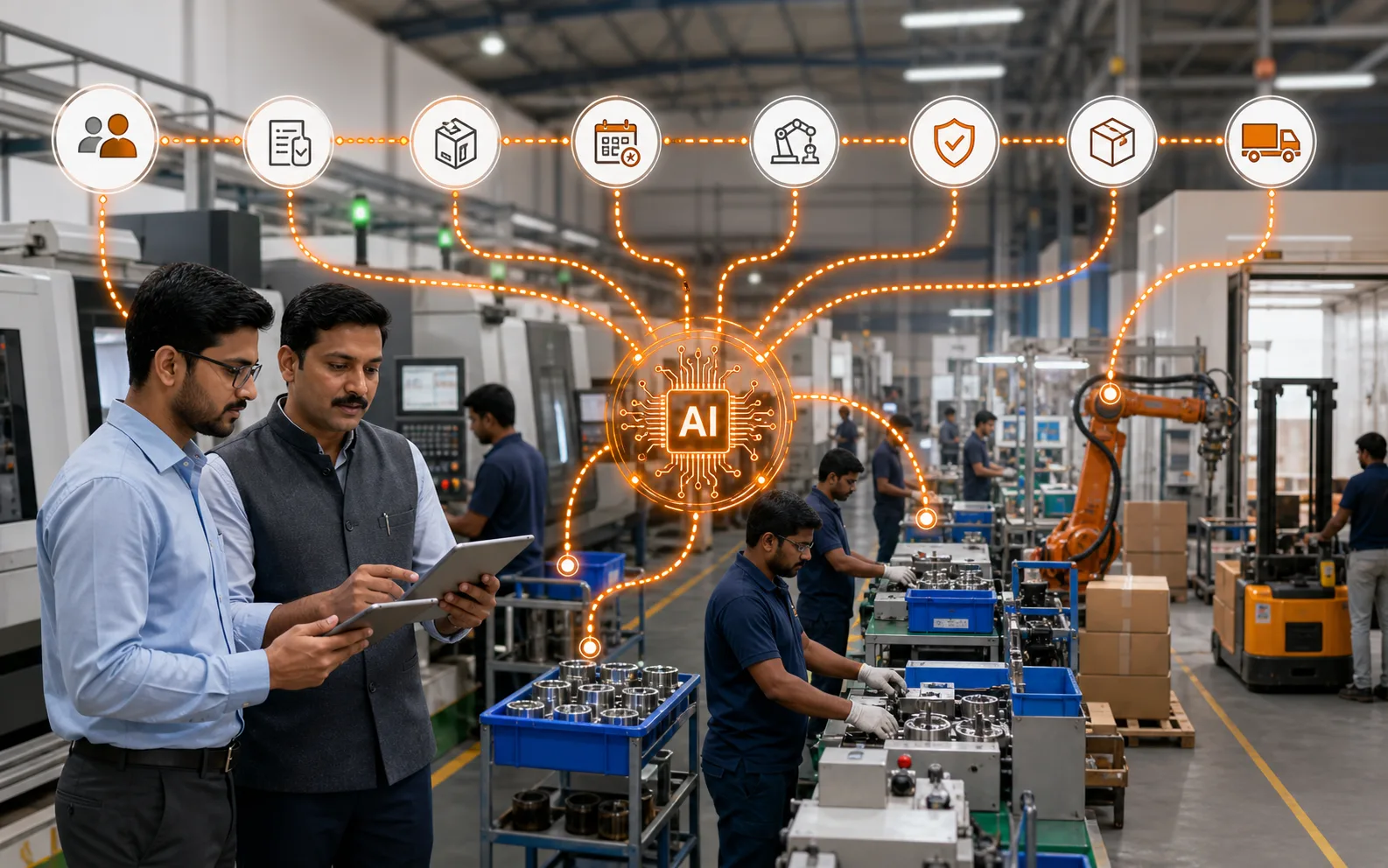
A Manufacturing Alternative to SAP: Optiwise
Run your factory in Optiwise, a manufacturing alternative to SAP Business One with connected operations, AI agents and no-code workflows.
14 Jun 2026Read more →How Do I Know If My Manufacturing Business Really Needs an ERP?
A practical guide for manufacturers to identify when spreadsheets, manual follow-ups, and disconnected systems are no longer enough — and when ERP becomes an operational necessity.
14 Jun 2026Read more →Production Management System Optimized | Optiwise
Learn best practices for optimizing a production management system across planning, scheduling, material readiness, quality, and reporting.
12 Jun 2026Read more →What Is the Best ERP for Pharmaceutical Manufacturing?
Learn how to choose the best ERP for pharmaceutical manufacturing, with guidance on batch control, quality workflows, traceability, inventory, documentation, and GMP discipline.
10 Jun 2026Read more →