
Benefits Of General Ledger Report For Business | Optiwise
Learn why the general ledger report matters for business owners, how it supports financial control, audits, reconciliation, decision-making, and ERP-based visibility.
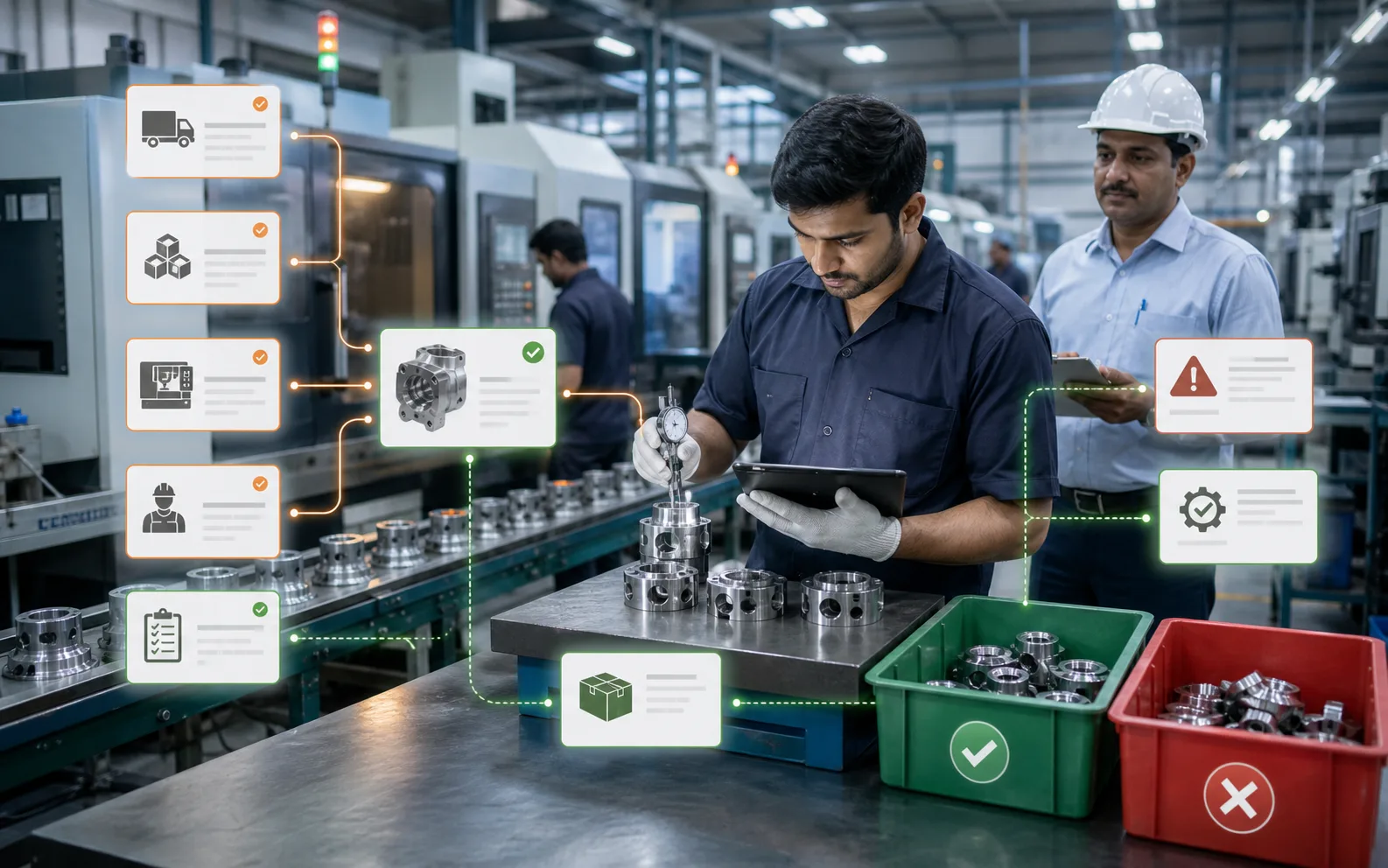
Benefits of General Ledger Report for Business
A general ledger report is not only for accountants. It is the financial memory of the business. It shows how transactions move through accounts, where money was spent, what income was recorded, what liabilities exist, and how balances changed over time.
For SME owners, the general ledger can help answer uncomfortable but necessary questions: where did cash go, why is an expense high, which account needs reconciliation, and whether business activity is being recorded correctly.
AICAN Optiwise helps manufacturers connect operational workflows with reporting discipline so owners can review business performance with more confidence.
What Is a General Ledger Report?
A general ledger report lists transactions account-wise for a selected period. It may include date, voucher number, narration, debit amount, credit amount, running balance, and account details.
It forms the base for financial statements such as trial balance, profit and loss, and balance sheet.
Why the General Ledger Matters
The general ledger matters because it gives transaction-level detail. A profit and loss statement may show total expenses, but the general ledger shows the entries behind those totals.
When an owner wants to understand a number, the ledger helps trace it.
Benefit 1: Financial Transparency
The general ledger gives visibility into how transactions are recorded. Owners can review expense accounts, income accounts, assets, liabilities, advances, loans, and adjustments.
This helps reduce blind spots in financial management.
Benefit 2: Easier Reconciliation
Bank reconciliation, vendor reconciliation, customer reconciliation, tax reconciliation, and internal account review all depend on accurate ledger entries.
If the ledger is clean, reconciliation is faster. If the ledger is messy, every month-end becomes a chase.
Benefit 3: Audit Readiness
Auditors need transaction trails. The general ledger provides account-wise details and supporting references that help explain financial numbers.
Good ledger discipline reduces last-minute stress during audits or reviews.
Benefit 4: Expense Control
Owners can use the general ledger to review spending patterns. Repairs, freight, consumables, discounts, purchase price variance, and indirect expenses can be examined over time.
This helps identify unusual entries or areas where cost control is needed.
Benefit 5: Better Decision-Making
Financial decisions should be based on reliable data. The general ledger helps owners understand whether profit, cash flow, working capital, and liabilities are moving in the right direction.
It also supports budgeting and variance review.
General Ledger and Manufacturing Businesses
Manufacturers have many operational transactions that affect finance: purchases, stock, production consumption, job work, sales, dispatch, returns, rejections, expenses, payments, and receipts.
When operational data is disconnected from financial records, reports become delayed or inconsistent.
ERP helps by reducing the gap between operations and accounts.
Common General Ledger Problems
Entries are posted under wrong accounts.
Narrations are unclear.
Supporting documents are missing.
Adjustments are passed late.
Customer or vendor balances do not reconcile.
Expense categories are too broad to analyse.
These problems make reports less useful.
ERP Role in Ledger Reporting
ERP can help connect source transactions with accounting records. Purchase entries, sales entries, payment records, credit notes, debit notes, and expenses can flow with better structure when processes are defined.
Optiwise by AICAN helps SMEs improve operational visibility, which supports better reporting discipline.
How Owners Should Use Ledger Reports
Owners should not wait until year-end. A monthly review can include major expense accounts, unusual entries, overdue liabilities, customer advances, vendor balances, loan accounts, and reconciliation gaps.
The goal is not to inspect every entry personally. The goal is to ask better questions and catch issues early.
General Ledger Report Checklist
Check account grouping.
Review large or unusual entries.
Verify narrations and references.
Compare month-on-month changes.
Reconcile bank, customer, and vendor balances.
Look for old outstanding amounts.
Ensure adjustments have explanations.
How Optiwise Helps
AICAN Optiwise supports SMEs by connecting business workflows and reporting visibility. When purchase, inventory, sales, dispatch, and finance-related processes are better organized, ledger review becomes more meaningful.
Founder’s Note
At AICAN, we believe owners should not see accounts only as a compliance requirement. Financial reports are decision tools. A clean general ledger helps owners understand the business beneath the surface. Optiwise supports that clarity by improving the operational data that feeds reporting.
FAQs
What is a general ledger report?
It is an account-wise report of financial transactions for a selected period.
Why is the general ledger important?
It supports reconciliation, audit, financial analysis, expense review, and accurate reporting.
Can business owners use general ledger reports?
Yes. Owners can use them to understand expenses, balances, unusual entries, and financial movement.
How does ERP help ledger reporting?
ERP connects transactions and workflows, reducing duplicate entry and improving reporting structure.
Where can I learn more?
Visit AICAN Optiwise and About AICAN.

Related Posts

Kanban System | Optiwise
Learn how a Kanban system works in manufacturing, where it helps, where it fails, and how Optiwise connects Kanban signals with inventory, purchase, and production planning.
12 Jun 2026Read more →Erp In Operations Management | Optiwise
Learn how ERP improves operations management by connecting planning, inventory, purchase, production, quality, dispatch, finance, and reporting.
12 Jun 2026Read more →ERP for FMCG Companies in India
A practical guide to ERP for FMCG companies in India, covering distributor orders, batch tracking, expiry, inventory, production, schemes, costing, and reporting.
11 Jun 2026Read more →
Optiwise, Odoo, Acumatica and Business Central for Manufacturing
Compare manufacturing workflows in Optiwise, Odoo, Acumatica and Dynamics 365 Business Central. See what your factory can run in Optiwise.
11 Jun 2026Read more →