
Is Cloud ERP Suitable for Automotive Factories?
Learn when cloud ERP is suitable for automotive factories, what benefits it offers, what risks to evaluate, and how manufacturers should decide between cloud and on-premise ERP.
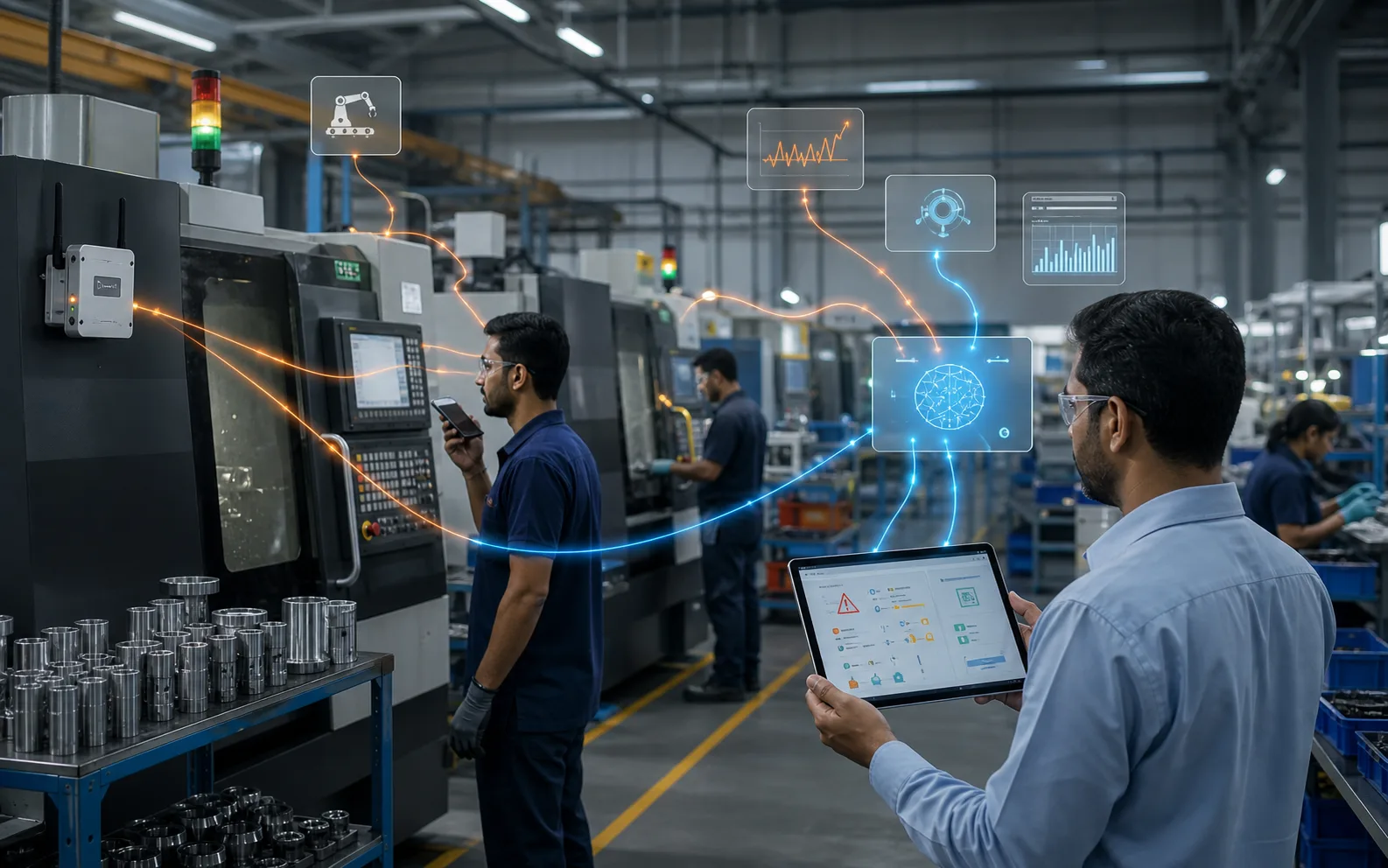
Is Cloud ERP Suitable for Automotive Factories?
Cloud ERP can be suitable for automotive factories when the system is secure, reliable, manufacturing-ready, and implemented with proper shopfloor discipline. The deployment model matters, but it is not the only question. A cloud ERP that does not understand production, inventory, quality, job work, and traceability will not solve factory problems simply because it is cloud-based.
Automotive manufacturers should evaluate cloud ERP with a practical lens: will it help the factory plan better, control material, track production, manage quality, improve dispatch reliability, and give management visibility?
If the answer is yes, cloud ERP can be a strong fit.
AICAN Optiwise supports manufacturers looking for connected operational visibility across departments. For many factories, cloud deployment can make this visibility easier to access, maintain, and scale.
What Cloud ERP Means
Cloud ERP means the ERP system is hosted on cloud infrastructure and accessed through the internet or secure network connection. Users do not usually need to maintain the main application server inside the factory.
This differs from traditional on-premise ERP, where the software is installed on local servers managed by the company or its IT vendor.
Cloud ERP may be accessed from:
- Office desktops.
- Shopfloor terminals.
- Laptops.
- Tablets.
- Mobile devices.
- Multiple plant locations.
The practical advantage is that teams can access the same system without depending heavily on local server maintenance.
Why Automotive Factories Consider Cloud ERP
Automotive factories are under pressure to improve visibility. Management wants current production, inventory, purchase, quality, and dispatch data. Multi-location companies want common reporting. Growing companies want systems that can scale without heavy IT overhead.
Cloud ERP can help with:
- Faster deployment.
- Easier access across locations.
- Lower local server maintenance.
- Centralized updates.
- Better remote visibility for management.
- Easier scalability as users or plants grow.
- Reduced dependence on local IT infrastructure.
For small and mid-sized manufacturers, these benefits can be significant.
Manufacturing Readiness Matters More Than Cloud Label
A common mistake is to evaluate ERP mainly by deployment model. Cloud vs on-premise is important, but manufacturing fit is more important.
An automotive factory needs ERP features such as:
- Customer schedules.
- BOM and routing.
- Production planning.
- Inventory and stores.
- Purchase and supplier follow-up.
- Job work and subcontracting.
- Quality inspection.
- Rework and rejection tracking.
- Traceability.
- Dispatch planning.
- Costing and reporting.
If a cloud ERP cannot handle these workflows, it is not suitable for automotive manufacturing. It may be good software for another business, but not enough for the factory.
Benefits of Cloud ERP for Automotive Manufacturers
Cloud ERP can bring practical benefits when implemented properly.
First, it improves accessibility. Managers, planners, purchase teams, and authorized users can access data from different locations. This is useful for companies with multiple plants, warehouses, or travelling management.
Second, it reduces local server dependency. The factory does not need to manage all infrastructure internally. This can reduce maintenance burden.
Third, updates and improvements can be easier to roll out. Cloud systems often allow smoother upgrades compared with heavily customized on-premise systems.
Fourth, cloud ERP can support faster scaling. As the company adds users, modules, or locations, the system can expand more easily.
Fifth, cloud ERP can improve continuity if local hardware fails, provided the vendor has strong backup and reliability practices.
Concerns Automotive Factories Should Evaluate
Cloud ERP also requires careful evaluation.
Factories should review:
- Internet reliability on the shopfloor.
- Offline or fallback workflows for critical transactions.
- Data security and access control.
- Backup and disaster recovery.
- User permission management.
- Performance during peak usage.
- Integration with machines, barcode scanners, or local devices.
- Vendor support responsiveness.
- Data ownership and export options.
- Compliance with customer or internal IT requirements.
These concerns do not mean cloud ERP is unsuitable. They mean the factory should implement it responsibly.
Internet Reliability Is a Practical Issue
A factory cannot afford daily disruption because the internet is unstable. Before choosing cloud ERP, automotive manufacturers should assess connectivity in production, stores, quality, and dispatch areas.
Important questions include:
- Is internet available in all required areas?
- Is there backup connectivity?
- Are shopfloor devices stable?
- What happens if the connection drops during a transaction?
- Which processes need fallback procedures?
For many factories, these issues can be solved with proper network planning. But they should not be ignored.
Security and Access Control
Cloud ERP must be evaluated for security. Automotive factories may hold sensitive information such as customer schedules, supplier rates, BOMs, drawings references, costs, quality records, and dispatch data.
The system should support:
- Role-based permissions.
- Strong authentication practices.
- Controlled master data changes.
- Audit trails.
- Backup policy.
- User access reviews.
- Data export options.
Security is not only the vendor’s responsibility. The company must also manage user roles, passwords, device access, and internal approval discipline.
Cloud ERP and Shopfloor Adoption
Shopfloor adoption is critical. A cloud ERP may be technically strong but still fail if production, stores, and quality teams find it difficult to use.
The system should work well on the devices the factory actually uses. Transactions should be simple. Screens should support daily workflows. Users should be trained properly. Supervisors should understand the value of timely entries.
Cloud does not remove the need for process discipline. It only changes how the system is hosted and accessed.
Cloud vs On-Premise: How to Decide
Cloud ERP may be suitable when:
- The company wants faster deployment.
- Management needs remote visibility.
- Multiple locations need one system.
- Local IT resources are limited.
- The vendor has strong reliability and support.
- Internet connectivity can be made stable.
- The ERP is manufacturing-ready.
On-premise ERP may be considered when:
- The company has strict internal hosting rules.
- Internet connectivity is extremely unreliable.
- Deep local infrastructure control is required.
- Customer or regulatory requirements demand local hosting.
- The company has strong IT capacity to maintain servers.
For many small and mid-sized automotive manufacturers, cloud ERP is increasingly practical, but the decision should be based on operations, security, and reliability.
Where AICAN Optiwise Fits
AICAN Optiwise is built for manufacturing visibility across planning, production, inventory, purchase, quality, and dispatch. For automotive factories evaluating cloud ERP, the important question is whether the system can support real factory workflows while remaining accessible and manageable.
AICAN focuses on practical adoption, not just software deployment. You can learn more about the company at About AICAN.
Founder’s Note
Cloud ERP should not be sold as magic. It is a deployment model. The real value still comes from clear workflows, reliable data, trained users, and management discipline.
When cloud makes the system easier to access, easier to maintain, and easier to scale, it can be a strong choice. But the factory must still do the hard and useful work of connecting its operations properly.
FAQs
Is cloud ERP suitable for automotive factories?
Yes, cloud ERP can be suitable when it is secure, reliable, manufacturing-ready, and supported by stable connectivity and proper user adoption.
What are the benefits of cloud ERP for manufacturers?
Benefits include easier access, lower local server maintenance, centralized updates, scalability, remote visibility, and better support for multi-location operations.
What risks should factories check before choosing cloud ERP?
Factories should check internet reliability, data security, backup policy, performance, access control, machine or device integration, support quality, and fallback workflows.
Is on-premise ERP better than cloud ERP?
Not always. On-premise may suit companies with strict hosting requirements or poor connectivity. Cloud may suit companies that want easier access, lower IT overhead, and faster scalability.
How does AICAN Optiwise help automotive factories?
AICAN Optiwise helps automotive factories connect production planning, inventory, purchase, quality, dispatch, and reporting in a practical manufacturing ERP environment.

Related Posts

Kanban System | Optiwise
Learn how a Kanban system works in manufacturing, where it helps, where it fails, and how Optiwise connects Kanban signals with inventory, purchase, and production planning.
12 Jun 2026Read more →Erp In Operations Management | Optiwise
Learn how ERP improves operations management by connecting planning, inventory, purchase, production, quality, dispatch, finance, and reporting.
12 Jun 2026Read more →ERP for FMCG Companies in India
A practical guide to ERP for FMCG companies in India, covering distributor orders, batch tracking, expiry, inventory, production, schemes, costing, and reporting.
11 Jun 2026Read more →
Optiwise, Odoo, Acumatica and Business Central for Manufacturing
Compare manufacturing workflows in Optiwise, Odoo, Acumatica and Dynamics 365 Business Central. See what your factory can run in Optiwise.
11 Jun 2026Read more →