
Can Computer Vision Detect Defects Better Than Human Inspectors?
Compare computer vision and human inspection for manufacturing defects, including consistency, speed, judgement, false rejects, training, and ROI.
Can Computer Vision Detect Defects Better Than Human Inspectors?
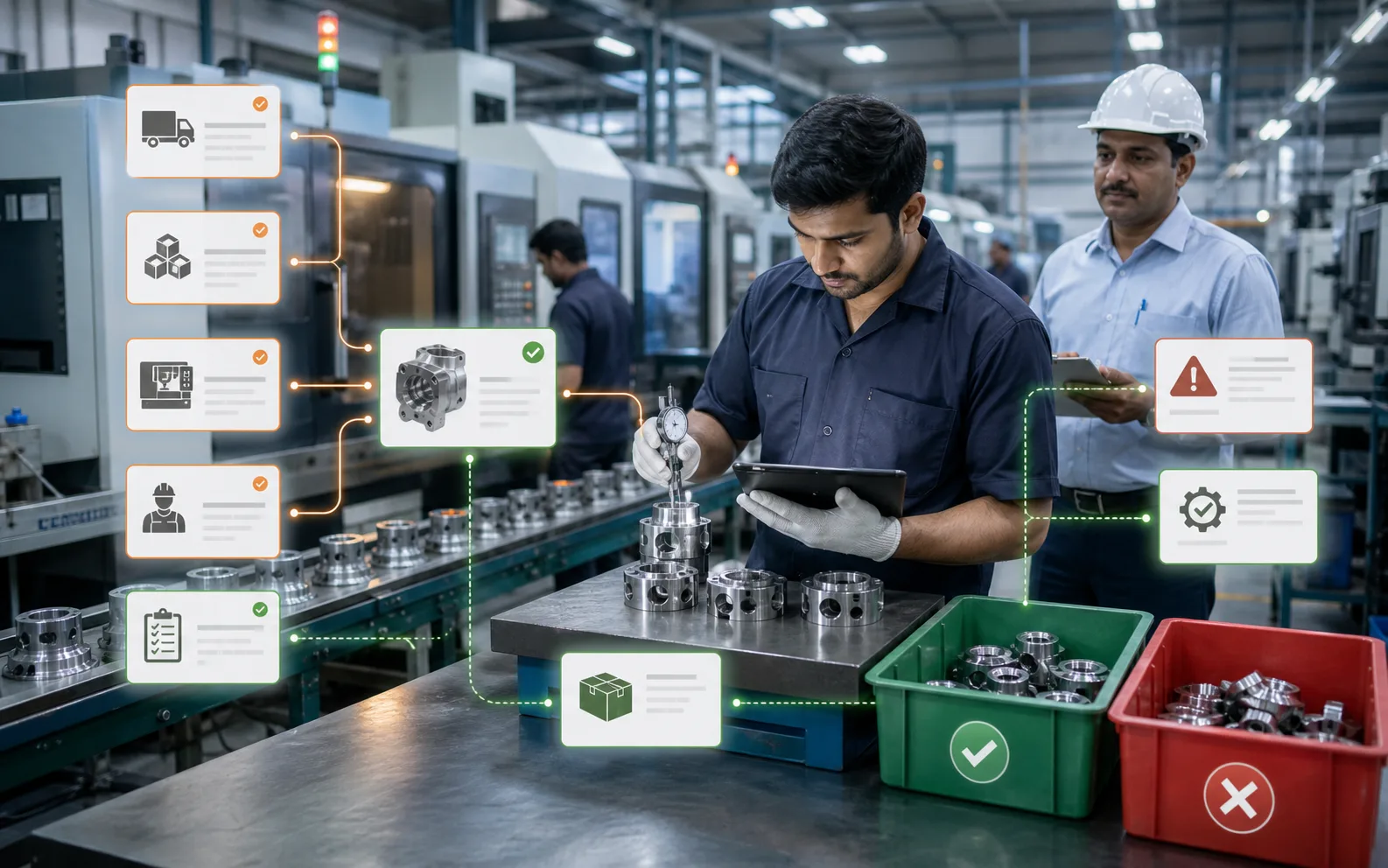
Computer vision can detect some defects better than human inspectors, but not all defects.
It is very good at repetitive visual checks where the defect is visible, consistent, and definable. It does not get tired. It can inspect every part at line speed. It can store images and counts. But humans are still better at judgement, unusual cases, context, touch-based checks, and deciding what to do when the situation does not fit the rule.
The strongest quality systems often combine both: computer vision for consistency and humans for judgement.
For manufacturers using AICAN Optiwise, the goal is not to replace inspection skill. The goal is to make quality decisions faster, more consistent, and better documented.
Where computer vision is stronger
Computer vision is strong when the inspection task is repeatable.
It can check whether a label is present, a code is readable, a part is positioned correctly, a component is missing, a colour is wrong, a fill level is off, or a surface mark is visible. It can apply the same rule again and again without fatigue.
This is useful on fast lines where human attention can drop over time.
Where human inspectors are stronger
Humans are better when the defect is subjective, rare, hard to define, or requires broader context.
An experienced inspector may understand whether a small mark is acceptable for the customer, whether a texture feels wrong, whether a borderline defect needs escalation, or whether a process condition explains the issue. Humans can also adapt quickly when a new defect appears.
Computer vision needs the defect to be visible and the decision rule to be trained or configured.
Fatigue changes inspection quality
Human inspection is mentally demanding.
A person inspecting repetitive parts for hours may miss defects because of fatigue, distraction, lighting, speed pressure, or inconsistent criteria. This is not a moral failure. It is the nature of repetitive visual work.
Computer vision helps by taking over the most repetitive checks and giving inspectors more time for review, root cause, and exceptions.
Vision systems can also make mistakes
Computer vision is not perfect.
It can miss defects if lighting changes, if the defect is outside the trained pattern, if the camera is dirty, if products vary more than expected, or if the inspection rule is poorly tuned. It can reject good products if thresholds are too strict.
False rejects and false accepts must be measured during pilot and production review.
The best comparison is by defect type
Do not ask whether computer vision is better in general.
Ask whether it is better for this defect, on this product, at this speed, under this lighting, with this level of variation. A missing cap may be easy. A subtle surface scratch on reflective metal may be difficult. A printed date code may be easy with good contrast but hard if ink quality varies.
The decision should be based on real samples.
ROI depends on volume and defect cost
Computer vision makes more sense when defect cost, inspection volume, or customer risk is high.
If a defect is rare and low impact, manual inspection may be enough. If defects are frequent, costly, fast-moving, or customer-facing, automated inspection may justify itself.
ROI should include scrap, rework, customer complaints, inspection labour, delayed detection, and traceability value.
Human review still matters
Even with computer vision, someone should review patterns.
Quality teams need to study rejected images, tune thresholds, identify process causes, and decide corrective actions. Operators need to know what to do when a reject happens. Maintenance may need to adjust fixtures, lighting, or machines.
Vision creates evidence. People still improve the process.
Where AICAN Optiwise fits
AICAN Optiwise can help connect vision inspection results with production dashboards, defect trends, alerts, and review workflows. This helps teams see whether defect detection is improving the factory, not just rejecting parts.
AICAN builds for manufacturers that want practical systems where technology supports people and decisions. Learn more at About AICAN.
Founder’s Note
A camera does not have judgement. A person does not have unlimited attention. Good factories use both wisely. Let computer vision handle the repetitive visual burden, and let people focus on context, exceptions, and improvement.
FAQs
Is computer vision more accurate than human inspection?
For some repeatable visual defects, it can be more consistent. For subjective or complex defects, human judgement may still be stronger.
Can computer vision inspect every part?
Yes, if the system is designed for the line speed, camera position, lighting, and inspection requirement.
Will vision systems remove inspectors?
Usually they change the role. Inspectors may focus more on review, exceptions, root cause, and process improvement.
What causes false rejects?
Lighting changes, product variation, dirty lenses, poor thresholds, and unclear defect definitions can all cause false rejects.
How does AICAN Optiwise support quality teams?
It can connect inspection results to dashboards and trends so quality teams can act on defect patterns.

Related Posts

Kanban System | Optiwise
Learn how a Kanban system works in manufacturing, where it helps, where it fails, and how Optiwise connects Kanban signals with inventory, purchase, and production planning.
12 Jun 2026Read more →Erp In Operations Management | Optiwise
Learn how ERP improves operations management by connecting planning, inventory, purchase, production, quality, dispatch, finance, and reporting.
12 Jun 2026Read more →ERP for FMCG Companies in India
A practical guide to ERP for FMCG companies in India, covering distributor orders, batch tracking, expiry, inventory, production, schemes, costing, and reporting.
11 Jun 2026Read more →
Optiwise, Odoo, Acumatica and Business Central for Manufacturing
Compare manufacturing workflows in Optiwise, Odoo, Acumatica and Dynamics 365 Business Central. See what your factory can run in Optiwise.
11 Jun 2026Read more →