
Cost of sensor network infrastructure
Understand the real cost of sensor network infrastructure in manufacturing, including sensors, gateways, wiring, installation, software, training, maintenance, and scaling.
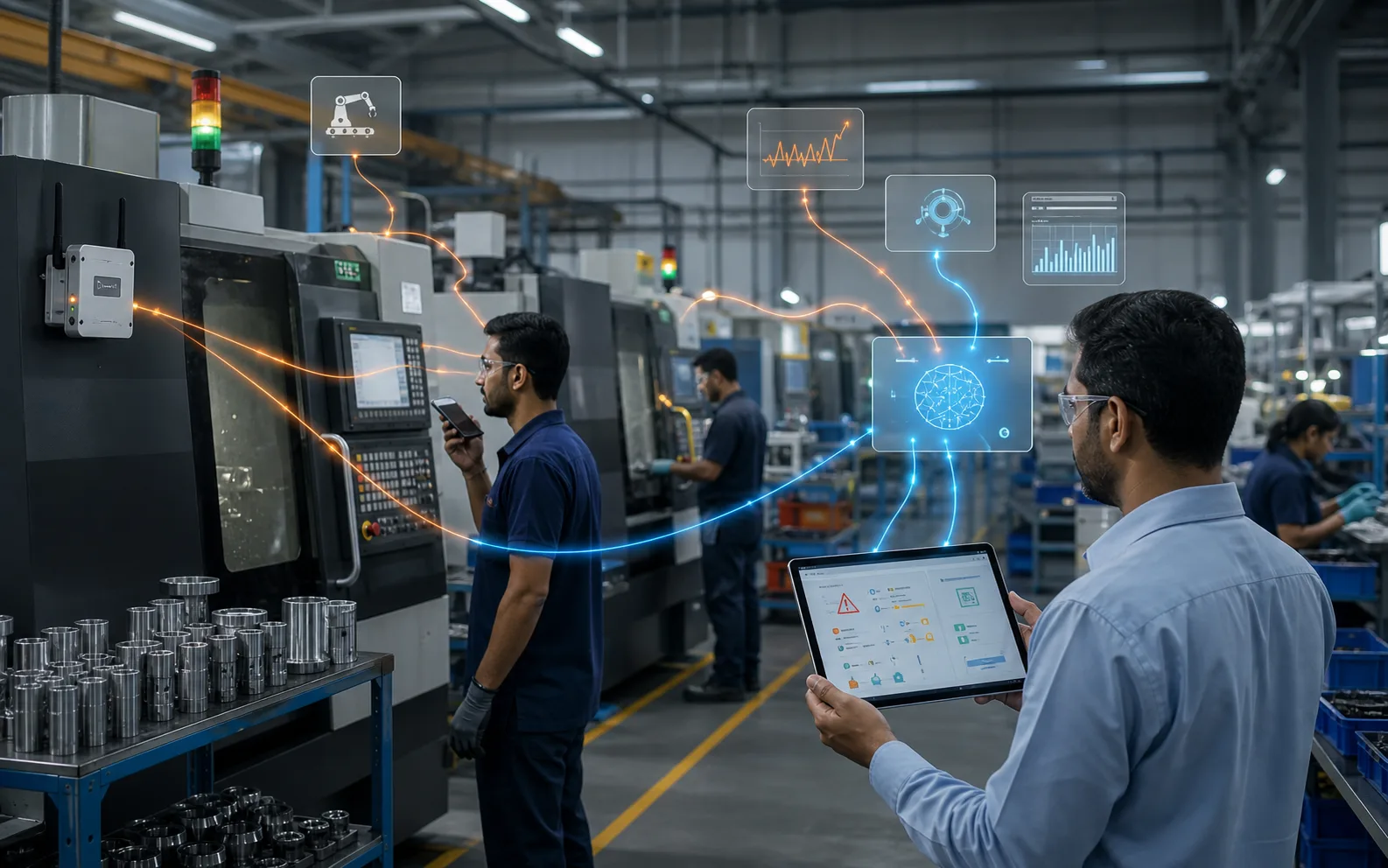
Cost of Sensor Network Infrastructure
The cost of sensor network infrastructure is not just the cost of sensors.
A factory may need sensors, cables, connectors, brackets, panels, gateways, PLC inputs, network equipment, software configuration, dashboards, installation labour, training, documentation, spares, and maintenance routines. The final cost depends on machine age, environment, number of signals, integration complexity, and how much the factory wants to automate.
A cheap sensor project can become expensive if the infrastructure is poorly planned. A well-planned infrastructure can start small and scale without rebuilding everything.
For manufacturers evaluating AICAN Optiwise, the right question is not “what does one sensor cost?” It is “what infrastructure do we need to make sensor data useful and reliable?”
Sensors are only the first cost
Sensors are the visible part of the project.
A plant may need proximity sensors for counting, current sensors for machine status, vibration sensors for maintenance, temperature sensors for process monitoring, pressure sensors for utilities, flow sensors for consumption, and vision sensors for inspection. Each type has a different price range and installation requirement.
But the device price alone does not tell the project cost. The sensor must be mounted, powered, connected, protected, named, tested, and mapped into a system.
Installation labour can be significant
Installation often costs more than expected.
Teams may need to stop machines, access panels, route cables, install brackets, drill mounts, configure controllers, test signals, and validate dashboard readings. In older plants, finding clean signal points may take time. In harsh environments, extra protection may be needed.
The more machines involved, the more important installation planning becomes.
Gateways and networking create the data path
Sensor data needs a route from the machine to the dashboard.
That route may include PLCs, IoT gateways, industrial PCs, network switches, routers, Wi-Fi access points, cellular devices, or cloud connections. A small pilot may use one gateway. A plant-wide rollout may require multiple gateways and a more structured network design.
Network cost should include reliability, security, and maintenance, not only hardware.
Software and dashboard setup are part of the investment
Sensor signals must be turned into useful views.
The software layer needs machine names, signal mapping, units, thresholds, alert rules, dashboards, reports, and user permissions. If a sensor shows pressure, the dashboard must know the range, unit, normal condition, and abnormal threshold. If a sensor counts parts, the system must know which line, machine, and job it relates to.
AICAN Optiwise helps manufacturers turn these connected signals into usable dashboards, alerts, and reports.
Training and change management cost time
A sensor network changes how people work.
Operators may need to respond to alerts. Supervisors may need to review dashboards. Maintenance teams may need to inspect sensors. Managers may need to use reports in daily reviews. If training is skipped, the system may be installed but underused.
Training cost is not waste. It protects adoption.
Maintenance and spares should be budgeted
Sensor networks need upkeep.
Sensors can fail, cables can loosen, connectors can corrode, wireless batteries can drain, gateways can go offline, and dashboards may need updates as processes change. Critical sensors need spares and replacement procedures.
Budgeting only for installation creates problems later. Budget for operation.
Start with a phased cost model
The best cost plan often has phases.
A pilot phase proves one use case. A line-level phase expands to important machines. A plant-level phase standardizes infrastructure. A management phase connects sensor data to reports, alerts, and decision routines.
This staged approach reduces risk and prevents buying infrastructure before the value is clear.
Compare cost with operating loss
Infrastructure cost should be compared with the losses it helps reduce.
If sensors reduce downtime, improve production visibility, reduce energy waste, improve quality response, or make maintenance more proactive, the investment may be justified. If the project only creates dashboards nobody uses, cost will feel high no matter how cheap the hardware was.
The business case should connect signals to decisions.
Where AICAN Optiwise fits
AICAN Optiwise helps manufacturers convert sensor network infrastructure into operational visibility. It supports dashboards, alerts, and reports that make sensor data usable for production, maintenance, utilities, and management.
AICAN works with manufacturers that want practical digitisation with clear business value. Learn more at About AICAN.
Founder’s Note
The cheapest sensor network is not the one with the lowest hardware bill. It is the one that the factory can trust, maintain, and scale without rework. Spend carefully, start where the loss is real, and build infrastructure that earns its place.
FAQs
What costs should I include in a sensor network budget?
Include sensors, cables, connectors, brackets, gateways, panels, networking, software setup, dashboards, training, spares, and maintenance.
Is wiring a major cost?
It can be, especially across multiple machines, harsh environments, or older plants.
Should I start with a pilot?
Yes. A focused pilot helps prove value before larger infrastructure spending.
Can sensor infrastructure reduce operating cost?
It can help reduce downtime, waste, energy loss, and manual reporting effort when teams act on the data.
How does AICAN Optiwise fit into sensor infrastructure?
It helps turn connected sensor signals into dashboards, alerts, reports, and workflows that support factory decisions.

Related Posts

Kanban System | Optiwise
Learn how a Kanban system works in manufacturing, where it helps, where it fails, and how Optiwise connects Kanban signals with inventory, purchase, and production planning.
12 Jun 2026Read more →Erp In Operations Management | Optiwise
Learn how ERP improves operations management by connecting planning, inventory, purchase, production, quality, dispatch, finance, and reporting.
12 Jun 2026Read more →ERP for FMCG Companies in India
A practical guide to ERP for FMCG companies in India, covering distributor orders, batch tracking, expiry, inventory, production, schemes, costing, and reporting.
11 Jun 2026Read more →
Optiwise, Odoo, Acumatica and Business Central for Manufacturing
Compare manufacturing workflows in Optiwise, Odoo, Acumatica and Dynamics 365 Business Central. See what your factory can run in Optiwise.
11 Jun 2026Read more →