
Cost Reduction Strategies In Process Manufacturing | Optiwise
Learn practical cost reduction strategies for process manufacturing, including yield, waste, energy, inventory, maintenance, procurement, and how AICAN Optiwise improves control.

Cost Reduction Strategies in Process Manufacturing
Process manufacturing cost does not leak from one place. It leaks from many small places at the same time.
A little extra raw material consumption. A little yield loss. A batch held for quality. A pump breakdown. A rush purchase. A power-heavy process running at the wrong time. Extra packing waste. Finished goods sitting longer than planned. None of these may look dramatic alone, but together they quietly reduce margin.
Cost reduction in process manufacturing is not about cutting corners. It is about reducing avoidable waste while protecting quality, safety, compliance, and customer trust.
For SMEs, the best cost reduction strategy is visibility plus discipline.
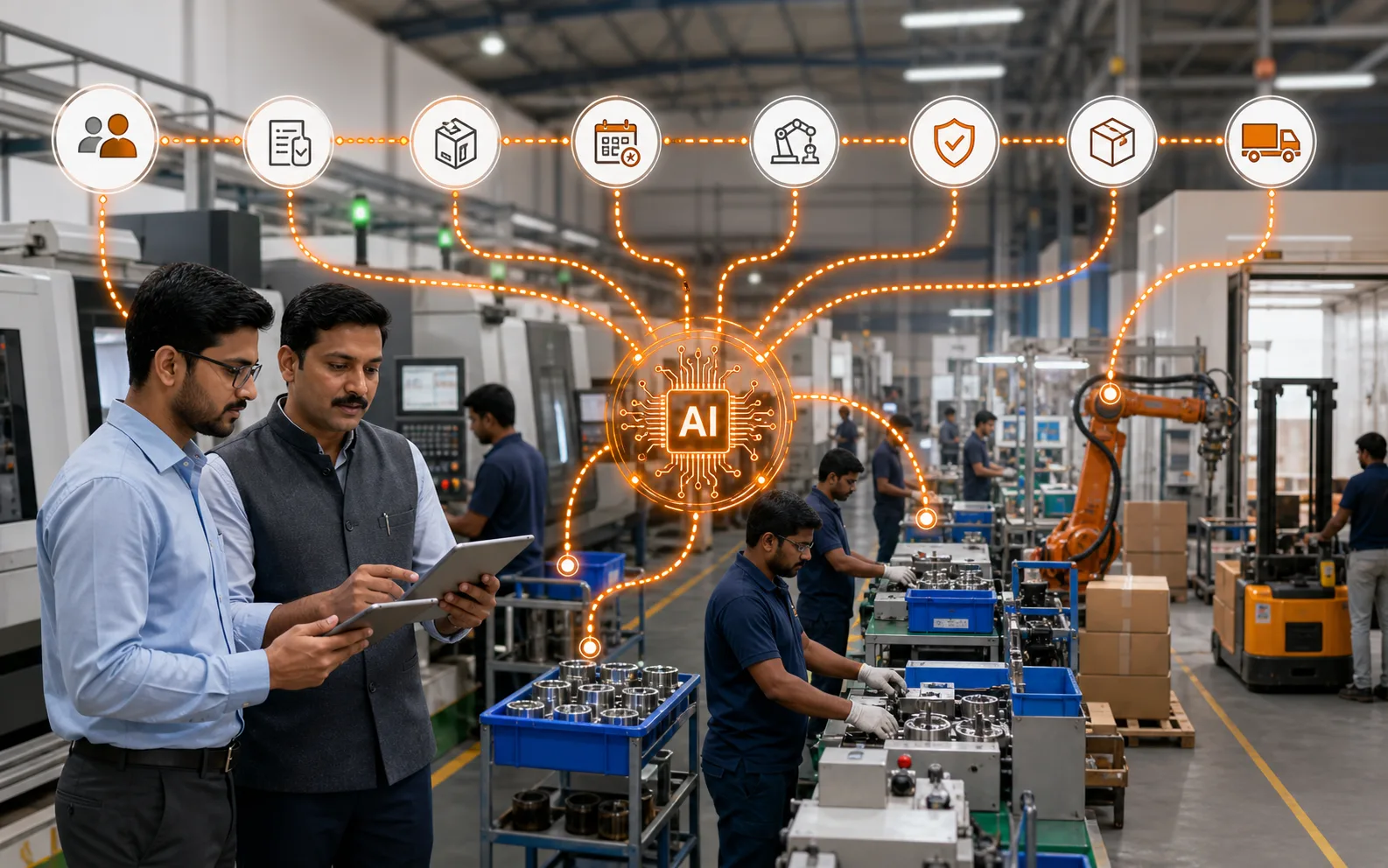
AICAN Optiwise helps process manufacturers connect inventory, purchase, production, quality, dispatch, and reporting so cost improvement becomes measurable.
What Is Process Manufacturing?
Process manufacturing produces goods through formulas, recipes, mixtures, or continuous processes.
It is common in industries such as:
- Chemicals
- Paints
- Food and beverages
- Pharmaceuticals
- Cosmetics
- Adhesives
- Plastics processing
- Lubricants
- Textiles and dyes
Unlike discrete manufacturing, where individual parts are assembled, process manufacturing often deals with batches, yields, quality parameters, shelf life, and conversions.
Why Cost Reduction Is Different in Process Manufacturing
Process manufacturing has unique cost drivers.
Costs are affected by:
- Raw material yield
- Formula accuracy
- Process loss
- Energy consumption
- Batch rejection
- Rework
- Quality testing
- Cleaning and changeover
- Storage conditions
- Shelf life
- Packaging waste
- Regulatory documentation
A small process deviation can affect a full batch. That makes control especially important.
Strategy 1: Improve Yield
Yield is one of the biggest cost levers.
If a process should produce 1,000 kg but regularly produces 960 kg, the missing 40 kg is cost. It may be evaporation, spillage, residue, measurement error, handling loss, or process inefficiency.
Improve yield by:
- Tracking standard vs actual output
- Recording batch-wise consumption
- Investigating abnormal loss
- Improving measurement accuracy
- Training operators on process discipline
- Reviewing equipment condition
- Monitoring process parameters
Yield improvement goes directly to margin.
Strategy 2: Control Raw Material Consumption
Raw material is often the largest cost.
Businesses should review:
- Formula accuracy
- Substitute material rules
- Batch-wise issue quantity
- Excess issue and returns
- Supplier quality variation
- Moisture or purity variation
- Storage loss
A connected system helps compare planned material requirement with actual consumption.
Strategy 3: Reduce Rejection and Rework
Rework consumes material, labour, machine time, quality effort, and energy.
Reduce rework by:
- Capturing rejection reasons
- Tracking supplier quality
- Monitoring in-process quality
- Using standard operating procedures
- Reviewing batch deviations
- Training operators
- Improving preventive maintenance
Quality cost should be visible, not hidden inside production overhead.
Strategy 4: Improve Inventory Planning
Too much inventory blocks cash. Too little inventory stops production.
Process manufacturers should track:
- Shelf-life items
- Slow-moving raw material
- Expiry risk
- Batch-wise stock
- Minimum and reorder levels
- Pending purchase orders
- Finished goods ageing
Inventory reduction should be thoughtful. Cutting stock blindly can create production stoppages.
Strategy 5: Reduce Energy and Utility Waste
Energy is a major cost in many process industries.
Cost reduction may come from:
- Monitoring high-energy processes
- Improving equipment efficiency
- Avoiding unnecessary idle running
- Planning production to reduce heat-up and cleaning cycles
- Maintaining compressors, boilers, pumps, chillers, and motors
- Tracking energy per unit output
Energy cost should be measured against production output, not only total monthly bill.
Strategy 6: Strengthen Preventive Maintenance
Breakdowns are expensive in process manufacturing because they can affect output, quality, safety, and delivery.
Preventive maintenance helps reduce:
- Downtime
- Batch failure
- Urgent spare purchases
- Quality variation
- Safety risk
- Production rescheduling
Maintenance should be planned around production schedules and critical equipment.
Strategy 7: Improve Procurement Control
Procurement affects cost through rates, quality, lead time, MOQ, and supplier reliability.
Cost reduction in procurement includes:
- Tracking supplier-wise rates
- Negotiating based on consumption patterns
- Avoiding emergency purchases
- Consolidating demand where practical
- Monitoring supplier quality
- Reviewing lead time performance
- Reducing excess inventory caused by poor MOQ planning
Purchase savings that create production risk are not true savings.
Strategy 8: Use Better Reporting
Cost reduction fails when the business cannot measure the problem.
Management should review:
- Yield variance
- Material consumption variance
- Rejection rate
- Energy per unit
- Downtime reasons
- Slow-moving stock
- Supplier delays
- Batch profitability
- Dispatch delays
Reports should lead to action owners.
How Optiwise Helps Process Manufacturers Reduce Cost
Optiwise by AICAN helps by connecting operating data across departments.
It supports visibility into:
- Inventory movement
- Purchase planning
- BOM or formula-based material requirements
- Production planning
- Stock issues and receipts
- Finished goods
- Dispatch readiness
- Reports and dashboards
This helps teams identify where cost is increasing: material, yield, inventory, purchase, production delay, or dispatch inefficiency.
Practical Cost Reduction Plan
- Pick the top 10 high-cost products or batches.
- Compare standard vs actual material consumption.
- Review yield losses.
- Identify top rejection reasons.
- Review slow-moving and expiry-risk stock.
- Track energy use against output.
- Review supplier rate and quality variation.
- Plan preventive maintenance for bottleneck equipment.
- Set one cost owner per improvement area.
- Review monthly and keep only measurable actions.
Founder’s Note
At AICAN, we believe cost reduction should never become quality reduction. In manufacturing, the right cost saving comes from fewer surprises, less waste, better planning, and clearer ownership.
With Optiwise, we help SMEs see the operating data behind cost so improvements can be practical and repeatable.
Learn more at About AICAN.
FAQs
What is cost reduction in process manufacturing?
It is the reduction of avoidable cost in material, yield loss, energy, rejection, inventory, maintenance, procurement, and production flow.
What is the biggest cost in process manufacturing?
Raw material is often the largest cost, but energy, yield loss, rework, and downtime can also be significant.
How can manufacturers reduce process loss?
Track standard vs actual output, investigate batch deviations, improve measurement, maintain equipment, and train operators.
Should cost reduction reduce inventory?
Yes, but carefully. Inventory should be optimized, not blindly reduced in a way that risks production stoppage.
How does Optiwise help?
AICAN Optiwise connects inventory, purchase, production, dispatch, and reporting so process manufacturers can see and reduce avoidable cost.

Related Posts
A Manufacturing Alternative to SAP: Optiwise
Run your factory in Optiwise, a manufacturing alternative to SAP Business One with connected operations, AI agents and no-code workflows.
14 Jun 2026Read more →How Do I Know If My Manufacturing Business Really Needs an ERP?
A practical guide for manufacturers to identify when spreadsheets, manual follow-ups, and disconnected systems are no longer enough — and when ERP becomes an operational necessity.
14 Jun 2026Read more →Production Management System Optimized | Optiwise
Learn best practices for optimizing a production management system across planning, scheduling, material readiness, quality, and reporting.
12 Jun 2026Read more →What Is the Best ERP for Pharmaceutical Manufacturing?
Learn how to choose the best ERP for pharmaceutical manufacturing, with guidance on batch control, quality workflows, traceability, inventory, documentation, and GMP discipline.
10 Jun 2026Read more →