
Data collection and analytics from sensors
Learn how industrial sensor data is collected, cleaned, contextualized, analyzed, and converted into practical manufacturing decisions.
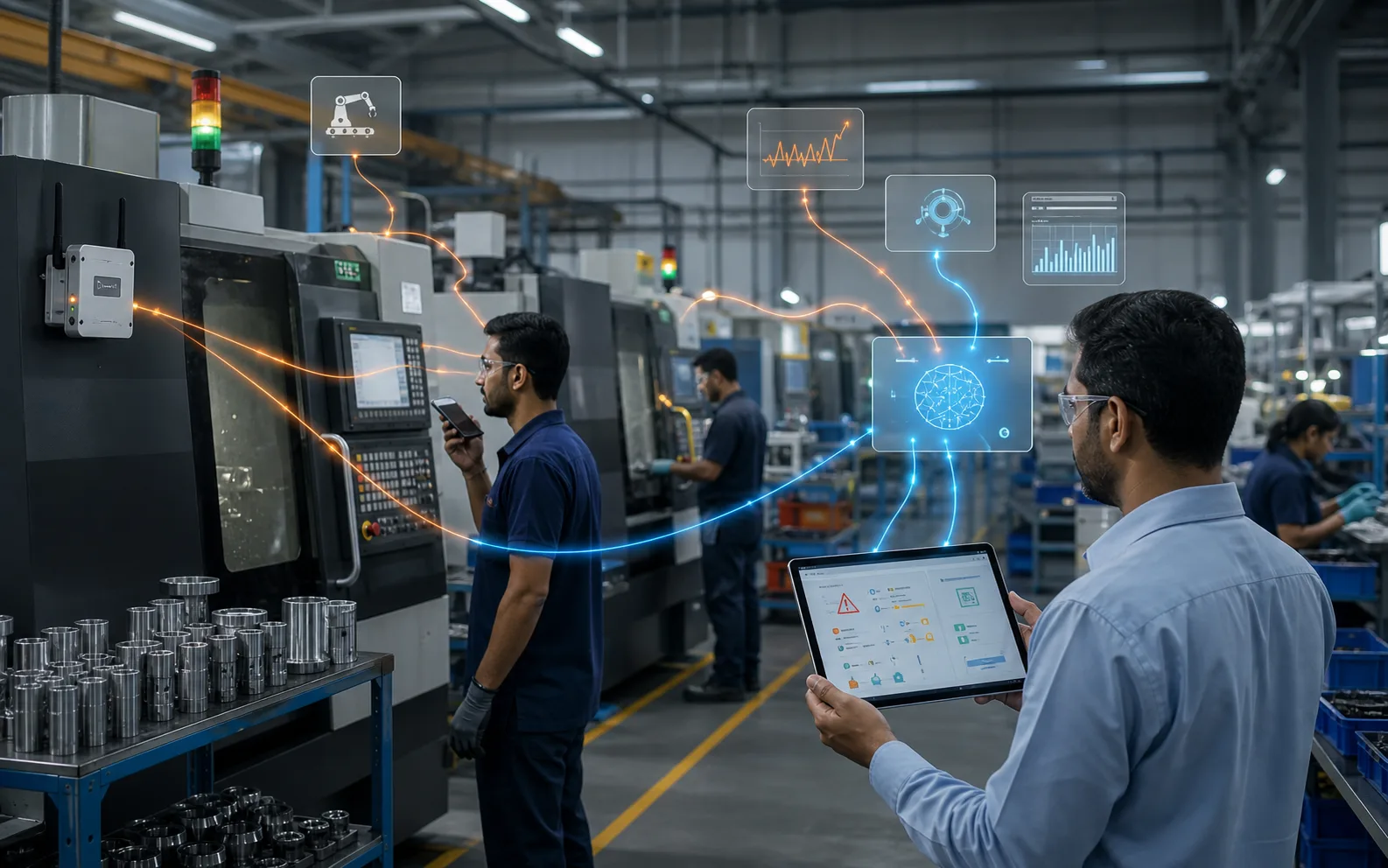
Data Collection and Analytics From Sensors
Sensor analytics starts with a simple question: what should the factory do differently because this signal exists?
A sensor can collect temperature, pressure, vibration, current, cycle count, machine status, level, flow, speed, or part presence. But data collection alone does not improve production. The value appears when data is cleaned, organized, connected to context, and reviewed by people who can act.
Factories do not need more numbers. They need better decisions.
For manufacturers using AICAN Optiwise, sensor data can become useful analytics only when it is tied to machines, shifts, products, downtime reasons, quality events, and maintenance actions.
Sensor data begins as a raw signal
A sensor first creates a raw signal.
That signal may be analog, digital, pulse-based, or protocol-based. It may come through a PLC, IoT gateway, controller, industrial PC, or direct device connection. At this stage, the data may only show a value or state.
Raw data needs interpretation. A number like 16.2 means little unless the system knows it is current, pressure, temperature, vibration, or flow, and which machine it belongs to.
Context turns data into information
The same sensor reading can mean different things in different contexts.
A current spike during startup may be normal. The same spike during steady running may indicate stress. A low speed reading during planned changeover is not a production loss. The same reading during full production is a problem.
Useful analytics connects sensor data with job, shift, machine, operator input, product, planned downtime, maintenance activity, and quality records.
Without context, dashboards can mislead people.
Data quality must be checked early
Bad data creates bad analytics.
Before building reports, verify whether the sensor is reading correctly, updating consistently, scaled properly, timestamped accurately, and mapped to the correct machine. Check whether readings survive network drops, machine restarts, and shift changes.
A data quality issue discovered after managers start trusting reports is much harder to fix.
Analytics should answer operational questions
Good sensor analytics answers questions that matter on the shop floor.
Examples include:
- Which machine stops most often?
- Which line is behind target right now?
- Which product causes more short stops?
- Which machine consumes energy while idle?
- Which compressor pressure drop repeats at night?
- Which vibration trend needs maintenance attention?
- Which process condition changed before quality rejection?
These questions create better analytics than generic charts.
Alerts are part of analytics
Analytics is not only historical reporting.
A sensor signal can trigger an alert when a value crosses a threshold, a machine stops unexpectedly, a count falls behind plan, or a condition changes abnormally. Alerts help teams act during the shift, not only after reviewing reports later.
The alert must be useful. Too many alerts create fatigue. Too few alerts hide problems. Good alert design includes priority, owner, timing, escalation, and closure.
Trends reveal patterns that events hide
A single reading may not matter. A trend may tell the story.
Vibration slowly increasing, temperature drifting, current rising over weeks, pressure fluctuating every night, or short stops increasing during one product run can all reveal underlying problems.
Trend analytics helps factories move from reaction to prevention.
Dashboards should be role-based
Different people need different analytics.
Operators need clear prompts and current status. Supervisors need exceptions, target versus actual, and downtime views. Maintenance needs asset health and repeated fault patterns. Management needs performance, risk, and improvement priorities.
One dashboard for everyone usually becomes too crowded for anyone.
Analytics should lead to action records
If data reveals a problem, the system should help the factory close the loop.
Who responded? What was found? What action was taken? Did the issue repeat? Did the metric improve after correction?
Analytics without action tracking becomes observation. The goal is improvement.
Where AICAN Optiwise fits
AICAN Optiwise helps manufacturers convert sensor and machine signals into dashboards, alerts, reports, and operational insights. It supports the practical layer between raw sensor data and factory decisions.
AICAN works with manufacturers that want analytics grounded in real production, maintenance, quality, and management workflows. Learn more at About AICAN.
Founder’s Note
Data becomes valuable when it changes the next decision. A factory can collect millions of readings and still operate blindly if nobody knows what to do with them. Start with the decision, then build the data collection and analytics around it.
FAQs
What data can industrial sensors collect?
They can collect machine status, counts, temperature, pressure, vibration, current, flow, level, speed, position, and environmental readings.
Is sensor analytics the same as AI?
No. Many useful analytics start with dashboards, trends, thresholds, and disciplined review before advanced AI is needed.
Why is context important in sensor analytics?
Context explains whether a reading is normal, abnormal, planned, or actionable.
How do I avoid bad analytics?
Validate sensor data, check scaling, confirm timestamps, map signals correctly, and review reports with shop-floor teams.
How does AICAN Optiwise help with analytics?
It can connect sensor data to dashboards, alerts, and reports that support practical manufacturing decisions.

Related Posts

Kanban System | Optiwise
Learn how a Kanban system works in manufacturing, where it helps, where it fails, and how Optiwise connects Kanban signals with inventory, purchase, and production planning.
12 Jun 2026Read more →Erp In Operations Management | Optiwise
Learn how ERP improves operations management by connecting planning, inventory, purchase, production, quality, dispatch, finance, and reporting.
12 Jun 2026Read more →ERP for FMCG Companies in India
A practical guide to ERP for FMCG companies in India, covering distributor orders, batch tracking, expiry, inventory, production, schemes, costing, and reporting.
11 Jun 2026Read more →
Optiwise, Odoo, Acumatica and Business Central for Manufacturing
Compare manufacturing workflows in Optiwise, Odoo, Acumatica and Dynamics 365 Business Central. See what your factory can run in Optiwise.
11 Jun 2026Read more →