
Difference Between Manufacturing And Production | Optiwise
Understand the difference between manufacturing and production, how each term applies in factories, and how Optiwise helps manage end-to-end manufacturing operations.
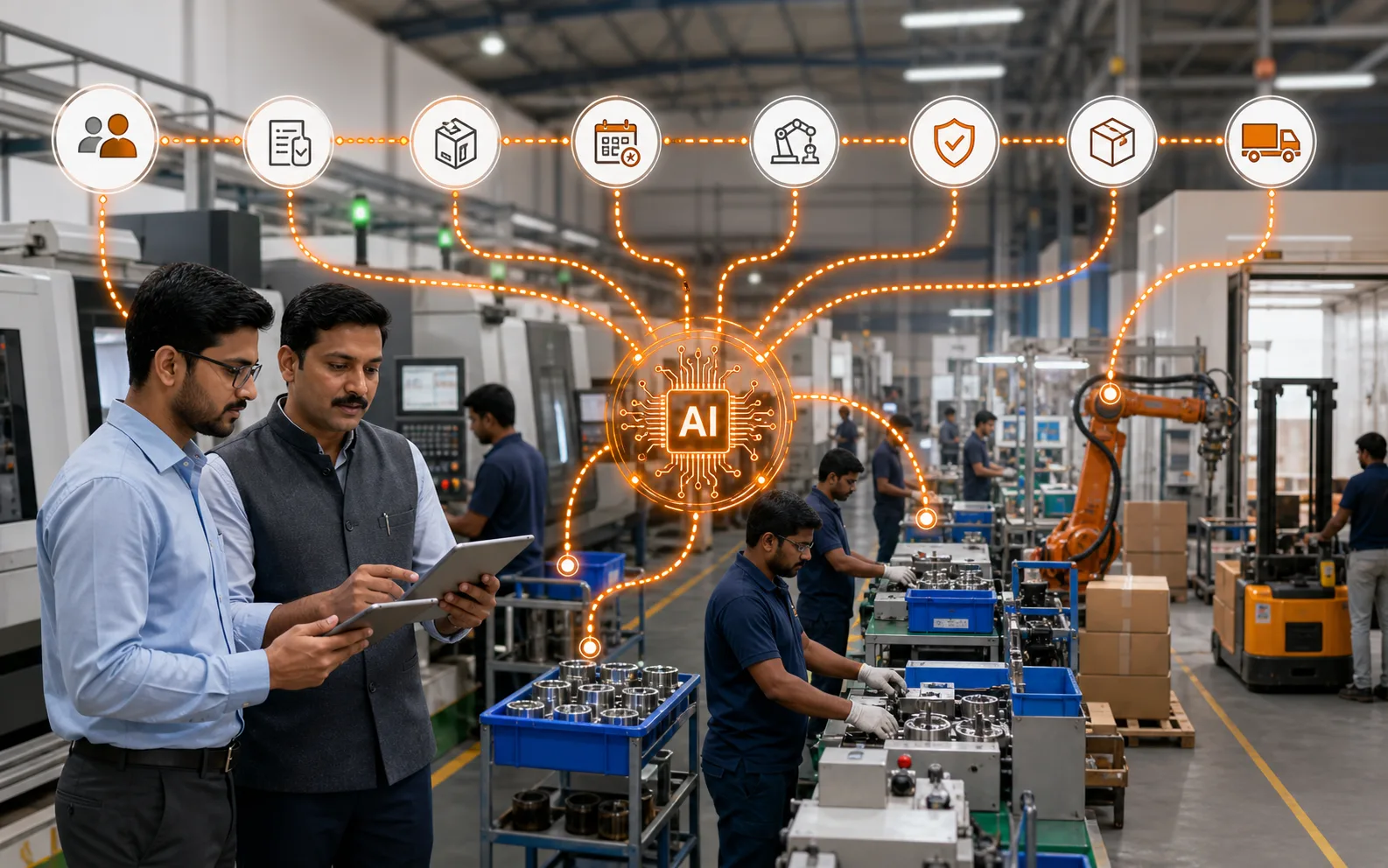
Difference Between Manufacturing and Production: A Practical Factory Guide
Manufacturing and production are often used as if they mean the same thing. In everyday conversation, that is understandable. But in business operations, the difference matters.
Production is the broader act of creating output. Manufacturing is a specific type of production where raw materials, components, labour, machines, and processes are used to make physical goods.
A factory manufactures products. A software company produces software. A farm produces crops. A machine shop manufactures parts. A film studio produces a movie. A packaging unit manufactures cartons.
For a manufacturing business, the distinction matters because software, reports, costing, inventory, and planning must reflect the real flow of physical goods.
AICAN Optiwise is built for manufacturers who need visibility from raw material purchase to production, inventory, dispatch, sales, and reporting.
What Is Production?
Production means creating goods or services by using resources.
Those resources may include labour, machines, land, capital, knowledge, time, or technology.
Production can create physical goods or intangible services. A consulting firm produces advice. A power plant produces electricity. A factory produces finished goods. A bakery produces bread. A designer produces a logo.
The word production is broad. It focuses on output creation.
What Is Manufacturing?
Manufacturing is the process of converting raw materials, components, or inputs into finished physical goods through machines, labour, tools, and defined processes.
Manufacturing usually involves:
- Raw material procurement
- BOMs and recipes
- Production planning
- Machine operations
- Labour allocation
- WIP management
- Quality checks
- Packing
- Finished goods inventory
- Dispatch
Manufacturing is a subset of production. All manufacturing is production, but not all production is manufacturing.
Simple Difference
Production is broader. Manufacturing is more specific.
Production can create goods or services. Manufacturing creates physical goods.
Production may or may not involve machines. Manufacturing usually involves tools, machines, labour, and shop-floor processes.
Production focuses on output. Manufacturing focuses on transformation of material into goods.
Manufacturing Example
A chemical company buys raw materials, follows a batch recipe, processes them in reactors, checks quality, packs the finished chemical, and dispatches it to customers.
That is manufacturing.
There is physical transformation. Inventory changes form. Raw material becomes finished goods. Quality, batch traceability, and production costing matter.
Production Example
A training company creates an online course. It uses instructors, scripts, recording equipment, editing, and a platform. It produces a service or digital product, but it is not manufacturing in the traditional physical-goods sense.
This is production, but not manufacturing.
Why the Difference Matters for ERP
Manufacturing ERP must handle things that generic production tracking may not.
It must manage item masters, BOMs, raw material stock, WIP, finished goods, batch or serial tracking, job work, quality checks, purchase planning, costing, and dispatch documents.
If a system treats manufacturing like simple output entry, the business loses visibility.
For example, an owner does not only need to know that 1,000 units were produced. They need to know which raw material was consumed, which batch was used, what wastage occurred, what labour or machine time was involved, what quality result was recorded, and whether the finished goods are ready to dispatch.
That is the difference between basic production entry and manufacturing control.
Why Manufacturers Need Connected Systems
A manufacturing company has many linked decisions.
Sales demand affects production planning. Production planning affects raw material purchase. Purchase affects cash flow. Inventory affects delivery commitments. Quality affects dispatch. Dispatch affects invoicing. Invoicing affects receivables.
If these areas are disconnected, the factory may produce output but still struggle to run profitably.
Optiwise by AICAN connects these workflows so management can see the full operating picture.
Common Confusion in Small Businesses
Many SMEs start with accounting software and spreadsheets. They record purchase, sales, and basic stock. Production may be tracked manually.
At that stage, people say “production” for everything happening inside the factory. But as the business grows, the need becomes more detailed.
What was consumed? What is WIP? What is rejected? What is pending quality? What is costing? What is available to dispatch? Which customer order is delayed because of which material?
These are manufacturing questions, not just production questions.
How Optiwise Helps
Optiwise supports the practical manufacturing flow: inventory, purchase, production, sales, reports, and business visibility. It helps teams move beyond simple output recording into connected operations.
AICAN builds Optiwise for Indian manufacturers who want better control over real factory work, not only back-office entries.
Founder’s Note
The word manufacturing carries responsibility. It means material is moving, machines are running, people are coordinating, and cash is tied to every decision.
At AICAN, we believe manufacturers need systems that respect that complexity without making daily work harder. Optiwise is built around that belief.
FAQs
What is the main difference between manufacturing and production?
Production is the broader creation of goods or services. Manufacturing is the production of physical goods by transforming raw materials or components.
Is manufacturing a type of production?
Yes. Manufacturing is a specific type of production focused on physical goods.
Can production happen without manufacturing?
Yes. Services, software, electricity, media, and agriculture can involve production without traditional manufacturing.
Why does the difference matter in ERP?
Manufacturing ERP needs BOMs, inventory, WIP, quality, costing, production planning, and dispatch visibility, which basic production tracking may not provide.
How does Optiwise help manufacturers?
Optiwise connects inventory, purchase, production, sales, and reports so manufacturers can manage end-to-end operations more clearly.

Related Posts
A Manufacturing Alternative to SAP: Optiwise
Run your factory in Optiwise, a manufacturing alternative to SAP Business One with connected operations, AI agents and no-code workflows.
14 Jun 2026Read more →How Do I Know If My Manufacturing Business Really Needs an ERP?
A practical guide for manufacturers to identify when spreadsheets, manual follow-ups, and disconnected systems are no longer enough — and when ERP becomes an operational necessity.
14 Jun 2026Read more →Production Management System Optimized | Optiwise
Learn best practices for optimizing a production management system across planning, scheduling, material readiness, quality, and reporting.
12 Jun 2026Read more →
What Is the Best ERP for Pharmaceutical Manufacturing?
Learn how to choose the best ERP for pharmaceutical manufacturing, with guidance on batch control, quality workflows, traceability, inventory, documentation, and GMP discipline.
10 Jun 2026Read more →