
Digital Payments For Manufacturing SMEs | Optiwise
Learn how digital payments help manufacturing SMEs improve cash visibility, reduce manual follow-up, connect orders and payments, and strengthen operational control.
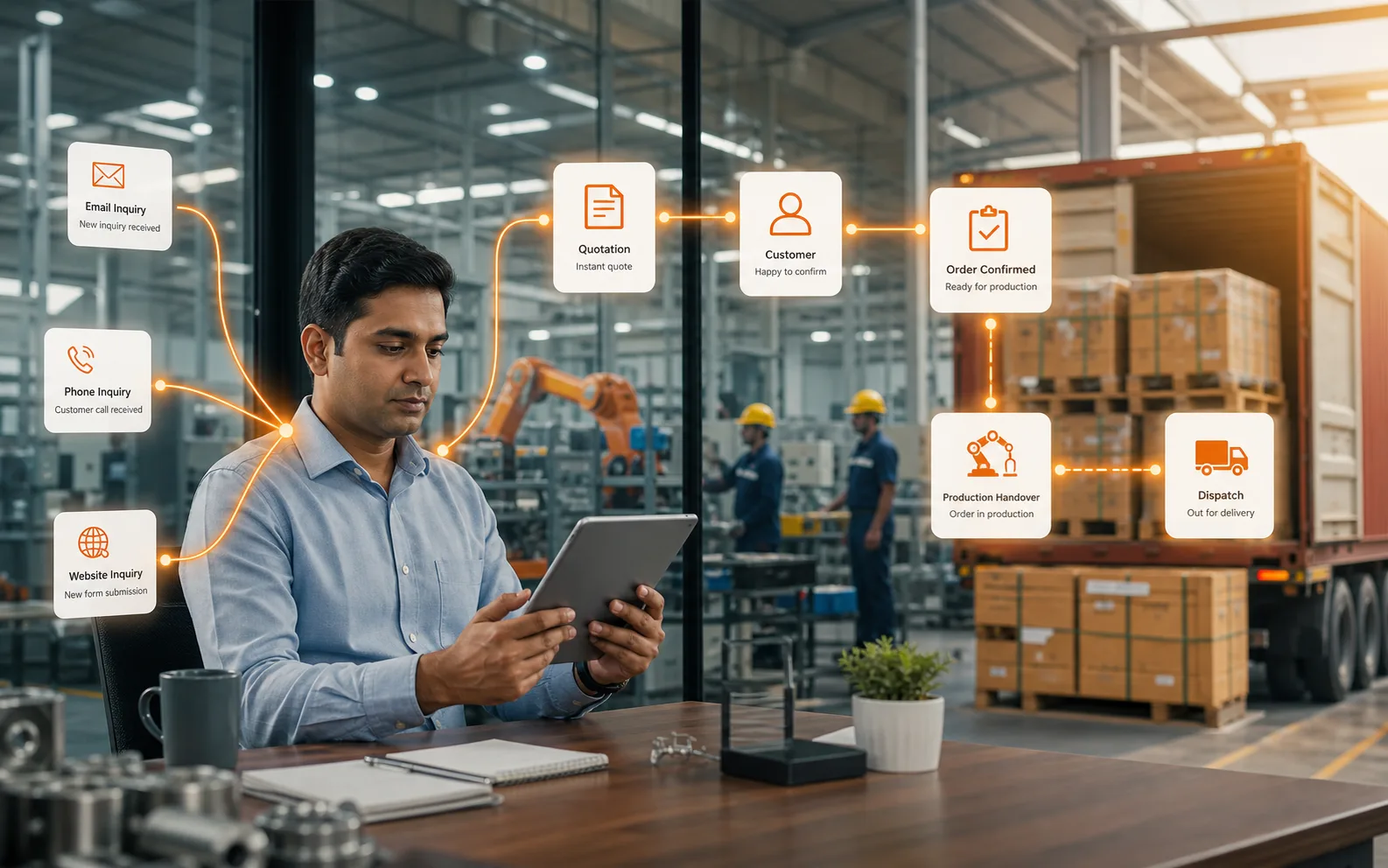
Digital Payments for Manufacturing SMEs: Benefits, Risks, and Operational Control
Digital payments are changing how SMEs collect and pay money. But for manufacturing businesses, the value is not only convenience. The real value comes when payment visibility connects with invoices, customer orders, supplier payments, dispatch decisions, and cash flow planning.
A business may dispatch goods on time but struggle because customer payments are delayed. Purchase may need supplier payments before material is released. Accounts may receive payment but sales may not know. Owners may depend on manual updates to understand cash position.
Digital payments can reduce some of this friction, but only when supported by clear processes and connected records.
This guide explains digital payments for manufacturing SMEs, benefits, risks, controls, and how AICAN Optiwise helps businesses strengthen operational visibility around orders, dispatch, and reporting.
Note: This article is for general business, software, and operational understanding only. Payment compliance, tax, GST, banking, cybersecurity, and legal requirements may vary. Please consult qualified professionals and payment providers for specific advice.
What Are Digital Payments?
Digital payments are electronic payment methods used to send or receive money without cash handling.
Examples include:
- bank transfers
- UPI
- NEFT
- RTGS
- IMPS
- cards
- payment gateways
- digital wallets where relevant
- automated collection links
For SMEs, the important question is how payment information connects with business records.
Why Digital Payments Matter for Manufacturing SMEs
Digital payments help SMEs:
- reduce cash handling
- improve payment traceability
- speed up collections
- simplify supplier payments
- reduce manual reconciliation
- improve cash visibility
- support remote transactions
- reduce paperwork
- improve customer convenience
But payment mode alone is not enough. Businesses must still track invoices, outstanding, disputes, and cash flow.
Benefits of Digital Payments
Faster Collection Visibility
Digital payments can make it easier to know when customers have paid.
Better Traceability
Transaction references help match payments with invoices.
Reduced Manual Handling
Less physical cash means fewer handling risks.
Easier Supplier Payments
Supplier payments can be made and tracked more systematically.
Improved Cash Planning
When payment status is visible, owners can plan purchases and expenses better.
Better Customer Experience
Customers may prefer convenient digital payment options.
Risks and Controls
Wrong Payment Mapping
Payments must be matched to the correct invoice or customer.
Fraud and Cybersecurity Risk
Payment links, bank details, and access controls must be handled carefully.
Unauthorized Payments
Approvals and maker-checker controls are important.
Reconciliation Gaps
Digital payments still need reconciliation with invoices and ledgers.
Overdependence on Manual Confirmation
Teams should not depend only on screenshots or messages.
Digital Payments and ERP Visibility
Digital payments become more useful when connected with operational data.
A connected system should help teams see:
- invoice status
- customer outstanding
- order status
- dispatch status
- payment follow-up
- supplier payable status
- collection reports
- cash flow signals
AICAN Optiwise helps SMEs improve operational visibility across sales, dispatch, purchase, production, and reporting. When aligned with finance workflows, this visibility supports better payment discipline.
Practical Example
A manufacturer dispatches goods to a customer with 30-day payment terms. The system tracks the sales order, dispatch, invoice reference, due date, and follow-up status. When payment is received digitally, accounts can match it with the invoice and sales can see that the customer is clear for future orders.
This reduces confusion between departments.
Best Practices
Use official payment channels.
Maintain correct customer and supplier records.
Match payments to invoice references.
Use approval workflows for supplier payments.
Avoid sharing sensitive payment details casually.
Review outstanding and payment status regularly.
Train teams on payment verification.
Connect payment information with order and invoice records where possible.
Founder’s Note
At AICAN, we believe digital payments are most valuable when they reduce uncertainty. A payment should not be just a screenshot in a chat. It should become part of the business record.
AICAN Optiwise helps manufacturers build operational visibility so payment, order, dispatch, and reporting conversations can become more connected.
FAQs
Why are digital payments useful for SMEs?
They improve traceability, reduce cash handling, support faster collections, and improve payment visibility.
Are digital payments risk-free?
No. Businesses need controls for fraud prevention, authorization, reconciliation, and correct invoice mapping.
How do digital payments help cash flow?
They can improve collection visibility and make it easier to track customer payments and supplier obligations.
Should digital payments be connected with ERP?
Where possible, yes. Payment visibility is more useful when linked with invoices, orders, customers, suppliers, and reports.
How does Optiwise help with payment visibility?
Optiwise by AICAN improves operational visibility across orders, dispatch, purchase, production, and reporting, supporting cleaner finance coordination.

Related Posts

Kanban System | Optiwise
Learn how a Kanban system works in manufacturing, where it helps, where it fails, and how Optiwise connects Kanban signals with inventory, purchase, and production planning.
12 Jun 2026Read more →Erp In Operations Management | Optiwise
Learn how ERP improves operations management by connecting planning, inventory, purchase, production, quality, dispatch, finance, and reporting.
12 Jun 2026Read more →ERP for FMCG Companies in India
A practical guide to ERP for FMCG companies in India, covering distributor orders, batch tracking, expiry, inventory, production, schemes, costing, and reporting.
11 Jun 2026Read more →
Optiwise, Odoo, Acumatica and Business Central for Manufacturing
Compare manufacturing workflows in Optiwise, Odoo, Acumatica and Dynamics 365 Business Central. See what your factory can run in Optiwise.
11 Jun 2026Read more →