
E Invoice In Gst | Optiwise
Understand e-invoice under GST, IRN, QR code, applicability, common manufacturing mistakes, and how AICAN Optiwise helps keep invoice data clean.
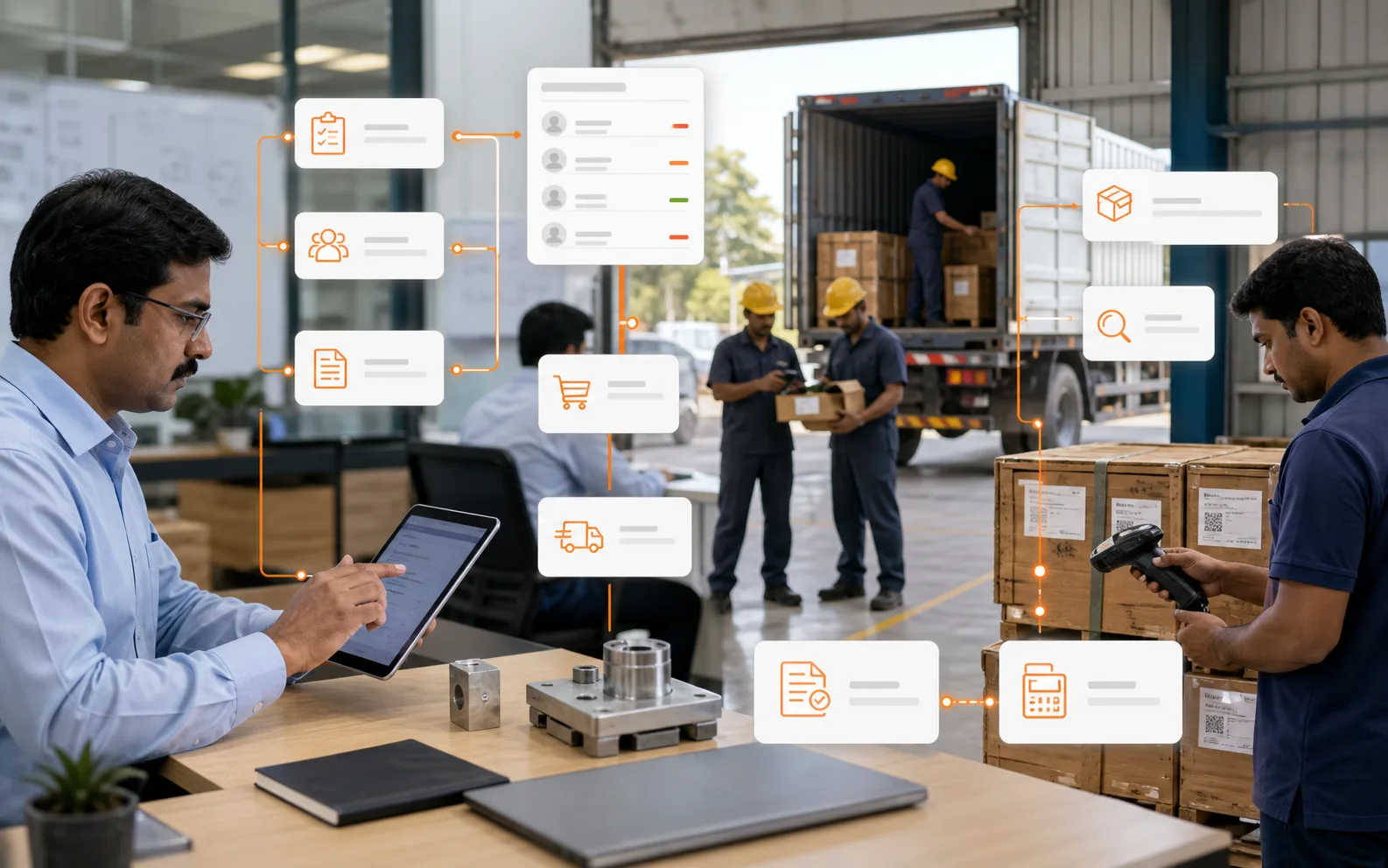
E-Invoice in GST: What Manufacturers Need to Know
An e-invoice is not just a PDF invoice sent by email.
Under GST, e-invoicing means reporting specified B2B invoice details to the Invoice Registration Portal so the system can generate an Invoice Reference Number, commonly called IRN, and a digitally signed QR code.
For manufacturers, e-invoicing matters because invoices are connected to dispatch, GST returns, e-way bills, customer input tax credit, and payment. If invoice data is wrong, the issue does not stay inside accounts. It travels to the customer, compliance records, and cash flow.
As per the GST e-invoice system information, e-invoicing has been rolled out in phases based on aggregate annual turnover. Current applicability should always be checked on official GST/e-invoice portal notifications because rules and thresholds can change.
This article is for operational understanding, not tax advice. Confirm applicability and compliance treatment with your GST advisor.
AICAN Optiwise helps manufacturers maintain cleaner invoice and operational data so e-invoice workflows become more reliable.
What Is E-Invoice Under GST?
E-invoice under GST is a system where invoice data is uploaded to the Invoice Registration Portal in a prescribed format. The portal validates the details and generates an IRN and QR code.
The invoice is still created by the taxpayer’s accounting or ERP system. The e-invoice system does not mean manually making an invoice on a government portal for every transaction. It means the invoice data must be reported and authenticated as required.
Key Terms
IRN means Invoice Reference Number. It is generated for a valid e-invoice.
QR code is a digitally signed code containing important invoice information.
IRP means Invoice Registration Portal.
GSTIN means Goods and Services Tax Identification Number.
B2B invoice means invoice between registered businesses.
Why E-Invoicing Matters for Manufacturers
Manufacturers raise invoices for finished goods, spare parts, job work, scrap, services, and sometimes exports or branch-related movements depending on the structure.
E-invoicing affects:
- Invoice accuracy
- GST reporting
- Customer input tax credit
- E-way bill preparation
- Dispatch readiness
- Payment processing
- Audit trail
A wrong GSTIN, HSN, taxable value, tax rate, place of supply, or invoice reference can create delays and reconciliation issues.
E-Invoice Applicability
E-invoicing applicability is based on notified GST rules and turnover thresholds. Official e-invoice system data shows phased enablement from larger taxpayers to smaller thresholds over time.
Because thresholds, date rules, exemptions, and portal requirements may change, manufacturers should check the official e-invoice portal, GST portal, and notifications before deciding applicability.
Do not rely on memory or old compliance notes. A business that crosses the threshold may need to prepare before the next applicable period.
E-Invoice Process in Simple Steps
First, the business creates an invoice in its ERP or billing system.
Second, required invoice data is prepared in the prescribed schema.
Third, the data is sent to the IRP.
Fourth, the IRP validates the invoice and generates the IRN and QR code.
Fifth, the authenticated invoice is shared with the customer.
Sixth, related GST and e-way bill workflows are handled as applicable.
The process should feel smooth only when master data is clean.
Common E-Invoice Mistakes
Wrong customer GSTIN.
Incorrect state or place of supply.
Wrong HSN code.
Incorrect tax rate.
Mismatch between dispatch document and invoice.
Manual edits after IRN generation without proper cancellation or correction process.
Generating invoices outside the ERP.
Not checking whether a transaction is covered or exempt.
Delaying e-invoice generation near dispatch time.
Manufacturing Controls Needed
Keep item masters clean.
Maintain correct HSN and tax rates.
Keep customer GSTIN and address data updated.
Connect sales order, dispatch, and invoice details.
Train accounts and dispatch teams on e-invoice timing.
Review cancellation and amendment workflows.
Reconcile e-invoice records with GST returns and customer records.
How Optiwise Helps
Optiwise by AICAN helps manufacturers connect customer data, item data, sales orders, dispatch, invoices, and reports. This reduces the data gaps that commonly create e-invoice errors.
AICAN builds Optiwise around manufacturing realities where billing is linked to inventory, dispatch, documents, and compliance.
Founder’s Note
E-invoicing is often treated as an accounts responsibility. But the quality of an e-invoice depends on master data, sales order accuracy, dispatch discipline, and item setup.
At AICAN, we believe compliance becomes easier when operations are clean. Optiwise is built to improve that foundation.
FAQs
What is e-invoice under GST?
E-invoice under GST is the reporting of invoice data to the Invoice Registration Portal, which generates an IRN and QR code for the invoice.
Is e-invoice just a PDF invoice?
No. It is not merely a PDF. It is authenticated invoice data reported through the prescribed GST e-invoice system.
Who needs e-invoicing?
Applicability depends on GST notifications, turnover thresholds, transaction type, and exemptions. Businesses should check official GST/e-invoice portal updates and professional advice.
Why does e-invoicing matter for manufacturers?
It affects dispatch, GST reporting, customer input tax credit, e-way bill workflows, and payment processing.
How does Optiwise help?
Optiwise connects sales, customer masters, item data, dispatch, invoices, and reports so e-invoice data is cleaner and easier to manage.

Related Posts
Types Of GST Returns For Manufacturers | Optiwise
A practical guide to GST returns for manufacturers, including GSTR-1, GSTR-3B, GSTR-9, GSTR-9C, composition returns, TDS/TCS returns, and reconciliation discipline.
17 May 2026Read more →Gst Invoice | Optiwise
Understand GST invoices, required details, common mistakes, e-invoice readiness, and how ERP helps manufacturers create accurate billing and tax records.
14 May 2026Read more →Gstr 10 | Optiwise
Learn what GSTR-10 final return is, who needs to file it, when it is filed, what records matter, and how ERP helps businesses close GST records cleanly.
20 Apr 2026Read more →
How to Transition Your Manual Accounting to ERP-Based Accounting
Learn how MSME manufacturers can move from manual or standalone accounting to ERP-based accounting with clean masters, opening balances, inventory links, approvals, and finance controls.
13 Apr 2026Read more →