
What Training Do Employees Need for IoT Systems?
Learn what training factory employees need for IoT systems, including dashboards, alerts, downtime reasons, data accuracy, security basics, and change management.
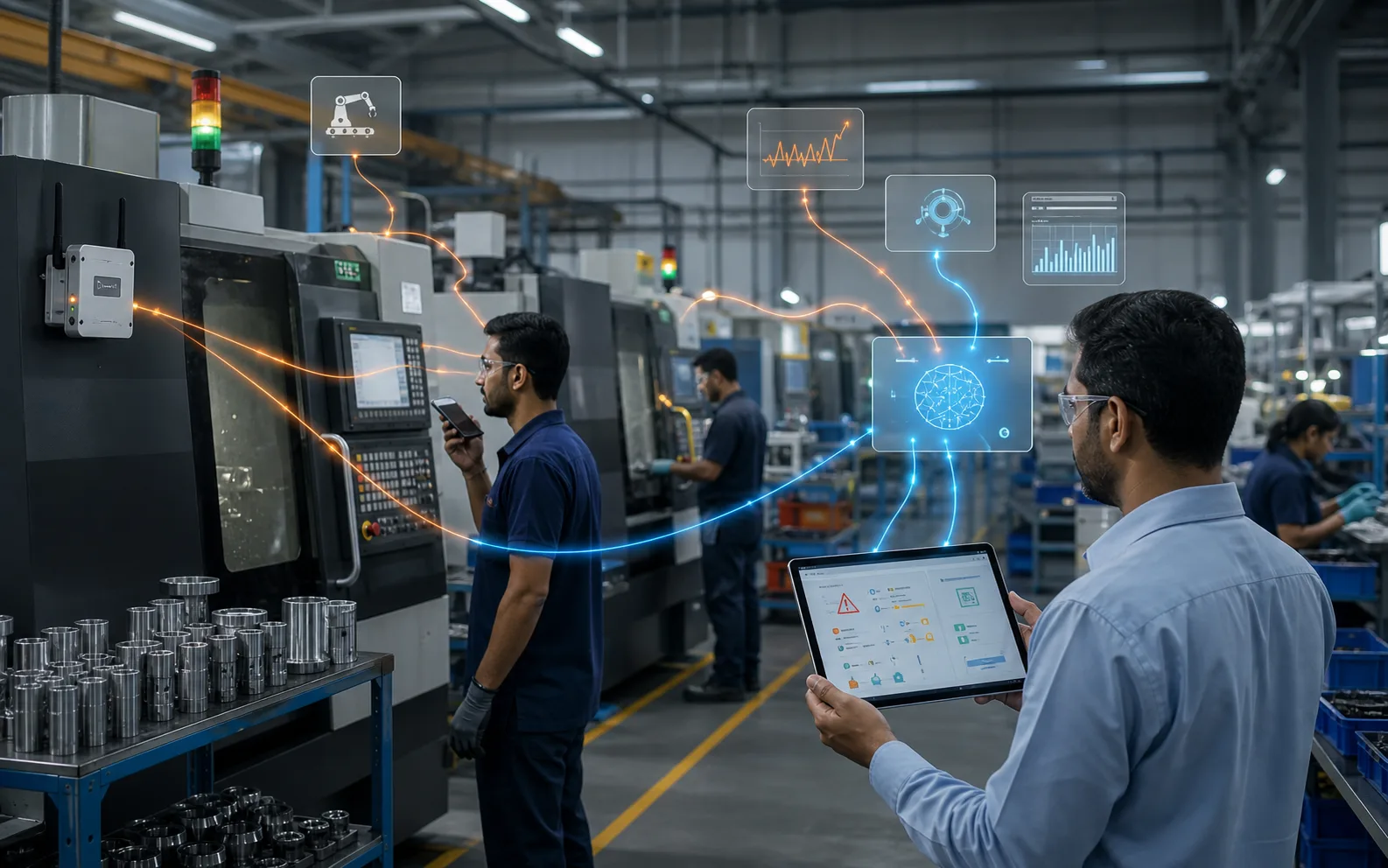
What Training Do Employees Need for IoT Systems?
Training for an IoT system is not about turning factory employees into IT engineers.
That is one of the biggest misunderstandings manufacturers have before implementation. Operators do not need to learn networking theory. Supervisors do not need to become software developers. Maintenance teams do not need to memorise every dashboard configuration. Management does not need to read raw machine signals.
What employees need is role-specific training that helps them use IoT data in their daily work.
A manufacturing IoT system becomes valuable only when people trust it, use it, and act on it. The sensors, gateways, dashboards, alerts, and reports are only one side of the project. The other side is behaviour: how operators enter downtime reasons, how supervisors respond to alerts, how maintenance uses machine trends, how quality teams connect defects to processes, and how management reviews performance without turning the system into a blame tool.
If training is treated as a one-time software demo, adoption will be weak. If training is designed around real factory roles, IoT can become part of everyday operations.
Why Training Matters More Than Most Teams Expect
IoT systems change how information moves inside a factory.
Before IoT, a supervisor may rely on manual rounds, operator updates, WhatsApp messages, registers, memory, or end-of-shift reporting. After IoT, machine status, stoppage time, production count, alerts, and performance trends may become visible much faster.
That visibility is useful, but it also changes habits. Operators may feel watched. Supervisors may receive more alerts than they are used to. Maintenance teams may be asked to respond based on data instead of only complaints. Management may expect faster explanations for production gaps.
Training helps the team understand what the system is for. It should make clear that IoT is not installed to punish people. It is installed to reduce confusion, improve response time, capture accurate reasons, and help the factory solve recurring problems.
Without this clarity, people may avoid using the system properly. They may select random downtime reasons, ignore alerts, continue parallel manual reporting, or distrust dashboards because they do not understand where the numbers come from.
Good training builds confidence. It tells each employee, “Here is what this system expects from you, here is what it gives back to you, and here is how it makes your work easier.”
Operators Need Simple, Shift-Level Training
Operators are often the most important users of an IoT system because they are closest to the machine. They know what actually happened during the shift.
Operator training should be simple, practical, and focused on daily actions. Operators may need to learn how to log in, select the correct machine or work order, confirm production count if required, choose downtime reasons, enter rejection reasons, respond to prompts, and report issues.
The training should avoid unnecessary technical language. An operator does not need to know how data travels from a sensor to the cloud. They need to know what to do when the machine stops, how quickly they should enter a reason, and why accurate reason entry matters.
For example, if the machine is idle because material has not arrived, selecting “machine breakdown” will create the wrong story. Maintenance may be blamed for a material issue. If the machine is stopped for setup but the reason is left blank, the supervisor may assume unplanned downtime. If rejection quantity is entered at the end of the day from memory, the quality report may become unreliable.
Operator training should cover:
- How to read the screen assigned to their machine
- How to confirm job, batch, or work order details
- How to enter downtime reasons quickly
- How to enter rejection reasons correctly
- What to do when the screen shows wrong data
- Whom to inform if a sensor or counter is not working
- Why accurate entries protect the operator as much as the company
The best operator training happens near the machine, using real shift examples. A classroom session alone is usually not enough.
Supervisors Need Training on Action, Not Just Dashboards
Supervisors need to understand dashboards, but dashboards are not the end goal. The real question is what they should do when the dashboard shows a problem.
A supervisor may see that one line is behind plan, one machine is stopped for too long, one operator has not entered a downtime reason, or one job is consuming more time than expected. Training should help supervisors turn this visibility into timely decisions.
Supervisor training should cover:
- How to read live machine and production status
- How to identify bottlenecks during the shift
- How to review downtime by machine, reason, and duration
- How to check whether operators are entering data correctly
- How to escalate maintenance, material, or quality issues
- How to compare planned versus actual output
- How to use shift summaries during handover
- How to avoid using data only for blame
The supervisor’s role is critical because they translate IoT visibility into shop-floor action. If supervisors continue working exactly as before and only check the dashboard at the end of the day, the system will not deliver its full value.
Training should include practical scenarios. For example: “Machine 3 has been idle for 18 minutes and the reason is material wait. What should happen next?” Or: “The dashboard shows high micro-stoppages on one line. How do we investigate?” This makes the system part of supervision, not just reporting.
Maintenance Teams Need Training on Signals, Alerts, and Patterns
Maintenance teams need a different type of training. They may need to understand machine status data, alarm trends, run hours, abnormal stoppage patterns, energy behaviour, and maintenance alerts.
The goal is not to replace maintenance judgement. The goal is to give maintenance teams better evidence.
For example, if a machine repeatedly stops for short durations, the dashboard may show a pattern that was previously hidden. If a motor draws unusual current, it may indicate a developing issue. If a machine frequently stops after a certain process stage, maintenance and production can investigate the root cause together.
Maintenance training should cover:
- How machine signals are captured
- What alerts mean and what they do not mean
- How to check repeated stoppage trends
- How to review machine run hours
- How to use maintenance history with IoT data
- How to validate whether a sensor is giving reliable readings
- How to report device or gateway issues
- How to separate machine faults from process or material issues
This training should also clarify ownership. If a sensor stops working, who checks it? If a gateway is offline, who is informed? If the dashboard shows a false machine status, how is it corrected? Without ownership, small technical issues can quietly damage trust in the system.
Quality Teams Need Training on Process Visibility
Quality teams benefit from IoT when production data is connected with rejection, inspection, batch, machine, operator, and process information.
Training for quality users should focus on how to connect defects with context. A rejection entry is more useful when linked to the machine, shift, item, batch, process stage, and reason. Over time, this can help identify whether defects are concentrated around specific machines, materials, settings, operators, suppliers, or time windows.
Quality training should cover:
- How rejection reasons are captured
- How inspection records connect with production data
- How to review rejection trends by machine or process
- How to identify recurring quality issues
- How to avoid vague reason codes such as “other”
- How to coordinate with production and maintenance when data shows patterns
IoT does not automatically improve quality. It improves visibility. The quality team still needs disciplined review and corrective action.
Stores and Inventory Teams Need Training on Data Flow
In many factories, IoT projects focus heavily on machines but forget inventory. That is a mistake because production visibility is incomplete if material movement is not understood.
Stores and inventory teams may need training on how production consumption, material issue, return, rejection, and stock updates connect with the system. If machine output is visible but material transactions remain delayed or inaccurate, management may still struggle to understand actual cost and availability.
Training for stores teams should cover:
- How material issue connects to work orders
- How consumption may be captured or confirmed
- How production output affects stock
- How rejection or scrap should be recorded
- How inventory delays affect production dashboards
- Why timely entries matter for planning and purchasing
This is especially important when IoT is part of a broader manufacturing platform like AICAN Optiwise, where production, inventory, purchase, and reporting can work together instead of staying in separate silos.
Management Needs Training on Interpretation
Management users often do not need to operate the system daily, but they must understand how to interpret its reports.
A dashboard can show OEE, downtime, production efficiency, rejection trends, energy usage, and delivery impact. But if management reads every number without understanding how it is captured, wrong conclusions can follow.
For example, a low machine utilisation number may not mean the operator performed poorly. It may mean the machine had no planned job, material was unavailable, changeover took longer, or maintenance was scheduled. A high downtime number may expose a process issue rather than a machine issue. A sudden improvement may reflect better data entry rather than actual productivity improvement.
Management training should cover:
- What each key metric means
- How data is captured
- Which numbers are automated and which depend on user input
- What reports should be reviewed daily, weekly, and monthly
- How to ask better questions from the data
- How to avoid creating fear around visibility
- How to use trends instead of reacting to one-off numbers
The strongest management teams use IoT data to remove bottlenecks, not to create pressure without support.
IT and Admin Teams Need Training on Access, Devices, and Basic Security
Even when the IoT platform is managed by a vendor or implementation partner, the internal IT or admin team needs basic training.
They should understand user roles, access control, device connectivity, gateway status, password practices, network dependencies, and escalation paths. They do not need to control every technical detail, but they should know enough to keep the system healthy and secure.
Training should include:
- How users are created, changed, or removed
- Which roles have access to which data
- How to check whether devices are online
- What to do when a dashboard stops updating
- How to handle password and login issues
- Why shared logins should be avoided
- Basic cybersecurity hygiene for connected systems
- Whom to contact for support
For connected factory systems, security should be treated seriously. The training does not need to create fear, but it should make employees aware that connected devices, accounts, and networks must be handled responsibly.
Training Should Explain the Data Journey
One useful training exercise is to show employees how data travels from the machine to the dashboard.
For example:
- The machine produces a signal or the operator enters a reason.
- The gateway or system captures the data.
- The platform links it to a machine, shift, job, or work order.
- The dashboard shows live status or a report.
- Supervisors and managers use that information to act.
This simple explanation helps people trust the system. When employees understand where the data comes from, they are more likely to correct bad inputs, report device issues, and take dashboards seriously.
It also helps them understand why their role matters. If operators enter vague downtime reasons, reports become vague. If supervisors ignore alerts, response time does not improve. If maintenance does not close issues properly, history becomes incomplete. If management never reviews trends, improvement opportunities are missed.
IoT is a connected system, and training should make that connection visible.
Avoid the Surveillance Problem
One of the biggest adoption risks is that employees may see IoT as surveillance.
If the first message they hear is, “Now management can see everything you are doing,” resistance is natural. People may worry that every stoppage will be blamed on them, even when the cause is material, maintenance, planning, or quality.
Training should frame IoT differently. The message should be: “This system helps us find the real reason work is getting delayed.”
That distinction matters. In many factories, operators are blamed because there is no data. IoT can actually protect them when used correctly. If a machine stopped due to material shortage, the data should show material shortage. If production was delayed because a tool was unavailable, the reason should be visible. If maintenance response time is the issue, that too can be seen.
The system should make problems clearer, not make people defensive.
Leaders should communicate that the goal is better process control, not personal policing. This tone should be repeated during training, go-live, and review meetings.
Go-Live Training Should Be Hands-On
IoT training should not end with a presentation.
Before go-live, users should practise on the actual screens they will use. Operators should enter downtime reasons. Supervisors should respond to sample alerts. Maintenance should review a sample machine history. Quality teams should enter rejection reasons. Management should review a sample shift report.
During the first few days, floor support is very important. People will forget steps. Some reason codes may not fit real situations. Some screens may need adjustment. Some machines may show unexpected patterns. This is normal.
A strong go-live plan includes:
- Role-wise training before launch
- Live support during initial shifts
- Daily review of data quality
- Quick correction of confusing reason codes
- Clear support contact for issues
- Feedback sessions with operators and supervisors
- Refresher training after the first week or month
The first month should be treated as an adoption period, not just a technical launch.
How to Measure Whether Training Worked
Training is successful only if behaviour changes.
A manufacturer can measure adoption by checking whether users are logging in, whether downtime reasons are filled correctly, whether alerts are acknowledged, whether supervisors use dashboards during shifts, whether management reviews reports regularly, and whether manual parallel reporting reduces over time.
Useful adoption indicators include:
- Percentage of stoppages with valid reasons
- Number of unresolved or blank downtime entries
- Timeliness of production updates
- Frequency of dashboard usage by supervisors
- Number of repeated login or usage issues
- Quality of shift handover reports
- Reduction in manual follow-up calls
- Improvement in response time to critical stoppages
If adoption is weak, the answer is not always “more training.” Sometimes the screen is too complex. Sometimes reason codes are wrong. Sometimes users do not see any benefit. Sometimes management asks for data but does not act on it. Training and system design should improve together.
Where AICAN Optiwise Fits
AICAN Optiwise is designed for manufacturing businesses that need connected visibility across production, inventory, purchase, finance, reporting, and shop-floor operations.
In an IoT implementation, Optiwise can support the human side of adoption by making data useful for real workflows. Operators can work with practical inputs. Supervisors can see production and stoppage visibility. Management can connect shop-floor performance with planning and business outcomes. Inventory, quality, and purchase teams can work with information that is closer to actual production reality.
The value of IoT is not only in devices. It is in how the information helps people make better decisions. A platform like Optiwise helps bring that information into daily manufacturing routines instead of leaving it as a separate technical dashboard.
AICAN works with the belief that manufacturing digital transformation should be practical, role-aware, and grounded in factory realities. You can learn more about the team behind the work on the About AICAN page.
FAQ
Do operators need technical knowledge to use IoT systems?
No. Operators usually need simple role-based training on the screens and actions relevant to their work. They should understand how to enter downtime reasons, confirm production information, report issues, and respond to prompts. They do not need deep technical knowledge of sensors or networks.
How long does IoT training take?
It depends on the factory size, number of roles, and system complexity. Basic operator training may be completed in short practical sessions, while supervisors, maintenance, quality, and management may need separate role-wise sessions. Refresher training after go-live is often more useful than one long session before launch.
What is the most important training topic for IoT adoption?
Downtime reason accuracy is one of the most important topics. If stoppage reasons are wrong or blank, reports become misleading. Users must understand why accurate entries matter and how the data will be used.
How do we prevent employees from feeling monitored?
Leadership should clearly communicate that IoT is meant to improve process visibility, not blame individuals. Training should show how accurate data can reveal material shortages, maintenance delays, planning gaps, quality holds, and other real causes of production loss.
Who should own IoT training inside the factory?
Ownership is usually shared. Operations should own daily usage, supervisors should own shift adoption, maintenance should own machine and device-related inputs, IT or admin should own access and basic connectivity support, and management should own review discipline.
Can AICAN Optiwise support role-wise manufacturing workflows?
Yes. AICAN Optiwise is built to support connected manufacturing workflows across production, inventory, purchase, finance, reporting, and operational visibility. This makes IoT data more useful because it can connect with the broader factory process.
Founder’s Note
Technology adoption in factories is never only about software. It is about trust.
When a new system enters the shop floor, people quickly ask quiet but important questions: Will this make my work harder? Will I be blamed for things outside my control? Will anyone actually use the data I enter? Will this system understand how our factory really works?
At AICAN, we believe these questions deserve honest answers. IoT should not be introduced as a monitoring weapon. It should be introduced as a visibility system that helps teams find the real reasons behind delays, losses, rework, and confusion.
The best training does more than explain buttons. It explains purpose. When employees understand why the data matters and how it helps them, adoption becomes much stronger.
Final Thought
Employees do not need to become technical experts to use IoT systems well. They need clear, practical training that matches their role.
Operators need simple inputs. Supervisors need action-focused dashboards. Maintenance needs meaningful alerts and history. Quality needs traceability. Stores needs data flow clarity. Management needs interpretation. IT needs access and support awareness.
When training is handled properly, IoT becomes part of the factory’s working rhythm. When connected with AICAN Optiwise, that rhythm can support better production control, faster decisions, and a more reliable manufacturing operation.

Related Posts

Will AI Create More Jobs Than It Destroys?
Explore whether AI will create more jobs than it destroys, with a practical view of manufacturing, automation, new roles, reskilling, and business transformation.
13 Jun 2026Read more →Manufacturing AI vs. Hiring More Workers
Compare manufacturing AI with hiring more workers and learn when automation, better systems, training, or additional people are the right answer.
7 Jun 2026Read more →
Will AI Replace My Production Planning Job?
Understand how AI affects production planning jobs, what tasks may change, and how planners can become more valuable with AI-supported scheduling and visibility.
6 Jun 2026Read more →Do I Need Special Skills to Use AI in Manufacturing?
Learn what skills manufacturing teams need to use AI, including process knowledge, data discipline, prompt clarity, review judgment, ERP understanding, and change readiness.
6 Jun 2026Read more →