
Energy consumption of sensor systems
Understand how much energy sensor systems use, what affects consumption, and why the value of sensor data usually comes from the energy and waste it helps reduce.
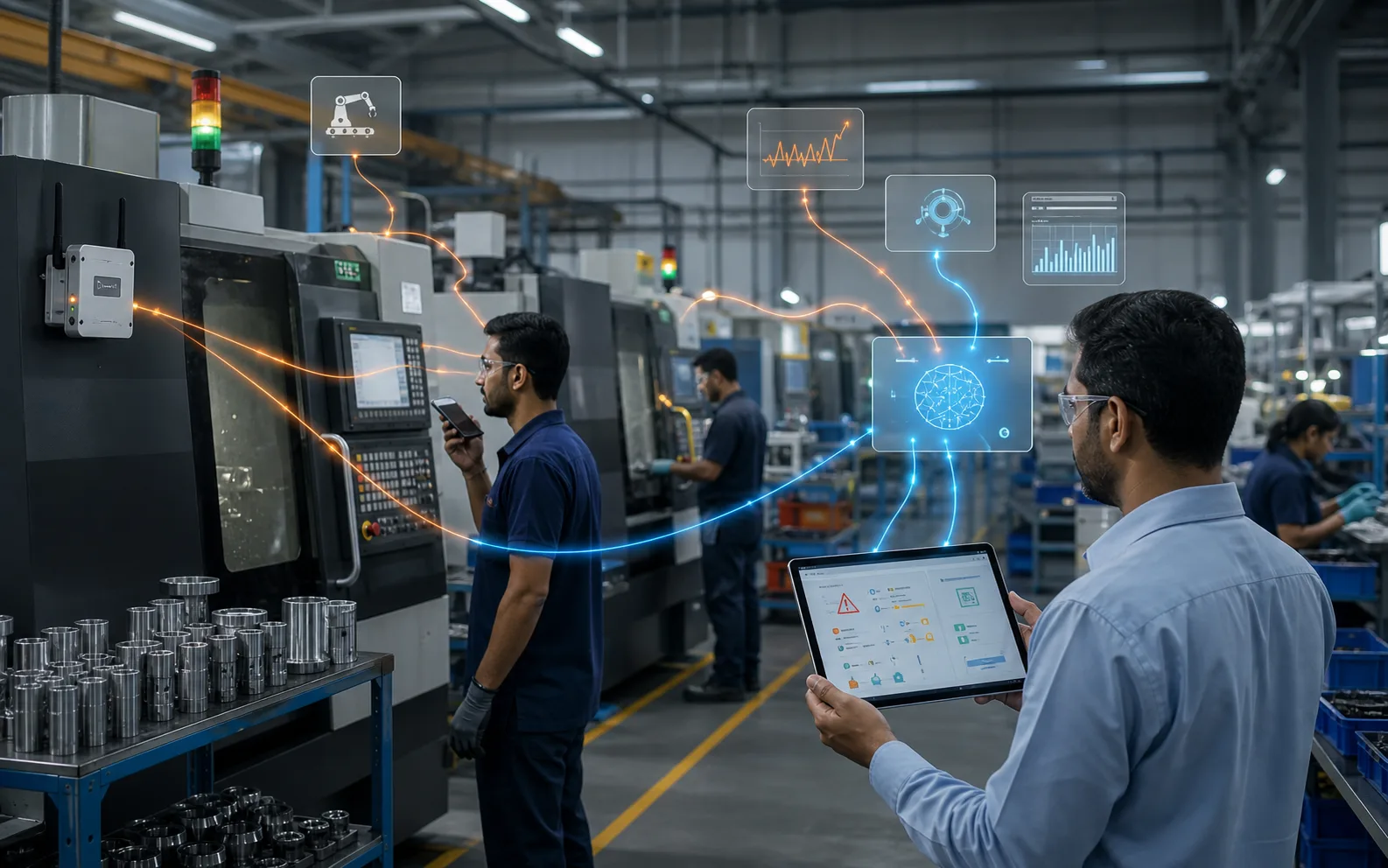
Energy Consumption of Sensor Systems
Most industrial sensor systems consume far less energy than the machines and utilities they help monitor.
That does not mean energy use should be ignored. Sensors, gateways, wireless devices, edge computers, network equipment, and dashboards all require power. But in most manufacturing use cases, the more important question is whether the system helps reduce larger energy losses: idle machines, compressed air leaks, inefficient utilities, overheating equipment, or unnecessary running.
A sensor system should use energy responsibly while helping the factory waste less energy overall.
For manufacturers using AICAN Optiwise, sensor energy consumption should be considered as part of the total operating design, but not confused with the much larger energy improvement opportunity.
Individual sensors are usually low-power devices
Many industrial sensors use modest power compared with motors, heaters, compressors, pumps, and production equipment.
A proximity sensor, temperature sensor, pressure transmitter, or photoelectric sensor typically draws a small amount of power. The exact consumption depends on voltage, output type, electronics, communication method, and device design.
For one sensor, energy cost is usually minor. Across hundreds or thousands of devices, planning becomes more relevant.
Gateways and edge devices consume more
The larger energy consumers in a sensor system may be gateways, industrial PCs, network switches, routers, displays, and edge computing devices.
These devices may run continuously to collect, process, store, or transmit data. Their power draw should be included in system planning, especially for remote sites, battery-backed systems, or panels with limited power capacity.
Still, these loads are usually small compared with production equipment.
Wireless sensors may depend on batteries
Wireless sensors introduce a different energy question: battery life.
Battery-powered sensors can reduce wiring effort, but battery replacement becomes a maintenance task. Transmission frequency, signal strength, distance, temperature, and communication protocol affect battery life.
If a wireless sensor is placed in a hard-to-reach location, battery maintenance must be planned carefully. Otherwise, the factory may lose visibility when batteries quietly die.
Sampling frequency affects energy and data volume
Not every sensor needs to report every second.
A vibration sensor on critical equipment may need frequent readings. A tank level sensor may not. A temperature sensor in a slow process may report less often than a high-speed counting sensor.
Higher sampling frequency can increase power use, data traffic, storage needs, and analysis load. The right frequency depends on how quickly the condition changes and how fast the factory needs to respond.
The bigger opportunity is energy visibility
Sensor systems can help reveal energy waste that is much larger than their own consumption.
Current sensors, energy meters, pressure sensors, flow sensors, and temperature sensors can show idle running, compressed air leaks, abnormal motor load, inefficient heating, utility instability, or machines consuming energy without output.
This is where the business case usually sits. The sensor system consumes some energy, but it helps expose energy waste across the plant.
Keep system design efficient
Energy-conscious design still matters.
Avoid unnecessary always-on displays. Choose suitable devices instead of overpowered hardware. Set sensible sampling rates. Use sleep modes where appropriate. Plan wireless battery maintenance. Group sensors through gateways efficiently. Review whether data storage and transmission are reasonable for the use case.
Good design avoids waste inside the monitoring system itself.
Power reliability is also important
Sensor systems need stable power.
If gateways or critical sensors lose power during outages or panel trips, dashboards may show missing data. For critical monitoring, consider backup power, local buffering, or alerting when devices go offline.
A power failure should be visible, not silently treated as normal data.
Energy metrics should connect to production
Energy data becomes most useful when connected to output.
Instead of only tracking total consumption, factories should ask: energy per part, energy per batch, energy during idle time, energy by shift, energy by line, and energy during abnormal conditions.
Sensor systems help create that connection when machine status and utility data are viewed together.
Where AICAN Optiwise fits
AICAN Optiwise can help manufacturers connect sensor and machine data into dashboards and reports that reveal production and utility patterns. This can support smarter decisions around energy, uptime, maintenance, and waste reduction.
AICAN works with manufacturers that want connected operations with practical ROI. Learn more at About AICAN.
Founder’s Note
The energy used by a sensor system should be designed responsibly, but the larger prize is the energy it helps the factory stop wasting. A small signal that exposes a compressor leak or idle machine can be worth far more than the power needed to capture it.
FAQs
Do industrial sensors use a lot of electricity?
Most individual sensors use relatively low power compared with factory machines and utilities.
What consumes the most power in a sensor system?
Gateways, industrial PCs, network equipment, displays, and edge devices may consume more than individual sensors.
Do wireless sensors need battery changes?
Many do. Battery life depends on reporting frequency, distance, protocol, environment, and device design.
Can sensors reduce factory energy costs?
They can help identify energy waste, but savings depend on whether the team acts on the data.
How does AICAN Optiwise help with energy visibility?
It can connect sensor data into dashboards and reports that help teams compare energy use with production activity.

Related Posts

Kanban System | Optiwise
Learn how a Kanban system works in manufacturing, where it helps, where it fails, and how Optiwise connects Kanban signals with inventory, purchase, and production planning.
12 Jun 2026Read more →Erp In Operations Management | Optiwise
Learn how ERP improves operations management by connecting planning, inventory, purchase, production, quality, dispatch, finance, and reporting.
12 Jun 2026Read more →ERP for FMCG Companies in India
A practical guide to ERP for FMCG companies in India, covering distributor orders, batch tracking, expiry, inventory, production, schemes, costing, and reporting.
11 Jun 2026Read more →
Optiwise, Odoo, Acumatica and Business Central for Manufacturing
Compare manufacturing workflows in Optiwise, Odoo, Acumatica and Dynamics 365 Business Central. See what your factory can run in Optiwise.
11 Jun 2026Read more →