
Erp Vs Accounting Software | Optiwise
Understand ERP vs accounting software, what each system does, when businesses need ERP, and why finance visibility improves when operations are connected.
ERP vs Accounting Software: What Is the Difference?
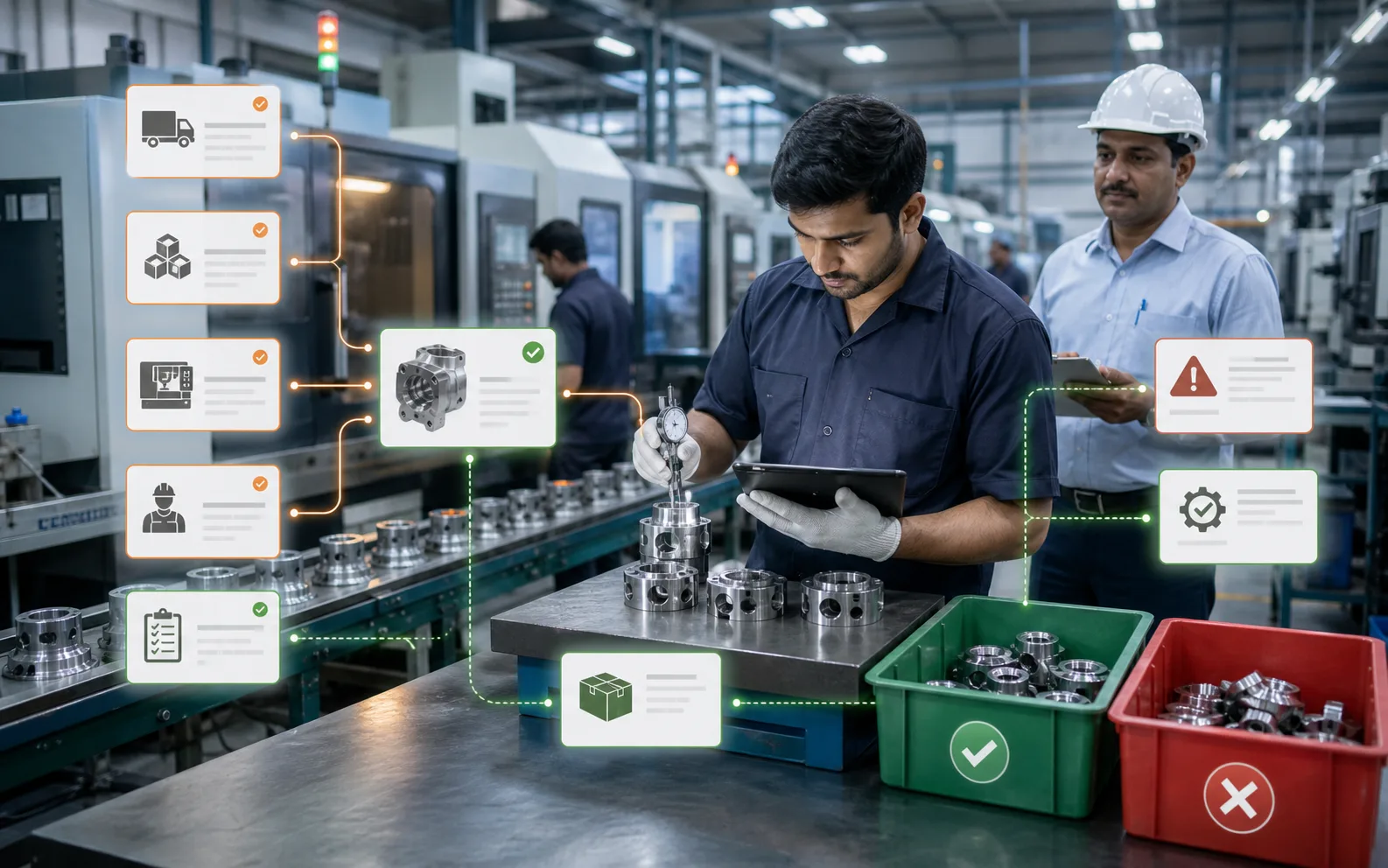
Accounting software tells you what happened financially. ERP helps you control what is happening operationally before it becomes a financial result.
That is the simplest difference.
Many small businesses begin with accounting software because billing, GST, receivables, payables, and books are immediate needs. That is sensible. But as the business grows, finance starts depending on data from purchase, inventory, production, sales, dispatch, and quality. If those operations are scattered, accounting becomes a cleanup exercise.
ERP does not replace accounting thinking. It connects operations so finance receives cleaner information.
AICAN Optiwise is built for businesses that need this connected operating layer across inventory, purchase, production, sales, finance visibility, and reporting.
What Accounting Software Does
Accounting software focuses on financial records.
It usually helps with:
- Sales invoices
- Purchase entries
- GST-related reports
- Receivables
- Payables
- Cash and bank records
- Ledger management
- Trial balance
- Profit and loss
- Balance sheet
For many small businesses, accounting software is essential. It helps maintain books, track money, and support compliance work.
But accounting software is not usually designed to manage the full operational flow of a manufacturing business.
What ERP Software Does
ERP software connects business operations.
It may include:
- Inventory
- Purchase
- Sales
- Production
- Quality
- Finance
- CRM
- HR
- Reports
- Approvals
- Dashboards
ERP is broader than accounting. It helps teams plan, execute, and track business work before it becomes only an accounting entry.
For example, ERP can show that a customer order is pending because raw material has not arrived, production is delayed, or quality inspection is incomplete. Accounting software may only see the invoice after dispatch happens.
The Core Difference
Accounting software answers:
- What did we sell?
- What did we buy?
- Who owes us money?
- Whom do we owe?
- What are our books showing?
ERP answers:
- What do we need to buy?
- What stock is available?
- What production is pending?
- Which orders are delayed?
- Which vendor is late?
- Which material was consumed?
- What can be dispatched?
- What is the operational reason behind the financial result?
Both are valuable. They solve different layers of the business.
Why Manufacturers Often Outgrow Accounting-Only Systems
Manufacturers have operational complexity that accounting software alone may not handle well.
Examples:
- BOMs
- Work orders
- Material issue
- WIP
- Scrap and rework
- Production completion
- Batch or serial tracking
- Quality inspection
- Stock reservation
- Machine or process status
If these are handled in spreadsheets while accounting happens separately, the business keeps reconciling instead of controlling.
Inventory: The Biggest Gap
Accounting software may track stock in a basic way, but manufacturing inventory needs more detail.
ERP inventory can include:
- Location-wise stock
- Batch-wise stock
- Raw material stock
- WIP
- Finished goods
- Rejected stock
- Material issue to production
- Stock transfers
- Physical stock reconciliation
- Slow-moving stock
Inventory is not just an accounting value. It is an operational signal.
Purchase and Production Linkage
In accounting software, purchase may begin when a bill is entered. In ERP, purchase can begin when production needs material.
ERP can connect:
- Material requirement
- Purchase requisition
- Purchase order
- Vendor delivery
- GRN
- Quality inspection
- Stock update
- Purchase invoice
This gives the business better control before the bill arrives.
Sales and Dispatch Linkage
Accounting software may generate invoices. ERP connects the full order-to-dispatch flow.
ERP can track:
- Quotation
- Sales order
- Stock availability
- Production requirement
- Dispatch planning
- Invoice
- Customer outstanding
This helps the sales team give better delivery commitments.
Finance Benefits from ERP
ERP helps finance by reducing messy upstream data.
Finance can get better visibility into:
- Inventory valuation
- Customer outstanding
- Vendor payable
- Purchase commitments
- Sales order pipeline
- Production cost
- Product profitability
- Expense approvals
When operations are captured properly, finance spends less time chasing departments.
Do You Need Both ERP and Accounting Software?
Some businesses use ERP with built-in finance. Others use ERP for operations and accounting software for statutory books. The right setup depends on business needs, system capability, accountant preference, and integration options.
The important question is whether operational data flows cleanly into finance.
If ERP and accounting are separate, integration or disciplined data transfer becomes important.
When Accounting Software Is Enough
Accounting software may be enough if:
- The business is very small.
- Inventory is simple.
- Production is not involved.
- Reports are mostly financial.
- Operations are easy to track manually.
It is a good foundation for basic financial discipline.
When ERP Becomes Necessary
ERP becomes necessary when:
- Stock mismatch affects work.
- Production planning is important.
- Purchase depends on material requirement.
- Sales promises depend on inventory and production.
- Reports take too long manually.
- Multiple departments use different data.
- Leadership needs real-time operational visibility.
At that stage, accounting software alone cannot carry the business.
Founder’s Note
At AICAN, we see many growing businesses where accounts is asked to explain problems that actually began in operations. Wrong stock, delayed purchase, unrecorded production, missed dispatch, and weak approvals eventually appear as financial confusion.
AICAN built Optiwise to help businesses improve the operational data that finance depends on. Cleaner operations create cleaner accounts.
FAQs
What is the difference between ERP and accounting software?
Accounting software manages financial records, while ERP connects operations such as inventory, purchase, sales, production, finance, and reporting.
Does ERP replace accounting software?
Sometimes ERP includes accounting features. In other cases, businesses use ERP for operations and accounting software for books, with integration or data transfer.
Why do manufacturers need ERP instead of only accounting software?
Manufacturers need ERP because production, BOMs, material issue, WIP, quality, and inventory control require operational workflows beyond basic accounting.
When should a business move from accounting software to ERP?
When stock, production, purchase, sales, and reporting become too complex for spreadsheets and accounting-only systems.
How does Optiwise help beyond accounting?
Optiwise by AICAN connects operations with finance visibility so businesses can control work before it becomes a financial problem.

Related Posts
Types Of GST Returns For Manufacturers | Optiwise
A practical guide to GST returns for manufacturers, including GSTR-1, GSTR-3B, GSTR-9, GSTR-9C, composition returns, TDS/TCS returns, and reconciliation discipline.
17 May 2026Read more →
Gst Invoice | Optiwise
Understand GST invoices, required details, common mistakes, e-invoice readiness, and how ERP helps manufacturers create accurate billing and tax records.
14 May 2026Read more →Gstr 10 | Optiwise
Learn what GSTR-10 final return is, who needs to file it, when it is filed, what records matter, and how ERP helps businesses close GST records cleanly.
20 Apr 2026Read more →
How to Transition Your Manual Accounting to ERP-Based Accounting
Learn how MSME manufacturers can move from manual or standalone accounting to ERP-based accounting with clean masters, opening balances, inventory links, approvals, and finance controls.
13 Apr 2026Read more →