
Gst Compliance For Small Businesses | Optiwise
A practical GST compliance guide for small businesses covering registration, invoicing, returns, input tax credit, e-way bills, e-invoicing, records, and ERP-led control.
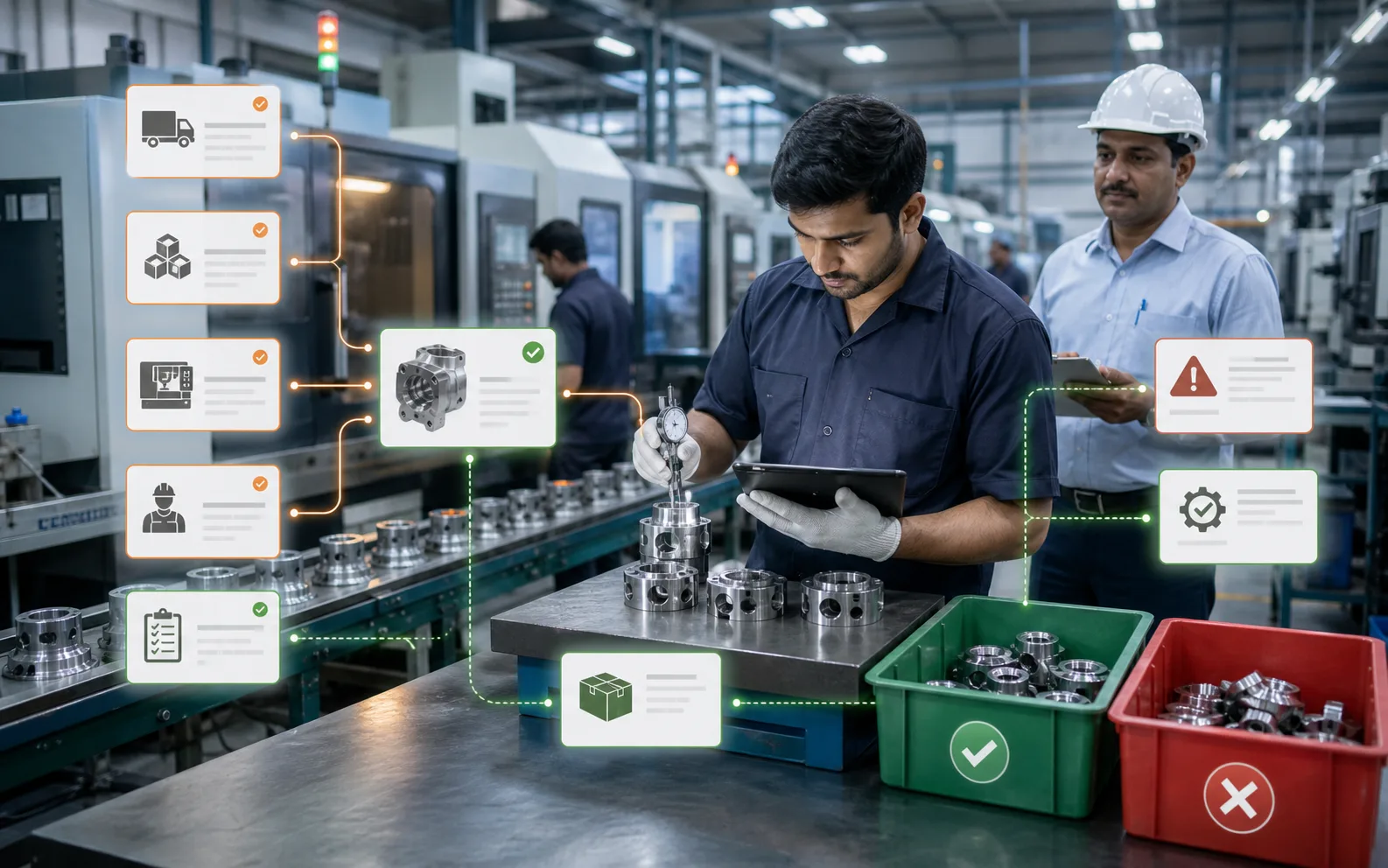
GST Compliance For Small Businesses: A Practical Operating Guide
GST compliance is not only a finance department task. For a small manufacturing or trading business, GST touches sales, purchase, inventory, dispatch, accounts, and management reporting.
The invoice must be correct. The GSTIN must be captured. HSN or SAC details must be accurate where applicable. Tax must be calculated properly. Purchase records must support input tax credit. E-way bill rules may apply for movement of goods. E-invoicing may apply if the business crosses the notified turnover threshold. Returns must match business records.
If these activities are handled only at month-end, compliance becomes stressful. If they are built into daily operations, GST becomes more manageable.
This article is general educational content, not tax, legal, or accounting advice. GST rules, thresholds, forms, and portal procedures can change. Businesses should verify requirements on official GST/CBIC resources and consult a qualified tax professional for their specific case.
For manufacturers using AICAN Optiwise, the goal is to reduce the gap between daily operations and GST reporting by keeping invoices, inventory, purchase, dispatch, and records connected.
What GST Compliance Means For A Small Business
GST compliance means following the rules required under India’s Goods and Services Tax framework. For a small business, this usually includes:
- Getting GST registration if applicable
- Issuing valid GST invoices
- Recording sales and purchase transactions correctly
- Filing GST returns on time
- Reconciling purchase data for input tax credit
- Maintaining supporting records
- Generating e-way bills where applicable
- Generating e-invoices if the business is covered by the e-invoicing mandate
- Paying tax liability correctly
- Responding to notices or mismatches when needed
The exact obligations depend on turnover, business type, state, supply type, customer type, composition scheme eligibility, industry, and other factors.
Start With Registration And Master Data
GST compliance begins with correct registration and clean master data.
A registered business should maintain accurate details for:
- Legal name and trade name
- GSTIN
- Principal place of business
- Additional places of business
- State codes
- Customer GSTINs
- Supplier GSTINs
- HSN or SAC codes
- Tax rates
- Item masters
- Address and place-of-supply details
Many GST problems begin with poor master data. A wrong customer GSTIN, incorrect state, missing HSN code, or outdated tax rate can create invoice errors and return mismatches.
ERP helps because master data can be maintained once and reused across transactions. Optiwise by AICAN can help businesses reduce repeated manual entry by connecting item, customer, supplier, and transaction records.
GST Invoicing Discipline
A GST invoice is not just a bill. It is a tax document.
A small business should ensure that invoices include the required details applicable to its situation, such as supplier information, recipient details, invoice number and date, description of goods or services, quantity, taxable value, tax rate, tax amount, HSN/SAC details where applicable, place of supply, and other required particulars.
For businesses covered by e-invoicing, invoice data must also be reported to the Invoice Registration Portal as per applicable rules before it becomes a valid e-invoice with IRN and QR code.
The operational issue is simple: GST invoicing cannot be fixed only after dispatch. Sales, stock, tax, transport, and accounts data must be aligned before the invoice is issued.
Return Filing And Reconciliation
GST return filing depends on the type of taxpayer and applicable filing cycle. Small businesses commonly deal with outward supply reporting, summary returns, input tax credit reconciliation, and payment of liability.
The challenge is not only filing the form. The challenge is making sure the numbers behind the form are reliable.
Before filing, businesses should review:
- Sales invoices issued
- Credit notes and debit notes
- Purchase invoices received
- Input tax credit eligibility
- Supplier filings and mismatches
- Advances where applicable
- Reverse charge transactions where applicable
- E-way bill and dispatch records where relevant
- Tax liability and payment status
When sales and purchase data live in disconnected spreadsheets, reconciliation takes longer and errors become more likely.
Input Tax Credit Control
Input tax credit, or ITC, is one of the most important GST areas for businesses because it directly affects cash flow.
A business may pay GST on purchases and claim eligible credit against output tax liability, subject to GST rules and conditions. However, ITC should not be treated casually. Eligibility, documentation, supplier compliance, invoice matching, receipt of goods or services, payment conditions, and blocked-credit rules may matter depending on the situation.
This is why purchase discipline is essential.
A small manufacturer should keep clear records of:
- Supplier invoices
- Goods received notes
- Purchase order references
- Taxable value and tax amounts
- Supplier GSTIN
- Item and HSN details
- ITC eligibility status
- Supplier filing status where relevant
ERP can help connect purchase invoices with GRN and stock records so finance is not forced to verify every purchase from scattered documents.
E-Way Bill And Dispatch Control
For movement of goods, e-way bill rules may apply depending on consignment value, type of movement, supply nature, and other conditions. Official rules should be checked for current requirements.
From an operational point of view, e-way bill errors often happen because dispatch data is incomplete or late. Vehicle details, invoice details, consignee information, item value, and movement purpose must be available at the right time.
A connected workflow helps dispatch and accounts work from the same transaction data instead of recreating information manually.
E-Invoicing Awareness
GST e-invoicing applies to businesses that meet notified aggregate turnover criteria, subject to exemptions and rules. Official GST e-invoice resources have reflected mandate expansion over time, including coverage for businesses above specified turnover limits.
Small businesses should not assume they are permanently outside e-invoicing. As turnover grows, the business should check applicability and prepare systems early.
E-invoicing readiness includes:
- Clean customer and supplier masters
- Accurate GSTIN validation practices
- Correct HSN/SAC and tax rates
- ERP or software capable of generating required invoice data
- Process for IRN and QR code handling
- Cancellation and amendment discipline
This is a strong reason to avoid casual invoice formats once the business begins scaling.
Records A Small Business Should Maintain
Good GST compliance depends on good records.
Useful records include:
- Sales invoices
- Purchase invoices
- Credit notes and debit notes
- E-way bills where applicable
- E-invoices where applicable
- Stock register
- GRN records
- Dispatch records
- Payment records
- Return filing acknowledgements
- Tax payment challans
- Reconciliation workings
- Communication with tax professionals or authorities where applicable
An ERP system helps because many of these records originate from daily operations. The fewer times the same data is re-entered, the lower the chance of mismatch.
Common GST Compliance Mistakes
Small businesses often struggle with avoidable issues:
- Delayed invoicing
- Wrong tax rate
- Incorrect GSTIN
- Missing HSN/SAC
- Poor purchase invoice tracking
- Claiming ITC without proper review
- Not reconciling supplier data
- Manual invoice numbering errors
- Dispatch without complete documents
- Treating GST only as a month-end task
These mistakes are usually not caused by lack of intent. They are caused by weak process and scattered data.
Where AICAN Optiwise Fits
AICAN builds practical systems for manufacturing operations. AICAN Optiwise helps connect sales, purchase, inventory, production, dispatch, and reporting so GST-related data is captured closer to the source.
For a small business, this can reduce month-end pressure. The finance team still needs professional review, but the base records become cleaner.
Founder’s Note
GST compliance becomes hard when businesses try to reconstruct the month after the month is over. The better approach is to capture the right data while work is happening.
At AICAN, we believe compliance should be supported by operations, not separated from it. When invoices, stock, purchase, and dispatch are connected, the business has a better chance of staying accurate without slowing everyone down.
FAQs
What is GST compliance for small businesses?
GST compliance means following applicable GST requirements such as registration, invoicing, return filing, tax payment, input tax credit review, e-way bill generation, e-invoicing where applicable, and record maintenance.
Does every small business need GST registration?
Not always. GST registration depends on turnover, supply type, state, inter-state supply, e-commerce activity, and other rules. Businesses should check official requirements and consult a tax professional.
Can ERP help with GST compliance?
Yes. ERP can help maintain clean invoice, purchase, stock, dispatch, and reporting records. It does not replace professional tax review, but it improves the quality of data used for compliance.
What is the biggest GST mistake small businesses make?
One common mistake is treating GST as a month-end accounting activity instead of capturing correct tax and transaction data during daily operations.
Why choose Optiwise for GST-ready operations?
Optiwise by AICAN helps manufacturers connect operational records so invoices, inventory, purchase, and dispatch data are easier to review for GST compliance.

Related Posts
Types Of GST Returns For Manufacturers | Optiwise
A practical guide to GST returns for manufacturers, including GSTR-1, GSTR-3B, GSTR-9, GSTR-9C, composition returns, TDS/TCS returns, and reconciliation discipline.
17 May 2026Read more →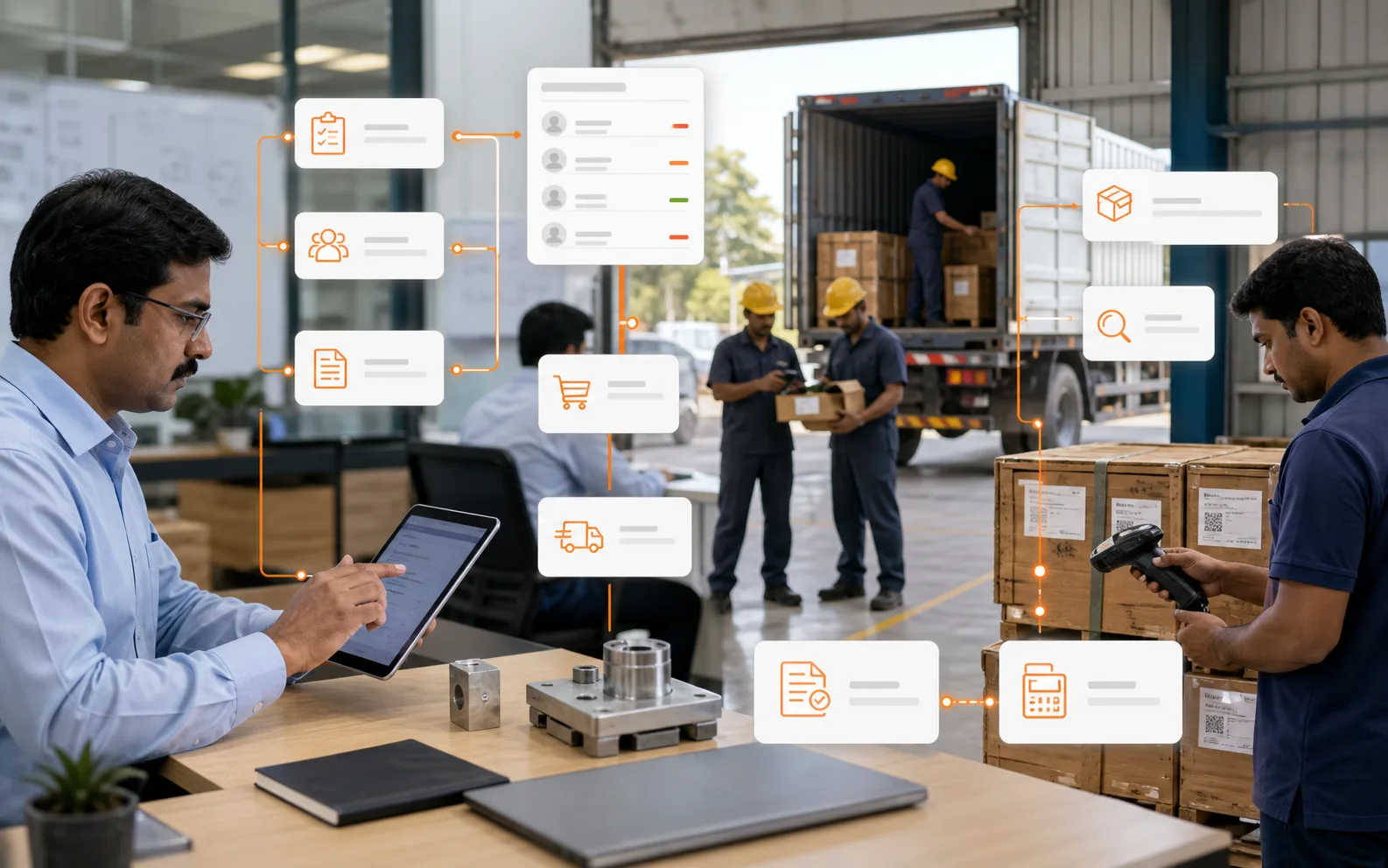
Gst Invoice | Optiwise
Understand GST invoices, required details, common mistakes, e-invoice readiness, and how ERP helps manufacturers create accurate billing and tax records.
14 May 2026Read more →Gstr 10 | Optiwise
Learn what GSTR-10 final return is, who needs to file it, when it is filed, what records matter, and how ERP helps businesses close GST records cleanly.
20 Apr 2026Read more →
How to Transition Your Manual Accounting to ERP-Based Accounting
Learn how MSME manufacturers can move from manual or standalone accounting to ERP-based accounting with clean masters, opening balances, inventory links, approvals, and finance controls.
13 Apr 2026Read more →