
How Does Computer Vision Improve Production Speed?
Learn how computer vision improves production speed by reducing manual inspection delays, faster defect detection, better counts, fewer stoppages, and connected factory workflows.
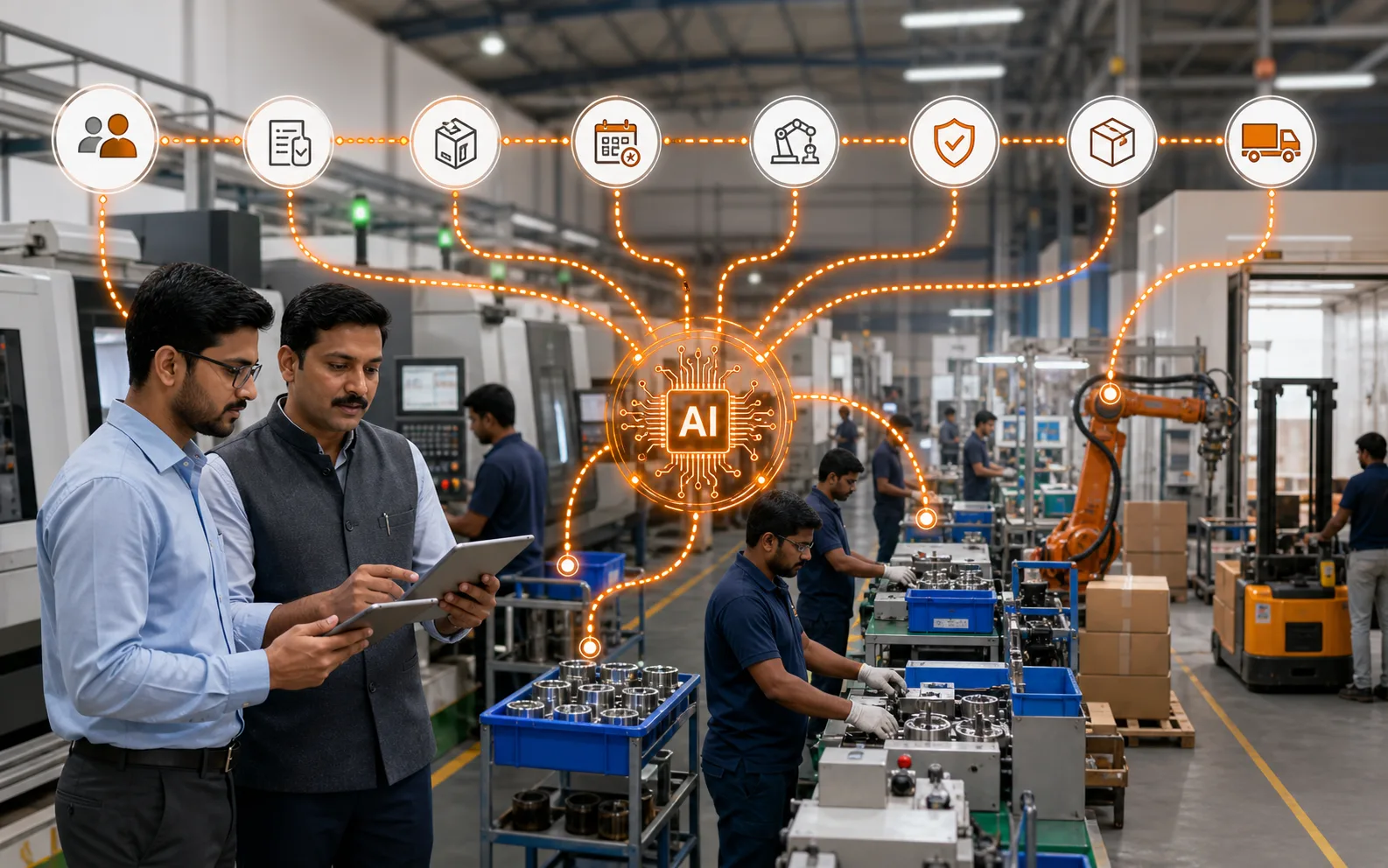
Production speed improves when inspection stops becoming the bottleneck.
In many factories, the line can physically produce faster than the inspection process can approve. Operators stop to check labels. Quality teams sample more parts after complaints. Supervisors wait for counts. Dispatch waits for confirmation. Rework loops pull people away from normal production.
Computer vision can improve production speed by making repetitive visual checks faster, more consistent, and more connected to action.
It does not mean running the line recklessly. It means removing avoidable delays while protecting quality.
Faster inspection at the point of production
Manual inspection takes time. Even when operators are skilled, repeated visual checks slow the line or require extra people.
Computer vision can inspect parts as they move, checking presence, position, count, code readability, orientation, surface condition, or packaging correctness. When the inspection is designed properly, the system can make a pass/fail decision without stopping every item for manual review.
This is especially useful in high-volume operations where small delays repeat thousands of times per shift.
Speed improves when defects are caught earlier
Late defect discovery slows production. A defect caught after packing may require sorting. A defect caught after dispatch may require replacement. A defect caught after several downstream operations wastes time already spent.
Vision systems help by detecting issues closer to the source.
For example:
- Wrong orientation before assembly
- Missing label before carton packing
- Unreadable code before dispatch
- Surface defect before coating
- Count mismatch before sealing
Earlier detection keeps bad parts from consuming more production time.
Less manual counting and reconciliation
Production speed is not only machine speed. It is also how quickly physical output becomes trusted system output.
If teams manually count products, update registers, reconcile with ERP, and correct mismatch later, the operation slows down. Vision-based counting can reduce this delay by capturing counts automatically and connecting them to batch, SKU, line, shift, and dispatch context.
When count data connects with AICAN Optiwise, supervisors can see output faster and reduce the time lost in manual reconciliation.
Fewer stoppages caused by quality uncertainty
Factories often slow down when quality confidence drops. A complaint arrives, and inspection becomes stricter. Operators pause more often. Supervisors ask for checks. Quality teams sort more material.
Computer vision can reduce this uncertainty by creating consistent inspection evidence.
If the system shows defect trends in real time, teams can respond to the actual issue instead of slowing everything because nobody knows where the problem is.
Faster decisions during production
A vision system can trigger immediate action:
- Reject a defective item
- Alert the operator
- Stop the line for critical defects
- Update rejected quantity
- Notify quality after repeated defects
- Show defect trends to supervisors
The value is not only the detection speed. It is the decision speed.
A camera result that stays inside one screen helps less than a result that moves into the production workflow.
Throughput should not come at the cost of false rejects
A poorly tuned vision system can reduce speed if it rejects too many good parts or creates constant operator interruptions.
That is why speed improvement requires careful setup:
- Stable lighting
- Clear defect definitions
- Controlled product presentation
- Correct camera placement
- Real sample validation
- Operator training
- Review of false rejects
- Practical reject handling
Speed without reliability creates frustration.
Computer vision can support line balancing
Vision data can show where bottlenecks appear.
For example:
- Defects rise after one machine step
- Counts slow at one packing station
- Rejects spike during changeover
- One shift has more stoppages due to inspection
- A specific SKU creates slower inspection handling
This helps supervisors improve the process, not just inspect products.
Where AICAN Optiwise fits
AICAN Optiwise helps manufacturers connect vision inspection results with production speed, quality status, inventory movement, and dispatch readiness. That connected view helps teams see whether the line is truly improving or only moving problems downstream.
AICAN focuses on practical manufacturing digitization: faster decisions, clearer workflows, and better visibility. You can learn more at About AICAN.
Founder's Note
Speed is not just about pushing machines harder. It is about removing uncertainty, rework, waiting, and repeated manual checks. Computer vision helps when it gives teams confidence to keep moving without losing quality control.
The best throughput improvement is the one the quality team can still trust.
FAQs
1. Does computer vision always increase line speed?
No. It improves speed when inspection is a real bottleneck and the system is designed reliably. Poor setup can create false rejects and slow the line.
2. Can vision inspect products while they are moving?
Yes, with suitable cameras, lighting, exposure, triggering, and processing. High-speed lines need careful validation.
3. How does vision reduce manual inspection time?
It automates repetitive visual checks and flags exceptions, allowing people to focus on review, root cause, and higher-value decisions.
4. Can production counts update automatically?
Yes, if vision counting is integrated with production systems or platforms like Optiwise.
5. What is the biggest risk when using vision for speed?
Chasing throughput before stabilising inspection accuracy, lighting, reject handling, and operator workflow.

Related Posts
A Manufacturing Alternative to SAP: Optiwise
Run your factory in Optiwise, a manufacturing alternative to SAP Business One with connected operations, AI agents and no-code workflows.
14 Jun 2026Read more →How Do I Know If My Manufacturing Business Really Needs an ERP?
A practical guide for manufacturers to identify when spreadsheets, manual follow-ups, and disconnected systems are no longer enough — and when ERP becomes an operational necessity.
14 Jun 2026Read more →Production Management System Optimized | Optiwise
Learn best practices for optimizing a production management system across planning, scheduling, material readiness, quality, and reporting.
12 Jun 2026Read more →
What Is the Best ERP for Pharmaceutical Manufacturing?
Learn how to choose the best ERP for pharmaceutical manufacturing, with guidance on batch control, quality workflows, traceability, inventory, documentation, and GMP discipline.
10 Jun 2026Read more →