
How Do Industrial Sensors Reduce Waste?
Learn how industrial sensors help manufacturers reduce material waste, energy waste, downtime waste, rework, scrap, and process losses.
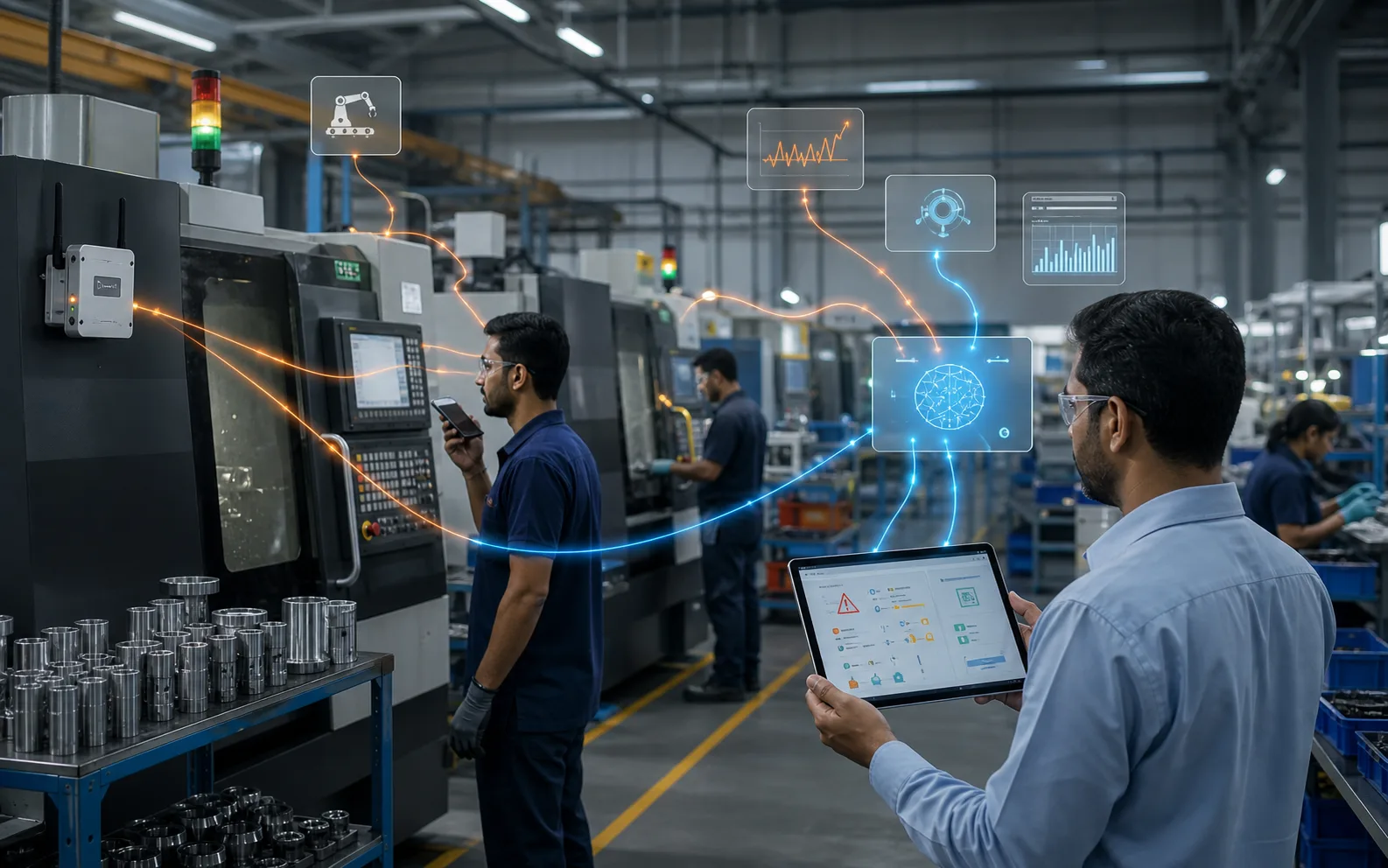
How Do Industrial Sensors Reduce Waste?
Industrial sensors reduce waste by catching losses closer to the moment they happen.
Waste is not only scrap material. It can be energy used when machines are idle, compressed air leaking all night, products made outside specification, unnecessary rework, excessive changeover loss, overproduction, delayed maintenance, or production time lost because nobody saw a problem early.
Sensors help by making these losses measurable. Once a factory can measure a loss reliably, it can assign ownership, act faster, and track whether improvement is real.
For manufacturers evaluating AICAN Optiwise, sensor data can become a practical foundation for waste reduction across production, utilities, maintenance, and quality.
Sensors reveal material waste earlier
Material waste often starts before the final rejection is recorded.
A process temperature drifts. Pressure drops. A feeder becomes inconsistent. A part is missing. A tool wears out. A machine begins behaving differently. By the time finished goods are inspected, a batch may already contain defects.
Sensors can detect early process changes so the team can intervene sooner. This does not eliminate quality checks, but it can reduce the number of bad parts produced before the issue is noticed.
The earlier the signal, the smaller the waste window.
Sensors help reduce energy waste
Energy waste is easy to ignore because it does not always stop production.
Machines may run idle. Compressors may work harder because of leaks. Motors may draw excessive current. Heaters may run outside efficient ranges. Utilities may operate during non-production hours.
Current sensors, energy meters, pressure sensors, flow sensors, and temperature sensors can reveal where consumption does not match output. A factory can then ask better questions: Why is this machine drawing power when no job is running? Why is compressed air pressure dropping at night? Why does this line consume more energy per part than another line?
Energy improvement begins with visibility.
Sensors reduce waste from unplanned downtime
Downtime wastes more than time.
It can waste labour, scheduled capacity, partially processed material, machine warm-up energy, customer commitments, and management attention. Sensors can help reduce downtime by detecting machine status, abnormal vibration, temperature rise, current changes, pressure instability, or repeated short stops.
A single downtime event may look isolated. Sensor history can show patterns. Once the pattern is visible, the team can decide whether the root cause is maintenance, tooling, operator support, material, planning, or process design.
Sensors improve process consistency
Inconsistent processes create waste even when machines are running.
If temperature, pressure, speed, feed, humidity, or level varies too much, output quality may suffer. Sensors help teams monitor whether process conditions remain inside acceptable ranges.
This is especially important in processes where variation slowly damages quality rather than causing an immediate stoppage. Without sensors, the issue may appear only after inspection or customer feedback.
Consistency reduces scrap, rework, and argument.
Sensors reduce overchecking and unnecessary manual work
Waste also includes effort.
If employees repeatedly walk to check levels, machine states, or readings that could be monitored automatically, time is being consumed without improving the process. Sensors can reduce low-value manual checking and allow workers to focus on exceptions.
This does not mean people stop inspecting. It means inspections become more targeted.
A maintenance technician should spend less time asking, “Is everything normal?” and more time responding to evidence that something is not normal.
Sensors make waste visible by shift, machine, and product
Waste reduction improves when data can be sliced by useful operating dimensions.
A factory may need to know which machine creates more scrap, which shift has more short stops, which product causes more rework, which utility line leaks more, or which job type causes higher energy use.
Sensor data connected with production context makes this possible. Without context, the factory only has signals. With context, it has improvement clues.
Sensors do not reduce waste alone
A sensor can detect waste, but it cannot guarantee correction.
The factory still needs review routines, thresholds, alert rules, maintenance action, operator training, and management follow-up. If alerts are ignored, waste continues. If dashboards are reviewed without decisions, nothing changes.
Sensor projects should include a simple operating rule: who checks the data, what action is expected, and how improvement is confirmed.
Start with the biggest visible waste
Do not begin by instrumenting everything.
Start with a known pain: scrap on a line, energy waste in utilities, repeated downtime, inaccurate counts, quality drift, or manual checking burden. Choose sensors that directly support that improvement.
When one use case proves value, expand carefully.
Where AICAN Optiwise fits
AICAN Optiwise helps manufacturers bring sensor and machine data into dashboards, alerts, and performance views. That makes it easier to connect waste signals with production decisions.
AICAN works with manufacturers that want practical systems for reducing operational waste and improving factory visibility. Learn more at About AICAN.
Founder’s Note
Waste hides in silence. It hides in idle machines, slow leaks, repeated rework, and small delays nobody records. Sensors help the factory hear those signals earlier. But the real improvement comes when people use that evidence to change the way work is done.
FAQs
What types of waste can sensors reduce?
Sensors can help reduce material scrap, rework, energy waste, downtime, utility leaks, overchecking, and process variation.
Do sensors automatically save money?
No. They reveal waste. Savings depend on whether the team acts on the information.
Which sensors are useful for waste reduction?
Current, pressure, flow, temperature, vibration, proximity, level, and vision sensors can all help depending on the waste source.
How should I start a sensor-based waste project?
Start with one known loss area, define the decision you want to improve, then choose sensors that capture the right signal.
How does AICAN Optiwise help reduce waste?
It can connect sensor data to dashboards, alerts, and reports so waste patterns become visible and actionable.

Related Posts

Kanban System | Optiwise
Learn how a Kanban system works in manufacturing, where it helps, where it fails, and how Optiwise connects Kanban signals with inventory, purchase, and production planning.
12 Jun 2026Read more →Erp In Operations Management | Optiwise
Learn how ERP improves operations management by connecting planning, inventory, purchase, production, quality, dispatch, finance, and reporting.
12 Jun 2026Read more →ERP for FMCG Companies in India
A practical guide to ERP for FMCG companies in India, covering distributor orders, batch tracking, expiry, inventory, production, schemes, costing, and reporting.
11 Jun 2026Read more →
Optiwise, Odoo, Acumatica and Business Central for Manufacturing
Compare manufacturing workflows in Optiwise, Odoo, Acumatica and Dynamics 365 Business Central. See what your factory can run in Optiwise.
11 Jun 2026Read more →