
How Much Do Industrial Sensors Cost?
Understand industrial sensor costs, including sensor type, specification, environment rating, installation, wiring, gateways, calibration, support, and lifecycle cost.
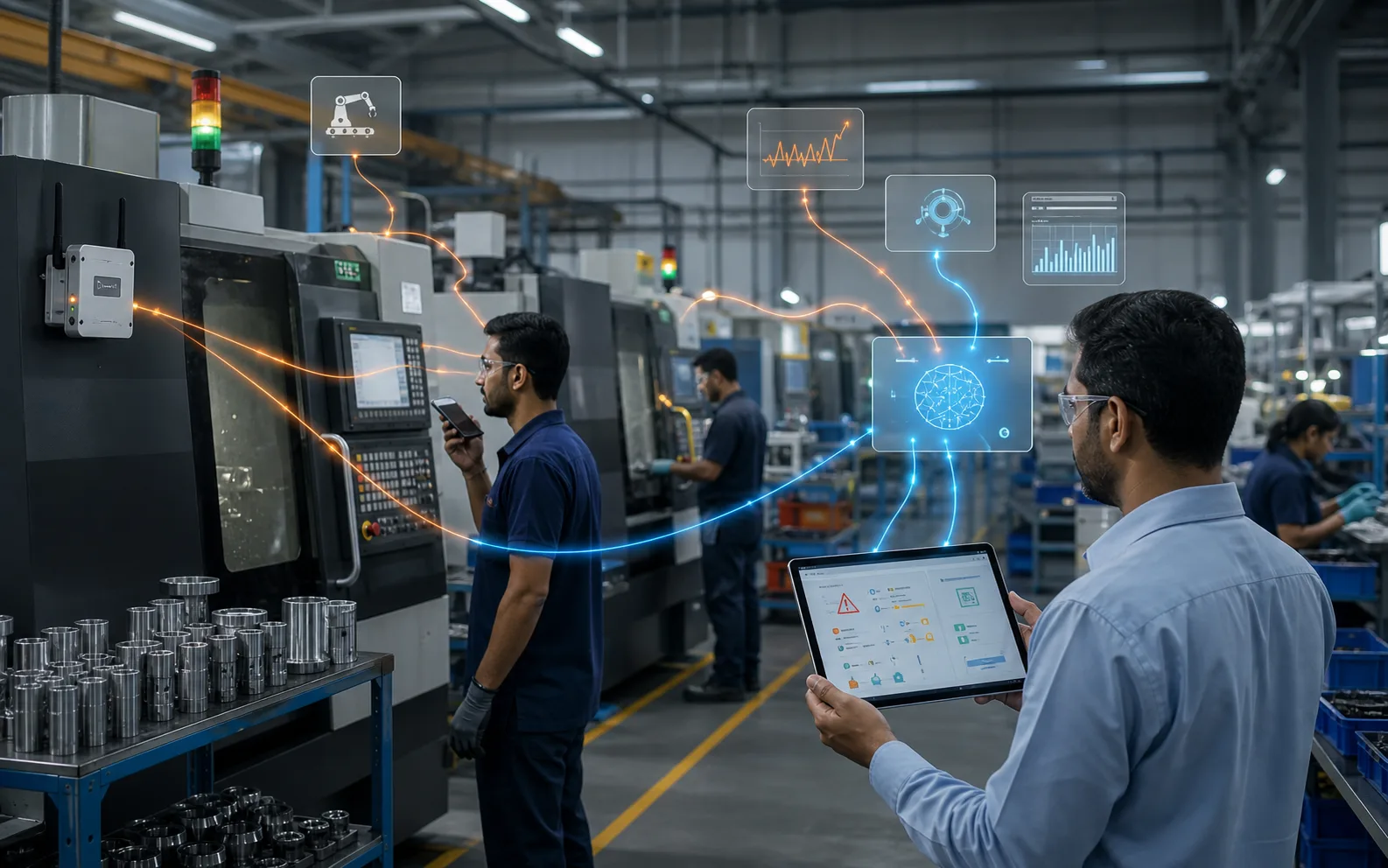
How Much Do Industrial Sensors Cost?
Industrial sensor cost is not only the price of the device.
The real cost includes the sensor, mounting, wiring, connectors, installation, gateway or PLC connection, calibration, commissioning, data validation, spares, maintenance, and the cost of getting the signal into a dashboard or automation system.
A simple sensor in a clean environment may be inexpensive to deploy. A high-accuracy sensor in a harsh production area may cost more because the application demands durability, accuracy, and support.
For manufacturers evaluating AICAN Optiwise, the better question is not only “What does the sensor cost?” It is “What is the total cost to create a reliable signal that improves a factory decision?”
Sensor type affects cost
Different sensor types have different cost ranges because they solve different problems.
A basic proximity sensor may cost less than a vibration sensor used for machine-health monitoring. A simple temperature sensor may cost less than a high-accuracy process sensor. A flow or level sensor may vary widely depending on material, range, and environment. A vision sensor or industrial camera system may cost significantly more because lighting, mounting, processing, and calibration matter.
The sensor type should be selected by use case, not price alone.
Specification affects cost
Higher accuracy, faster response, wider measurement range, stronger housing, better environmental rating, and industrial communication capability can all increase cost.
That increase may be justified if the signal affects production, quality, safety, or maintenance decisions. It may be unnecessary for a low-risk monitoring point.
A manufacturer should avoid both extremes: buying the cheapest sensor for a critical job, or buying an advanced sensor where a simple one would work.
Environment affects cost
Harsh environments require stronger sensors.
Heat, moisture, washdown, dust, oil, chemicals, vibration, pressure, and electrical noise may require special housings, connectors, cables, protection ratings, and installation methods. These add cost but can reduce failure and replacement later.
A sensor that fails repeatedly in a harsh location is not cheaper. It is a recurring maintenance problem.
Installation and wiring can cost more than expected
The device price is often only part of the spend.
Installation may require brackets, cable trays, conduits, connectors, panel work, electrical labour, machine downtime, safety precautions, testing, and documentation. If the sensor is far from the control panel or gateway, wiring cost may increase.
Factories should include installation in the budget from the beginning.
Gateways, PLCs, and platform connection add cost
Sensor data needs somewhere to go.
It may connect to a PLC, gateway, data logger, industrial PC, SCADA system, or IoT platform. If the existing equipment cannot accept the signal, additional hardware may be needed.
The cost of connecting the sensor to dashboards and reports can include gateway hardware, configuration, data mapping, communication setup, and platform integration.
A sensor that is not connected to a usable system may remain only a local signal.
Calibration and maintenance cost matter
Some sensors need calibration, cleaning, validation, replacement, or periodic inspection.
This cost should be considered when the sensor supports quality, process control, energy measurement, or maintenance decisions. A cheaper sensor that drifts or needs frequent replacement can cost more over time.
Lifecycle cost matters more than purchase price.
Cost should be compared against loss reduction
Industrial sensors should be justified through the losses they help reduce.
Those losses may include downtime, manual inspection, energy waste, rework, scrap, maintenance surprises, quality failures, or delayed production decisions.
A simple ROI approach:
- Identify the loss.
- Estimate current monthly impact.
- Estimate what portion the sensor can realistically reduce.
- Compare that benefit with sensor, installation, and support cost.
This keeps the buying decision grounded.
Where AICAN Optiwise fits
AICAN Optiwise helps manufacturers connect sensor investments to operational visibility and measurable outcomes. The platform can help sensor data become useful through dashboards, alerts, trends, and decision support.
AICAN works with manufacturers that want budget planning tied to practical factory value. You can learn more at About AICAN.
Founder’s Note
A sensor price is easy to ask for. Sensor value takes more discipline. The factory should know what loss the sensor will reveal, who will act on the data, and how the signal will be maintained. That is how cost becomes investment.
FAQs
Why do industrial sensor prices vary so much?
Because sensor type, accuracy, environment rating, communication method, durability, installation, and support requirements vary widely.
Is the cheapest sensor good enough?
It may be for low-risk monitoring, but critical applications need reliability and proper specification.
What extra costs should I budget for?
Budget for wiring, mounting, installation, gateways, PLC or platform integration, calibration, support, and spares.
How do I justify sensor cost?
Compare total cost against avoidable losses such as downtime, energy waste, manual checks, quality defects, and maintenance surprises.
Should I buy sensors before choosing a platform?
Usually no. The sensor choice should fit the data architecture, dashboard needs, and integration path.

Related Posts

Kanban System | Optiwise
Learn how a Kanban system works in manufacturing, where it helps, where it fails, and how Optiwise connects Kanban signals with inventory, purchase, and production planning.
12 Jun 2026Read more →Erp In Operations Management | Optiwise
Learn how ERP improves operations management by connecting planning, inventory, purchase, production, quality, dispatch, finance, and reporting.
12 Jun 2026Read more →ERP for FMCG Companies in India
A practical guide to ERP for FMCG companies in India, covering distributor orders, batch tracking, expiry, inventory, production, schemes, costing, and reporting.
11 Jun 2026Read more →
Optiwise, Odoo, Acumatica and Business Central for Manufacturing
Compare manufacturing workflows in Optiwise, Odoo, Acumatica and Dynamics 365 Business Central. See what your factory can run in Optiwise.
11 Jun 2026Read more →