
What's the Difference Between Industrial Sensors and Consumer Sensors?
Understand the difference between industrial and consumer sensors in reliability, accuracy, durability, environment rating, integration, calibration, and support.
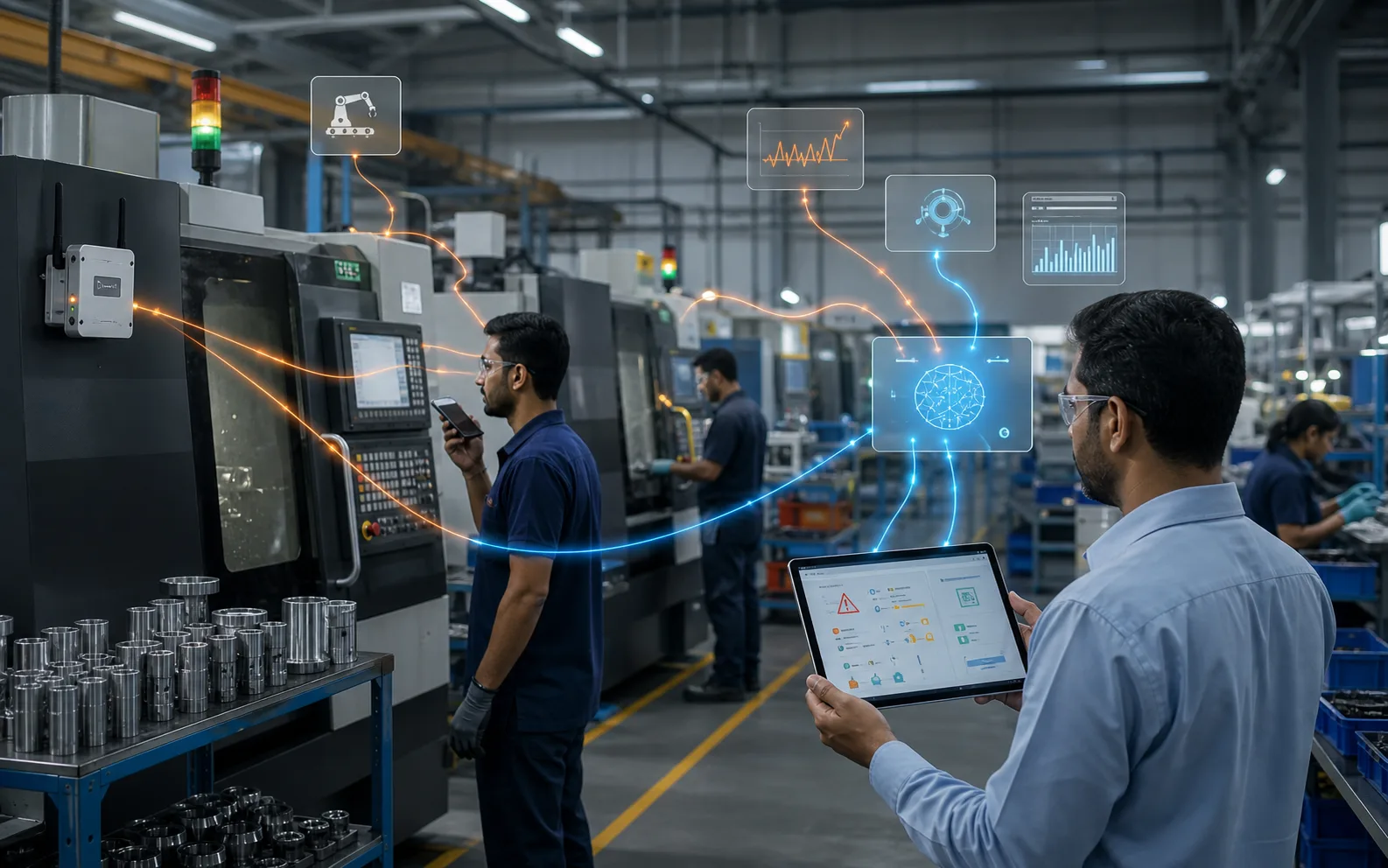
What's the Difference Between Industrial Sensors and Consumer Sensors?
Industrial sensors and consumer sensors may measure similar things, but they are built for very different worlds.
A consumer sensor may work well in a home, office, or personal device. A factory sensor has to survive vibration, heat, dust, electrical noise, moisture, oil, long operating hours, and the consequences of wrong data. In manufacturing, a bad reading can lead to lost production, wrong maintenance action, quality problems, or unsafe assumptions.
That is why sensor selection matters.
For manufacturers evaluating AICAN Optiwise, the goal is not to buy the most expensive sensor. It is to use the right level of reliability for the process being monitored.
Industrial sensors are built for harsh environments
Factories are not gentle environments.
Machines vibrate. Motors generate electrical noise. Temperatures change. Dust settles. Oil, coolant, water, heat, and pressure may be present. A sensor mounted near production equipment must keep working despite these conditions.
Industrial sensors are designed with environment ratings, rugged housings, stronger connectors, mounting options, and durability expectations suited to shop-floor use.
Consumer sensors are usually not designed for this level of exposure. They may work temporarily, but reliability can drop quickly in harsh conditions.
Accuracy and repeatability matter more in production
Accuracy is how close the reading is to the real value. Repeatability is whether the sensor gives consistent readings under the same conditions.
In a factory, both matter.
If a temperature sensor is used for quality control, inaccurate readings can create defects. If a proximity sensor misses cycles, production counts become wrong. If a current sensor is inconsistent, machine-state detection becomes unreliable.
Industrial sensors are selected based on tolerance, response time, range, and repeatability needed for the process.
Consumer sensors may not provide the same confidence in production-critical use.
Industrial sensors support proper integration
A factory sensor usually needs to communicate with PLCs, gateways, controllers, SCADA systems, IoT platforms, or industrial networks.
Industrial sensors may support standard signal types or protocols such as digital outputs, analog outputs, pulse signals, Modbus, IO-Link, or other industrial communication methods depending on the device and system.
Consumer sensors may depend on mobile apps, Wi-Fi, Bluetooth, or proprietary cloud systems that are not suitable for factory integration.
Integration is not a minor detail. If the sensor cannot communicate reliably with the factory system, its data may not be useful.
Calibration and maintenance are different
Many industrial sensors need calibration, inspection, replacement planning, or periodic validation.
This is especially important when sensor readings affect quality, safety, energy decisions, or maintenance planning. The factory should know how the sensor is calibrated, how drift is detected, and how replacement is handled.
Consumer sensors are often designed for convenience, not controlled maintenance.
A manufacturer should match sensor maintenance discipline to the risk of the application.
Failure consequences are higher in manufacturing
If a consumer sensor fails at home, the inconvenience may be small. If an industrial sensor fails in a factory, the result can be downtime, wrong production counts, missed alerts, quality loss, or maintenance confusion.
That does not mean every sensor must be expensive. It means critical applications need stronger reliability.
A sensor used only for non-critical monitoring may not need the same specification as a sensor used for process control, safety-related visibility, or quality-sensitive measurement.
Industrial sensors need better support and documentation
Manufacturers should expect proper documentation: operating range, wiring details, output type, environmental rating, calibration guidance, mounting recommendations, and integration requirements.
Good documentation helps maintenance teams troubleshoot problems and helps implementation teams connect sensors correctly.
Consumer sensors often lack the depth of documentation needed for industrial use.
Cost difference should be judged by risk
Industrial sensors may cost more than consumer sensors, but the comparison should include risk.
If a cheap sensor fails and causes repeated downtime, wrong readings, or replacement effort, the total cost may be higher. If the application is non-critical and low-risk, a simpler sensor may be acceptable.
The correct question is not “Which sensor is cheaper?” It is “What happens if this sensor gives wrong data or fails?”
Where AICAN Optiwise fits
AICAN Optiwise helps manufacturers connect sensor data into practical factory visibility. The platform approach depends on using sensor inputs that are reliable enough for the decision they support.
AICAN works with manufacturers to build systems that respect real shop-floor conditions rather than assuming every environment behaves like an office. More about the company is available at About AICAN.
Founder’s Note
The factory floor has a way of exposing weak assumptions. A sensor that looks fine on paper must still survive heat, dust, vibration, people, wiring, and time. Choose the sensor based on the consequence of being wrong.
FAQs
Can consumer sensors be used in factories?
Sometimes for low-risk monitoring, but they are usually not suitable for harsh or production-critical environments.
Why do industrial sensors cost more?
They are often built for durability, accuracy, environmental resistance, industrial integration, and longer operating life.
What matters more: accuracy or durability?
Both matter, but priority depends on the use case. Quality-sensitive measurements need accuracy, while harsh environments demand durability.
Do industrial sensors need calibration?
Some do, especially when readings affect quality, safety, compliance, or maintenance decisions.
How should I choose between sensor grades?
Consider environment, data criticality, integration needs, failure consequences, and support requirements.

Related Posts

Kanban System | Optiwise
Learn how a Kanban system works in manufacturing, where it helps, where it fails, and how Optiwise connects Kanban signals with inventory, purchase, and production planning.
12 Jun 2026Read more →Erp In Operations Management | Optiwise
Learn how ERP improves operations management by connecting planning, inventory, purchase, production, quality, dispatch, finance, and reporting.
12 Jun 2026Read more →ERP for FMCG Companies in India
A practical guide to ERP for FMCG companies in India, covering distributor orders, batch tracking, expiry, inventory, production, schemes, costing, and reporting.
11 Jun 2026Read more →
Optiwise, Odoo, Acumatica and Business Central for Manufacturing
Compare manufacturing workflows in Optiwise, Odoo, Acumatica and Dynamics 365 Business Central. See what your factory can run in Optiwise.
11 Jun 2026Read more →