
Manufacturing ERP Systems: Software Development Jobs Explained
Learn what software development jobs in manufacturing ERP systems involve, from modules and integrations to reporting, AI, and implementation support.
Manufacturing ERP Systems: Software Development Jobs Explained
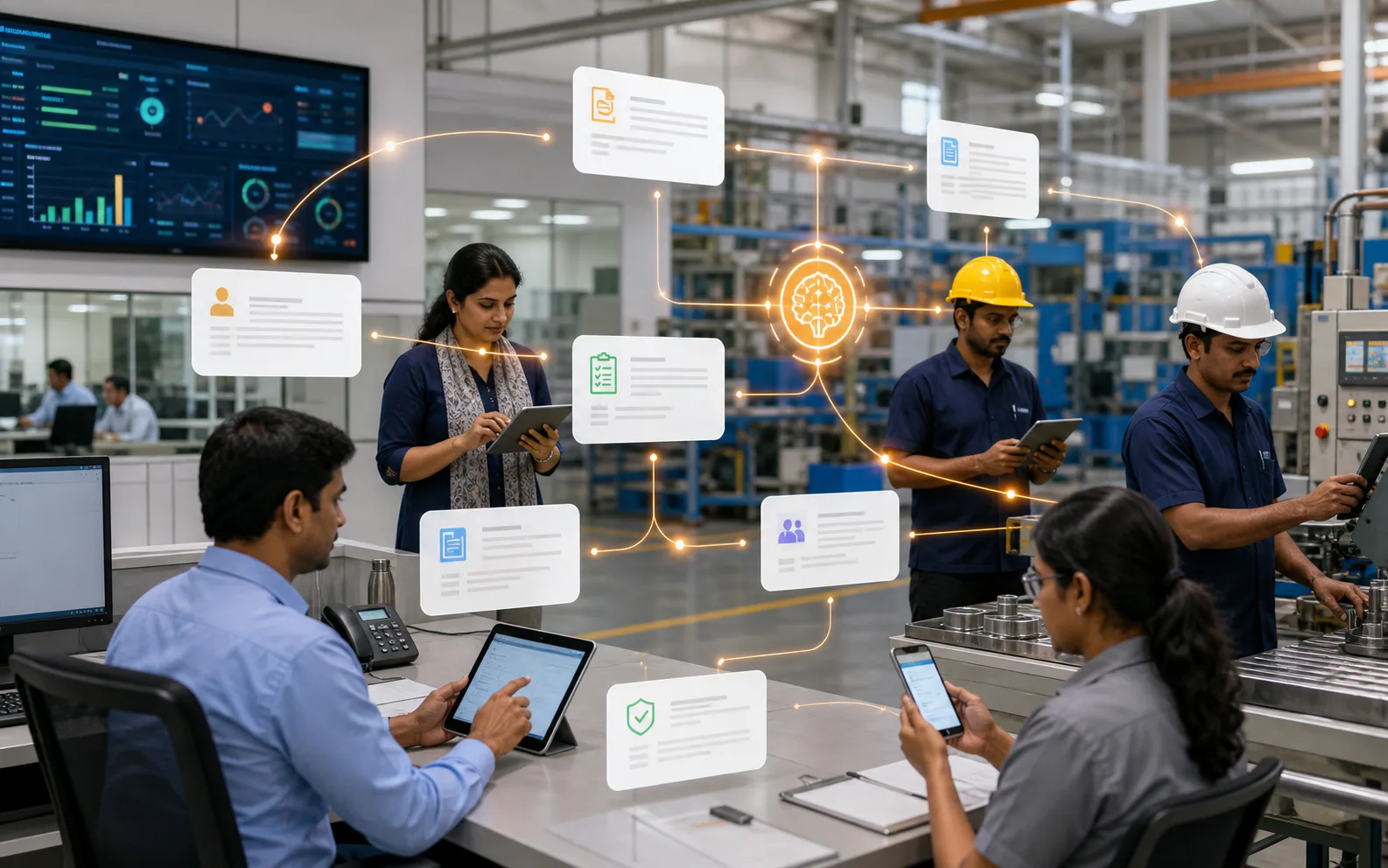
Manufacturing ERP systems are some of the most practical software products a developer can work on. They connect daily factory operations: enquiries, quotations, purchase orders, raw materials, inventory, production plans, quality checks, dispatch, invoices, and management reports.
A software development job in manufacturing ERP is not only about writing features. It is about making business movement visible and reliable.
What Manufacturing ERP Developers Build
ERP developers build modules that support real workflows. In a manufacturing ERP, this can include CRM, sales orders, purchase, inventory, BOM, production planning, job cards, quality checks, dispatch, finance reports, and dashboards.
They also build validations. For example, a production entry should not consume more material than available stock unless the business has approved that exception. A purchase order should follow vendor rates and approval rules. A dispatch entry should match the sales order and packing details.
Good ERP development is full of these practical details.
Integration Work
Manufacturing ERP systems often connect with accounting software, weighing scales, barcode scanners, e-invoicing systems, payment tools, customer portals, vendor systems, IoT devices, and BI dashboards.
Integration work is valuable because factories rarely run on one tool alone. Developers who understand APIs, data formats, queues, error handling, and reconciliation are useful in this space.
Reporting and Analytics
Management teams depend on ERP reports for decisions. Developers may build reports for stock ageing, production efficiency, purchase pending, vendor performance, rejection trends, sales order status, machine utilization, and cash flow.
This is where domain understanding matters. A report should not simply display data. It should answer the question a manager actually has.
Customization and Configuration
Manufacturing companies differ by industry. A plastic components factory, fabrication unit, chemical plant, packaging manufacturer, and electronics assembler may all need different workflows.
ERP developers may customize forms, approvals, calculations, document formats, and dashboards. The challenge is to support flexibility without making the system messy.
AI in Manufacturing ERP
AI is becoming part of ERP development. It can help summarize orders, highlight delayed jobs, suggest reorder quantities, flag abnormal consumption, predict late deliveries, and help users ask questions in plain language.
Developers who understand both structured ERP data and AI-assisted workflows will have strong opportunities.
Where AICAN Optiwise Fits
AICAN Optiwise is an AI-native ERP and operating system for manufacturers. It brings together sales, purchase, inventory, production, quality, dispatch, finance visibility, and AI agents so factory teams can work from connected data rather than scattered files.
For developers, platforms like Optiwise show the future of ERP jobs: not just CRUD screens, but intelligent workflows that help manufacturers act faster and with more confidence.
FAQ
What skills are needed for manufacturing ERP development?
Backend development, databases, APIs, reporting, workflow logic, testing, and manufacturing domain understanding are important.
Is ERP development a good career?
Yes. ERP systems are critical to business operations, and manufacturing ERP offers stable, high-impact work.
Do ERP developers need factory knowledge?
They do not need to be production experts, but understanding factory workflows makes them much better at building useful software.
Final Thought
Manufacturing ERP development is business software with real consequences. When the system works well, stock is clearer, production is smoother, and decisions become faster. That makes the work both technical and deeply practical.

Related Posts

Will AI Create More Jobs Than It Destroys?
Explore whether AI will create more jobs than it destroys, with a practical view of manufacturing, automation, new roles, reskilling, and business transformation.
13 Jun 2026Read more →Manufacturing AI vs. Hiring More Workers
Compare manufacturing AI with hiring more workers and learn when automation, better systems, training, or additional people are the right answer.
7 Jun 2026Read more →
Will AI Replace My Production Planning Job?
Understand how AI affects production planning jobs, what tasks may change, and how planners can become more valuable with AI-supported scheduling and visibility.
6 Jun 2026Read more →Do I Need Special Skills to Use AI in Manufacturing?
Learn what skills manufacturing teams need to use AI, including process knowledge, data discipline, prompt clarity, review judgment, ERP understanding, and change readiness.
6 Jun 2026Read more →