
What Manufacturing Jobs Are Safe From AI Automation?
Learn which manufacturing jobs are safer from AI automation and why roles requiring judgment, physical problem-solving, leadership, maintenance, and quality expertise remain valuable.
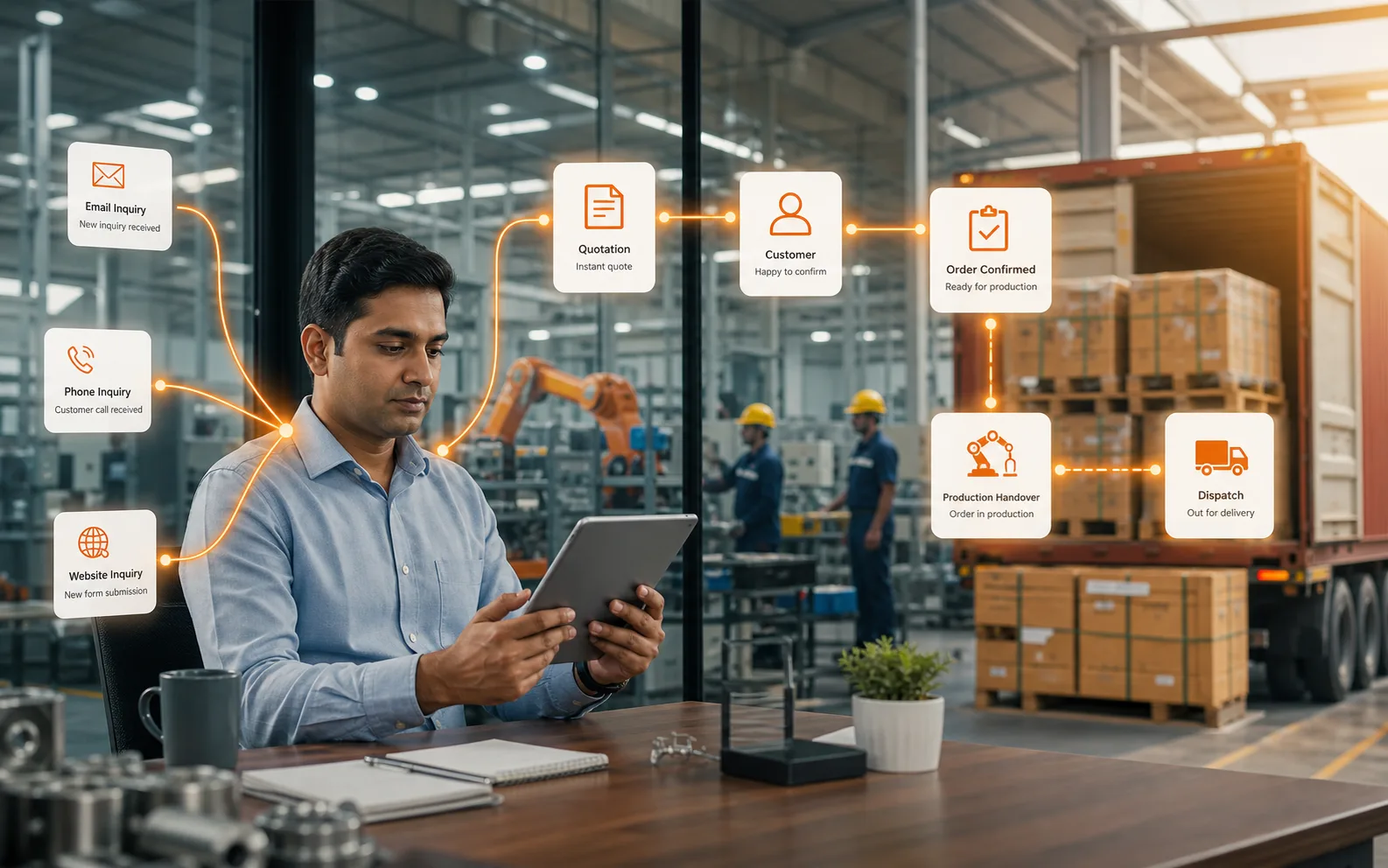
What Manufacturing Jobs Are Safe From AI Automation?
No job is completely untouched by AI, but some manufacturing roles are safer because they require judgment, physical problem-solving, human coordination, and deep process knowledge. AI is strong at data analysis and repetitive information work. It is weaker at messy real-world exceptions.
The safest workers will be those who combine practical manufacturing knowledge with digital skills.
Jobs Involving Physical Problem-Solving
Maintenance technicians, tool room teams, machine setters, and skilled operators often handle problems that require physical inspection and experience.
AI can flag a machine risk, but a person still needs to inspect, repair, adjust, and validate the machine.
Supervisory Roles
Production supervisors coordinate people, machines, materials, priorities, and exceptions. AI can help summarize delays and risks, but supervisors still need to make judgment calls.
Human coordination remains important.
Quality Roles
AI can detect defects and analyze trends, but quality decisions often require interpretation, customer context, process knowledge, and accountability.
Quality engineers who use AI well will become more valuable.
Process Improvement Roles
Industrial engineers, process improvement teams, and operations managers solve complex problems across departments. AI can provide data, but people redesign processes.
Customer and Supplier Coordination
Manufacturing depends on relationships, negotiation, trust, and communication. AI can prepare summaries, but people manage the relationship.
Roles That Combine Domain and Digital Skills
The safest future roles may be hybrid:
- ERP power users
- Digital production supervisors
- Quality analytics leads
- Maintenance planners using AI
- Manufacturing data analysts
- AI workflow coordinators
- Implementation specialists
These roles use AI rather than compete with it.
Jobs More Exposed to Automation
Roles that are mostly repetitive data entry, routine reporting, or predictable manual movement may be more exposed.
But even these roles can evolve if workers learn new skills.
How to Make Your Job Safer
Build skills in:
- Process knowledge
- ERP systems
- AI tools
- Data discipline
- Problem-solving
- Quality thinking
- Maintenance understanding
- Communication
AI rewards workers who can turn insights into action.
Where AICAN Optiwise Fits
AICAN Optiwise supports manufacturing teams with connected ERP and AI workflows across sales, purchase, inventory, production, shopfloor, quality, dispatch, and finance visibility. It is designed to help people work with better information, not remove the need for manufacturing expertise.
Learn more at AICAN Optiwise and About AICAN.
Founder’s Note
AICAN’s view is that the future of manufacturing work belongs to people who understand the factory and can use digital tools confidently.
Optiwise is built to support that transition by giving teams clearer workflows and AI assistance inside real operations.
FAQ
Which manufacturing jobs are safest from AI?
Jobs requiring judgment, physical troubleshooting, supervision, quality expertise, maintenance, and process improvement are safer.
Can AI replace skilled operators?
AI can support them, but skilled physical work and machine judgment remain valuable.
Are office manufacturing jobs at risk?
Repetitive reporting and data entry are more exposed, but those roles can evolve with digital skills.
What skill protects workers most?
Combining process knowledge with AI and ERP skills is highly valuable.
Should workers fear AI?
They should prepare for it, not ignore it. Learning early is the best protection.
Final Thought
The safest manufacturing jobs will not be the ones untouched by AI. They will be the ones where people use AI to become better at judgment, coordination, and problem-solving.
Next step: Explore AICAN Optiwise to see how AI can support manufacturing teams instead of replacing practical expertise.

Related Posts

Will AI Create More Jobs Than It Destroys?
Explore whether AI will create more jobs than it destroys, with a practical view of manufacturing, automation, new roles, reskilling, and business transformation.
13 Jun 2026Read more →Manufacturing AI vs. Hiring More Workers
Compare manufacturing AI with hiring more workers and learn when automation, better systems, training, or additional people are the right answer.
7 Jun 2026Read more →
Will AI Replace My Production Planning Job?
Understand how AI affects production planning jobs, what tasks may change, and how planners can become more valuable with AI-supported scheduling and visibility.
6 Jun 2026Read more →Do I Need Special Skills to Use AI in Manufacturing?
Learn what skills manufacturing teams need to use AI, including process knowledge, data discipline, prompt clarity, review judgment, ERP understanding, and change readiness.
6 Jun 2026Read more →