
How Do I Reduce Casting Defects?
Learn how foundries can reduce casting defects by tracking heat numbers, material, moulding, pouring, process data, inspection, rejection, rework, root causes, and corrective actions.
How Do I Reduce Casting Defects?
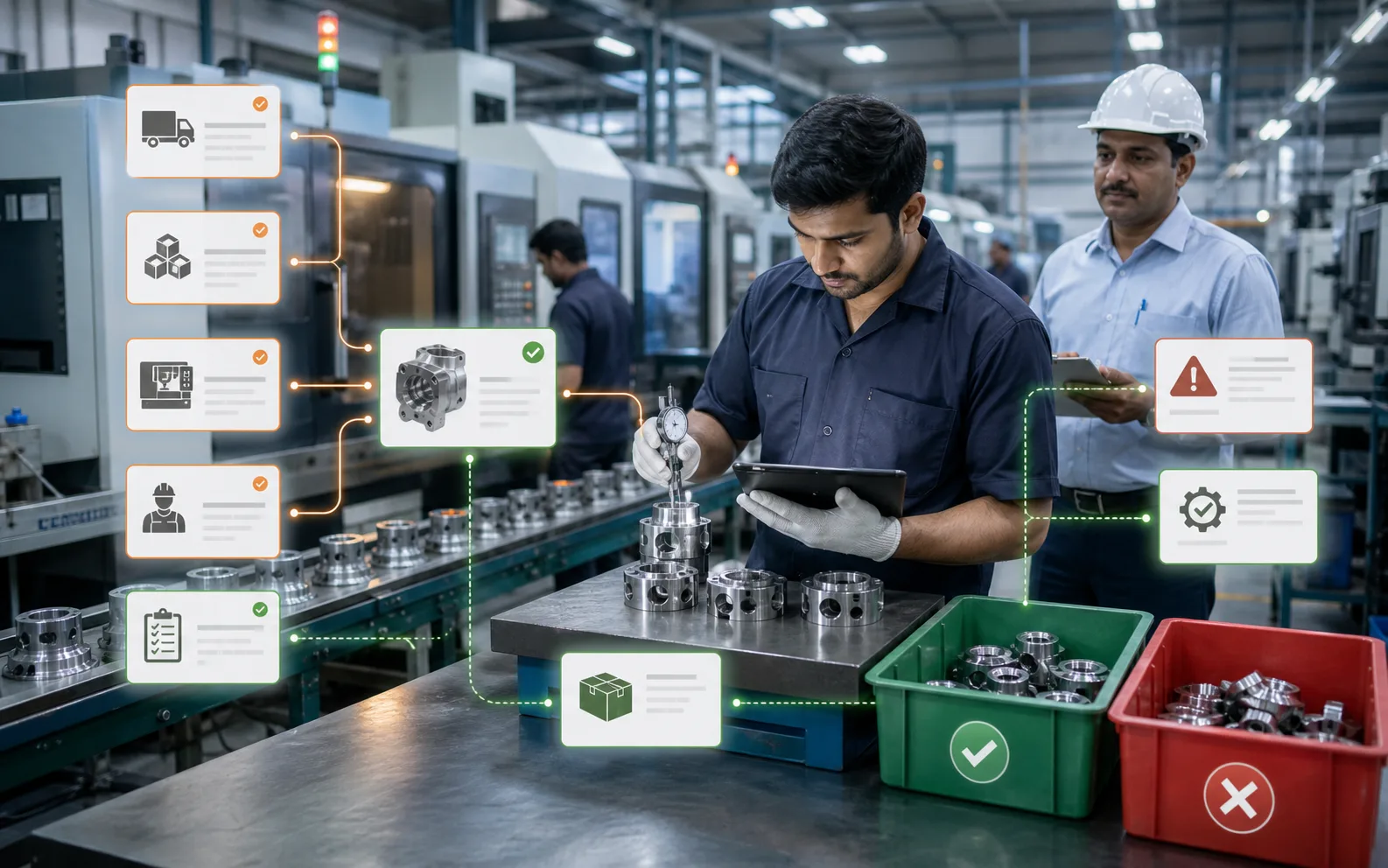
Casting defects are reduced by tracking process inputs, heat numbers, moulding conditions, pouring records, inspection results, defect types, rejection, rework, root causes, and corrective actions. The key is not only finding defects, but learning which conditions create them repeatedly.
Foundry defects can come from material, charge mix, melting, pouring, moulding, core making, sand conditions, temperature control, handling, or process discipline. If records are scattered, teams spend more time debating causes than fixing them.
AICAN Optiwise helps manufacturers connect foundry production, inventory, furnace, quality, maintenance, dispatch, finance, and reporting so defect reduction can be managed with better evidence.
Track defects by type
A total rejection number does not explain the problem. Foundries should capture defect categories clearly.
Examples may include:
- Porosity
- Blowholes
- Shrinkage
- Cold shut
- Misrun
- Inclusion
- Crack
- Dimensional issue
- Surface defect
The exact list should match the foundry process. Clear defect categories help quality teams identify repeat patterns.
Connect defects with heat numbers
Heat-level traceability is essential. A defect should be traceable to the heat, furnace, charge mix, pouring batch, and job.
ERP should connect:
- Heat number
- Furnace used
- Material grade
- Charge mix
- Pouring date and shift
- Job or casting reference
- Inspection result
- Defect type
- Rejection quantity
This helps identify whether certain heats, grades, or material combinations create higher risk.
Review process stage where defect was found
Knowing where a defect was found helps identify where to act.
Track:
- Moulding
- Core making
- Melting
- Pouring
- Shakeout
- Fettling
- Machining
- Final inspection
This helps separate process creation from detection point and supports better root cause analysis.
Capture rejection and rework cost
Defects affect both quality and margin. ERP should help quantify the loss.
Track:
- Quantity rejected
- Quantity reworked
- Rework method
- Scrap value
- Extra material consumed
- Extra process time
- Customer impact
- Cost impact
This helps owners prioritize the defects that hurt the business most.
Close corrective actions
Defect reduction needs follow-through. If corrective actions are not tracked, the same issue can return.
A practical workflow should include:
- Defect logged
- Root cause recorded
- Responsible person assigned
- Corrective action planned
- Target date set
- Action completed
- Result reviewed
This turns quality records into improvement action.
Use dashboards for trends
ERP dashboards can help foundries review:
- Defect by type
- Defect by heat number
- Rejection by grade
- Rejection by customer or job
- Rework cost
- Repeat issues
- Corrective action status
These trends help teams focus on recurring problems rather than isolated incidents.
Where Optiwise fits
Optiwise can help foundries reduce casting defects by connecting heat tracking, material consumption, production stages, inspection, rejection, rework, corrective action, costing, and dashboards.
A practical implementation can focus on:
- Defect type tracking
- Heat number traceability
- Stage-wise quality records
- Rejection and rework analysis
- Root cause capture
- Corrective action follow-up
- Cost impact reports
AICAN helps manufacturers build quality systems that support daily improvement.
Founder’s Note
Casting defects rarely improve through memory alone. They improve when the factory can see the pattern: which heat, which process, which reason, which cost, and which action. At AICAN, we believe ERP should make that pattern visible so foundries can improve with discipline. Learn more at About AICAN.
FAQs
How do I reduce casting defects?
Reduce defects by tracking heat numbers, material, process stages, defect types, rejection, rework, root causes, corrective actions, and cost impact.
Why is heat number tracking important?
Heat numbers connect defects with furnace operation, charge mix, material grade, pouring, casting output, and quality results.
Can ERP track foundry defects?
Yes. ERP can track defect type, stage, heat number, quantity affected, rework, rejection, cause, action, and cost.
What casting defect reports are useful?
Useful reports include defect by type, defect by heat, rejection by grade, rework cost, repeat defects, and corrective action status.
Does ERP itself remove casting defects?
No. ERP gives visibility and discipline. Defects reduce when teams use that data to improve process, material control, training, and maintenance.

Related Posts

Kanban System | Optiwise
Learn how a Kanban system works in manufacturing, where it helps, where it fails, and how Optiwise connects Kanban signals with inventory, purchase, and production planning.
12 Jun 2026Read more →Erp In Operations Management | Optiwise
Learn how ERP improves operations management by connecting planning, inventory, purchase, production, quality, dispatch, finance, and reporting.
12 Jun 2026Read more →ERP for FMCG Companies in India
A practical guide to ERP for FMCG companies in India, covering distributor orders, batch tracking, expiry, inventory, production, schemes, costing, and reporting.
11 Jun 2026Read more →
Optiwise, Odoo, Acumatica and Business Central for Manufacturing
Compare manufacturing workflows in Optiwise, Odoo, Acumatica and Dynamics 365 Business Central. See what your factory can run in Optiwise.
11 Jun 2026Read more →