
Do We Need Special Cameras for Computer Vision Inspection?
Learn when manufacturers need industrial cameras for computer vision inspection and when standard cameras may not be enough for accuracy, speed, lighting, and reliability.
Do We Need Special Cameras for Computer Vision Inspection?
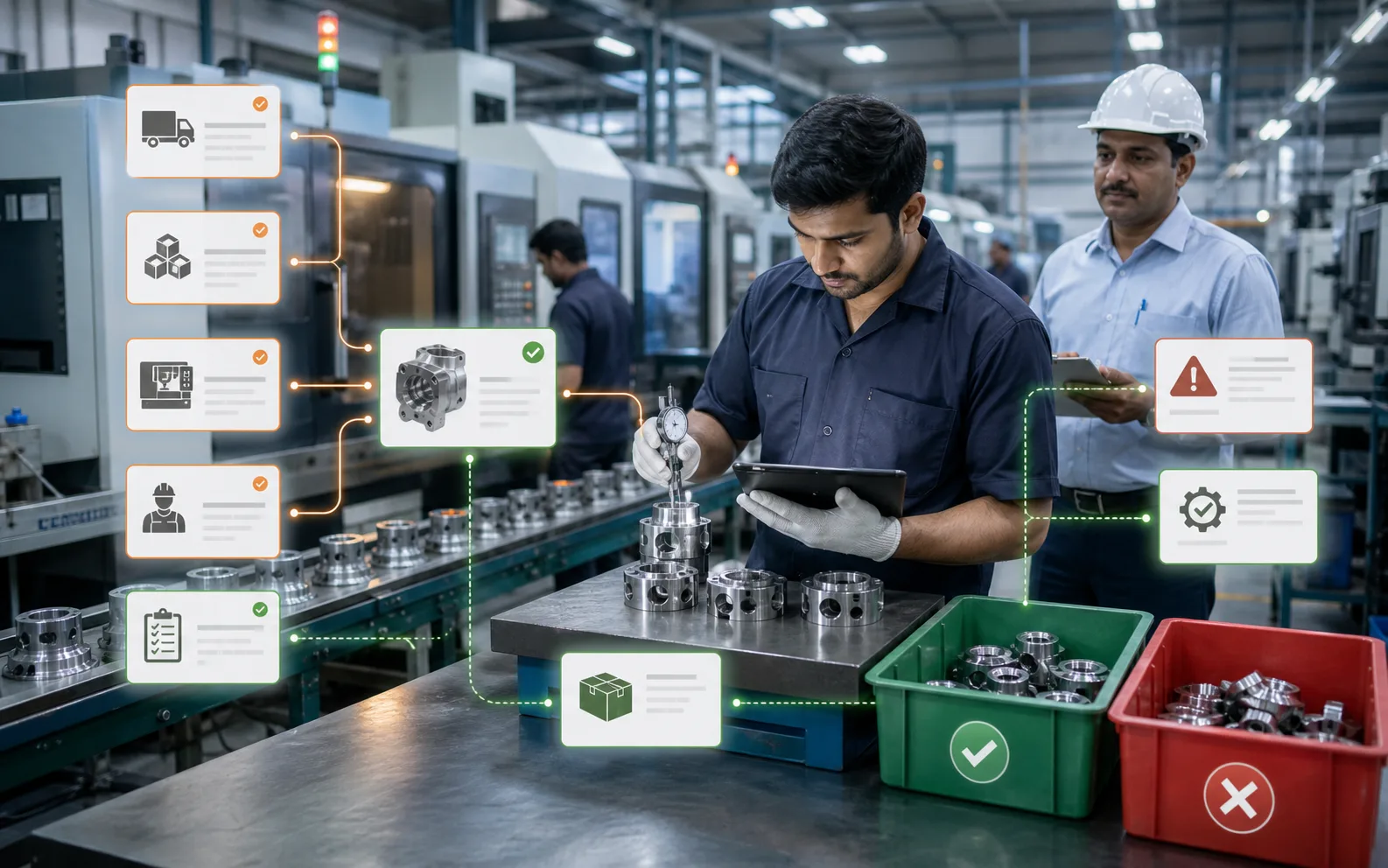
You may need special cameras for computer vision inspection if the task requires reliable accuracy at production speed.
A normal camera can capture images. An industrial vision camera is built to capture the right image repeatedly under factory conditions. That difference matters when the system must detect small defects, measure dimensions, read codes, inspect fast-moving products, or trigger rejection without delay.
The camera choice should follow the inspection problem, not the other way around.
For manufacturers using AICAN Optiwise, camera quality matters because inspection data must be trustworthy before it appears in dashboards and reports.
Standard cameras may work for simple visibility
If the goal is only to view a process remotely, a standard camera may be enough.
For example, a manager may want to see whether a line is running or whether material is present in a broad area. In that case, video visibility may be useful even if it is not a formal inspection system.
But visibility is different from automated inspection. Inspection needs repeatable image quality and decision accuracy.
Industrial cameras are built for repeatability
Industrial cameras are designed for controlled capture.
They may offer better triggering, frame rates, exposure control, lens compatibility, mounting, communication, synchronization, and durability. These features matter when the line is moving and the system must inspect every product consistently.
If the inspection result affects quality release, rejection, or customer commitments, industrial-grade hardware is often worth considering.
Resolution depends on defect size
Camera resolution should be selected based on the smallest feature or defect that must be detected.
If the defect is a missing large label, resolution requirements may be modest. If the defect is a tiny scratch, pinhole, misprint, or small component, higher resolution may be needed.
Too little resolution misses defects. Too much resolution increases cost, data size, processing load, and setup complexity.
Frame rate depends on line speed
Fast lines need cameras that can capture clear images at the required speed.
If products move quickly, the camera, lighting, exposure, and trigger must work together. Motion blur can make a good camera perform badly. Sometimes a strobe light or shorter exposure is needed.
The production speed should be known before camera selection.
Lens and lighting matter as much as the camera
A camera without the right lens and lighting will struggle.
The lens determines field of view, focus, distortion, and working distance. Lighting determines whether the defect is visible. A lower-cost camera with excellent lighting may outperform a high-end camera with poor lighting.
Vision projects should treat camera, lens, lighting, and mounting as one system.
Factory environment affects camera choice
Dust, vibration, washdown, oil, heat, and operator contact can all affect camera reliability.
Some applications need enclosures, protective windows, cooling, sealed housings, or rugged mounting. A camera that works on a desk may not survive a production line.
Industrial inspection should be designed for the plant, not the lab.
Software compatibility matters
The camera must work with the inspection software and integration architecture.
Check supported interfaces, drivers, image formats, trigger methods, latency, and compatibility with PLCs, edge computers, or vision software. A technically good camera can still create integration difficulty if the software stack does not support it well.
Where AICAN Optiwise fits
AICAN Optiwise helps manufacturers use inspection results in dashboards, alerts, and quality workflows. The platform depends on reliable input from the vision system, so camera and lighting choices should be validated properly.
AICAN works with manufacturers that want practical technology choices, not overbuying or underbuilding. Learn more at About AICAN.
Founder’s Note
Do not buy the fanciest camera first. Define the defect, speed, lighting, and decision. Then choose the simplest camera system that can produce reliable evidence every shift. The right camera is the one that makes the inspection trustworthy.
FAQs
Can CCTV cameras be used for computer vision inspection?
Sometimes for simple monitoring, but formal inspection usually needs better control over image capture, lighting, trigger, and resolution.
What camera resolution do I need?
It depends on the smallest defect or feature that must be detected and the field of view.
Is lighting more important than camera choice?
Often, yes. Poor lighting can ruin inspection accuracy even with a good camera.
Do industrial cameras cost more?
They often do, but they may provide the reliability and control needed for production inspection.
How does AICAN Optiwise use camera inspection data?
It can connect inspection outputs into dashboards, alerts, and reports when the vision system provides reliable results.

Related Posts

Kanban System | Optiwise
Learn how a Kanban system works in manufacturing, where it helps, where it fails, and how Optiwise connects Kanban signals with inventory, purchase, and production planning.
12 Jun 2026Read more →Erp In Operations Management | Optiwise
Learn how ERP improves operations management by connecting planning, inventory, purchase, production, quality, dispatch, finance, and reporting.
12 Jun 2026Read more →ERP for FMCG Companies in India
A practical guide to ERP for FMCG companies in India, covering distributor orders, batch tracking, expiry, inventory, production, schemes, costing, and reporting.
11 Jun 2026Read more →
Optiwise, Odoo, Acumatica and Business Central for Manufacturing
Compare manufacturing workflows in Optiwise, Odoo, Acumatica and Dynamics 365 Business Central. See what your factory can run in Optiwise.
11 Jun 2026Read more →