
Tech Job Growth in Manufacturing: What You Need to Know
Understand why tech job growth in manufacturing is rising and what roles are emerging in ERP, automation, IoT, analytics, AI, and operations software.
Tech Job Growth in Manufacturing: What You Need to Know
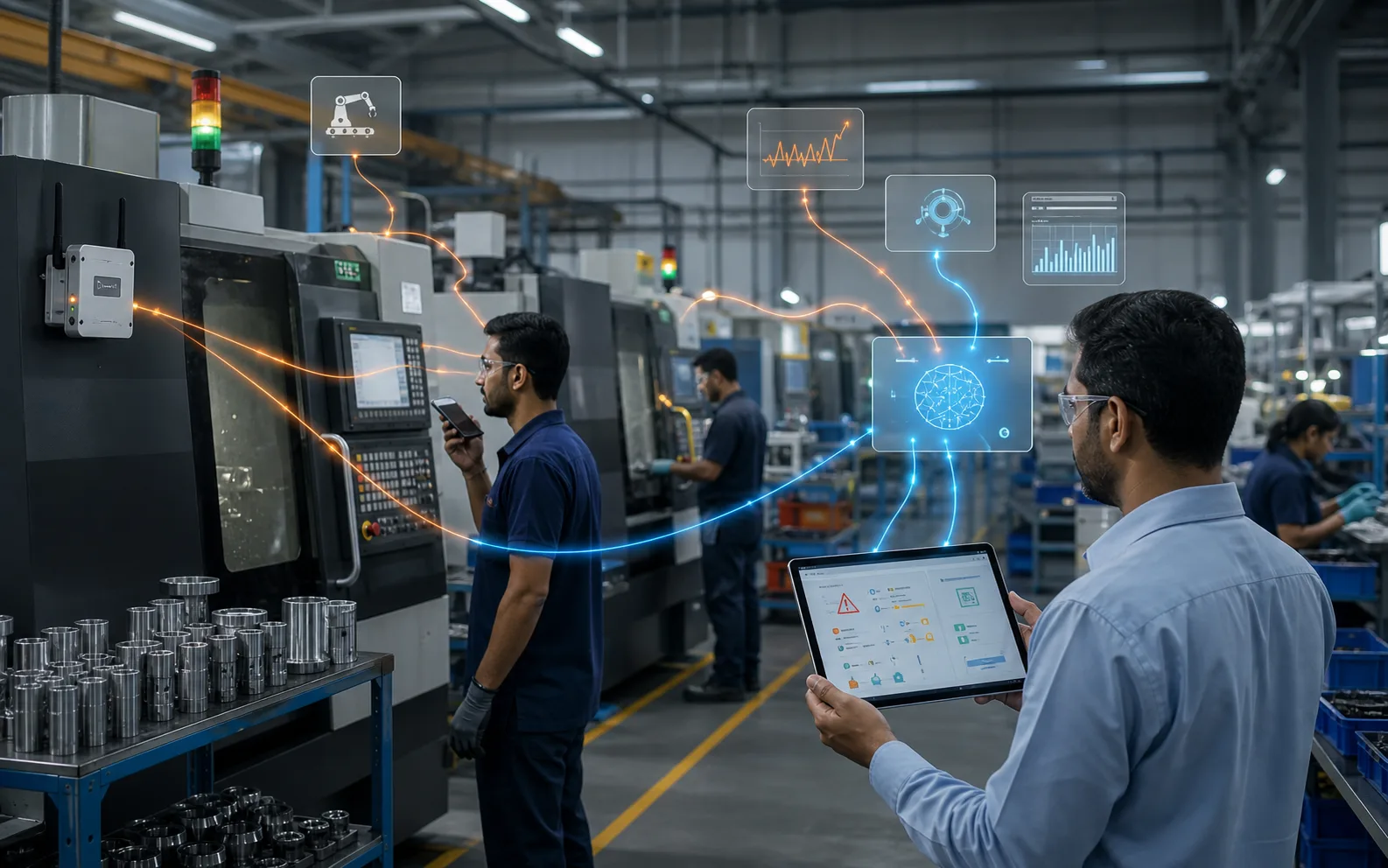
Manufacturing is becoming more digital because factories cannot scale on manual coordination alone. Customers expect faster delivery. Raw material prices fluctuate. Quality standards are stricter. Owners want real-time visibility. Teams need fewer delays and fewer surprises.
This is why tech job growth in manufacturing is becoming more visible. The industry needs people who can build, implement, support, analyze, and improve digital systems.
Why Manufacturing Needs More Tech Talent
Many factories still depend on spreadsheets, phone calls, paper registers, and disconnected software. These methods work for a while, but they become painful as order volume, product variety, and compliance needs increase.
Manufacturers need software for sales tracking, purchase planning, inventory control, production scheduling, quality management, dispatch, finance visibility, and reporting. They also need integrations between systems so data does not have to be entered again and again.
That creates demand for developers, analysts, implementation consultants, product managers, QA testers, automation engineers, and support teams.
The Biggest Growth Areas
ERP modernization is one of the biggest areas. Manufacturers want systems that are easier to use, faster to implement, and more connected to daily work.
Automation and IoT are also growing. Machines, sensors, and shopfloor devices can generate useful data, but companies need software people to capture and interpret it.
Analytics is another strong area. Owners and managers want dashboards for production efficiency, inventory ageing, order status, rejection, vendor performance, and cash flow.
AI is now entering the picture. AI agents and assistants can help summarize data, flag risks, answer operational questions, and guide users through workflows.
Roles That Are Emerging
Manufacturing tech is creating roles such as ERP developer, implementation specialist, manufacturing data analyst, IoT software engineer, automation integration engineer, product analyst, customer success manager, and AI workflow designer.
Some roles sit inside manufacturing companies. Others sit inside software companies that serve manufacturers.
What Makes Manufacturing Different From Other Industries
Manufacturing software affects physical movement. If inventory is wrong, production may stop. If quality data is missed, defective material may reach customers. If dispatch data is delayed, customer commitments suffer.
That gives manufacturing tech work a seriousness that many professionals enjoy. The software is not abstract. It changes what happens on the factory floor.
Where AICAN Optiwise Fits
AICAN Optiwise is built for manufacturers who want connected operations without getting trapped in disconnected tools. It combines ERP modules, shopfloor visibility, finance insights, and AI agents across key workflows.
As more manufacturers adopt systems like Optiwise, the demand for people who understand both software and manufacturing will continue to grow.
FAQ
Are tech jobs increasing in manufacturing?
Yes. Digital transformation, ERP adoption, automation, analytics, and AI are increasing demand.
What manufacturing tech roles are in demand?
ERP developers, implementation specialists, data analysts, automation engineers, IoT engineers, and support professionals are in demand.
Is manufacturing tech a stable career path?
It can be stable because manufacturers depend on reliable systems for daily operations.
Final Thought
Manufacturing tech is growing because factories need better control, visibility, and speed. People who can connect software with real operations will find meaningful opportunities in this shift.

Related Posts

Will AI Create More Jobs Than It Destroys?
Explore whether AI will create more jobs than it destroys, with a practical view of manufacturing, automation, new roles, reskilling, and business transformation.
13 Jun 2026Read more →Manufacturing AI vs. Hiring More Workers
Compare manufacturing AI with hiring more workers and learn when automation, better systems, training, or additional people are the right answer.
7 Jun 2026Read more →
Will AI Replace My Production Planning Job?
Understand how AI affects production planning jobs, what tasks may change, and how planners can become more valuable with AI-supported scheduling and visibility.
6 Jun 2026Read more →Do I Need Special Skills to Use AI in Manufacturing?
Learn what skills manufacturing teams need to use AI, including process knowledge, data discipline, prompt clarity, review judgment, ERP understanding, and change readiness.
6 Jun 2026Read more →