
How Much Technical Expertise Do We Need In-House?
Learn what in-house skills manufacturers need to run computer vision systems, which tasks vendors can support, and how to build practical ownership without hiring a full AI team.
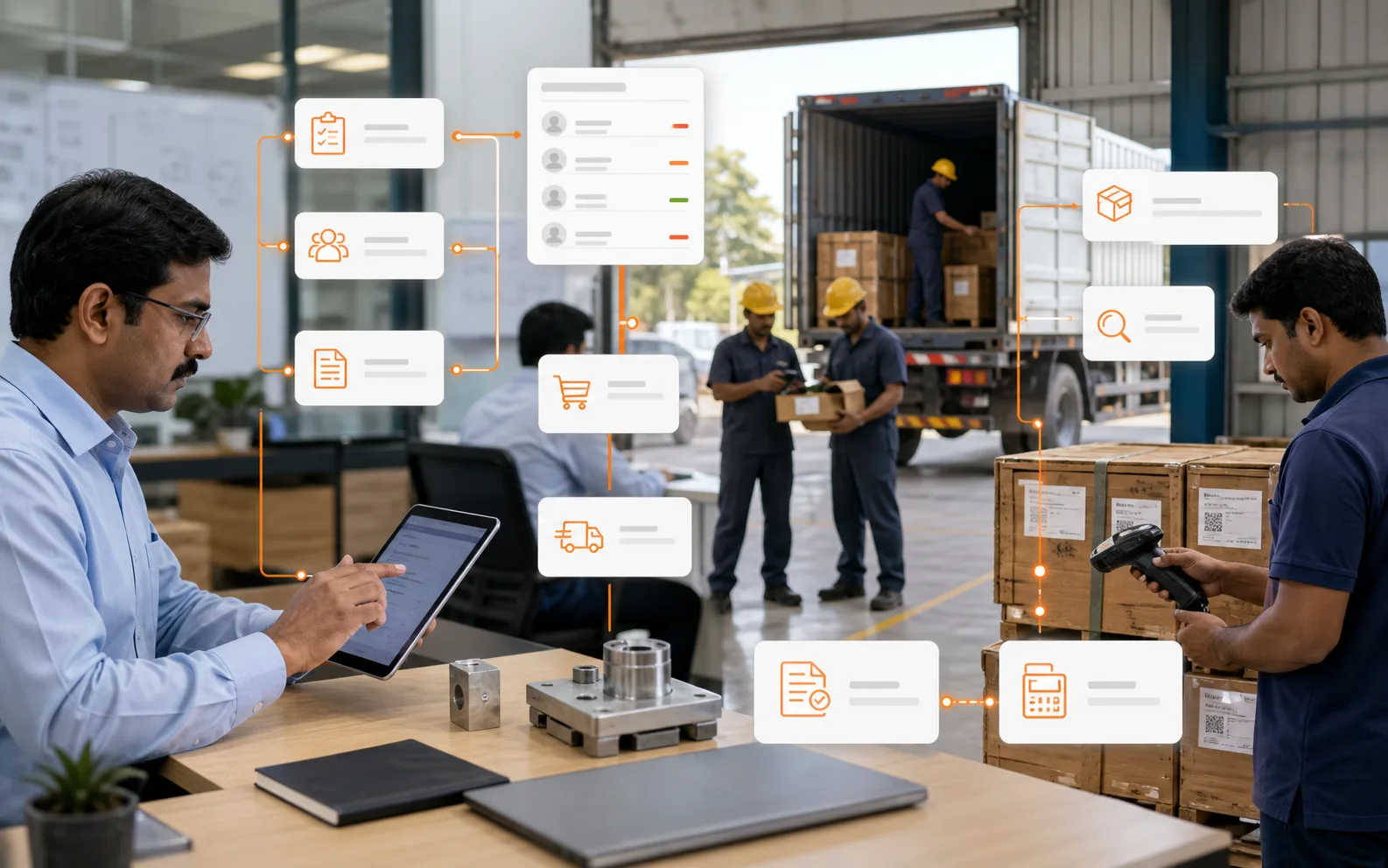
Most factories do not need an AI team to use computer vision. They do need clear ownership.
One reason manufacturers delay computer vision projects is the fear that the system will be too technical to maintain. They imagine needing data scientists, machine learning engineers, and camera specialists on payroll before they can start.
For many use cases, that is not true.
A well-implemented computer vision system should be usable by operators, quality teams, supervisors, and maintenance staff with role-specific training. You may still need a capable technology partner for setup, tuning, upgrades, and advanced troubleshooting, but day-to-day use should not depend on rare technical skills.
The key is to define what your team must own and what your partner must support.
Operators need workflow confidence, not coding skills
Operators should not need to understand algorithms. Their responsibility is to run the process correctly.
They need to know:
- What the system checks
- What pass, fail, warning, or uncertain means
- How to handle rejected parts
- When to stop or escalate
- What not to move or adjust
- How to respond during changeover
- How to report repeated false rejects
If the operator interface is confusing, the project has already made their job too hard. The system should fit production rhythm.
Quality teams need inspection ownership
Quality engineers or quality leads usually need deeper knowledge. They should understand defect categories, acceptance rules, review workflows, and how to interpret inspection history.
They do not always need to train AI models themselves, but they should own the quality logic:
- What is considered acceptable?
- Which defect categories matter?
- What is critical versus reviewable?
- How are false rejects and false accepts handled?
- When should inspection logic be revised?
- How are changes documented?
This ownership is important because the vision system is making quality decisions. The quality team must be able to explain those decisions.
Maintenance needs hardware and uptime skills
Maintenance teams should understand the physical system:
- Camera mount
- Light source
- Lens and enclosure
- Power supply
- Network cable
- Reject mechanism
- Industrial PC or edge device
- Basic cleaning and inspection routine
They do not need to rewrite software, but they should be able to identify whether a problem is physical. A dirty lens, loose bracket, failed light, or disconnected cable can look like a software problem to an untrained team.
Practical maintenance training prevents unnecessary downtime.
Supervisors need process and escalation control
Supervisors should know how to manage the inspection workflow. They need enough technical understanding to ask good questions, but their job is not to tune models.
They should know:
- Whether the system is active
- Whether operators are following reject handling
- Whether false rejects are rising
- Whether production is bypassing inspection
- When to involve quality or maintenance
- How to read shift-level trends
This is where connected dashboards help. AICAN Optiwise can make inspection data part of the daily production view instead of keeping it hidden inside the vision station.
Admin-level skills may remain with the partner
Some tasks may stay with the technology partner or a trained internal admin:
- Initial camera and lighting design
- Model training or advanced rule configuration
- Integration with ERP, MES, PLC, or dashboards
- Major recipe changes
- Software updates
- Security configuration
- Advanced troubleshooting
- Performance tuning after new product introductions
This is normal. Manufacturers do not need to own everything on day one. But they should know who owns each task.
Build an ownership matrix
Before go-live, create a simple ownership matrix.
For each activity, define owner and backup:
- Daily operation
- Reject handling
- Cleaning lens cover
- Checking light status
- Reviewing rejected images
- Approving recipe changes
- Reporting false rejects
- Restarting the system
- Escalating downtime
- Coordinating vendor support
- Reviewing monthly performance
This removes confusion. When something happens at 11:30 PM during night shift, people should not be debating who is responsible.
How much IT involvement is needed?
IT should be involved early if the system connects to the network, cloud, ERP, MES, or central dashboards.
IT may need to review:
- Network access
- User roles
- Data storage
- Backup
- Security policy
- Remote support access
- API credentials
- Device management
This does not mean IT must run the vision system daily. But they should approve the architecture so the system does not become an unmanaged device on the plant network.
When do you need deeper in-house expertise?
You may need more internal technical capability if:
- You plan to deploy across many lines quickly
- Product variants change frequently
- New inspection recipes are created often
- You want internal teams to train models
- Downtime cost is very high
- The system is connected to critical line controls
- You have strict data governance requirements
In such cases, training one or two internal champions can be useful. These champions do not need to become full AI engineers, but they should understand the system deeply enough to coordinate changes and support adoption.
What a good partner should provide
A computer vision partner should not leave your team dependent and confused. They should provide:
- Role-wise training
- Operator SOP
- Maintenance checklist
- Escalation path
- Basic troubleshooting guide
- Change management process
- Support contact and response expectations
- Documentation of recipes and system configuration
AICAN works with manufacturers from the view that technology should fit operational reality. A system is successful only when the plant can run it confidently.
Where AICAN Optiwise fits
AICAN Optiwise helps reduce the expertise burden by bringing inspection results into a familiar operating layer: production, inventory, quality, dispatch, and management dashboards. The more context a team has in one place, the less they depend on specialist interpretation for every decision.
You can learn more about the company at About AICAN.
Founder's Note
The question is not, "Do we have AI experts?" The better question is, "Do we have clear owners for operation, quality, maintenance, support, and improvement?"
Factories are good at running processes when the process is clear. Computer vision should be introduced the same way: clear responsibilities, clear escalation, and clear evidence.
FAQs
1. Do we need to hire a data scientist for computer vision?
Usually no for standard inspection use cases. A partner can handle model setup and tuning while your team owns operation, review, and process action.
2. Who should be the internal owner?
Usually a quality or production lead, supported by maintenance and IT. The owner should understand the business problem and coordinate with the technology partner.
3. Can operators manage daily use?
Yes, if the interface is designed well and operators are trained on practical workflows, alerts, rejection handling, and escalation.
4. What should maintenance know?
Maintenance should understand camera mounting, lighting, cleaning, cable checks, power, network basics, and when recalibration or vendor support is required.
5. How do we avoid vendor dependency?
Ask for documentation, training, ownership matrix, basic troubleshooting guides, and clear support terms. Train internal champions for recurring tasks.

Related Posts

Kanban System | Optiwise
Learn how a Kanban system works in manufacturing, where it helps, where it fails, and how Optiwise connects Kanban signals with inventory, purchase, and production planning.
12 Jun 2026Read more →Erp In Operations Management | Optiwise
Learn how ERP improves operations management by connecting planning, inventory, purchase, production, quality, dispatch, finance, and reporting.
12 Jun 2026Read more →ERP for FMCG Companies in India
A practical guide to ERP for FMCG companies in India, covering distributor orders, batch tracking, expiry, inventory, production, schemes, costing, and reporting.
11 Jun 2026Read more →
Optiwise, Odoo, Acumatica and Business Central for Manufacturing
Compare manufacturing workflows in Optiwise, Odoo, Acumatica and Dynamics 365 Business Central. See what your factory can run in Optiwise.
11 Jun 2026Read more →