
How Do I Track Furnace Performance?
Learn how foundries can track furnace performance using heat numbers, charge mix, melting time, energy use, downtime, temperature records, quality results, and ERP dashboards.
How Do I Track Furnace Performance?
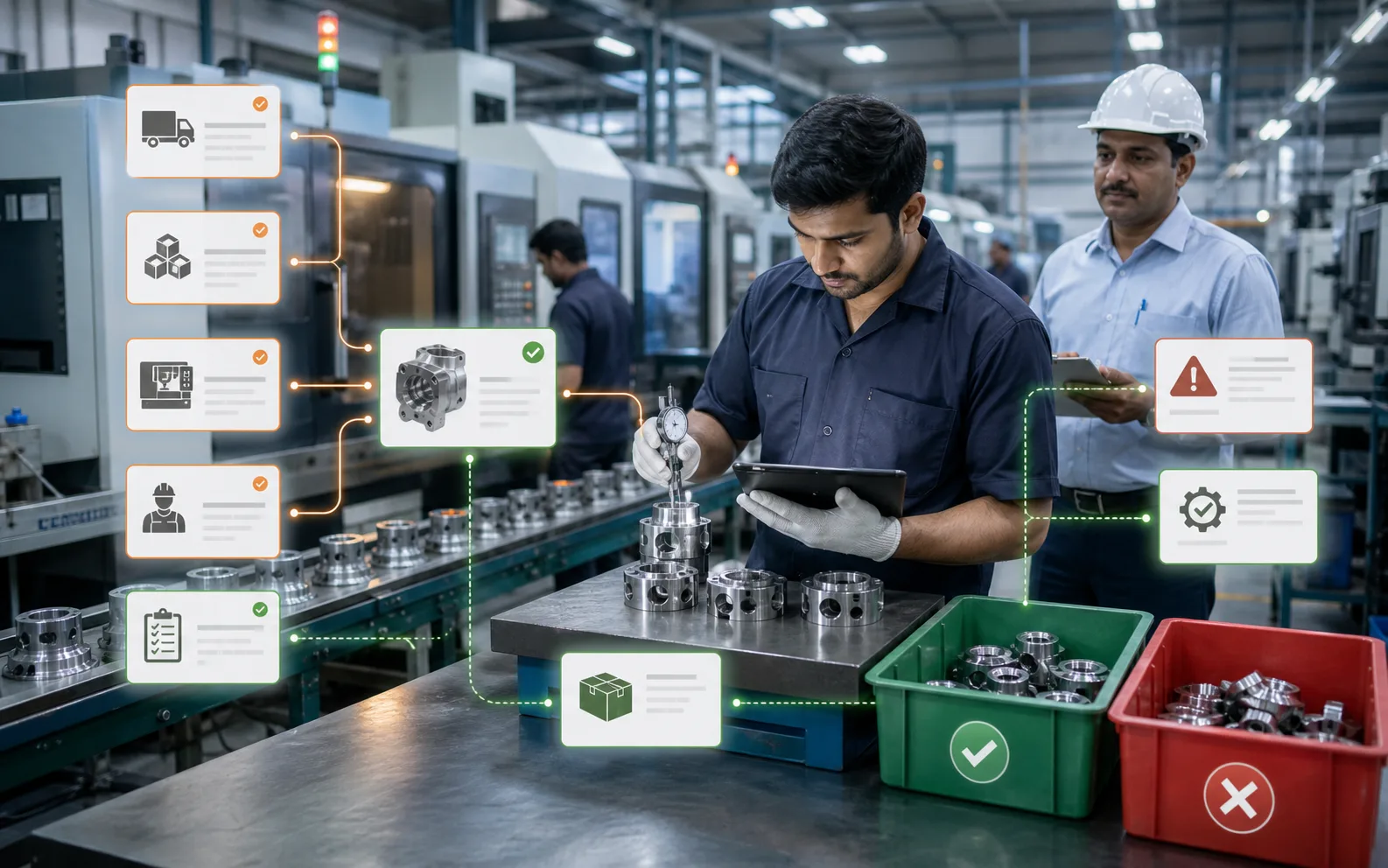
Furnace performance is tracked by connecting heat numbers, charge mix, melting time, furnace status, downtime, energy use, output, quality test results, rejection, and casting traceability in one system. For a foundry, the furnace is not just another machine. It is one of the main cost, quality, and capacity drivers.
If furnace performance is reviewed only at the end of the month, the foundry loses the chance to correct problems while they are happening. ERP and IoT visibility can help teams understand each heat, each stoppage, each quality result, and each cost impact more clearly.
AICAN Optiwise helps manufacturers connect production, inventory, quality, maintenance, finance, dispatch, and reporting so furnace performance can be reviewed with operational context.
Start with heat number discipline
Heat number tracking is the foundation of furnace performance control. Every heat should connect to material consumed, furnace used, output produced, quality result, and casting batches affected.
ERP should capture:
- Heat number
- Furnace name or ID
- Date and shift
- Grade or alloy
- Charge mix reference
- Operator or shift reference where used
- Quantity melted
- Quantity poured
- Linked production orders
This creates traceability and helps quality teams investigate issues later.
Track charge mix and material consumption
Furnace performance is affected by raw material quality, scrap, alloys, returns, and charge planning.
Track:
- Raw material issued
- Scrap or return material used
- Alloy additions
- Consumption quantity
- Material cost
- Balance stock
- Variance from planned charge
This helps the foundry understand whether cost and quality issues begin from the material side.
Monitor melting time and downtime
A furnace may lose performance because of long melting cycles, power issues, breakdowns, waiting for charge material, waiting for moulds, or maintenance delays.
Useful tracking includes:
- Heat start time
- Heat end time
- Melting duration
- Waiting time
- Downtime reason
- Breakdown details
- Maintenance action
- Output loss
This helps management identify whether the issue is equipment, material planning, maintenance, or production coordination.
Connect furnace data with quality
Furnace performance must be reviewed alongside quality results. A fast melt that creates quality problems is not a successful heat.
ERP should connect:
- Heat number
- Test result
- Chemical or quality reference where applicable
- Casting batch
- Defect type
- Rejection quantity
- Rework or repair
- Customer complaint where configured
This gives a clearer picture of process performance.
Review energy and cost impact
Energy is a major cost in furnace operations. Even when exact automatic energy integration is not available, foundries can still track useful cost data through structured records.
Review:
- Energy or fuel reference where configured
- Furnace utilization
- Melting time
- Rejection cost
- Rework cost
- Material cost per heat
- Output per heat
This helps owners identify expensive patterns and improve planning.
Where Optiwise fits
Optiwise can help foundries connect furnace performance with ERP workflows such as heat tracking, charge mix, inventory, production, quality, maintenance, costing, and dispatch.
A practical implementation can focus on:
- Heat number traceability
- Charge mix tracking
- Furnace status and downtime
- Quality result linkage
- Rejection analysis
- Maintenance records
- Cost dashboards
AICAN helps foundries build visibility around the processes that affect quality and margin most.
Founder’s Note
A furnace record should tell more than what was melted. It should show what was planned, what was consumed, how long it took, what quality result came out, and what it cost the business. At AICAN, we believe that kind of operational clarity is the base for better foundry decisions. Learn more at About AICAN.
FAQs
How do I track furnace performance?
Track heat numbers, charge mix, furnace status, melting time, downtime, energy or fuel references, quality results, rejection, and cost impact.
Why are heat numbers important?
Heat numbers connect furnace operation with material consumption, casting output, quality results, rejection, and traceability.
Can ERP track furnace downtime?
Yes. ERP can capture downtime reason, duration, affected heat or job, maintenance action, and output loss.
How does furnace tracking improve quality?
It connects heat data with test results, defects, rejection, and rework so teams can identify process patterns.
What furnace reports should foundries review?
Useful reports include heat traceability, charge mix variance, melting time, downtime, rejection by heat, maintenance issues, and cost per heat.

Related Posts

Kanban System | Optiwise
Learn how a Kanban system works in manufacturing, where it helps, where it fails, and how Optiwise connects Kanban signals with inventory, purchase, and production planning.
12 Jun 2026Read more →Erp In Operations Management | Optiwise
Learn how ERP improves operations management by connecting planning, inventory, purchase, production, quality, dispatch, finance, and reporting.
12 Jun 2026Read more →ERP for FMCG Companies in India
A practical guide to ERP for FMCG companies in India, covering distributor orders, batch tracking, expiry, inventory, production, schemes, costing, and reporting.
11 Jun 2026Read more →
Optiwise, Odoo, Acumatica and Business Central for Manufacturing
Compare manufacturing workflows in Optiwise, Odoo, Acumatica and Dynamics 365 Business Central. See what your factory can run in Optiwise.
11 Jun 2026Read more →