
How Do I Track Mold Performance?
Learn how injection molding factories can track mold performance using shot count, cavity output, cycle time, rejection, maintenance history, downtime, quality issues, and ERP dashboards.
How Do I Track Mold Performance?
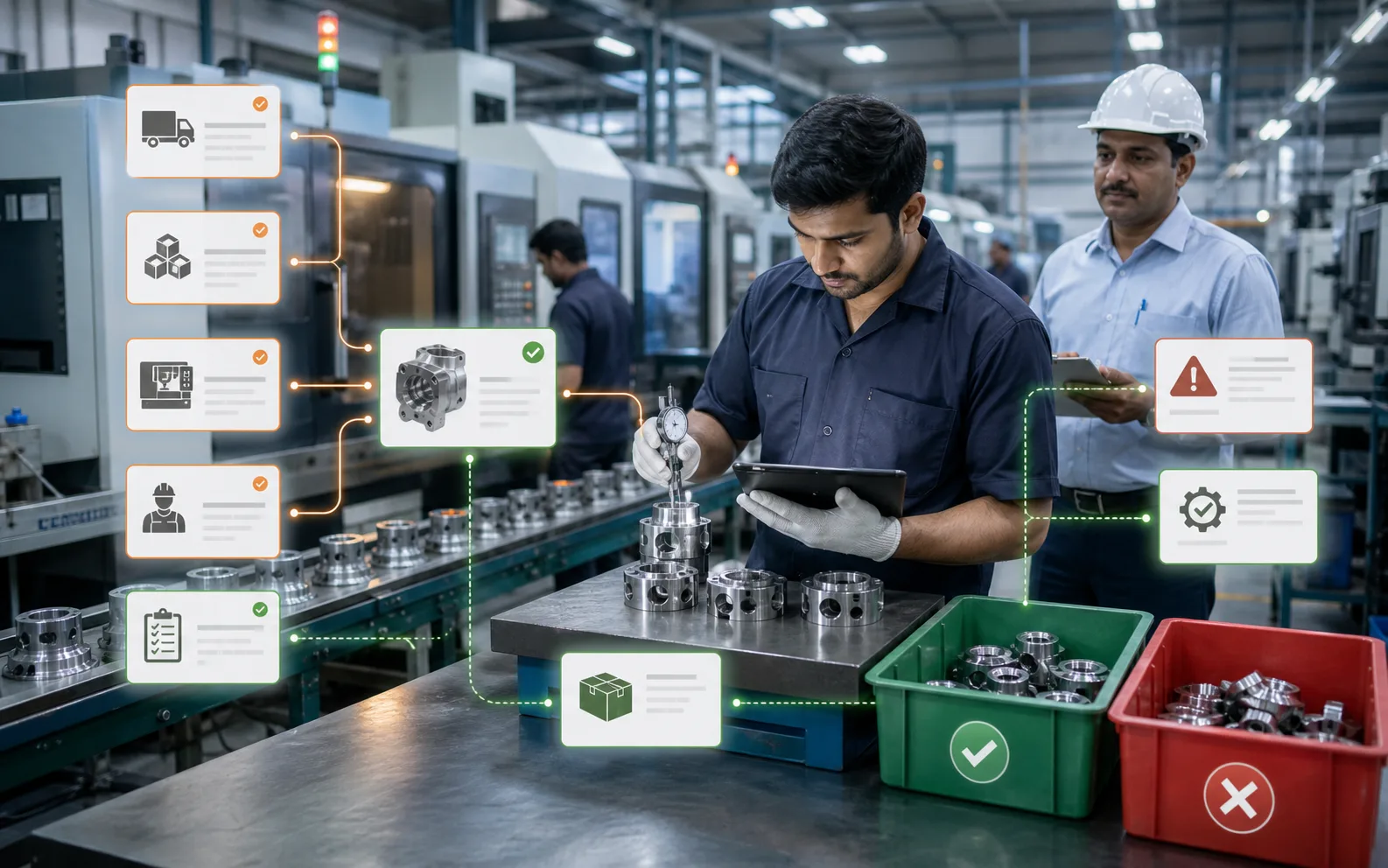
You track mold performance by measuring how each mold performs in real production: shot count, cycle time, cavity output, downtime, maintenance history, rejection, setup time, quality issues, and actual production output against plan. The goal is to know whether a mold is helping production run smoothly or quietly causing delay, rejection, and extra cost.
In injection molding, the mold is not just a tool. It is one of the most important production assets in the factory. A machine may be available, resin may be ready, and operators may be present, but if the mold is damaged, unstable, unavailable, or producing high rejection, the job will not run properly.
Many factories know mold problems informally. The supervisor says “this mold always gives flash,” or the operator says “cavity three is weak,” or maintenance says “this mold needs repair soon.” That knowledge is useful, but it should not live only in conversations. It should be captured in the ERP so planning, production, maintenance, quality, and costing all see the same picture.
AICAN Optiwise helps plastic manufacturers connect mold performance with production, quality, maintenance, inventory, dispatch, and costing.
Why Mold Performance Matters
A mold affects production in several ways:
- Output per cycle
- Part quality
- Setup time
- Cycle time stability
- Machine compatibility
- Rejection rate
- Maintenance frequency
- Delivery reliability
- Job costing
If a mold has eight cavities but only six are producing acceptable parts, the production plan may be wrong. If a mold needs frequent repair, maintenance cost rises. If cycle time is slower than expected, delivery and pricing assumptions suffer.
Tracking mold performance helps the factory stop guessing.
What To Track For Each Mold
A strong mold performance record should include:
- Mold code
- Part number linked to mold
- Customer ownership if applicable
- Cavity count
- Compatible machines
- Shot count or production count
- Planned cycle time
- Actual cycle time
- Setup time
- Rejection rate
- Rejection reasons
- Downtime events
- Maintenance history
- Repair status
- Tool room remarks
- Current location
- Availability status
Not every company needs every field on day one, but the system should grow toward this level of visibility.
Shot Count And Mold Life
Shot count helps track how much a mold has been used. It can support preventive maintenance and life planning.
If a mold is expected to need maintenance after a certain number of shots, ERP should help alert the team before failure occurs. This is especially useful for high-volume parts where unexpected mold failure can create major delivery risk.
Shot count also helps with customer-owned molds. The factory can provide clearer usage records when needed.
Cavity Performance
Cavity count is important in injection molding. A mold may have multiple cavities, but not all cavities may perform equally.
Track whether all cavities are active and producing acceptable parts. If one cavity is blocked or producing defects, output per cycle changes. This affects production planning and costing.
A production plan based on eight cavities will fail if only seven cavities are usable.
Cycle Time And Setup Time
Mold performance should be linked to cycle time. If a mold regularly takes longer than planned, the factory needs to understand why.
Possible reasons include cooling issue, mold wear, machine mismatch, process instability, operator handling, or quality adjustments.
Setup time should also be tracked. Some molds may take longer to set because of alignment, clamping, auxiliary equipment, insert setup, or maintenance condition.
Rejection Linked To Mold
Rejection should be connected to mold performance. Defects such as flash, short shot, warpage, sink marks, dimensional variation, flow marks, or cavity imbalance may indicate mold-related issues.
ERP should show rejection trends by mold, not only by part or machine. This helps quality and maintenance teams identify repeat issues.
Maintenance And Repair History
A mold performance system should capture maintenance and repair history:
- Preventive maintenance dates
- Breakdown or repair events
- Parts replaced
- Tool room observations
- Pending repair
- Trial results after repair
- Next maintenance due
This history helps avoid repeated firefighting. It also helps decide whether a mold should be refurbished or replaced.
Mold Availability For Planning
Production planning must know whether the mold is available and production-ready. A mold may exist physically but be under repair, at a vendor, in trial, or waiting for approval.
ERP should show mold status clearly so planners do not schedule jobs that cannot run.
Where AICAN Optiwise Fits
AICAN Optiwise helps injection molding companies track mold performance as part of production control. Mold data can connect with machine schedules, production batches, rejection, maintenance, quality, and costing.
This gives management a more accurate view of why output is high or low, why rejection repeats, and where preventive action is needed.
Founder’s Note
At AICAN, we believe molds deserve the same management attention as machines. A weak mold can quietly damage productivity, quality, costing, and delivery. If mold knowledge stays only with a few experienced people, the factory becomes vulnerable.
AICAN Optiwise is built to make that knowledge visible and useful. Learn more about our manufacturing work on About AICAN.
FAQs
What is mold performance tracking?
It is the process of measuring mold output, shot count, cavity performance, cycle time, rejection, downtime, maintenance, repair, and availability.
Why is shot count important?
Shot count helps track mold usage, plan preventive maintenance, and understand mold life.
Can ERP track cavity-level issues?
A suitable ERP can record cavity-related remarks and rejection patterns, helping identify whether one cavity is affecting output or quality.
How does mold performance affect costing?
Poor mold performance increases cycle time, rejection, maintenance, setup time, and downtime, all of which affect cost.
Should mold maintenance be connected to production planning?
Yes. If a mold is under repair or due for maintenance, production planning should see that before scheduling the job.
How can AICAN Optiwise help?
AICAN Optiwise helps connect mold performance with production, quality, maintenance, machine scheduling, and costing.

Related Posts

Kanban System | Optiwise
Learn how a Kanban system works in manufacturing, where it helps, where it fails, and how Optiwise connects Kanban signals with inventory, purchase, and production planning.
12 Jun 2026Read more →Erp In Operations Management | Optiwise
Learn how ERP improves operations management by connecting planning, inventory, purchase, production, quality, dispatch, finance, and reporting.
12 Jun 2026Read more →ERP for FMCG Companies in India
A practical guide to ERP for FMCG companies in India, covering distributor orders, batch tracking, expiry, inventory, production, schemes, costing, and reporting.
11 Jun 2026Read more →
Optiwise, Odoo, Acumatica and Business Central for Manufacturing
Compare manufacturing workflows in Optiwise, Odoo, Acumatica and Dynamics 365 Business Central. See what your factory can run in Optiwise.
11 Jun 2026Read more →