
How to Transition from Startups to Stable Manufacturing Tech Jobs
Learn how developers and tech professionals can move from startups into stable manufacturing tech jobs in ERP, automation, analytics, IoT, and industrial software.
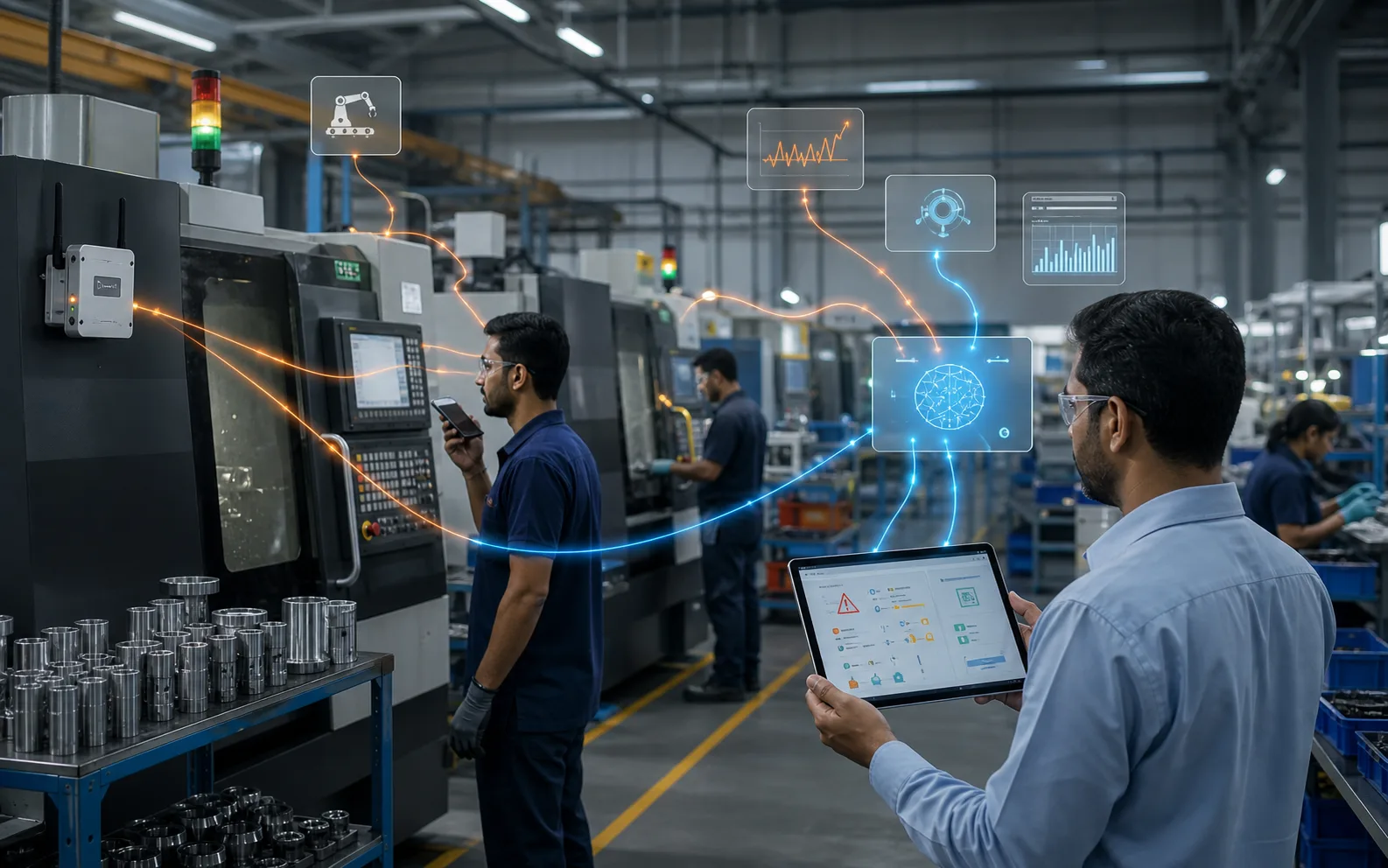
How to Transition from Startups to Stable Manufacturing Tech Jobs
Many developers and tech professionals eventually look for work that feels more stable, grounded, and connected to real business operations. Manufacturing tech can be a strong option. It may not always have the same public attention as consumer startups, but it offers serious problems, long-term demand, and visible impact.
If you are moving from startups into manufacturing technology, the transition is very possible. You just need to adjust how you present your skills.
What Transfers From Startup Experience
Startup experience can be valuable in manufacturing. You may already know how to build quickly, handle ambiguity, talk to users, debug production issues, and work across functions. These habits matter in manufacturing too.
If you have built dashboards, internal tools, automation workflows, APIs, CRMs, inventory tools, or reporting systems, you already have relevant experience.
The key is to connect your work to operational outcomes: time saved, errors reduced, visibility improved, decisions made faster, or manual work removed.
What You Need to Learn
Manufacturing has its own language. Learn terms such as BOM, work order, job card, WIP, routing, batch, lot, inward, outward, rejection, rework, dispatch, purchase order, and stock ageing.
You do not need to become a plant manager, but you should understand how material and information move through a factory.
ERP concepts are especially useful. Many manufacturing tech jobs involve ERP systems, integrations, reporting, implementation, or support.
Roles to Target
Good transition roles include ERP developer, implementation consultant, product analyst, data analyst, backend developer for industrial software, customer success specialist, QA tester, integration engineer, and automation software engineer.
You can work inside a manufacturing company or join a software company that serves manufacturers.
How to Position Yourself
Do not describe yourself only as a startup developer. Describe yourself as someone who builds practical systems for operations.
Highlight reliability, documentation, user empathy, testing, and problem-solving. Manufacturing companies care about systems that work consistently because downtime and wrong data create real costs.
Where AICAN Optiwise Fits
AICAN Optiwise is an AI-native ERP and operating system for manufacturers. It brings together sales, purchase, inventory, production, quality, dispatch, finance visibility, and AI agents.
For startup professionals, platforms like Optiwise show how modern manufacturing tech is evolving. It has the pace and product thinking of software, but it solves grounded factory problems.
FAQ
Can startup developers move into manufacturing tech?
Yes. Many startup skills transfer well, especially backend development, dashboards, automation, APIs, and user-focused problem-solving.
What should I learn first?
Start with manufacturing workflows and ERP basics: inventory, purchase, production, quality, and dispatch.
Are manufacturing tech jobs more stable?
They can be more stable because manufacturers rely on software for ongoing operations, not only growth experiments.
Final Thought
Moving from startups to manufacturing tech is not a step backward. It can be a move toward practical, durable work where software improves how real businesses run every day.

Related Posts

Will AI Create More Jobs Than It Destroys?
Explore whether AI will create more jobs than it destroys, with a practical view of manufacturing, automation, new roles, reskilling, and business transformation.
13 Jun 2026Read more →Manufacturing AI vs. Hiring More Workers
Compare manufacturing AI with hiring more workers and learn when automation, better systems, training, or additional people are the right answer.
7 Jun 2026Read more →
Will AI Replace My Production Planning Job?
Understand how AI affects production planning jobs, what tasks may change, and how planners can become more valuable with AI-supported scheduling and visibility.
6 Jun 2026Read more →Do I Need Special Skills to Use AI in Manufacturing?
Learn what skills manufacturing teams need to use AI, including process knowledge, data discipline, prompt clarity, review judgment, ERP understanding, and change readiness.
6 Jun 2026Read more →