
Vision System vs Hiring More Inspectors: Cost Comparison
Compare the cost and operating impact of computer vision systems versus hiring more manual inspectors, including accuracy, fatigue, rework, scalability, data, and long-term quality control.
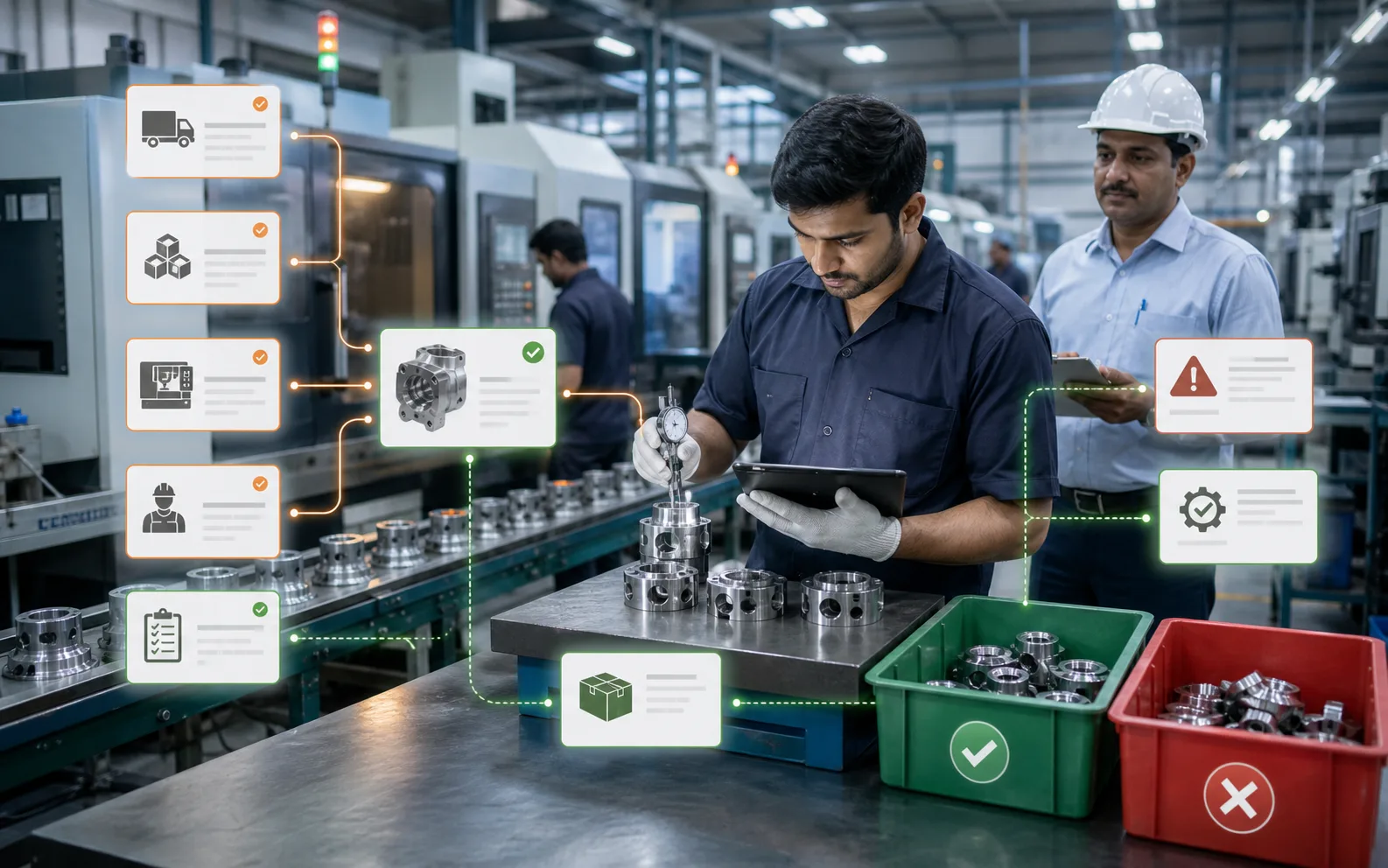
Hiring more inspectors may solve capacity. It may not solve consistency, traceability, or speed.
When defects increase or inspection slows production, the first answer is often to add more people. That may be necessary in some cases. Human judgement is valuable, especially for complex defects and exception review.
But if the task is repetitive, high-speed, and visually consistent, adding inspectors may not solve the deeper problem.
Computer vision and human inspection should not be seen as enemies. The better question is: which work should be automated, and where should people focus their judgement?
Manual inspection cost is recurring
Manual inspection cost includes more than salary.
Consider:
- Wages
- Supervisor time
- Training
- Overtime
- Shift coverage
- Absence coverage
- Fatigue-related errors
- Re-inspection after complaints
- Sorting and containment work
- Documentation effort
If production volume grows, manual inspection cost may grow with it.
Vision system cost is front-loaded plus support
Computer vision usually has a higher initial investment:
- Camera and lens
- Lighting
- Mounting
- Software
- Edge device
- Integration
- Installation
- Training
- Support
- Maintenance
After deployment, the system has operating costs: support, cleaning, updates, spare parts, and occasional recipe or model tuning.
The comparison should use total cost over time, not only first-month cost.
Humans are flexible; systems are consistent
Inspectors can handle unusual cases, context, and judgement. They can notice unexpected issues outside a narrow rule. They can communicate process concerns.
Vision systems are strong at consistent repetitive checks. They do not get tired, bored, distracted, or rushed at the end of a shift. They can also create image evidence and structured defect records.
The best setup often uses vision for repetitive detection and people for review, escalation, and root-cause action.
Fatigue changes inspection quality
Manual inspection quality can drop during long shifts, high speed, poor lighting, repetitive tasks, or production pressure.
This is not a criticism of people. It is a human limitation.
Computer vision can reduce dependence on constant human attention for repetitive checks. Quality teams can then focus on the cases that need judgement.
Data is a major difference
A manual inspector may catch a defect, but unless the event is recorded properly, trend data is weak.
A vision system can record:
- Defect category
- Time
- SKU
- Batch
- Line
- Shift
- Image evidence
- Accepted and rejected count
- Operator action
When connected with AICAN Optiwise, this data can support production, inventory, quality, dispatch, and management decisions.
When hiring more inspectors makes sense
Hiring more inspectors may be right when:
- Defects require complex human judgement
- Product variation is high and hard to automate
- Volume is low
- Inspection task changes frequently
- The business case for automation is weak
- The process is not stable enough for vision
- Temporary inspection surge is needed
Automation should not be forced where people are clearly better.
When computer vision makes sense
Computer vision is usually stronger when:
- Inspection is repetitive
- Volume is high
- Defects are visually detectable
- Line speed is important
- Manual fatigue creates misses
- Traceability is needed
- Counting or verification must be fast
- Defect trend data is valuable
- Rework or customer complaints are costly
Compare over a 12- to 36-month horizon
A fair comparison should look beyond the initial purchase.
Compare:
- Total inspector cost over time
- Vision investment and operating cost
- Rework reduction
- Scrap reduction
- Complaint reduction
- Speed improvement
- Data and traceability value
- Scalability across shifts or lines
The answer may be a hybrid: fewer repetitive manual checks, better exception review, and stronger data.
Where AICAN fits
AICAN and AICAN Optiwise help manufacturers connect inspection with production and quality workflows. That makes the comparison clearer because the decision is not only labour versus camera. It is manual effort versus connected operating visibility.
You can learn more at About AICAN.
Founder's Note
The goal is not to replace people for the sake of replacement. The goal is to stop asking people to do machine-like work all day and then blame them when attention drops. Let systems handle repetition. Let people handle judgement.
That is a healthier inspection model.
FAQs
1. Is computer vision always cheaper than hiring inspectors?
No. It depends on volume, defect cost, system investment, support cost, and inspection complexity.
2. Does computer vision remove the need for quality people?
No. It changes their role toward review, exception handling, root-cause analysis, and process improvement.
3. When should we hire instead of automate?
When defects require flexible judgement, volume is low, or the process changes too often for stable automation.
4. What is the biggest advantage of vision systems?
Consistency and data. Vision systems can inspect repeatedly and produce structured evidence for trends and decisions.
5. How does Optiwise help the comparison?
Optiwise connects inspection data with factory workflows, making the value of automation easier to measure beyond labour cost alone.

Related Posts

Kanban System | Optiwise
Learn how a Kanban system works in manufacturing, where it helps, where it fails, and how Optiwise connects Kanban signals with inventory, purchase, and production planning.
12 Jun 2026Read more →Erp In Operations Management | Optiwise
Learn how ERP improves operations management by connecting planning, inventory, purchase, production, quality, dispatch, finance, and reporting.
12 Jun 2026Read more →ERP for FMCG Companies in India
A practical guide to ERP for FMCG companies in India, covering distributor orders, batch tracking, expiry, inventory, production, schemes, costing, and reporting.
11 Jun 2026Read more →
Optiwise, Odoo, Acumatica and Business Central for Manufacturing
Compare manufacturing workflows in Optiwise, Odoo, Acumatica and Dynamics 365 Business Central. See what your factory can run in Optiwise.
11 Jun 2026Read more →