
What Happens to My Job if We Add AI?
Learn how AI changes manufacturing jobs, which tasks shift first, why human judgment remains important, and how workers can prepare.
What Happens to My Job if We Add AI?
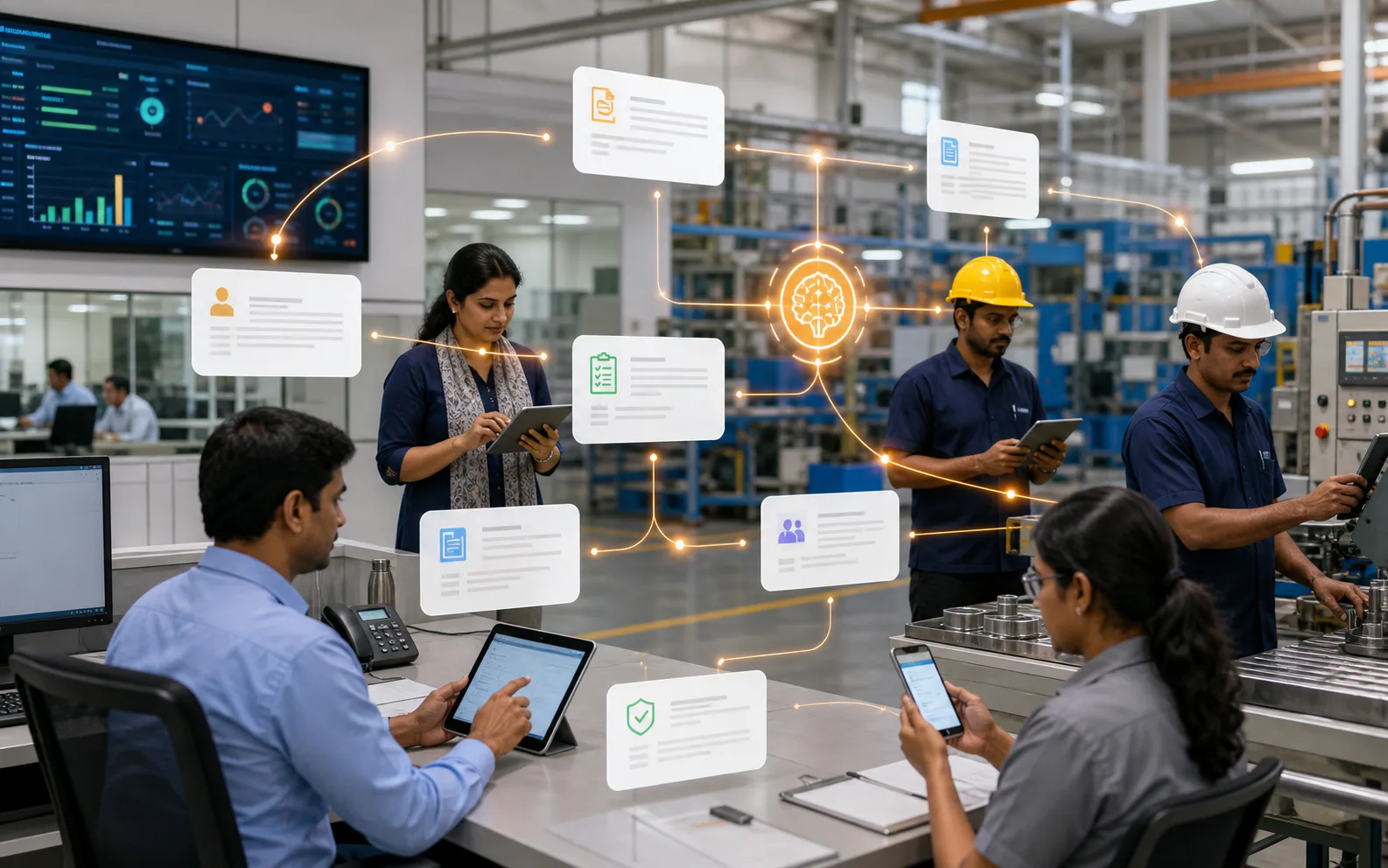
When a factory adds AI, your job is more likely to change than disappear immediately. AI usually takes over repetitive information work first: preparing reports, checking status, flagging exceptions, drafting updates, and comparing data.
The work that remains becomes more focused on judgment, coordination, problem-solving, and action.
This change can feel uncomfortable, especially if AI is introduced without explanation. But in practical manufacturing, people still matter because factories deal with machines, materials, customers, and real-world exceptions.
What Changes First
The first changes usually happen in manual reporting and follow-up. Instead of spending time collecting updates from multiple departments, workers may receive AI-assisted summaries or alerts.
A planner may spend less time preparing reports and more time resolving constraints. A stores user may receive shortage warnings earlier. A supervisor may review delay patterns instead of manually compiling them.
What Still Needs Human Judgment
AI can show that production is delayed, but people decide how to recover. AI can identify a quality trend, but quality teams confirm the cause. AI can flag a machine risk, but maintenance teams inspect and repair.
Manufacturing judgment depends on experience, context, and responsibility.
How to Prepare
The best preparation is to become comfortable with digital workflows, accurate data entry, dashboards, and AI-assisted recommendations.
Workers who understand the process and can review AI outputs critically will become more valuable.
Why Communication Matters
Management should explain why AI is being added and how roles will change. If teams only hear vague promises, they may fear the worst.
Clear communication builds trust.
Where AICAN Optiwise Fits
AICAN Optiwise helps factory teams work with connected operational data across production, inventory, purchase, sales, finance, and reporting. AI becomes more helpful when workers can see reliable information in one system.
AICAN believes technology should support people who run manufacturing operations every day. Learn more at About AICAN.
Founder’s Note
A factory is not just machines and software. It is people making thousands of small decisions that keep work moving.
AI should make those decisions better informed. The best outcome is not fewer people caring about the factory; it is people spending less time chasing information and more time improving the work.
FAQ
Will AI remove my manufacturing job?
AI may automate parts of some jobs, but many manufacturing roles still need human judgment, coordination, and physical process knowledge.
What skills should I learn?
Learn digital workflows, data accuracy, dashboard reading, and how to review AI recommendations.
Will AI monitor workers?
It depends on how the company implements it. Responsible AI should focus on process improvement, not unfair monitoring.
Can AI make work easier?
Yes, by reducing repetitive reporting, follow-ups, and manual checking.
Final Thought
AI will change manufacturing jobs by shifting attention from manual information gathering to better decisions. Workers who learn the system and understand the process will stay important.

Related Posts

Will AI Create More Jobs Than It Destroys?
Explore whether AI will create more jobs than it destroys, with a practical view of manufacturing, automation, new roles, reskilling, and business transformation.
13 Jun 2026Read more →Manufacturing AI vs. Hiring More Workers
Compare manufacturing AI with hiring more workers and learn when automation, better systems, training, or additional people are the right answer.
7 Jun 2026Read more →
Will AI Replace My Production Planning Job?
Understand how AI affects production planning jobs, what tasks may change, and how planners can become more valuable with AI-supported scheduling and visibility.
6 Jun 2026Read more →Do I Need Special Skills to Use AI in Manufacturing?
Learn what skills manufacturing teams need to use AI, including process knowledge, data discipline, prompt clarity, review judgment, ERP understanding, and change readiness.
6 Jun 2026Read more →