
Will AI Replace My Manufacturing Job?
A practical explanation of how AI affects manufacturing jobs, why most roles will change before they disappear, and how factory teams can prepare.

Will AI Replace My Manufacturing Job?
This is one of the most honest questions people ask when AI enters a factory. It is not just a technology question. It is a livelihood question. Operators, supervisors, planners, store teams, purchase executives, quality teams, and finance staff all want to know whether AI is here to support them or slowly replace them.
The practical answer is this: AI will change many manufacturing jobs, but most factory roles will be redesigned before they are replaced. In the near term, AI is more likely to remove repetitive follow-ups, manual report preparation, data checking, and basic monitoring than it is to remove experienced people who understand machines, materials, vendors, customers, and shopfloor reality.
Manufacturing is physical, variable, and full of judgment. AI can process information quickly, but people still understand context in ways software cannot fully replace.
What AI Is Actually Good at in Manufacturing
AI is strong where work is repetitive, data-heavy, and pattern-based. It can detect unusual machine behavior, forecast demand, summarize production delays, identify slow-moving inventory, compare planned versus actual output, and alert teams when something looks wrong.
It can also help with documentation. Instead of spending time preparing the same reports every day, teams can use AI to generate first drafts, highlight exceptions, and focus attention where action is needed.
This means many jobs become less about collecting information and more about interpreting it.
What AI Is Not Good at Replacing
AI does not walk the shopfloor and sense when a machine sounds wrong. It does not negotiate with a difficult vendor based on years of relationship history. It does not understand local worker morale, maintenance habits, hidden process shortcuts, or customer pressure unless people and systems record that context clearly.
A production supervisor does more than read numbers. A store manager does more than count stock. A quality head does more than tick inspection boxes. Good manufacturing work includes experience, judgment, coordination, and accountability.
AI can support these roles, but it does not automatically replace them.
Which Tasks Are Most Likely to Be Automated
The first tasks to be automated are usually administrative and repetitive: daily MIS reports, inventory exception lists, reorder reminders, invoice matching checks, production variance summaries, customer update drafts, and basic support categorization.
These tasks are important, but they often consume time that skilled people could use better. When AI handles the first layer of work, people can spend more time solving problems.
Which Skills Become More Valuable
As AI grows inside manufacturing, some skills become more important.
People who understand process flow, data accuracy, root cause analysis, and decision-making will become more valuable. So will people who can ask the right questions, verify AI outputs, and connect system insights with shopfloor reality.
The future manufacturing employee is not someone who competes with AI at data processing. It is someone who uses AI to make better decisions faster.
How Leaders Should Talk About AI With Teams
The worst way to introduce AI is with vague excitement and no clarity. Teams need to know what is being automated, why it is being automated, and how their work will change.
Leaders should explain that AI is being introduced to reduce manual burden, improve visibility, and support better planning. They should also provide training and create space for feedback from people who know the actual work.
If the people closest to the process are ignored, AI adoption becomes resistance. If they are included, AI becomes a practical tool.
Where AICAN Optiwise Fits
AICAN Optiwise is designed to help manufacturers connect day-to-day operations so teams can work with clearer information. When production, inventory, purchase, sales, finance, and reports are connected, AI can assist people instead of confusing them with fragmented data.
AICAN does not see technology as a replacement for manufacturing experience. The goal is to give factory teams better visibility, faster reporting, and stronger control so people can spend less time chasing data and more time improving outcomes. You can read more about the company at About AICAN.
Founder’s Note
The fear around AI is real, and it deserves respect. People have built careers through hard work, not through buzzwords.
In manufacturing, the best use of AI is not to remove people from the system. It is to remove avoidable friction from their day. When workers, supervisors, and managers get better information at the right time, their experience becomes more powerful, not less important.
FAQ
Will AI replace factory workers?
AI may automate some repetitive tasks, but most manufacturing roles involve judgment, coordination, and physical process understanding that AI cannot fully replace.
Which jobs are most affected by AI?
Roles with heavy manual reporting, repetitive data checking, and routine follow-up work will change the fastest.
How can employees prepare for AI?
Learn to use digital systems well, understand data accuracy, improve process knowledge, and practice reviewing AI recommendations critically.
Should manufacturers involve workers in AI adoption?
Yes. Shopfloor input is essential because workers understand real process exceptions that may not appear in system data.
Final Thought
AI will change manufacturing work, but change does not have to mean replacement. The strongest factories will combine experienced people with smarter systems, giving teams more time to solve the problems that actually matter.

Related Posts
Will AI Create More Jobs Than It Destroys?
Explore whether AI will create more jobs than it destroys, with a practical view of manufacturing, automation, new roles, reskilling, and business transformation.
13 Jun 2026Read more →Manufacturing AI vs. Hiring More Workers
Compare manufacturing AI with hiring more workers and learn when automation, better systems, training, or additional people are the right answer.
7 Jun 2026Read more →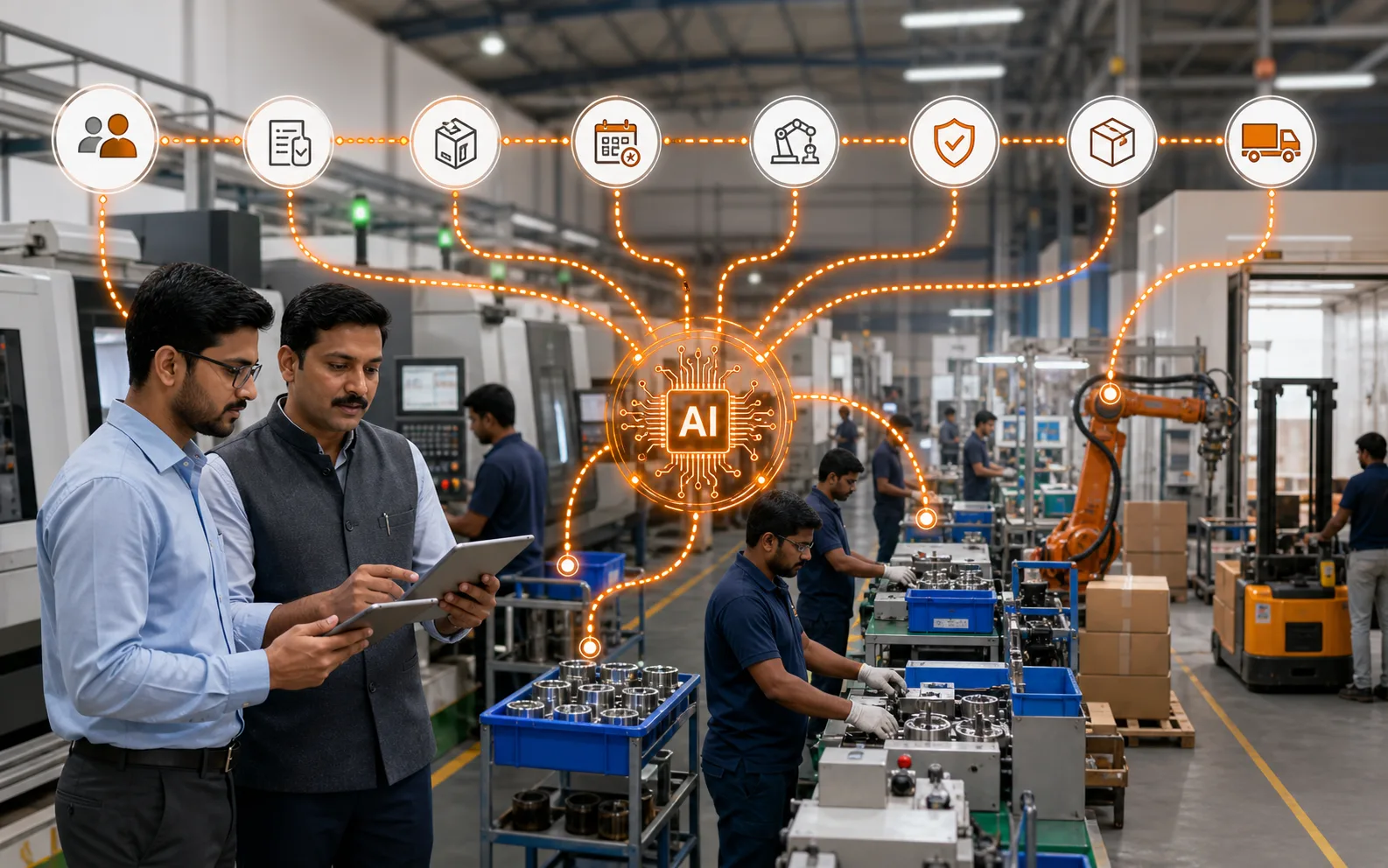
Will AI Replace My Production Planning Job?
Understand how AI affects production planning jobs, what tasks may change, and how planners can become more valuable with AI-supported scheduling and visibility.
6 Jun 2026Read more →Do I Need Special Skills to Use AI in Manufacturing?
Learn what skills manufacturing teams need to use AI, including process knowledge, data discipline, prompt clarity, review judgment, ERP understanding, and change readiness.
6 Jun 2026Read more →