
Barcode Scanning System | Optiwise
A practical guide to barcode scanning systems for SME manufacturers, covering scanning workflows, devices, ERP integration, benefits, and rollout mistakes.
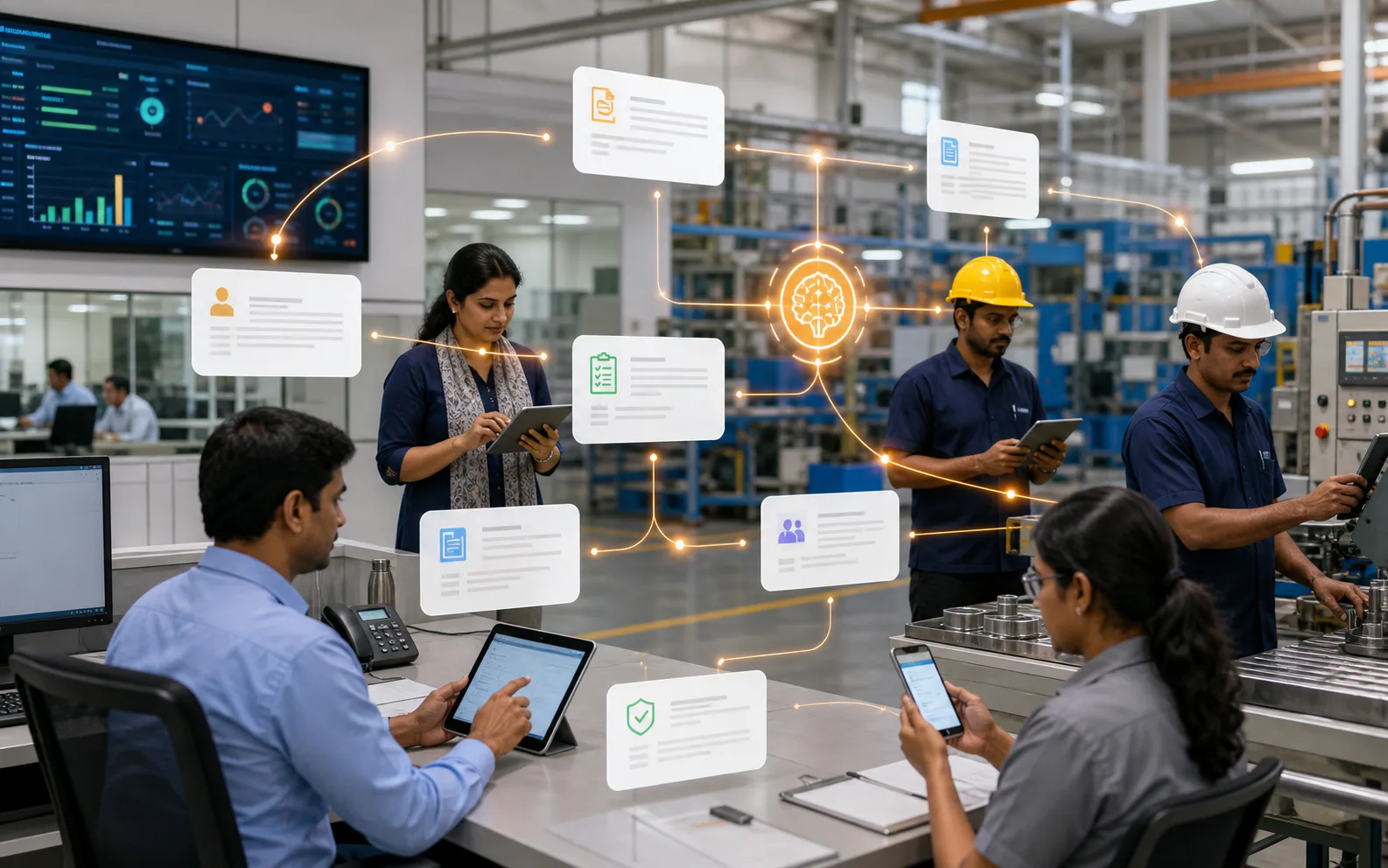
Barcode Scanning System: A Practical Guide for Inventory and Manufacturing
A barcode scanning system is not valuable because it looks modern. It is valuable because it reduces the distance between physical movement and system data. When material moves, the system should know. When finished goods are picked, the system should know. When a batch is dispatched, the system should know which batch went out.
For SME manufacturers, this matters because inventory mistakes create real operational pain: production stoppages, wrong dispatches, urgent purchases, delayed billing, and endless reconciliation.
AICAN Optiwise helps connect barcode scanning with ERP workflows so scanning supports real business control.
What Is a Barcode Scanning System?
A barcode scanning system uses barcode labels and scanning devices to capture information quickly. The scanner reads the barcode and sends the item, batch, location, or document information to the software.
In inventory and manufacturing, scanning can support goods receipt, stock transfer, bin movement, production issue, production receipt, QC movement, picking, packing, dispatch, and stock counting.
How a Barcode Scanner Works in Operations
The scanner reads a printed barcode. The software interprets the code and matches it with master data or transaction data. The user confirms quantity, location, document, or action. The system updates inventory based on the transaction.
The scanner alone does not create control. Control comes from the workflow connected to scanning.
Types of Barcode Scanning Workflows
Goods receipt scanning helps identify material received from suppliers.
Putaway scanning helps record where the material is stored.
Production issue scanning helps ensure the correct raw material goes to the correct work order.
Finished goods scanning helps record output and batch details.
Picking and packing scanning helps reduce dispatch mistakes.
Stock count scanning helps physical verification move faster.
Each workflow should have a clear purpose.
Why Manufacturers Use Barcode Scanning
Manufacturers use barcode scanning to improve accuracy, speed, traceability, and accountability.
Accuracy improves because users scan instead of typing long item codes.
Speed improves because repetitive transactions become faster.
Traceability improves because movement history is captured.
Accountability improves because transactions can be linked to users, time, and documents.
Barcode Scanning and ERP
A barcode scanning system should ideally be connected with ERP. If scanning updates a separate system, teams may still need duplicate entry or manual reconciliation.
When connected with ERP, scanning can update purchase receipts, inventory movements, production consumption, QC status, and dispatch documents directly.
Optiwise by AICAN is built to help SMEs connect these workflows so barcode scanning becomes part of the operational system.
Device Choices
Businesses can use handheld barcode scanners, mobile phones with scanning capability, rugged devices, tablet-based scanning, or fixed scanners depending on the environment.
The choice depends on scan volume, distance, lighting, label size, warehouse conditions, user movement, and budget.
For many SMEs, the best device is not the most expensive one. It is the device that users will actually use correctly every day.
Barcode Labels and Factory Conditions
Labels must survive the environment. Dust, heat, oil, moisture, handling, and storage conditions can damage weak labels. If labels fail, users stop trusting the system.
Label size, placement, print quality, and material matter. In some cases, location labels need to be larger than item labels because users scan them from a distance.
Implementation Mistakes
One common mistake is scanning everything from day one. This creates complexity before teams are ready.
Another mistake is skipping item master cleanup. Poor item data creates poor scanning outcomes.
A third mistake is not defining exceptions. What should a user do if a barcode is damaged? What if quantity differs? What if the wrong item is scanned? These scenarios need clear handling.
A fourth mistake is treating scanning as an IT project. It is an operations project with technology support.
A Practical Rollout Plan
Start with one workflow where errors are costly and repetitive. Goods receipt or dispatch is often a good starting point.
Clean item masters and locations.
Test labels in real conditions.
Train users with actual transactions.
Review daily exceptions for the first few weeks.
Expand scanning to production issue, stock transfer, and cycle counting after the first workflow stabilizes.
How Barcode Scanning Improves Reporting
Reports improve when transactions are captured at the right time. Stock reports, ageing reports, batch traceability, production consumption, and dispatch pending reports become more reliable.
This helps owners trust system data instead of depending on verbal updates.
How Optiwise Helps
AICAN Optiwise helps manufacturers connect barcode scanning with purchase, stores, production, QC, sales, and dispatch workflows. This turns scanning into a business control mechanism, not just a warehouse convenience.
Optiwise is especially useful for SMEs that want practical inventory discipline without heavy custom systems.
Founder’s Note
At AICAN, we believe barcode scanning works best when it is simple for the user and useful for management. If a scanner makes the storekeeper’s job harder, adoption will fail. If scanning does not improve decisions, the owner will lose interest. Optiwise is built to connect both sides.
FAQs
What is a barcode scanning system?
It is a system that uses scanners and barcode labels to capture inventory or document information quickly.
Where is barcode scanning used in manufacturing?
It is used in goods receipt, putaway, stock transfer, production issue, production receipt, picking, packing, dispatch, and stock counting.
Does barcode scanning require special hardware?
It can use handheld scanners, rugged devices, tablets, or mobile phones depending on the workflow and environment.
Can barcode scanning improve stock accuracy?
Yes, when connected with disciplined transactions and ERP workflows.
Where can I learn more?
Visit AICAN Optiwise or About AICAN.

Related Posts

Kanban System | Optiwise
Learn how a Kanban system works in manufacturing, where it helps, where it fails, and how Optiwise connects Kanban signals with inventory, purchase, and production planning.
12 Jun 2026Read more →Erp In Operations Management | Optiwise
Learn how ERP improves operations management by connecting planning, inventory, purchase, production, quality, dispatch, finance, and reporting.
12 Jun 2026Read more →ERP for FMCG Companies in India
A practical guide to ERP for FMCG companies in India, covering distributor orders, batch tracking, expiry, inventory, production, schemes, costing, and reporting.
11 Jun 2026Read more →Optiwise, Odoo, Acumatica and Business Central for Manufacturing
Compare manufacturing workflows in Optiwise, Odoo, Acumatica and Dynamics 365 Business Central. See what your factory can run in Optiwise.
11 Jun 2026Read more →