
The Best Time to Learn AI Skills for Your Career
Learn why the best time to learn AI skills is now, what to start with, and how practical AI fluency can protect and grow your career.

The Best Time to Learn AI Skills for Your Career
The best time to learn AI skills is before you are forced to. AI adoption is already changing how work gets done. People who begin early have time to experiment, make mistakes, and build confidence.
You do not need to stop everything and become an AI expert. Start with practical skills you can use in your current work.
Why Start Now
AI tools are becoming part of daily workflows. Waiting until your role changes suddenly is risky.
Early learning helps you:
- Understand what AI can do
- Reduce fear
- Improve productivity
- Spot new opportunities
- Protect career flexibility
What to Learn First
Start with:
- Prompting clearly
- Summarizing documents
- Drafting communication
- Reviewing reports
- Creating checklists
- Understanding dashboards
- Verifying AI output
Apply AI to Your Current Job
Do not learn AI in theory only. Use it for real tasks. If you work in manufacturing, try using AI to summarize delays, organize follow-ups, or draft SOPs.
Build a Learning Habit
AI tools will keep changing. The real skill is continuous learning.
Where AICAN Optiwise Fits
AICAN Optiwise brings AI into manufacturing workflows, making AI skills practical for sales, purchase, inventory, production, quality, dispatch, and finance teams.
FAQ
Is it too early to learn AI?
No. AI is already entering daily work.
Do I need advanced AI courses?
Not at first. Begin with practical tool usage.
How much time should I spend?
Even a few focused hours per week can build useful fluency.
Should companies train employees?
Yes. AI adoption works better when teams are trained.
Final Thought
Learning AI early gives you room to adapt calmly.
The longer you wait, the more rushed the transition may feel.

Related Posts
Will AI Create More Jobs Than It Destroys?
Explore whether AI will create more jobs than it destroys, with a practical view of manufacturing, automation, new roles, reskilling, and business transformation.
13 Jun 2026Read more →Manufacturing AI vs. Hiring More Workers
Compare manufacturing AI with hiring more workers and learn when automation, better systems, training, or additional people are the right answer.
7 Jun 2026Read more →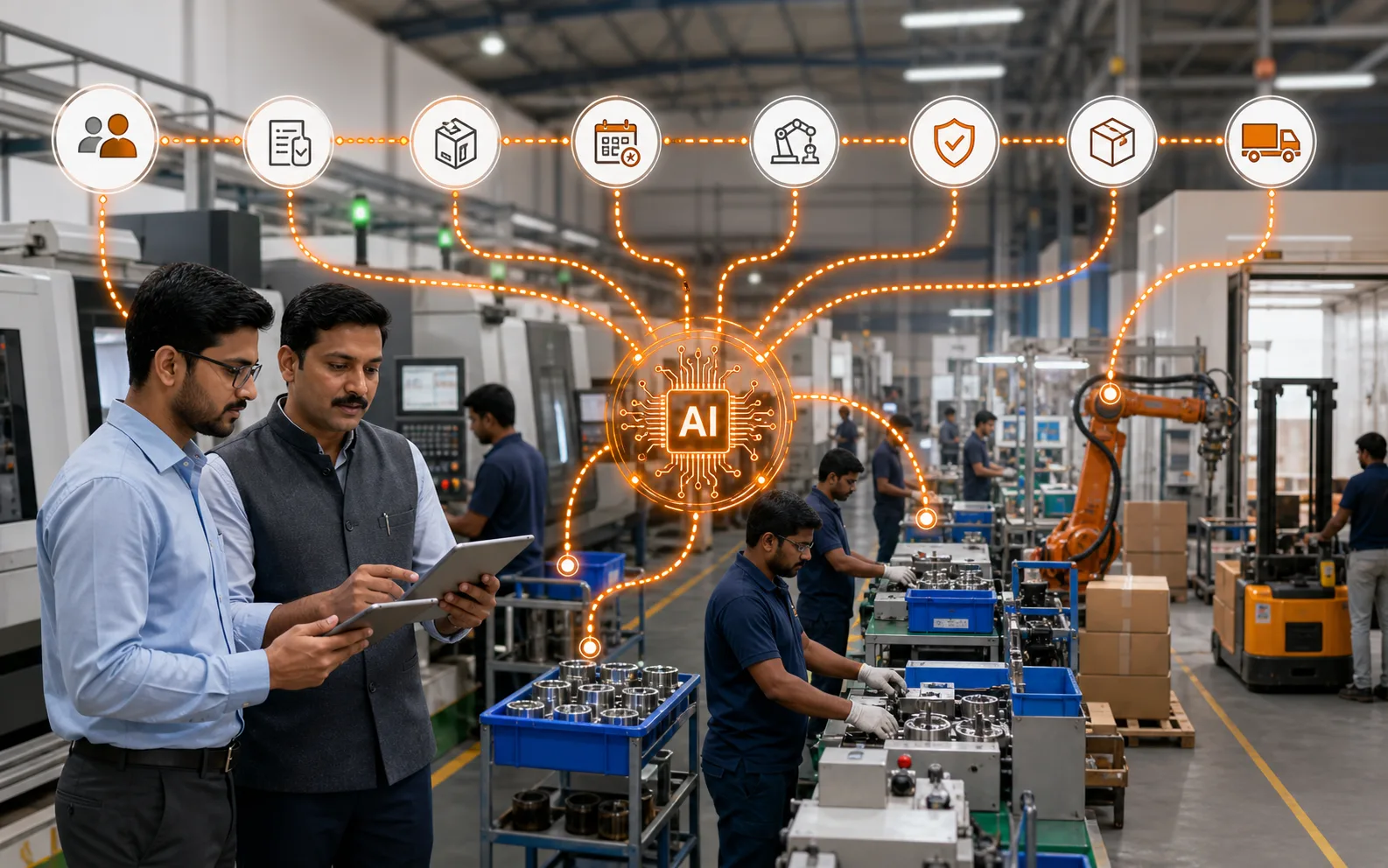
Will AI Replace My Production Planning Job?
Understand how AI affects production planning jobs, what tasks may change, and how planners can become more valuable with AI-supported scheduling and visibility.
6 Jun 2026Read more →Do I Need Special Skills to Use AI in Manufacturing?
Learn what skills manufacturing teams need to use AI, including process knowledge, data discipline, prompt clarity, review judgment, ERP understanding, and change readiness.
6 Jun 2026Read more →