
How Do I Choose Between Different Sensor Technologies?
Learn how manufacturers can choose between sensor technologies by matching use case, environment, accuracy, response time, integration, cost, and maintenance needs.
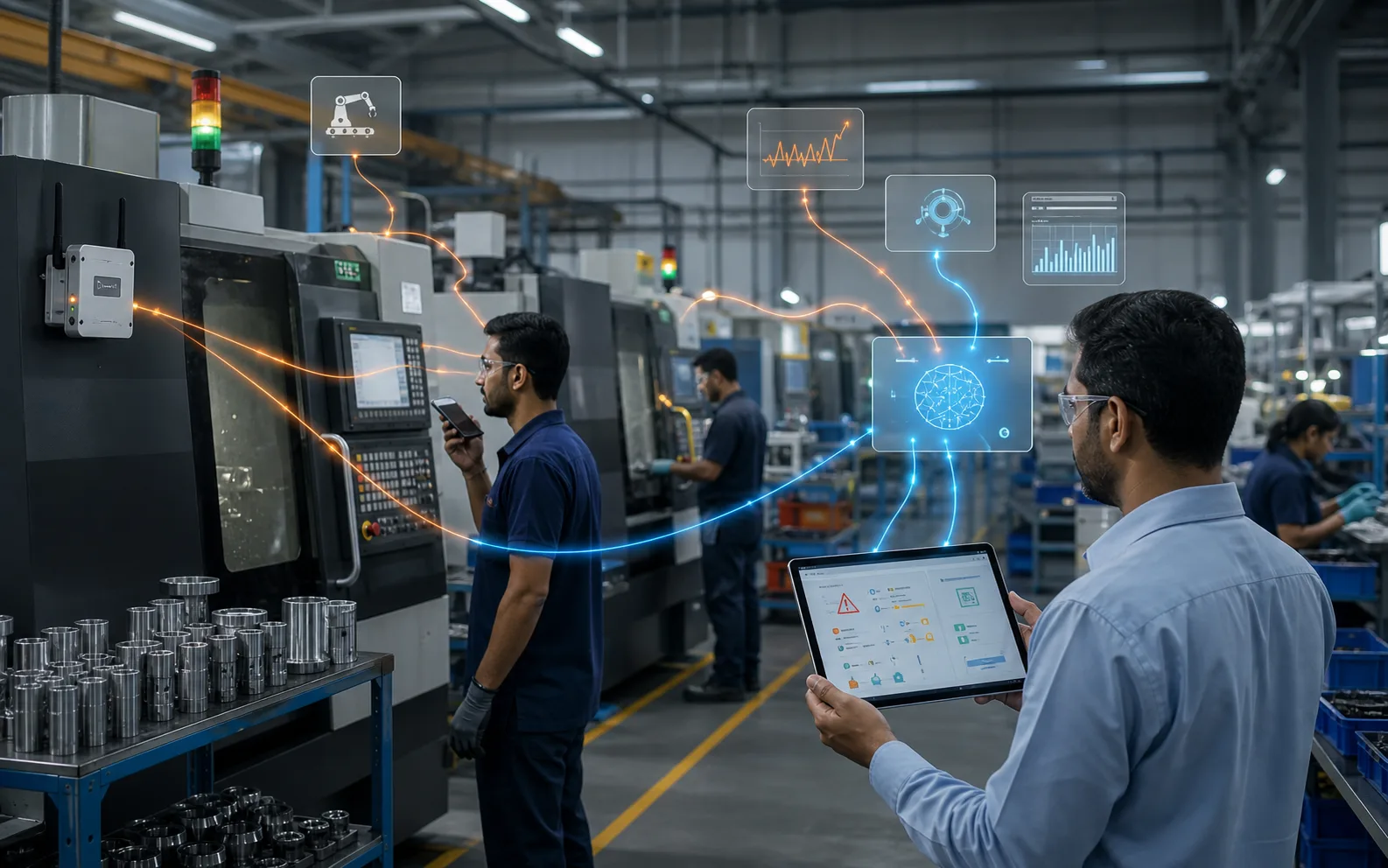
How Do I Choose Between Different Sensor Technologies?
Choosing between sensor technologies is easier when the factory starts with the decision it wants to improve.
Do not begin by asking whether proximity, vision, vibration, current, pressure, or temperature sensors are best. Ask what you need to know. Is a part present? Is the machine running? Is a motor under stress? Is the process temperature stable? Is pressure dropping? Is a defect visible? Is material level low?
The right sensor technology is the one that answers the operating question reliably in your environment.
For manufacturers evaluating AICAN Optiwise, sensor selection should support trustworthy dashboards, alerts, and decisions.
Define the measurement clearly
Start by writing the measurement in plain language.
Examples:
- detect whether a metal part is present
- count cycles on an older machine
- monitor motor load
- detect bearing vibration change
- track process temperature
- detect pressure loss in compressed air
- inspect label position
- monitor liquid level in a tank
This prevents the team from choosing a sensor based on habit or vendor suggestion alone.
Match technology to material and process
Different sensors work better with different materials and conditions.
Inductive proximity sensors work well for metal detection. Photoelectric sensors can detect objects using light but may be affected by dust, reflectivity, or alignment. Capacitive sensors may detect non-metal materials but need careful setup. Vision systems can inspect complex features but need lighting and image stability.
Vibration sensors suit rotating equipment. Current sensors help with electrical load and machine-state detection. Pressure and flow sensors suit utilities and process lines. Temperature sensors suit heat-sensitive equipment or quality processes.
The application should drive the choice.
Consider the environment
A sensor that works in a clean demo may struggle in production.
Heat, dust, moisture, oil, vibration, electrical noise, sunlight, steam, and physical impact can affect performance. Some technologies are more sensitive to environmental conditions than others.
Before selecting, ask:
- Will dust block the signal?
- Will vibration loosen alignment?
- Will moisture damage the connector?
- Will lighting affect a vision system?
- Will electrical noise affect the reading?
- Can the sensor be cleaned or protected?
Environment fit is often the difference between success and frustration.
Check accuracy and response time
Some applications need high accuracy. Others need fast response. Some need both.
A counting application may need fast detection. A quality measurement may need accuracy. A maintenance trend may need consistency over time. A level monitoring application may not need millimetre-level precision.
Choose the specification that matches the decision. Over-specifying increases cost. Under-specifying creates bad data.
Think about integration early
The sensor must connect to your system.
Check output type, wiring, protocol, gateway compatibility, PLC input, power supply, and dashboard integration. A technically suitable sensor can still create implementation trouble if it does not fit the data architecture.
Ask how the signal will appear in AICAN Optiwise or any connected platform: as a status, count, trend, alarm, value, or event.
Compare maintenance needs
Different technologies need different upkeep.
Photoelectric sensors may need lens cleaning. Vision systems need lighting stability and calibration. Vibration sensors need secure mounting. Temperature and pressure sensors may need calibration. Current sensors may need electrical inspection.
Maintenance effort should be included in the decision.
Pilot when the choice is uncertain
If two technologies seem possible, test them.
A short pilot on the actual machine can reveal issues that specifications do not show. The pilot should test signal reliability, false triggers, installation difficulty, dashboard usefulness, and user response.
Factories should prefer evidence over assumptions.
Where AICAN Optiwise fits
AICAN Optiwise helps manufacturers turn sensor signals into practical factory visibility. The platform can support better decisions only when the sensor technology captures the right signal reliably.
AICAN works with manufacturers that need sensor choices aligned with real production needs. More about the company is available at About AICAN.
Founder’s Note
Sensor technology should be chosen like a tool, not like a trend. The best choice is the one that reveals the truth your factory needs, survives the environment, and keeps producing data your team can trust.
FAQs
How do I choose the right sensor technology?
Define the use case, environment, accuracy, response time, integration path, and maintenance needs before comparing sensor types.
Should I use vision sensors for everything?
No. Vision is powerful but can be more complex. Use it where visual inspection or positioning adds clear value.
When should I pilot a sensor?
Pilot when the environment is harsh, the signal is uncertain, or multiple technologies could work.
What is the biggest mistake in sensor selection?
Choosing by sensor type or brand before defining the operating problem.
Can one sensor technology solve multiple problems?
Sometimes, but each use case should be validated separately.

Related Posts

Kanban System | Optiwise
Learn how a Kanban system works in manufacturing, where it helps, where it fails, and how Optiwise connects Kanban signals with inventory, purchase, and production planning.
12 Jun 2026Read more →Erp In Operations Management | Optiwise
Learn how ERP improves operations management by connecting planning, inventory, purchase, production, quality, dispatch, finance, and reporting.
12 Jun 2026Read more →ERP for FMCG Companies in India
A practical guide to ERP for FMCG companies in India, covering distributor orders, batch tracking, expiry, inventory, production, schemes, costing, and reporting.
11 Jun 2026Read more →
Optiwise, Odoo, Acumatica and Business Central for Manufacturing
Compare manufacturing workflows in Optiwise, Odoo, Acumatica and Dynamics 365 Business Central. See what your factory can run in Optiwise.
11 Jun 2026Read more →