
Digital India Why Businesses Should Go Digital | Optiwise
Learn why Indian manufacturing SMEs should go digital, how Digital India has changed business expectations, and how AICAN Optiwise supports factory digitisation.
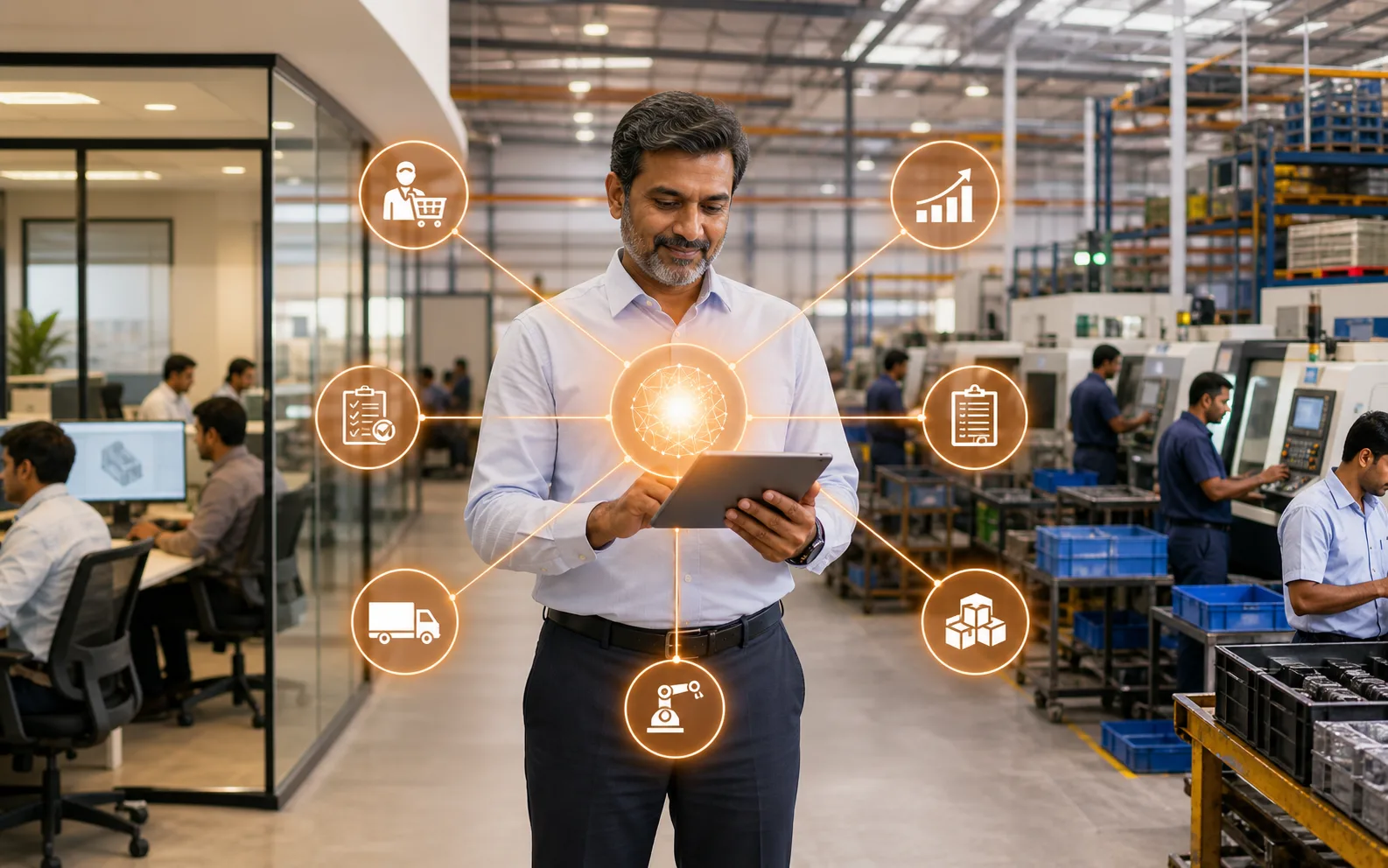
Digital India: Why Manufacturing Businesses Should Go Digital
India’s business environment has changed.
Customers expect faster responses. Suppliers expect cleaner records. GST, e-way bills, e-invoicing, online banking, digital payments, and cloud systems have become part of daily business life. A manufacturer that still runs on scattered registers, manual files, and disconnected spreadsheets feels slower every year.
Digital India, launched in 2015, set a national direction toward digital infrastructure, services on demand, and digital empowerment. For businesses, the message is practical: digital systems are no longer optional decoration. They are becoming the operating language of modern commerce.
For manufacturing SMEs, going digital is not about looking modern. It is about reducing mistakes, improving visibility, protecting cash, and scaling without losing control.
AICAN Optiwise is built to help manufacturers digitise the workflows that matter: inventory, purchase, production, sales, reports, and decision visibility.
What Does Going Digital Mean for a Manufacturer?
Going digital does not mean buying software and continuing the same old habits.
It means replacing scattered, delayed, and manual information with connected, timely, and usable data.
For a manufacturer, digitalisation can include:
- Digital inventory records
- Purchase order workflows
- BOM and production planning
- Goods receipt and material issue tracking
- Sales order management
- Dispatch documentation
- GST-ready invoicing
- Reports and dashboards
- Approval workflows
- Supplier and customer records
- Digital document storage
- Barcode or QR-based tracking where needed
- IoT and shop-floor data where useful
The goal is simple: the business should know what is happening without waiting for manual updates from every department.
Why Digital Matters Now
Manufacturing has become more demanding. Customers ask for delivery status. Vendors expect quicker coordination. Compliance requires cleaner records. Owners need faster visibility into cash, stock, and production.
Manual systems struggle because they depend on memory and repeated follow-up.
A purchase order may be in one file. Stock may be in another file. Production may be in a notebook. Dispatch may be on WhatsApp. Accounts may have a separate system. Management then spends time collecting information instead of making decisions.
Digital systems reduce that friction.
Benefit 1: Better Inventory Control
Inventory is one of the biggest cash blocks in manufacturing. Without digital records, teams overbuy, miss shortages, and discover dead stock too late.
A digital inventory system helps track receipts, issues, WIP, finished goods, ageing, and availability.
This improves purchase planning and reduces production surprises.
Benefit 2: Faster Production Visibility
Owners need to know what is planned, what is running, what is delayed, and what is completed.
Digital production tracking makes this easier. Teams can link production orders with BOM, material availability, and output.
This helps reduce firefighting.
Benefit 3: Cleaner Compliance and Documents
GST, e-way bills, invoices, delivery challans, purchase records, and credit/debit notes all depend on clean data.
Digital workflows reduce the chance of wrong GSTIN, missing invoice reference, delayed document, or untraceable dispatch.
Compliance becomes easier when operational data is clean.
Benefit 4: Better Cash Flow Decisions
Digital systems help owners see receivables, payables, inventory value, order status, and purchase commitments.
This matters because cash flow problems often start inside operations: excess stock, delayed dispatch, late invoice, disputed delivery, or slow collection.
Benefit 5: Scalable Growth
A business can run manually when it is small. But growth increases complexity. More orders, more SKUs, more vendors, more staff, more locations, more approvals.
Digital systems help standardise operations so the business does not depend only on a few people’s memory.
Common Digitalisation Mistakes
One mistake is digitising only accounts and ignoring production or inventory.
Another mistake is buying software without cleaning item masters and workflows.
Some businesses expect software to fix discipline problems automatically.
Some implement too much too fast and overwhelm teams.
Some do not train users properly.
Some measure success only by installation, not usage.
Digitalisation works when it is tied to real business problems.
How to Start
Start with pain points. Is inventory wrong? Is production visibility poor? Are purchase approvals slow? Are dispatch documents messy? Is costing unclear?
Digitise the highest-value workflows first.
Clean master data.
Train teams.
Set review rhythms.
Use dashboards for decisions.
Improve gradually.
Optiwise by AICAN supports this practical path. It is designed for manufacturing businesses that want to move from scattered tools to a connected operating system.
Founder’s Note
Digital India created a larger shift in how businesses interact with government, customers, banks, suppliers, and markets. But for manufacturers, the real question is not whether India is digital. It is whether the factory is ready to operate in that environment.
At AICAN, we believe digital transformation should start with everyday factory truth: stock, orders, production, purchase, dispatch, and cash. Optiwise is built to make that truth visible.
FAQs
Why should manufacturing businesses go digital?
They should go digital to improve inventory control, production visibility, compliance, cash flow, documentation, and scalability.
Does going digital mean only using accounting software?
No. Manufacturing digitalisation should include inventory, purchase, production, sales, dispatch, reports, and finance visibility.
Is digitalisation expensive for SMEs?
It can be phased. The bigger cost is often hidden in manual errors, excess inventory, delayed dispatch, and poor visibility.
How does Digital India affect businesses?
Digital India has increased expectations around digital infrastructure, online services, paperless workflows, digital payments, and faster business coordination.
How does Optiwise help businesses go digital?
Optiwise connects manufacturing workflows such as inventory, purchase, production, sales, documents, and reports so SMEs can digitise operations practically.

Related Posts

Kanban System | Optiwise
Learn how a Kanban system works in manufacturing, where it helps, where it fails, and how Optiwise connects Kanban signals with inventory, purchase, and production planning.
12 Jun 2026Read more →Erp In Operations Management | Optiwise
Learn how ERP improves operations management by connecting planning, inventory, purchase, production, quality, dispatch, finance, and reporting.
12 Jun 2026Read more →ERP for FMCG Companies in India
A practical guide to ERP for FMCG companies in India, covering distributor orders, batch tracking, expiry, inventory, production, schemes, costing, and reporting.
11 Jun 2026Read more →
Optiwise, Odoo, Acumatica and Business Central for Manufacturing
Compare manufacturing workflows in Optiwise, Odoo, Acumatica and Dynamics 365 Business Central. See what your factory can run in Optiwise.
11 Jun 2026Read more →