
Geographic Regions With Growing AI Job Markets
Learn where AI job markets are growing, what types of regions benefit, and how manufacturing hubs can create AI-enabled career opportunities.

Geographic Regions With Growing AI Job Markets
AI job growth is not limited to traditional technology hubs. As AI moves into manufacturing, logistics, healthcare, finance, retail, and operations, opportunities are spreading into industrial regions too.
The strongest regions are usually where three things meet: business demand, skilled talent, and digital infrastructure.
Technology Hubs
Large tech hubs continue to attract AI roles in model development, product engineering, data science, infrastructure, and AI platforms.
These regions often have universities, startups, investors, and large technology companies.
Manufacturing Clusters
Manufacturing regions can create AI jobs around automation, ERP, industrial data, quality analytics, predictive maintenance, and supply chain intelligence.
These roles may not always be called “AI jobs,” but they involve AI-enabled work.
Logistics and Supply Chain Corridors
Regions with warehouses, ports, transport networks, and distribution centers need AI for forecasting, route planning, inventory, and operations visibility.
Healthcare and Life Sciences Hubs
Healthcare regions need AI for diagnostics support, operations, documentation, patient workflows, and compliance.
Remote and Hybrid Opportunities
Some AI roles can be remote, especially in analytics, support, documentation, and workflow design. But domain-heavy roles often benefit from proximity to operations.
How Workers Should Think About Location
Instead of asking only, “Where are AI companies located?” ask, “Where are industries adopting AI?”
That opens more options.
Where AICAN Optiwise Fits
AICAN Optiwise creates AI opportunities inside manufacturing clusters by bringing AI-assisted workflows to MSMEs. As factories digitize, local talent can grow into roles around implementation, training, data quality, and operations intelligence.
FAQ
Are AI jobs only in big cities?
No. AI adoption in manufacturing and logistics can create roles in industrial regions too.
Can AI jobs be remote?
Some can, but roles tied to operations may require local presence.
What regions grow AI jobs fastest?
Regions with strong industry demand, talent, infrastructure, and digital adoption grow faster.
Should manufacturing workers relocate for AI jobs?
Not always. Local digital adoption may create opportunities within manufacturing clusters.
Final Thought
AI job growth follows business problems.
Where industries need better decisions, automation, and data, AI careers can emerge.

Related Posts
Will AI Create More Jobs Than It Destroys?
Explore whether AI will create more jobs than it destroys, with a practical view of manufacturing, automation, new roles, reskilling, and business transformation.
13 Jun 2026Read more →Manufacturing AI vs. Hiring More Workers
Compare manufacturing AI with hiring more workers and learn when automation, better systems, training, or additional people are the right answer.
7 Jun 2026Read more →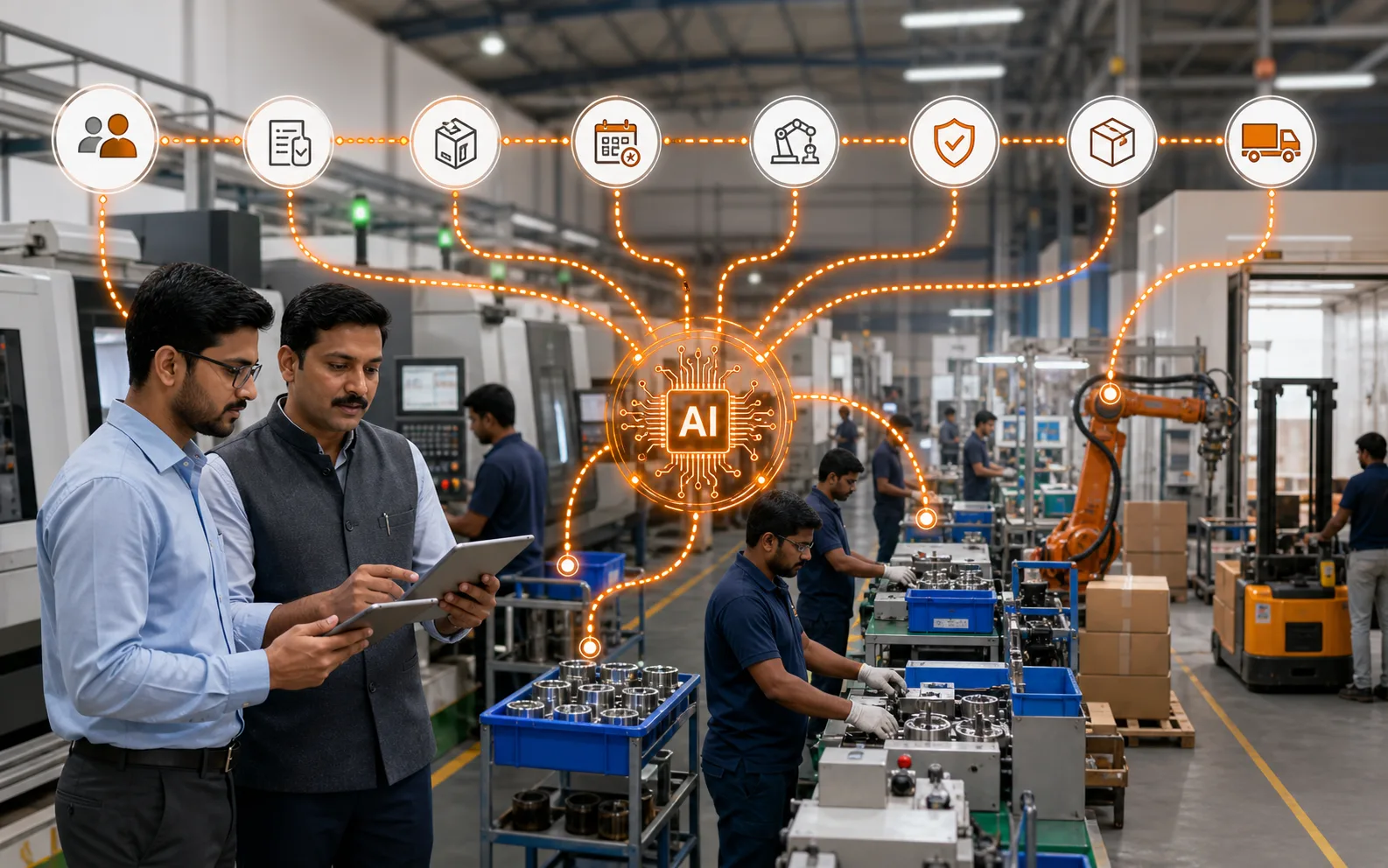
Will AI Replace My Production Planning Job?
Understand how AI affects production planning jobs, what tasks may change, and how planners can become more valuable with AI-supported scheduling and visibility.
6 Jun 2026Read more →Do I Need Special Skills to Use AI in Manufacturing?
Learn what skills manufacturing teams need to use AI, including process knowledge, data discipline, prompt clarity, review judgment, ERP understanding, and change readiness.
6 Jun 2026Read more →