
How Do I Get Started With an ERP System for My Startup?
Learn how early-stage businesses and manufacturing startups can start ERP with focused workflows, clean data, simple scope, cloud tools, and phased adoption.
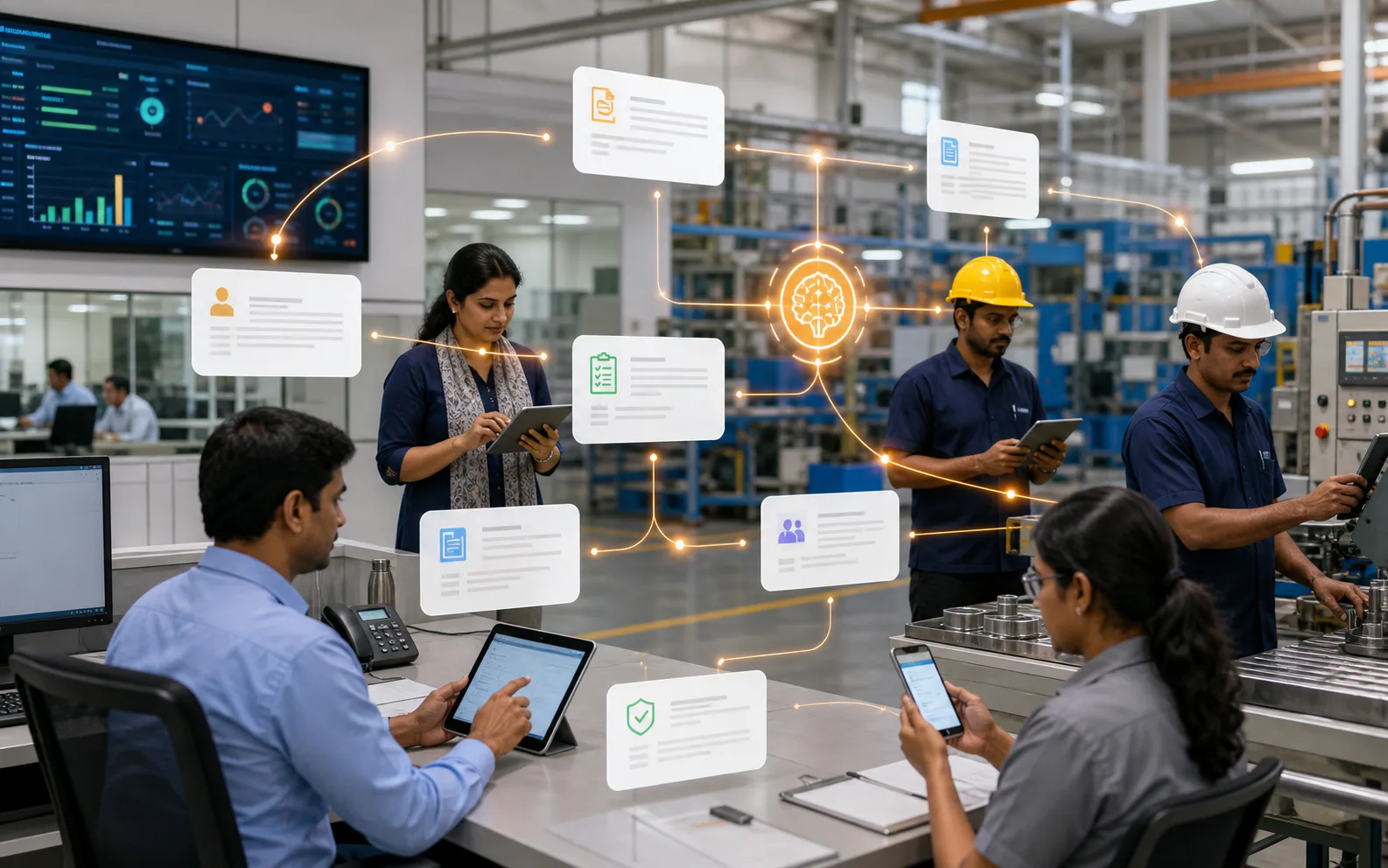
How Do I Get Started With an ERP System for My Startup?
A startup should not implement ERP like a large company. It should start with the minimum operating system needed to keep work visible, reliable, and scalable.
For a manufacturing startup, early ERP discipline can prevent bad habits from becoming permanent.
Start With Core Workflows
Do not begin with every possible module. Start with what affects daily execution:
- Customer enquiries
- Sales orders
- Purchase
- Inventory
- Production status
- Dispatch
- Basic finance visibility
These workflows create the foundation.
Keep Data Clean From Day One
Startups have an advantage: data has not yet become too messy. Create clean item codes, customer records, supplier records, units, and stock rules early.
Good data habits save future cleanup cost.
Choose Cloud and Scalable Tools
Cloud ERP is often practical for startups because it reduces infrastructure burden and supports remote access.
Choose a system that can add users, modules, locations, and reports later.
Avoid Over-Customization
A startup may still be discovering its process. Heavy customization too early can lock the business into immature workflows.
Use standard workflows where possible and customize only after patterns are clear.
Train the Team Early
Even a small team should learn to record work properly. If everything starts in WhatsApp and Excel, moving later becomes harder.
Define Success Metrics
Track simple metrics:
- Orders captured
- Stock accuracy
- Purchase delays
- Production status updates
- On-time dispatch
- Customer follow-ups
Where AICAN Optiwise Fits
AICAN Optiwise can help manufacturing startups build connected operational discipline early across sales, purchase, inventory, production, quality, dispatch, and finance visibility. Its AI-assisted layer can support founders who need fast visibility without a large management team.
FAQ
Is ERP too early for startups?
Not if operations are already complex. Start with focused workflows rather than a heavy rollout.
What should a startup implement first?
Inventory, orders, purchase, production status, dispatch, and dashboards are good starting points for manufacturing startups.
Should startups build custom ERP?
Usually not at first. Configurable ERP is often safer until processes mature.
Can ERP help investors trust a startup?
Clean systems and reliable data can improve operational credibility.
Final Thought
Startups do not need big-company ERP complexity.
They need clean operating habits early, so growth does not turn into confusion.

Related Posts

Kanban System | Optiwise
Learn how a Kanban system works in manufacturing, where it helps, where it fails, and how Optiwise connects Kanban signals with inventory, purchase, and production planning.
12 Jun 2026Read more →Erp In Operations Management | Optiwise
Learn how ERP improves operations management by connecting planning, inventory, purchase, production, quality, dispatch, finance, and reporting.
12 Jun 2026Read more →ERP for FMCG Companies in India
A practical guide to ERP for FMCG companies in India, covering distributor orders, batch tracking, expiry, inventory, production, schemes, costing, and reporting.
11 Jun 2026Read more →Optiwise, Odoo, Acumatica and Business Central for Manufacturing
Compare manufacturing workflows in Optiwise, Odoo, Acumatica and Dynamics 365 Business Central. See what your factory can run in Optiwise.
11 Jun 2026Read more →