
How Do Job Travelers Work in an ERP System?
Learn how ERP job travelers work in manufacturing, including routing, work orders, material issue, operation tracking, labor, QC checkpoints, rework, and dispatch visibility.
How Do Job Travelers Work in an ERP System?
Introduction
A job traveler is the production story of a job.
It tells the shop floor what needs to happen, what has already happened, and what still needs attention.
In many factories, this story lives on paper.
A printed job card moves with the material. Operators sign it. Supervisors write notes. QC adds remarks. Sometimes the paper is updated carefully. Sometimes it is updated at the end of the day. Sometimes it gets misplaced.
ERP changes the job traveler from a static document into a live operational record.
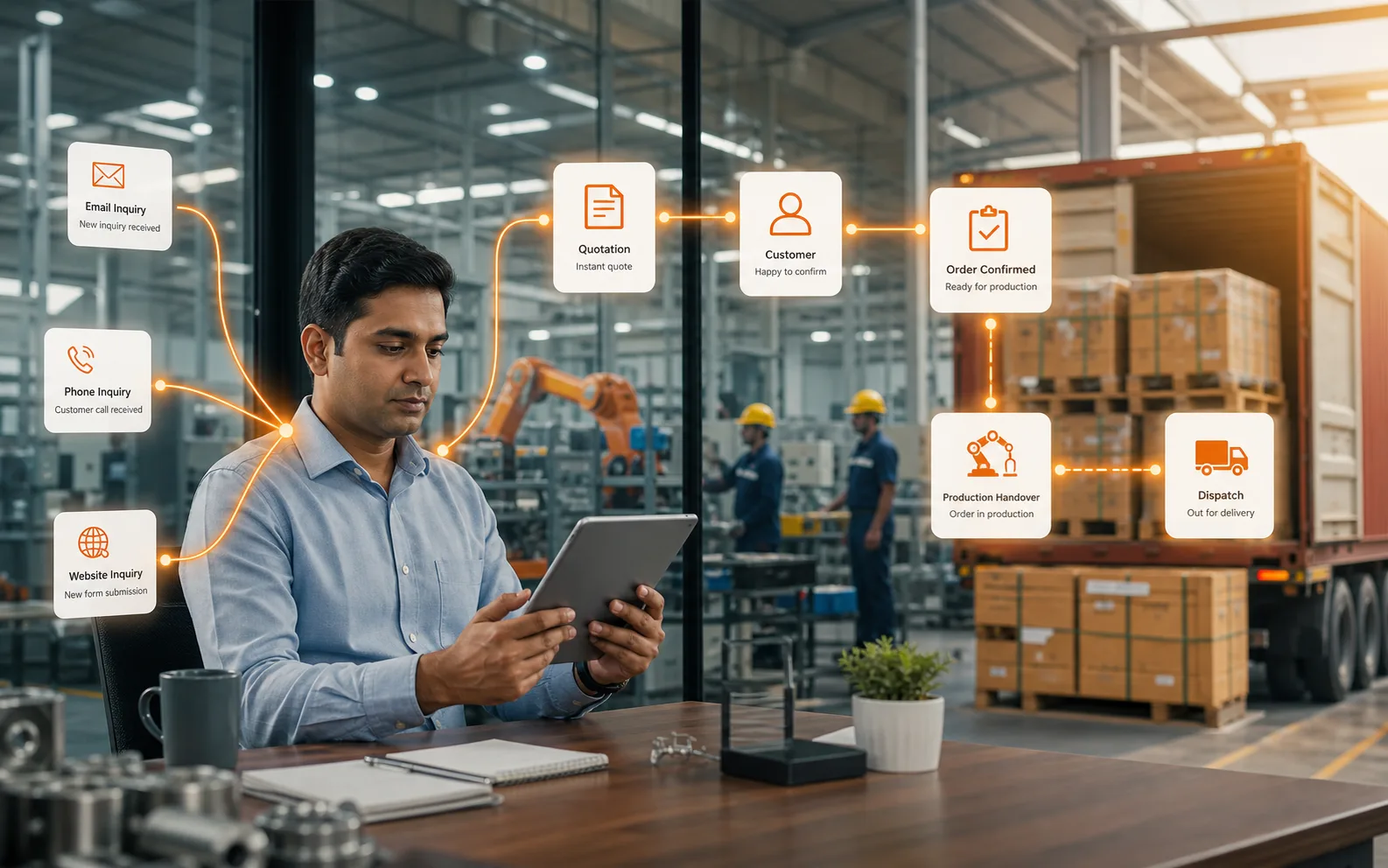
The job traveler becomes connected to the work order, material issue, routing, labor, production status, QC, rework, and dispatch.
What a Digital Job Traveler Contains
A digital job traveler should include job number, customer order, item details, drawing or specification reference, routing steps, planned quantity, material requirements, operation sequence, machine or work center, operator updates, QC checkpoints, rejection, rework, and final completion status.
For custom manufacturing, it may also include special instructions, customer notes, revision details, subcontracting steps, and inspection requirements.
The advantage is that the traveler does not only travel physically.
It becomes visible to everyone who needs it.
Production can see status.
Inventory can see material issue.
QC can see pending inspection.
Managers can see delays.
Finance can connect labor and material to cost.
How ERP Makes It Useful
A paper traveler records what happened if someone updates it.
An ERP traveler can guide what should happen next.
If material is not issued, the job is not ready.
If QC is pending, dispatch should not proceed.
If an operation is delayed, the schedule can show the risk.
If rework is recorded, job cost can reflect it.
AICAN Optiwise supports production planning, work orders, inventory, QC, shopfloor workflows, and AI-assisted task follow-ups. Virat can keep pending steps visible. Rohit can summarize production delays. Rishabh can highlight material issues.
This turns the job traveler into a live control tool.
A Real Manufacturing Scenario
A fabrication company used printed travelers for years.
The system worked when volume was low. As jobs increased, travelers were updated late. QC remarks were hard to search. Rework history was not easy to link to cost. Dispatch teams had to call production for status.
After moving to ERP-based job travelers, each stage became visible.
The company could see which jobs were waiting for material, which were in production, which were at QC, and which were ready for dispatch.
The traveler stopped being paperwork.
It became the job’s live status.
Frequently Asked Questions
What is a job traveler in ERP?
A job traveler is a digital record that tracks a job through production steps, material issue, operations, QC, rework, and completion.
Does every factory need job travelers?
They are most useful when jobs move through multiple stages, machines, or departments.
Can job travelers help with costing?
Yes. They can capture material, labor, rework, rejection, and operation status by job.
Can digital job travelers replace paper?
In many cases, yes. Some factories may keep paper during transition, but ERP should become the source of truth.
Conclusion
ERP job travelers help manufacturers track work as it moves through the shop floor.
They improve visibility, reduce follow-ups, support quality checks, and strengthen job costing.
For growing factories, they turn production status from memory into a shared record.
A Final Thought
A job traveler should answer one simple question:
Where is this job, and what does it need next?
If the answer requires five phone calls, the traveler is not doing its job.
Manufacturers exploring digital job travelers can learn more about AICAN Optiwise at aican.co.in.
— Vedant Awasthi

Related Posts

Will AI Create More Jobs Than It Destroys?
Explore whether AI will create more jobs than it destroys, with a practical view of manufacturing, automation, new roles, reskilling, and business transformation.
13 Jun 2026Read more →Manufacturing AI vs. Hiring More Workers
Compare manufacturing AI with hiring more workers and learn when automation, better systems, training, or additional people are the right answer.
7 Jun 2026Read more →
Will AI Replace My Production Planning Job?
Understand how AI affects production planning jobs, what tasks may change, and how planners can become more valuable with AI-supported scheduling and visibility.
6 Jun 2026Read more →Do I Need Special Skills to Use AI in Manufacturing?
Learn what skills manufacturing teams need to use AI, including process knowledge, data discipline, prompt clarity, review judgment, ERP understanding, and change readiness.
6 Jun 2026Read more →