
How to Reduce Idle Machine Time
Learn how to reduce idle machine time through better planning, material readiness, operator availability, setup control, machine monitoring, and ERP visibility.
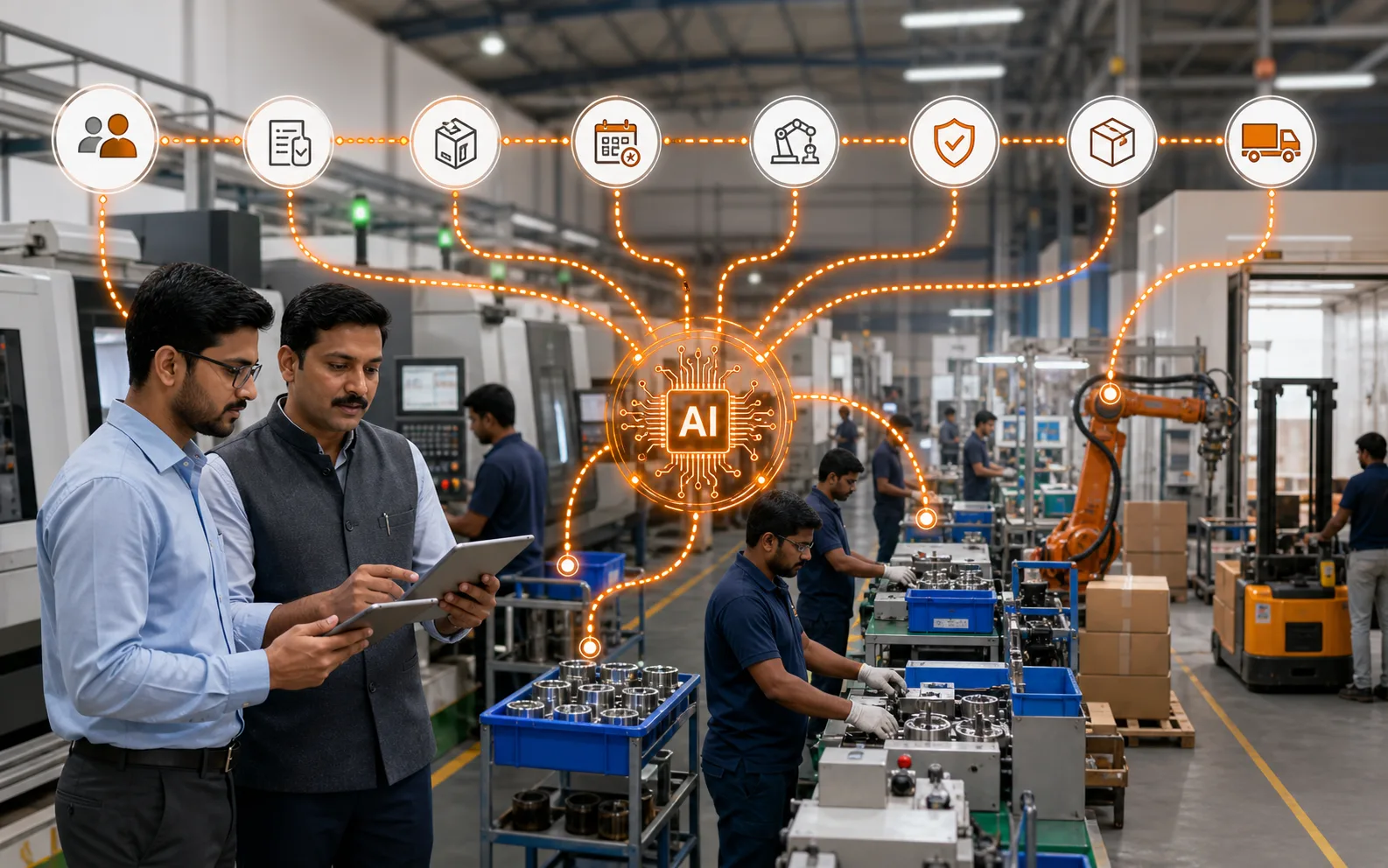
How to Reduce Idle Machine Time
Idle machine time is one of the most common hidden losses in manufacturing. A machine may not be broken, but it is still not producing. It may be waiting for material, operator, program, tool, inspection, maintenance, approval, or the next job.
Reducing idle time improves capacity without buying new machines.
The first step is to measure why machines are idle.
Separate Idle Time From Downtime
Downtime usually means the machine cannot run due to a problem. Idle time means the machine could run but is waiting for something.
This difference matters because the solution is different.
Track Idle Reasons
Common idle reasons include no material, no operator, no work order, setup pending, tool not ready, program not ready, quality hold, waiting for inspection, or waiting for maintenance clearance.
Reason-wise tracking helps teams fix the real bottleneck.
Improve Production Planning
Machines become idle when jobs are not scheduled clearly or material readiness is not checked.
Production plans should connect with inventory, purchase, manpower, and machine capacity.
Improve Setup Readiness
Prepare tools, fixtures, programs, drawings, and inspection requirements before the machine becomes available.
Setup readiness reduces waiting between jobs.
Use Machine Monitoring
Machine monitoring can show idle time in real time. Alerts can notify supervisors when a machine has been idle beyond a defined threshold.
This allows faster action during the shift.
Connect With ERP
ERP connects machine status with work orders, material availability, purchase status, quality, and dispatch priorities.
This helps teams understand why idle time is happening.
Where AICAN Optiwise Fits
AICAN Optiwise helps manufacturers connect production, inventory, purchase, machine utilization, sales, finance, and reporting so idle time can be reduced with better visibility.
AICAN supports factories that want more output from existing assets. Learn more at About AICAN.
Founder’s Note
Idle machines are expensive because they look harmless. Nothing is broken, but capacity is being lost.
When factories track idle reasons honestly, they often find improvement opportunities without major investment.
FAQ
What is idle machine time?
Idle machine time is when a machine is available but not producing because it is waiting for something.
What causes idle time?
No material, no operator, no job, setup delay, inspection hold, tool issues, and planning gaps are common causes.
How is idle time different from downtime?
Downtime means the machine cannot run. Idle time means it could run but is waiting.
How can ERP reduce idle time?
ERP connects production planning, inventory, purchase, and machine status so teams can prevent waiting.
Final Thought
Reducing idle machine time is one of the fastest ways to improve capacity. Track the reasons, prepare jobs better, and connect machine status with planning.

Related Posts

Kanban System | Optiwise
Learn how a Kanban system works in manufacturing, where it helps, where it fails, and how Optiwise connects Kanban signals with inventory, purchase, and production planning.
12 Jun 2026Read more →Erp In Operations Management | Optiwise
Learn how ERP improves operations management by connecting planning, inventory, purchase, production, quality, dispatch, finance, and reporting.
12 Jun 2026Read more →ERP for FMCG Companies in India
A practical guide to ERP for FMCG companies in India, covering distributor orders, batch tracking, expiry, inventory, production, schemes, costing, and reporting.
11 Jun 2026Read more →
Optiwise, Odoo, Acumatica and Business Central for Manufacturing
Compare manufacturing workflows in Optiwise, Odoo, Acumatica and Dynamics 365 Business Central. See what your factory can run in Optiwise.
11 Jun 2026Read more →