
What's the Learning Curve for Operating Sensor Systems?
Understand the learning curve for factory sensor systems, including operator training, supervisor adoption, maintenance readiness, and dashboard habits.
What's the Learning Curve for Operating Sensor Systems?
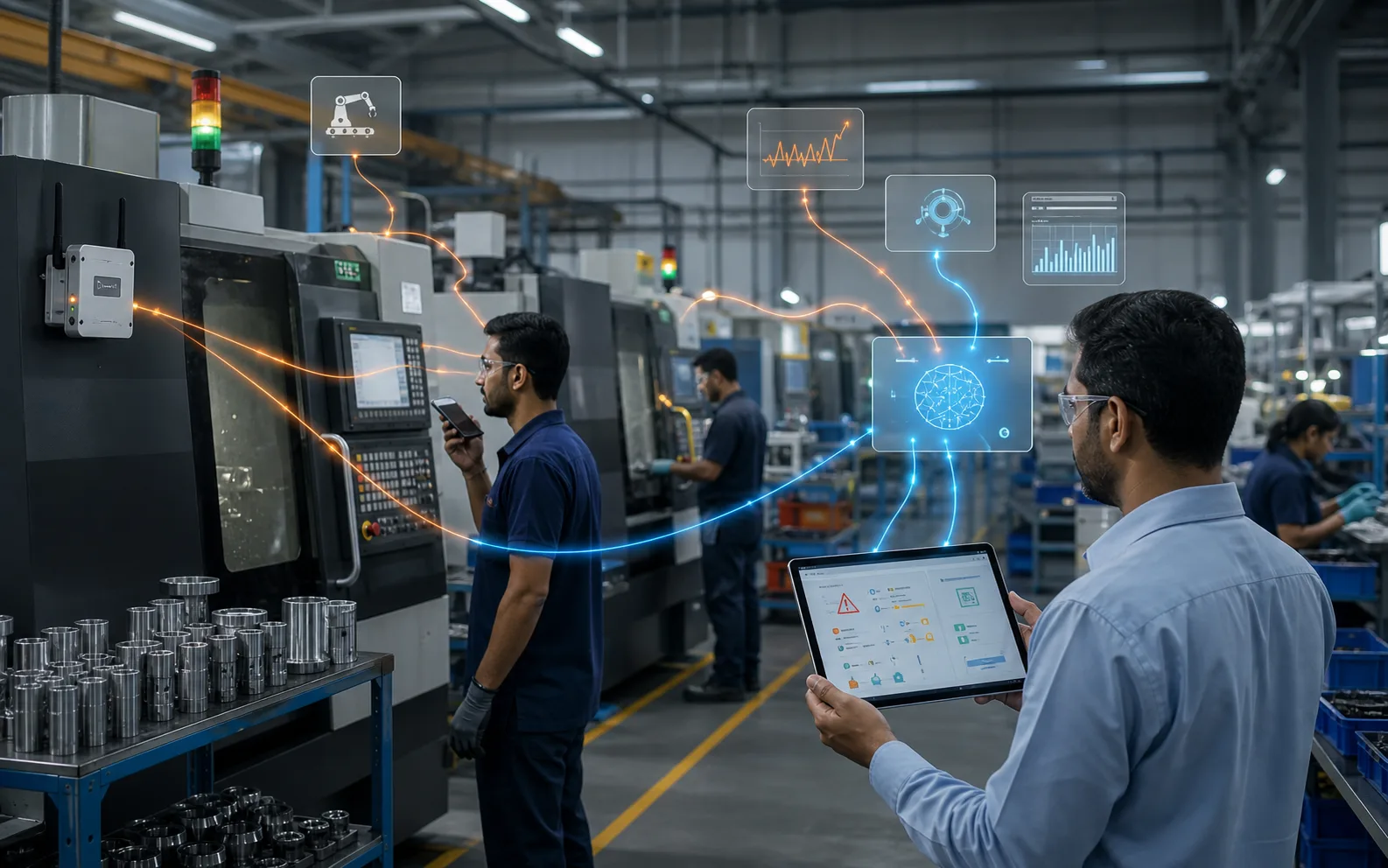
The learning curve for sensor systems is usually less about technology and more about habits.
Most factory users do not need to understand every electrical detail of a sensor. Operators need to know what the signal means, what action is expected, and how to report context. Supervisors need to know how to read dashboards and follow up. Maintenance teams need to know how to inspect sensors and respond to abnormal readings. Managers need to know how to use the data without turning it into blame.
For manufacturers evaluating AICAN Optiwise, the goal should be simple adoption: right information, right role, right action.
Different roles need different training
A common mistake is giving everyone the same training.
Operators need practical, machine-level training. What does this alert mean? When do I confirm downtime reason? What should I do if the dashboard count looks wrong? Who do I call if a sensor is damaged?
Supervisors need shift-level training. Which machines are behind? Which alerts need attention? How do I review downtime? How do I compare target versus actual?
Maintenance teams need technical training. Where is each sensor installed? How is it powered? How do I test it? What does a bad signal look like? What spare parts are needed?
Management needs decision training. Which metrics matter? What should be reviewed daily? What should not be overinterpreted?
The interface should be role-friendly
A sensor system becomes harder to learn when the dashboard shows too much.
Operators should not need to read a management analytics screen. Maintenance teams should not need to dig through production charts to find machine health. Owners should not be forced into technical signal pages when they need performance summaries.
Good adoption depends on role-based views. The right person should see the right level of detail.
Start with a few signals
Factories should not introduce every sensor metric at once.
Start with signals that people already care about: machine running status, production count, downtime, alerts, temperature, pressure, or vibration on critical equipment. Once the team trusts those signals, expand.
A smaller system that people use is better than a large system everyone avoids.
Operators need confidence, not lectures
Operators may worry that sensor systems are being introduced to blame them.
Training should show how the system helps reveal real causes: material delay, maintenance wait, tool problem, planning issue, machine fault, quality hold, or power interruption. When operators see that the system protects truth, not just management control, adoption improves.
The best training uses real shop-floor examples instead of generic slides.
Supervisors need review routines
Supervisors may understand the dashboard quickly but still fail to use it consistently.
The learning curve includes building routines: checking line status at shift start, reviewing alerts during the shift, closing downtime reasons, escalating repeated issues, and using data in production meetings.
A dashboard without a routine becomes background decoration.
Maintenance needs ownership of sensor health
Sensor systems add a new responsibility for maintenance teams.
They need to know which sensors are critical, how to inspect them, how to troubleshoot failures, how to clean or align them, and when to replace them. If sensor health is ignored, users lose trust in the data.
Maintenance adoption improves when sensor health is treated like equipment health.
Managers must use data responsibly
The fastest way to damage adoption is to use sensor data unfairly.
If every downtime event becomes an operator blame discussion, people will resist the system. Managers should use the data to find process causes, not just individual fault. Sensor data should make problems easier to solve, not harder to discuss.
A healthy learning curve includes cultural discipline.
How long does adoption take?
Basic use can happen quickly when the system is simple and the training is role-based. Deeper adoption takes longer because people need to trust the data and build new routines.
The first weeks should focus on confidence: are the readings correct, do alerts make sense, are dashboards useful, and do people know what to do?
Once trust is established, the system becomes part of normal factory management.
Where AICAN Optiwise fits
AICAN Optiwise is designed to help manufacturers turn sensor and machine data into usable dashboards, alerts, and workflows. The easier the information is to act on, the faster the learning curve becomes.
AICAN works with manufacturers that want technology adoption to fit real people and real factory routines. Learn more at About AICAN.
Founder’s Note
Factories do not adopt technology because it is impressive. They adopt it when it makes the day clearer. The learning curve becomes manageable when each person understands what the system means for their work and sees that the data is being used fairly.
FAQs
Is it hard for operators to learn sensor systems?
Not if training is practical and role-specific. Operators need clear actions, not technical overload.
Who needs training?
Operators, supervisors, maintenance teams, and managers all need different training.
How can we reduce resistance?
Explain the purpose, involve shop-floor teams early, use real examples, and avoid using data only for blame.
How long does it take to adopt?
Basic use can be quick, but trust and disciplined routines usually take several weeks.
How does AICAN Optiwise help adoption?
It can present sensor data in usable dashboards and workflows so each role sees information they can act on.

Related Posts

Kanban System | Optiwise
Learn how a Kanban system works in manufacturing, where it helps, where it fails, and how Optiwise connects Kanban signals with inventory, purchase, and production planning.
12 Jun 2026Read more →Erp In Operations Management | Optiwise
Learn how ERP improves operations management by connecting planning, inventory, purchase, production, quality, dispatch, finance, and reporting.
12 Jun 2026Read more →ERP for FMCG Companies in India
A practical guide to ERP for FMCG companies in India, covering distributor orders, batch tracking, expiry, inventory, production, schemes, costing, and reporting.
11 Jun 2026Read more →
Optiwise, Odoo, Acumatica and Business Central for Manufacturing
Compare manufacturing workflows in Optiwise, Odoo, Acumatica and Dynamics 365 Business Central. See what your factory can run in Optiwise.
11 Jun 2026Read more →