
Manufacturing Analytics | Optiwise
Learn manufacturing analytics, key metrics, practical dashboard examples, data sources, mistakes, and how Optiwise helps manufacturers turn operations data into decisions.
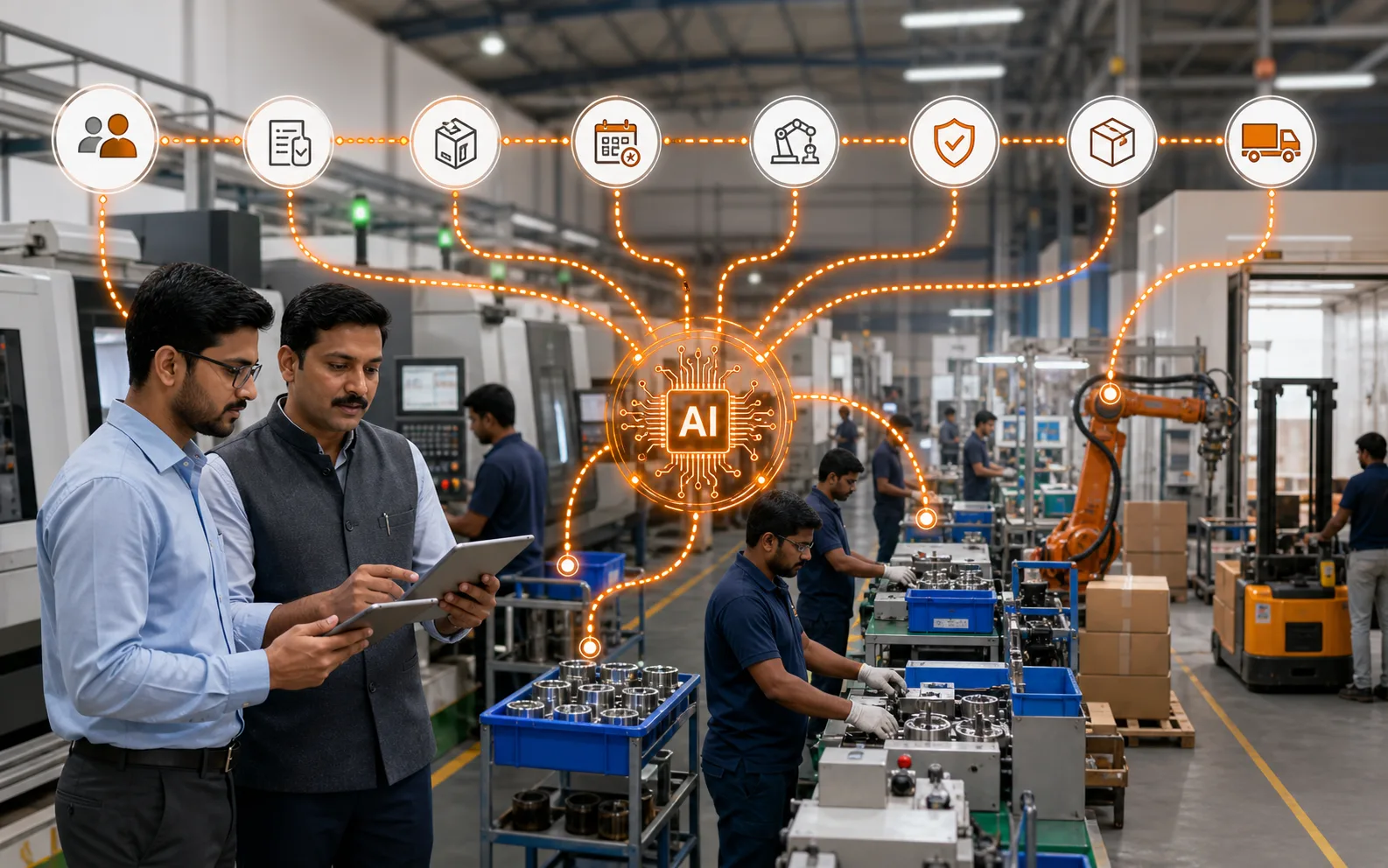
Manufacturing Analytics: Turning Factory Data Into Better Decisions
Manufacturing businesses generate data every day. Sales orders, purchase orders, GRNs, stock movement, production entries, machine logs, quality checks, dispatches, invoices, rework, scrap, and WIP all tell a story.
The problem is that most factories do not hear that story in time.
Data stays scattered across departments. Reports are prepared after the problem has already happened. Owners ask for updates and teams manually compile numbers. By then, the late order is already late, the stock is already short, and the margin is already damaged.
Manufacturing analytics helps change that by turning operational data into useful visibility. This guide explains manufacturing analytics and how AICAN Optiwise helps manufacturers move from delayed reporting to faster decisions.
What Is Manufacturing Analytics?
Manufacturing analytics is the use of production, inventory, purchase, quality, dispatch, finance, and machine data to understand performance and improve decisions.
It can answer questions such as:
- Which orders are delayed?
- Which materials are short?
- Which machines or stages are bottlenecks?
- Which products have high rejection?
- Which jobs are over cost?
- Which vendors delay production?
- Where is cash blocked in inventory?
Analytics is useful only when it leads to action.
Why Manufacturing Analytics Matters
Manufacturers operate with many moving parts. A small issue in purchase can become a production delay. A production delay can become a dispatch delay. A dispatch delay can become a customer complaint.
Analytics helps connect these signals early.
It gives owners and managers better visibility into performance, cost, quality, delivery, inventory, capacity, and risk.
Key Data Sources
Useful analytics may come from sales orders, purchase orders, GRN, vendor delivery, item master, BOM, inventory movement, production plan, work orders, WIP, machine data, quality inspection, rework, scrap, finished goods, dispatch, invoices, and customer complaints.
The more connected the data, the more useful the analytics.
Key Manufacturing Metrics
Production Output
Shows actual output compared with plan.
WIP
Shows work currently stuck between processes.
On-Time Delivery
Shows whether customer commitments are being met.
Inventory Turnover
Shows how efficiently inventory is moving.
Stockout Rate
Shows how often material shortage affects operations.
Supplier On-Time Delivery
Shows vendor reliability.
Rejection and Rework
Shows quality leakage.
Planned vs Actual Cost
Shows where margin is being lost.
Dashboard Examples
An owner dashboard may show pending dispatch, delayed orders, low stock, inventory value, WIP, overdue purchase orders, receivables, creditor pressure, and production risk.
A production dashboard may show work order status, stage-wise WIP, output against plan, rejection, rework, and bottlenecks.
A purchase dashboard may show pending POs, supplier delays, shortage items, price changes, and GRN pending.
A stores dashboard may show low stock, slow-moving inventory, ageing stock, stock valuation, and item movement.
Common Analytics Mistakes
The first mistake is building dashboards from dirty data.
The second mistake is tracking too many metrics with no action owner.
The third mistake is reporting monthly when decisions are needed daily.
The fourth mistake is using analytics only for senior management and not operational teams.
The fifth mistake is treating analytics as decoration instead of a decision system.
How AI Improves Manufacturing Analytics
AI can help summarize exceptions, identify unusual patterns, suggest follow-ups, explain delays, and help owners ask natural-language questions about operations.
But AI needs structured data. If factory data is incomplete or scattered, AI output becomes unreliable.
That is why digitization and analytics must work together.
How Optiwise Helps With Manufacturing Analytics
Optiwise by AICAN helps manufacturers connect ERP workflows, IoT signals where applicable, reports, dashboards, and AI agents.
Optiwise can bring visibility across CRM, purchase, smart GRN, inventory, QR tracking, BOM, production, WIP, quality, dispatch, and reports.
This helps owners see not only what happened, but what needs attention now.
Practical Implementation Steps
Start with five business questions. For example: what is delayed, what is short, what is over cost, what is stuck, and what is affecting dispatch?
Then map the required data sources. Clean item masters. Standardize transactions. Create dashboards by role. Assign action owners. Review metrics regularly.
Analytics should become part of weekly and daily operating rhythm.
Founder’s Note
At AICAN, we believe analytics should feel like a factory control room, not a report file. Owners need answers while there is still time to act.
Optiwise is built to connect operational data and AI-assisted insights so manufacturers can move faster with more confidence.
FAQs
What is manufacturing analytics?
Manufacturing analytics uses factory data from production, purchase, inventory, quality, dispatch, and finance to improve decisions.
What metrics should manufacturers track?
Important metrics include production output, WIP, on-time delivery, inventory turnover, stockouts, supplier delivery, rejection, rework, and planned vs actual cost.
Why do manufacturing dashboards fail?
They fail when data is dirty, metrics are not actionable, reports are delayed, or no one owns the follow-up.
How does AI help manufacturing analytics?
AI can summarize exceptions, identify patterns, answer operational questions, and support faster decisions when data is structured.
How does Optiwise support manufacturing analytics?
Optiwise connects ERP workflows, IoT, reports, dashboards, and AI agents across purchase, inventory, production, quality, dispatch, and finance visibility.

Related Posts
A Manufacturing Alternative to SAP: Optiwise
Run your factory in Optiwise, a manufacturing alternative to SAP Business One with connected operations, AI agents and no-code workflows.
14 Jun 2026Read more →How Do I Know If My Manufacturing Business Really Needs an ERP?
A practical guide for manufacturers to identify when spreadsheets, manual follow-ups, and disconnected systems are no longer enough — and when ERP becomes an operational necessity.
14 Jun 2026Read more →Production Management System Optimized | Optiwise
Learn best practices for optimizing a production management system across planning, scheduling, material readiness, quality, and reporting.
12 Jun 2026Read more →
What Is the Best ERP for Pharmaceutical Manufacturing?
Learn how to choose the best ERP for pharmaceutical manufacturing, with guidance on batch control, quality workflows, traceability, inventory, documentation, and GMP discipline.
10 Jun 2026Read more →