
Manufacturing Engineering | Optiwise
Learn manufacturing engineering, what manufacturing engineers do, key responsibilities, examples, metrics, and how Optiwise supports engineering-to-production workflows.
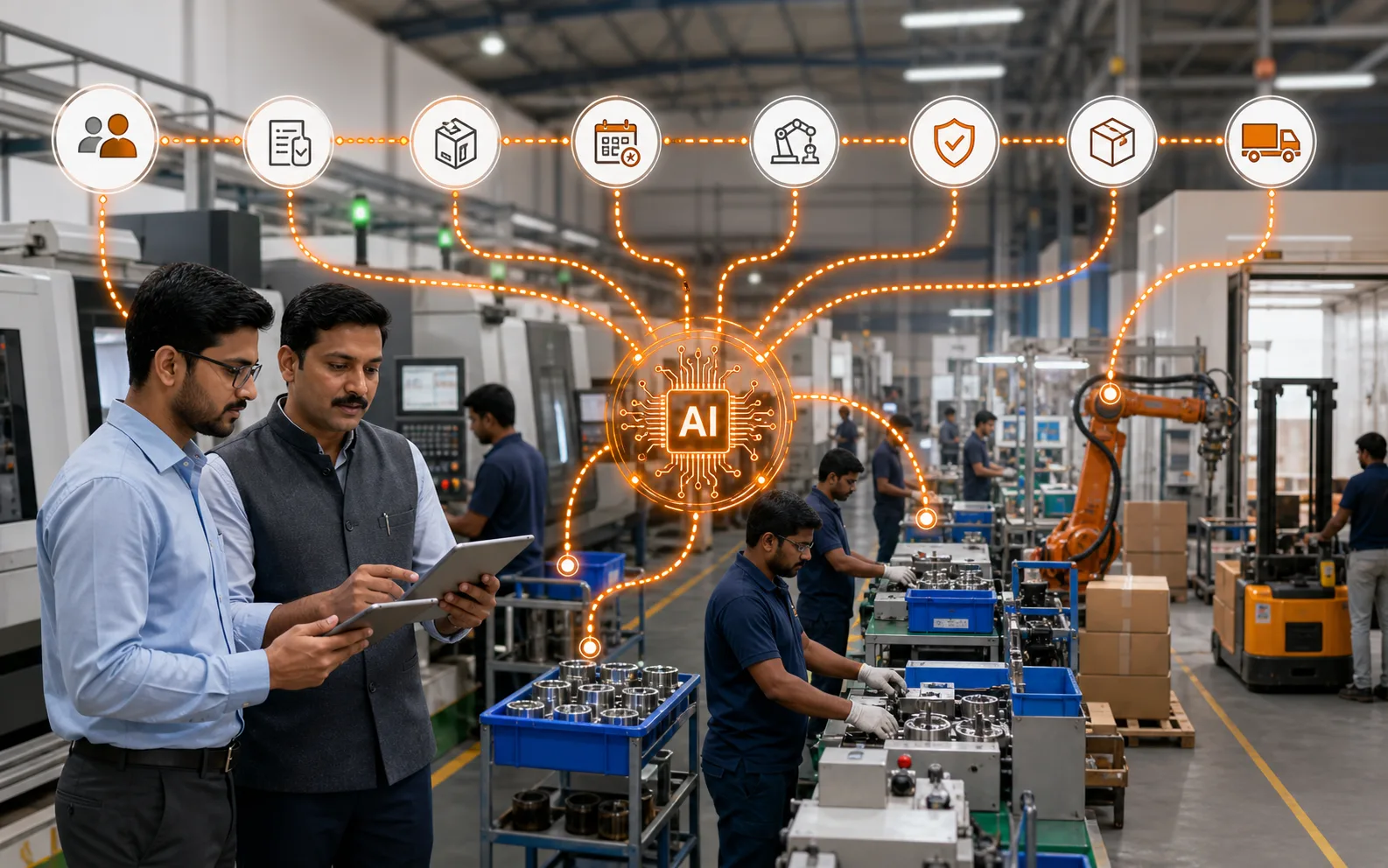
Manufacturing Engineering: The Bridge Between Design and Production
Manufacturing engineering is where product ideas become repeatable factory processes.
A drawing may look correct. A prototype may work. But production needs more than a design. It needs process sequence, tooling, BOM, work instructions, quality checks, material flow, cycle time, cost control, and practical shopfloor execution.
That is the role of manufacturing engineering.
This guide explains manufacturing engineering, what manufacturing engineers do, common responsibilities, and how AICAN Optiwise helps connect engineering decisions with production, inventory, and costing visibility.
What Is Manufacturing Engineering?
Manufacturing engineering is the discipline of designing, improving, and controlling manufacturing processes so products can be made efficiently, consistently, safely, and at the required quality level.
It sits between product design and production operations. The focus is not only what to make, but how to make it repeatedly.
What Does a Manufacturing Engineer Do?
A manufacturing engineer may design process flow, create routing, define work instructions, validate tooling, improve layout, reduce cycle time, analyse defects, support automation, improve material flow, and work on cost reduction.
In smaller factories, these responsibilities may be shared by production managers, owners, quality teams, and experienced supervisors.
Key Responsibilities
Process Planning
Deciding the sequence of operations required to manufacture a product.
BOM and Routing Support
Ensuring the bill of materials and manufacturing route match real production needs.
Tooling and Fixture Design
Creating or selecting tools and fixtures that improve accuracy, speed, and repeatability.
Quality Planning
Defining inspection points, tolerances, and quality controls before production starts.
Cycle Time Improvement
Studying how long operations take and reducing unnecessary waiting, setup, and movement.
Cost Reduction
Reducing waste, rework, scrap, excess material use, and inefficient processes.
Why Manufacturing Engineering Matters
Without manufacturing engineering, production depends heavily on experience and improvisation. That may work for a few orders, but it becomes risky as volume, product variety, and customer expectations grow.
Manufacturing engineering helps make operations repeatable. It reduces variation, improves output, supports quality, and creates better control over cost.
Manufacturing Engineering Examples
A fabrication business may redesign a welding fixture to reduce rework.
A packaging company may change line layout to reduce movement.
A machining unit may standardize setup sheets to reduce changeover time.
An electrical panel manufacturer may improve BOM and routing so purchase and production work from the same plan.
Common Mistakes
The first mistake is sending drawings to production without clear process instructions.
The second mistake is treating BOM as an estimate instead of an operating document.
The third mistake is not recording actual cycle time and rework.
The fourth mistake is making process improvements without updating the system.
The fifth mistake is not connecting engineering changes with purchase, inventory, and production.
How Digital Systems Help
Manufacturing engineering becomes stronger when product and process data are structured. BOM, item master, routing, work orders, quality checkpoints, WIP, cycle time, and cost records should connect.
If engineering data stays in files and production data stays on paper, improvements are hard to sustain.
How Optiwise Supports Manufacturing Engineering
Optiwise by AICAN helps manufacturers connect engineering-related records with daily execution.
Optiwise can support item masters, BOM, purchase planning, smart GRN, inventory, QR tracking, production orders, WIP, quality checks, costing visibility, reports, and AI-assisted dashboards.
This gives teams a clearer view of whether the process designed on paper is working on the shopfloor.
Practical Controls
Maintain clean BOMs. Define process routes. Record work instructions. Track material consumption. Measure cycle time. Record rejection and rework. Review planned vs actual cost. Update system records after engineering changes.
This article is for general business understanding only and is not engineering, safety, legal, tax, accounting, or compliance advice. Technical decisions should be reviewed by qualified professionals.
Founder’s Note
At AICAN, we see manufacturing engineering as the discipline that makes growth possible. A factory cannot scale on memory alone. It needs repeatable processes.
Optiwise is built to help manufacturers connect BOM, process, material, production, quality, and reports so process knowledge becomes part of the system.
FAQs
What is manufacturing engineering?
Manufacturing engineering is the design and improvement of manufacturing processes so products can be made efficiently and consistently.
What does a manufacturing engineer do?
A manufacturing engineer works on process planning, tooling, routing, quality checks, cycle time, layout, automation, and cost reduction.
Why is manufacturing engineering important?
It makes production repeatable, reduces defects, improves throughput, and supports cost control.
How is manufacturing engineering different from production?
Manufacturing engineering designs and improves the process. Production executes the process daily.
How does Optiwise support manufacturing engineering?
Optiwise connects BOM, item master, purchase, inventory, production, WIP, quality, costing, and dashboards so process decisions are tied to execution.

Related Posts
A Manufacturing Alternative to SAP: Optiwise
Run your factory in Optiwise, a manufacturing alternative to SAP Business One with connected operations, AI agents and no-code workflows.
14 Jun 2026Read more →How Do I Know If My Manufacturing Business Really Needs an ERP?
A practical guide for manufacturers to identify when spreadsheets, manual follow-ups, and disconnected systems are no longer enough — and when ERP becomes an operational necessity.
14 Jun 2026Read more →Production Management System Optimized | Optiwise
Learn best practices for optimizing a production management system across planning, scheduling, material readiness, quality, and reporting.
12 Jun 2026Read more →
What Is the Best ERP for Pharmaceutical Manufacturing?
Learn how to choose the best ERP for pharmaceutical manufacturing, with guidance on batch control, quality workflows, traceability, inventory, documentation, and GMP discipline.
10 Jun 2026Read more →