
How Do I Monitor Furnaces Remotely?
Learn how foundries can monitor furnaces remotely using IoT telemetry, heat numbers, furnace status, downtime, process alerts, maintenance, quality results, and ERP dashboards.
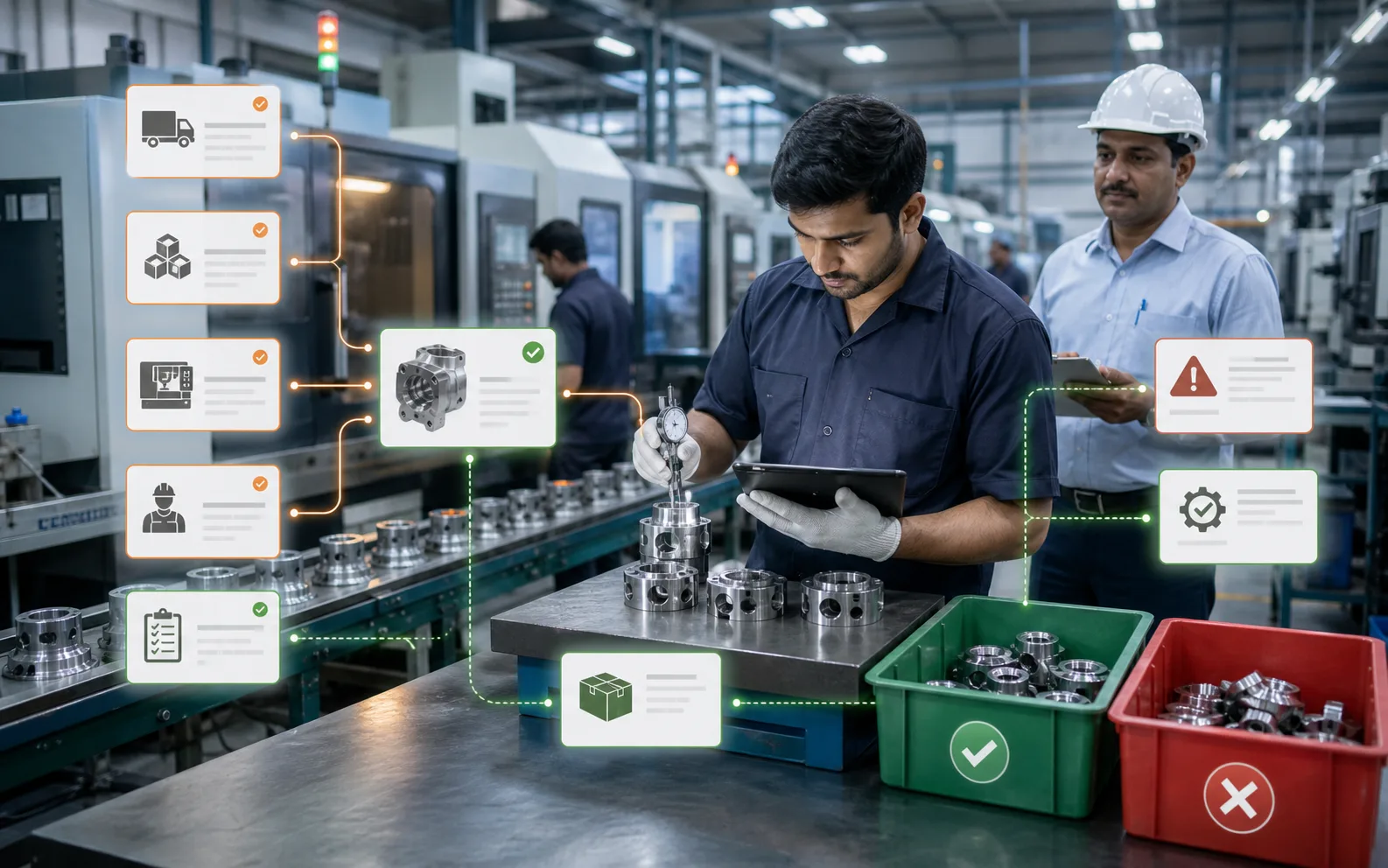
How Do I Monitor Furnaces Remotely?
Furnaces are monitored remotely by capturing furnace status, heat number, process signals, downtime, alarms, maintenance alerts, output, and quality results through IoT and connecting that information with ERP. Remote monitoring helps foundry teams see furnace performance without waiting for manual reports.
Remote visibility does not replace operators or metallurgical discipline. It supports them. The aim is to see important signals early, connect them with the right heat or job, and respond before downtime or quality risk grows.
AICAN Optiwise helps manufacturers connect production, inventory, quality, maintenance, dispatch, finance, and reporting so remote furnace monitoring can support practical decisions.
Define what needs to be monitored
Remote monitoring should begin with specific questions. What does the foundry need to know sooner?
Common monitoring needs include:
- Furnace running or stopped status
- Heat number in progress
- Melting cycle time
- Downtime alerts
- Process condition alerts where available
- Maintenance alerts
- Output status
- Quality hold status
A focused monitoring plan is easier to implement and easier for teams to trust.
Connect remote data with heat numbers
Remote furnace data becomes more useful when it is connected to heat traceability.
ERP should connect:
- Heat number
- Furnace used
- Date and shift
- Grade
- Charge mix
- Production order
- Quality result
- Rejection or rework record
This helps teams understand the operational impact of furnace events.
Track downtime and alerts
Remote monitoring can help teams respond faster when the furnace stops or behaves unexpectedly.
Track:
- Alert time
- Alert type
- Downtime duration
- Reason category
- Maintenance response
- Heat affected
- Output impact
This creates a better record for both maintenance and production review.
Connect maintenance with furnace history
Remote monitoring can support preventive maintenance by showing patterns over time.
ERP should track:
- Breakdown records
- Preventive maintenance schedule
- Repeated alerts
- Spare parts used
- Maintenance closure
- Downtime trend
This helps reduce unplanned stoppages and improves accountability.
Review quality impact
Furnace events should be reviewed alongside quality data.
Useful links include:
- Heat number
- Test result
- Defect type
- Rejection quantity
- Rework decision
- Customer complaint where configured
This helps the foundry identify whether specific furnace conditions are linked to quality outcomes.
Where Optiwise fits
Optiwise can help foundries connect remote furnace monitoring with ERP workflows such as heat tracking, charge mix, production, quality, maintenance, costing, and dispatch.
A practical implementation can focus on:
- Remote furnace status visibility
- Heat number linkage
- Downtime and alert capture
- Maintenance follow-up
- Quality result connection
- Rejection analysis
- Performance dashboards
AICAN helps manufacturers use monitoring data inside the actual operating workflow.
Founder’s Note
Remote monitoring is not about replacing the foundry team. It is about giving them better timing and better context. At AICAN, we believe furnace data becomes valuable when it is tied to heat, quality, maintenance, and cost, so decisions improve where it matters. Learn more at About AICAN.
FAQs
How do I monitor furnaces remotely?
Monitor furnaces remotely by using IoT signals for furnace status, downtime, alerts, cycle time, maintenance, and connecting them with ERP heat and quality records.
What should remote furnace monitoring include?
It should include furnace status, heat number, downtime, process alerts where available, maintenance response, output, and quality linkage.
Can ERP track furnace alerts?
Yes. ERP can capture alert records, downtime reasons, maintenance actions, heat numbers, and quality outcomes.
Why connect furnace monitoring with heat numbers?
Heat linkage helps trace furnace events to material consumption, casting output, quality results, rejection, and cost.
Does remote monitoring improve quality automatically?
No. It improves visibility. Quality improves when teams use the data to act on process, maintenance, material, and operating discipline.

Related Posts

Kanban System | Optiwise
Learn how a Kanban system works in manufacturing, where it helps, where it fails, and how Optiwise connects Kanban signals with inventory, purchase, and production planning.
12 Jun 2026Read more →Erp In Operations Management | Optiwise
Learn how ERP improves operations management by connecting planning, inventory, purchase, production, quality, dispatch, finance, and reporting.
12 Jun 2026Read more →ERP for FMCG Companies in India
A practical guide to ERP for FMCG companies in India, covering distributor orders, batch tracking, expiry, inventory, production, schemes, costing, and reporting.
11 Jun 2026Read more →
Optiwise, Odoo, Acumatica and Business Central for Manufacturing
Compare manufacturing workflows in Optiwise, Odoo, Acumatica and Dynamics 365 Business Central. See what your factory can run in Optiwise.
11 Jun 2026Read more →