
Negotiating Job Security With AI Implementation
Learn how employees and managers can discuss job security during AI implementation through reskilling, role redesign, performance goals, and transparent communication.

Negotiating Job Security With AI Implementation
When a company implements AI, employees naturally wonder what it means for their jobs. Avoiding the conversation creates fear. A better approach is to discuss role changes, training, and expectations directly.
Job security in the AI age is often tied to reskilling and business value.
Ask About the AI Plan
Employees can ask:
- Which workflows will AI affect?
- Which tasks may be automated?
- What roles will change?
- What training will be provided?
- How will success be measured?
Request Reskilling Support
If AI changes your work, ask for practical training. This may include AI tools, dashboards, data literacy, ERP usage, or process improvement.
Offer to Help With Adoption
Employees who help implement change become more valuable. Volunteer for pilot projects, testing, documentation, or training support.
Define New Responsibilities
If AI automates part of your job, discuss what higher-value responsibilities you can take on.
Managers Should Communicate Early
Managers should explain goals, timelines, and training plans. Uncertainty creates resistance.
Where AICAN Optiwise Fits
When AICAN Optiwise is introduced, teams can discuss how AI agents will support sales, purchase, inventory, production, quality, dispatch, and finance workflows, and what new skills users need.
FAQ
Can employees negotiate training?
Yes. Training benefits both employees and the business.
Should managers promise no job changes?
They should be honest. Better to explain expected changes and support paths.
How can employees stay valuable?
Learn tools, help adoption, and move toward judgment-based work.
What if AI is introduced without communication?
Ask constructive questions and request clarity.
Final Thought
Job security conversations should not happen after fear has already spread.
Talk early, train seriously, and redesign roles with people in mind.

Related Posts

Will AI Create More Jobs Than It Destroys?
Explore whether AI will create more jobs than it destroys, with a practical view of manufacturing, automation, new roles, reskilling, and business transformation.
13 Jun 2026Read more →Manufacturing AI vs. Hiring More Workers
Compare manufacturing AI with hiring more workers and learn when automation, better systems, training, or additional people are the right answer.
7 Jun 2026Read more →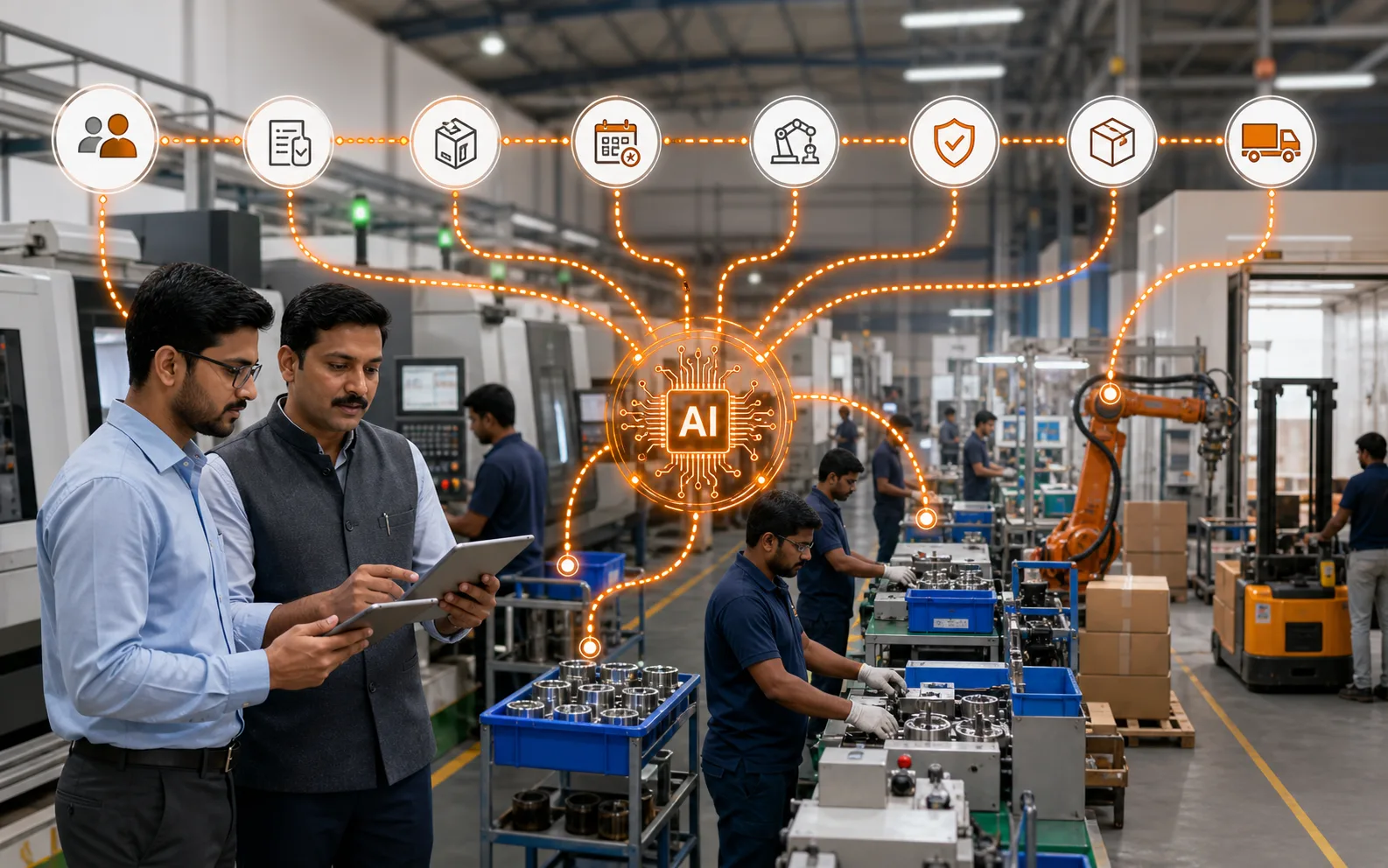
Will AI Replace My Production Planning Job?
Understand how AI affects production planning jobs, what tasks may change, and how planners can become more valuable with AI-supported scheduling and visibility.
6 Jun 2026Read more →Do I Need Special Skills to Use AI in Manufacturing?
Learn what skills manufacturing teams need to use AI, including process knowledge, data discipline, prompt clarity, review judgment, ERP understanding, and change readiness.
6 Jun 2026Read more →