
Order Management System | Optiwise
Learn how an order management system helps manufacturers manage sales orders, inventory, production readiness, dispatch status, and customer commitments.

Order Management System: Meaning, Features, and Manufacturing Benefits
An order management system helps a business control customer orders from entry to fulfilment. For manufacturers, it is not just a sales tracker. It is the connection between customer demand, stock, production, purchase, dispatch, and management reporting.
When order management is weak, customers get vague updates, sales teams chase production, production blames material shortage, and management discovers delays too late.
A good order management system creates one clear view of every order.
What Is an Order Management System?
An order management system, or OMS, is software that records, tracks, and manages customer orders throughout their lifecycle.
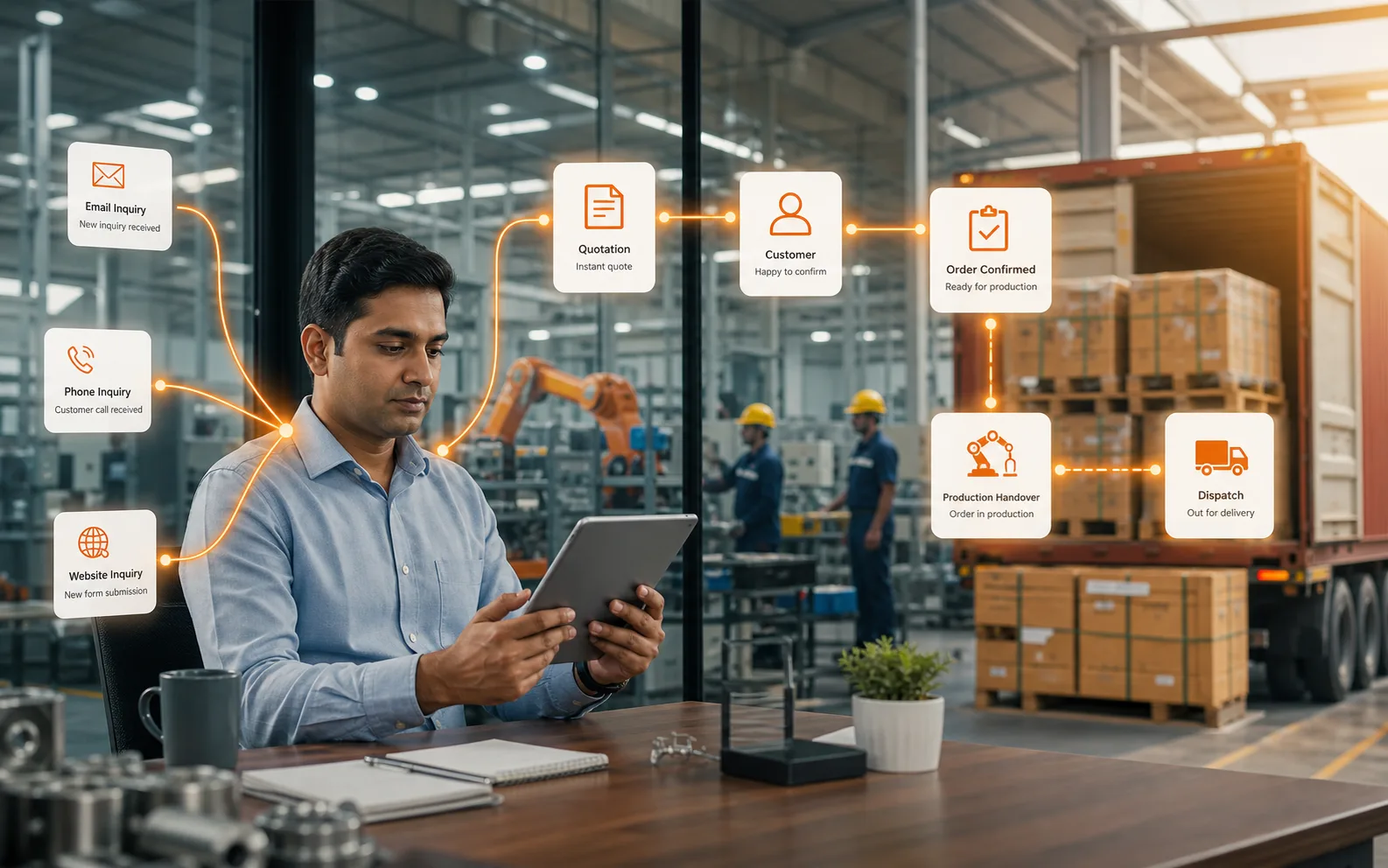
It captures order details, checks stock, reserves inventory, connects to production planning, tracks dispatch, and provides status visibility.
For manufacturing businesses, the OMS should be connected to ERP workflows, not isolated from operations.
What an OMS Should Track
A useful OMS tracks customer name, product code, quantity, price, delivery date, order status, stock allocation, production requirement, dispatch status, invoice status, and pending actions.
It should also show exceptions: orders delayed due to stock, production, quality, approval, payment, or logistics.
The real value is not only storing orders. It is identifying what needs attention.
Why Manufacturers Need OMS
Manufacturers often deal with made-to-order products, partial dispatches, repeat customers, product variants, dealer orders, and project commitments.
Manual order tracking becomes difficult when there are many orders in different stages. One order may be waiting for material. Another may be under production. Another may be ready but not invoiced. Another may be blocked due to payment approval.
An OMS makes these stages visible.
Key Features
Important OMS features include sales order entry, customer approval workflow, inventory check, order reservation, production linkage, dispatch planning, partial shipment handling, document generation, status dashboards, and customer-wise reporting.
For manufacturers, integration with BOM, work orders, warehouse, and purchase is especially important.
Common Mistakes
The first mistake is letting sales orders sit outside the system until dispatch time. This delays planning.
The second is failing to reserve stock. Without reservation, two orders can compete for the same item.
The third is not tracking reasons for delay. If delays are not categorized, the business cannot improve.
The fourth is using order status labels that are too vague. “In process” is not enough. Teams need to know whether the order is waiting for production, stock, QC, packing, invoice, or transport.
How Optiwise Helps
AICAN Optiwise connects sales, inventory, production, purchase, reporting, IoT, and AI workflows. This makes order management stronger because order status depends on multiple departments.
With Optiwise by AICAN, manufacturers can improve visibility from order capture to dispatch. Teams can track readiness, exceptions, and bottlenecks through connected data rather than daily manual follow-up.
Learn more about AICAN and its AI-native manufacturing operations.
Implementation Checklist
Start by defining order stages clearly. Then standardize product codes, customer masters, delivery terms, and approval rules. Connect order entry with stock availability and production planning.
Make dashboards simple: open orders, delayed orders, ready-to-dispatch orders, orders pending production, and orders blocked for approval.
Metrics to Track
Track order cycle time, on-time delivery, order fill rate, delayed orders by reason, partial dispatch rate, order correction rate, and customer complaint rate.
These numbers help management identify whether the order problem is sales discipline, production capacity, material shortage, or dispatch execution.
Founder’s Note
AICAN’s founder-led view is that customer trust is built through order visibility. A business should not need five phone calls to know where an order is stuck.
The right OMS makes the next action obvious.
FAQs
What is an order management system?
It is software that records, tracks, and manages customer orders from entry through fulfilment.
Why do manufacturers need an OMS?
Because orders often depend on inventory, production, quality, dispatch, and finance workflows.
What is the difference between OMS and ERP?
OMS focuses on order lifecycle. ERP connects broader business processes. In manufacturing, OMS should integrate with ERP workflows.
Can OMS handle partial dispatch?
A good OMS should track partial dispatches, pending quantities, and delivery status.
How does OMS improve customer service?
It gives teams accurate order status and helps reduce vague or delayed updates.
Final Thought
An order management system turns customer orders into visible operational commitments. When every order has a clear status and owner, delivery becomes easier to manage.

Related Posts
Sales Invoice Management Process For SMEs | Optiwise
A practical guide to sales invoice management for SME manufacturers, covering order confirmation, dispatch, GST details, documentation, payment follow-up, and controls.
5 Jun 2026Read more →How Do I Manage Custom Furniture Orders?
Learn how furniture manufacturers can manage custom orders using specifications, drawings, approvals, BOMs, materials, cutting, CNC, assembly, finishing, costing, delivery, and installation tracking.
21 May 2026Read more →Minimum Order Quantity | Optiwise
Learn minimum order quantity, why suppliers set MOQ, how manufacturers should evaluate it, risks, examples, and how Optiwise improves MOQ and stock planning.
2 May 2026Read more →MSME networking events and trade fairs 2024: International opportunities for Indian businesses
Written by Reading progress Call us As we step into 2024, the landscape for Micro, Small, and Medium Enterprises (MSMEs) is evolving rapidly. With digital transformation becoming the norm, it’s crucial for Indian busines…
17 Apr 2026Read more →