
Can Factories Automate Some Jobs While Keeping Others?
Factories can automate some jobs while keeping others by targeting repetitive tasks and preserving human judgment in quality, safety, maintenance, and supervision.
Can Factories Automate Some Jobs While Keeping Others?
Yes, factories can automate some jobs while keeping others. In fact, partial automation is often the most practical approach.
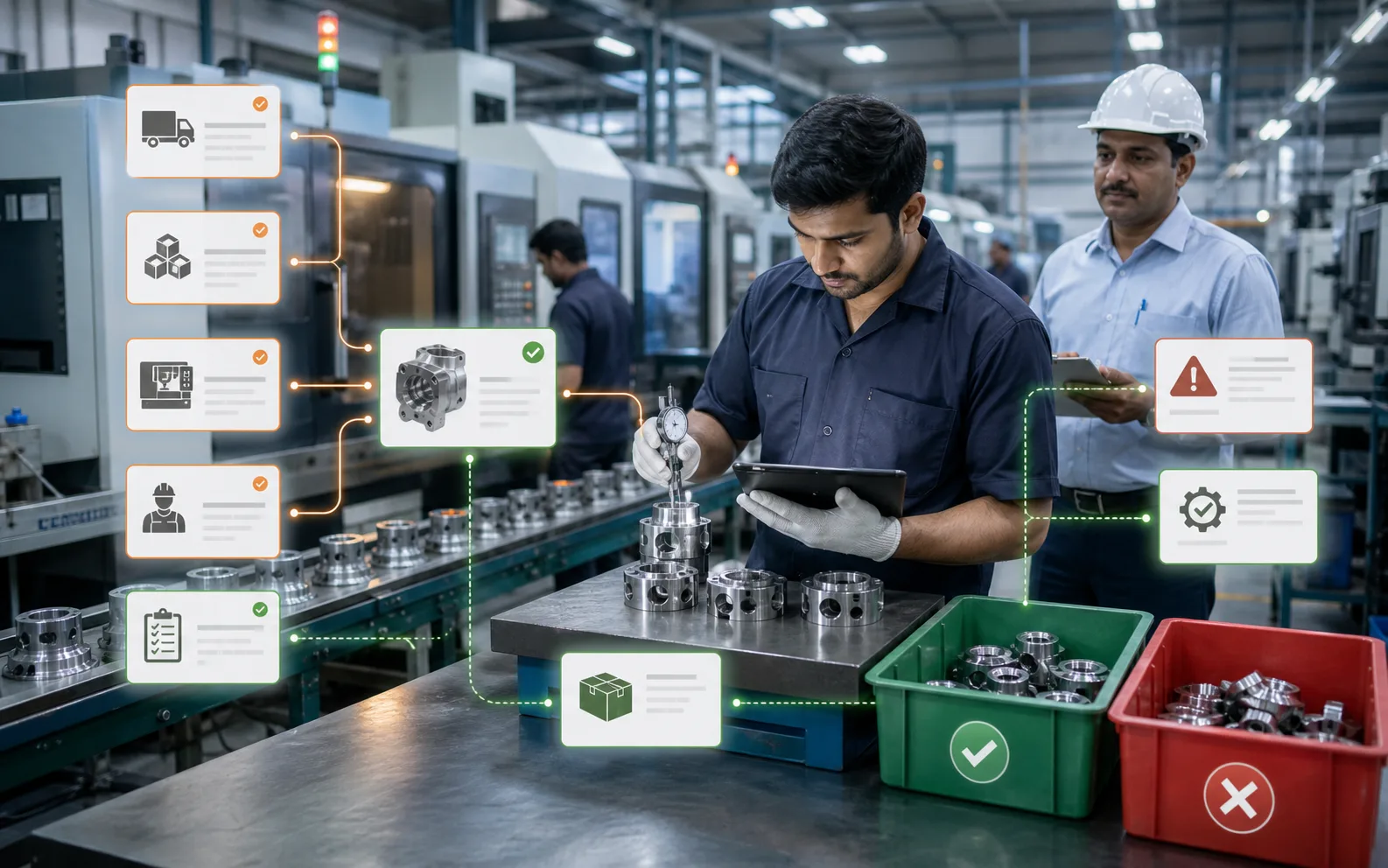
Not every task should be automated at once. Factories usually begin with repetitive, measurable, high-volume, or risky tasks while keeping human judgment in areas like quality, maintenance, supervision, safety, and exception handling.
Automation Works Best by Task, Not Job Title
A job is made of many tasks.
Some tasks may be automated, while others remain human-led. For example, a machine operator may stop doing manual recording but continue handling setup, inspection, and issue escalation.
What Gets Automated First
Common candidates include production reporting, repetitive movement, basic inspection support, downtime alerts, approval reminders, and status tracking.
These tasks are easier to define and measure.
What Usually Stays Human-Led
Human judgment remains important for safety, quality decisions, maintenance diagnosis, unusual machine behavior, team coordination, and customer-related trade-offs.
AICAN Optiwise supports partial automation by connecting production, inventory, purchase, sales, finance, reports, IoT readiness, and AI workflows.
Partial Automation Reduces Risk
A phased approach helps factories learn and adapt.
Teams can test what works, train users, and adjust workflows before expanding automation.
Where AICAN Optiwise Fits
AICAN Optiwise helps manufacturers automate practical workflows without removing human oversight. This supports steady transformation instead of disruptive change.
Learn more at About AICAN.
Founder’s Note
Automation does not have to be all or nothing. The smartest factories automate where it helps and keep people where judgment matters.
That balance creates trust and better results.
FAQ
Can one role be partially automated?
Yes. Some tasks within a role can be automated while others remain human-led.
Why is partial automation safer?
It allows learning, feedback, and controlled rollout.
Which tasks should stay human?
Safety, quality judgment, maintenance decisions, supervision, and unusual exceptions.
Does partial automation still improve productivity?
Yes, especially when repetitive work is reduced.
Final Thought
Factories can automate selectively and still protect valuable human work.
The goal is better productivity with responsible oversight, which is the practical model AICAN supports.

Related Posts

Will AI Create More Jobs Than It Destroys?
Explore whether AI will create more jobs than it destroys, with a practical view of manufacturing, automation, new roles, reskilling, and business transformation.
13 Jun 2026Read more →Manufacturing AI vs. Hiring More Workers
Compare manufacturing AI with hiring more workers and learn when automation, better systems, training, or additional people are the right answer.
7 Jun 2026Read more →
Will AI Replace My Production Planning Job?
Understand how AI affects production planning jobs, what tasks may change, and how planners can become more valuable with AI-supported scheduling and visibility.
6 Jun 2026Read more →Do I Need Special Skills to Use AI in Manufacturing?
Learn what skills manufacturing teams need to use AI, including process knowledge, data discipline, prompt clarity, review judgment, ERP understanding, and change readiness.
6 Jun 2026Read more →