
Revolutionizing Manufacturing: The Power of Industrial Automation
Written by Reading progress Call us In today’s rapidly evolving industrial landscape, the integration of industrial automation technologies is no longer a luxury but a necessity. From computer software and robotics to su…

Revolutionizing Manufacturing: The Power of Industrial Automation
Written by
vedant@aican.co.in
Reading progress
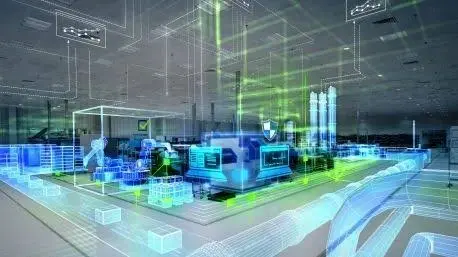
In today’s rapidly evolving industrial landscape, the integration of industrial automation technologies is no longer a luxury but a necessity. From computer software and robotics to supervisory systems and human-machine interfaces, industrial automationis transforming how we manage and operate manufacturing processes. This article explores the key components, benefits, challenges, and future trends of industrial automation.
Understanding Industrial Automation
Industrial automation involves the use ofautomatic operations and control systems such as PLC, SCADA, HMI, and robotics to manage industrial processes with minimal human intervention. This reduces human error, cuts costs, saves time, and achieves higher performance and reliability.
Key Technologies in Industrial Automation
Programmable Logic Controller (PLC)
A Programmable Logic Controller (PLC) is an essential tool in industrial automation. It controls machinery and processes by receiving data from sensors and actuators. This data is then processed to perform automated operations, enhancing system stability and performance while reducing the need for manual intervention.
Supervisory Control and Data Acquisition (SCADA)
SCADA systems enable real-time data collection and analysis, allowing operators to monitor and control industrial processes remotely. This improves decision-making and operational efficiency by providing insights into the performance of various systems.
Human Machine Interface (HMI)
The Human Machine Interface (HMI) facilitates interaction between human operators and machines. It provides a graphical display of system data, making it easier for operators to monitor and control processes.
Artificial Neural Network (ANN)
An Artificial Neural Network (ANN) consists of interconnected neuron nodes that process complex data. In industrial automation, ANNs can enhance predictive maintenance, quality control, and system optimization.
Distributed Control System (DCS)
A Distributed Control System (DCS) decentralizes control functions, distributing them across multiple automated systems. This improves reliability, flexibility, and scalability in industrial operations.
Robotics
Robotics play a critical role in industrial automation,especially in tasks that are complicated or dangerous for human workers. Robots can improve production flow and quality, increase safety, and reduce labor costs.
Types of Industrial Automation Systems
Fixed Automation
Fixed Automation is designed for high-volume production with a continuous workflow. It involves high initial investment but offers cost benefits in large-scale manufacturing due to its efficiency and speed.
Programmable Automation
Programmable Automation is suitable for batch production, allowing manufacturers to reprogram machines for different tasks. This flexibility improves uptime and increases production rates.
Flexible Automation
Flexible Automation is used in environments where products change frequently. This system allows for quick reconfiguration to meet changing production needs, offering greater customization.
Integrated Automation
With advancements in IIoT and Industry 4.0, Integrated Automation connects independent machines and production lines. This allows for real-time monitoring and adjustment of production processes, enhancing efficiency and responsiveness.
Benefits of Industrial Automation
Improve Worker Safety
Automation reduces the need for human workers in hazardous environments, significantly improving safety.
Increase Productivity
Automated systems operate faster and more efficiently than human labor, leading to higher productivity.
Higher Quality
Consistent and precise automated operations ensure better quality control and product consistency.
Better Decision Making
Real-time data collection and analysis enable better decision-making, optimizing production processes and resource allocation.
Challenges in Industrial Automation
Security Concerns
With increased connectivity, industrial systems become more vulnerable to cyber-attacks. Ensuring robust cybersecurity measures is crucial.
Data Overload
The vast amount of data generated by automated systems can be overwhelming. Effective data management and analysis are essential.
Implementation Costs
The initial investment for industrial automation can be high. However, the long-term benefits often outweigh the upfront costs.
Change Management
Adapting to automated systems requires a shift in the organizational culture. Training and support for staff are necessary to ensure a smooth transition.
Future Trends in Industrial Automation
5G Technology
The rollout of 5G technology will enhance connectivity and enable faster data transmission, crucial for real-time automation.
Predictive Maintenance
Using IoT and machine learning for predictive maintenance can prevent equipment failures and reduce downtime.
Augmented Reality (AR)
Augmented Reality (AR) can assist in training, maintenance, and troubleshooting, providing real-time visual guidance.
Edge Computing
Edge computing processes data closer to the source, reducing latency and improving response times in automated systems.
Blockchain
Blockchain technology ensures secure and transparent transactions, which can be beneficial for supply chain management.
Real-World Applications and Case Studies
General Electric
General Electric uses IoT to optimize its manufacturing processes, improving efficiency and reducing costs.
BMW
BMW utilizes IoT in its factories for real-time monitoring and predictive maintenance, enhancing production quality.
Philips
Philips employs IoT in manufacturing to streamline operations and improve product quality.
Cimpress
Cimpress leverages IoT for better inventory management and operational efficiency.
Owens Corning
Owens Corning uses IoT to enhance safety and productivity in its manufacturing processes.
Components of IoT in Industrial Automation
Digital Equipment and Edge Devices
Digital equipment and edge devices form the backbone of IoT in industrial automation, enabling real-time data collection and processing.
Data Communication Infrastructure
A robust data communication infrastructure ensures seamless connectivity between devices and systems.
Software and Analytics
Software and analytics tools analyze data to provide actionable insights, optimizing industrial operations.
Human Factors
Ultimately, the success of industrial automation depends on the people who design, implement, and manage these systems.
Beginning Your Industrial Automation Journey
For manufacturers and OEMs looking to embark on their industrial automation journey, it’s essential to start with a clear understanding of your specific needs and objectives. Partnering with experts like AICAN Optiwise can help you simplify end-to-end operations with affordable and customizable solutions.
In conclusion, industrial automation is revolutionizing manufacturing by leveraging advanced technologies to create more efficient, safe, and productive processes. As the industry continues to evolve, staying ahead of the curve with innovative solutions will be crucial for sustained growth and success.
Feel free to reach out to us at AICAN Optiwise to learn more about how we can help your business leverage industrial automation for greater efficiency and success.

Related Posts
A Manufacturing Alternative to SAP: Optiwise
Run your factory in Optiwise, a manufacturing alternative to SAP Business One with connected operations, AI agents and no-code workflows.
14 Jun 2026Read more →How Do I Know If My Manufacturing Business Really Needs an ERP?
A practical guide for manufacturers to identify when spreadsheets, manual follow-ups, and disconnected systems are no longer enough — and when ERP becomes an operational necessity.
14 Jun 2026Read more →
Is AI Worth the Investment for My Factory?
Learn how to decide if AI is worth the investment for your factory by evaluating use cases, data readiness, costs, risks, ROI, and operational impact.
13 Jun 2026Read more →Manufacturing AI Mistakes to Avoid Before You Start
List manufacturing AI mistakes and controls for unclear use case, messy data, unsafe automation, no owner, weak security and unreviewed recommendations.
13 Jun 2026Read more →